Sensory Processing Puzzles: The Neuroscience of Tactile Brain Games
Explore how sensory puzzles and tactile brain games improve cognitive health, regulate the nervous system, and support neurodiversity for all ages.
By Free To Play Puzzles Editorial Team 10 min read
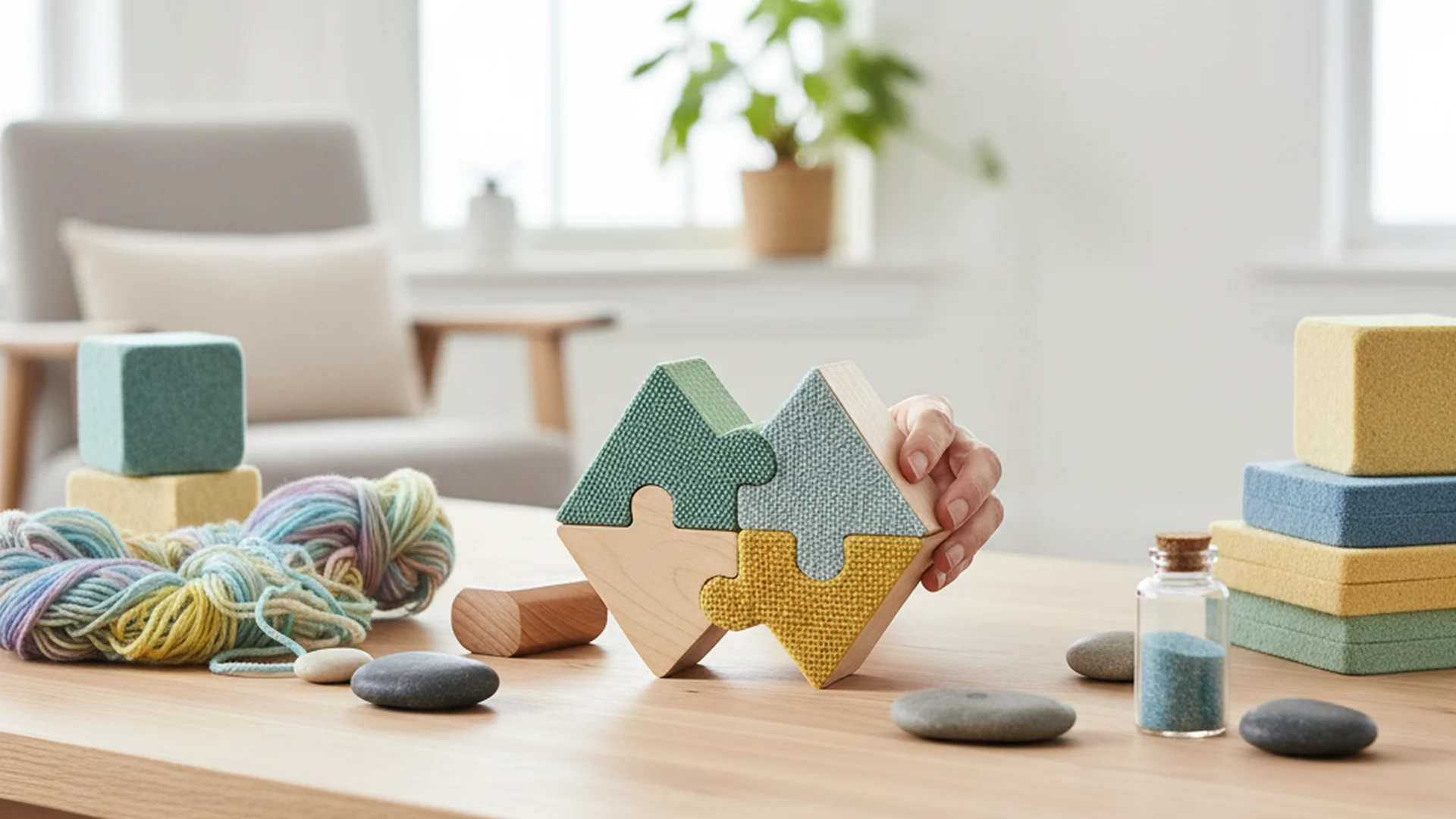
In our increasingly digital world, the human brain is often starved for physical feedback. While high-definition screens provide visual stimulation, they lack the multi-dimensional input that our nervous systems evolved to process. This gap is being bridged by a revolution in sensory puzzles—specialized tools designed to engage the "8 senses" to build cognitive resilience. Whether you are a parent supporting a neurodivergent child or an adult looking to maintain mental sharpness, tactile brain games offer a grounded, scientifically-backed method to improve focus and emotional regulation.
The Science of Multi-Sensory Engagement
Why does the brain respond so powerfully to sensory puzzles? Part of the answer lies in the way tactile feedback "grounds" the prefrontal cortex. When we engage in Mindfulness Puzzle Practice, we aren't just solving a logical problem; we are stimulating the somatosensory cortex.
Research indicates that multi-sensory learning tools can improve vocabulary acquisition and retention by approximately 18.6 days per additional sense engaged compared to traditional uni-sensory methods (like just looking at a screen). By adding texture, weight, or sound to a puzzle, you are essentially "double-encoding" the information in your brain.
Understanding the 8 Senses
Most of us were taught the five basic senses: sight, sound, touch, taste, and smell. However, modern occupational therapy identifies three additional internal senses that are crucial for cognitive processing:
- Proprioception: Sensing body position and "heavy work" (e.g., the weight of a puzzle piece).
- Vestibular: Balance and spatial orientation (e.g., doing a puzzle while standing).
- Interoception: Awareness of internal body signals (e.g., feeling your heart rate slow down during play).
Sensory Puzzles for Neurodiversity: ADHD and Autism
For individuals with Sensory Processing Disorder (SPD), ADHD, or autism, the world can often feel like it is "too loud" or "too much." Statistics show that up to 90% of individuals with autism and 50–64% of children with ADHD experience atypical sensory processing.
In these cases, Autism and Puzzles serve as more than just entertainment; they are "regulatory anchors." Unlike standard puzzles that focus solely on visual matching, sensory-specific versions incorporate:
- Textural Contrast: Sandpaper-to-velvet transitions.
- Auditory Feedback: Satisfying clicks or musical tones when pieces lock.
- Olfactory Elements: Scented wooden pieces that aid in memory association.
Advertisement
Senior Cognitive Health and Dementia Prevention
The benefits of tactile brain games extend far into our later years. Engaging with physical puzzles has been shown to reduce the risk of dementia by 15% and can lower rates of depression among seniors. However, the approach must be different than that used for children.
Maintaining Dignity in Therapy
A common mistake in senior care is using child-themed puzzles. For seniors with dementia, it is vital to use "adult-themed" puzzles featuring landscapes, classic cars, or vintage advertisements, but with adapted piece sizes (12–36 large pieces). This ensures the user feels respected while still receiving the tactile stimulation they need for Cognitive Rehabilitation Puzzles.
| Puzzle Type | Sensory Input | Best For |
|---|---|---|
| Textured 3D Puzzles | Tactile/Proprioceptive | Fine motor skill maintenance |
| Weighted Logic Blocks | Proprioceptive | Grounding and anxiety reduction |
| AR-Enhanced Wooden Puzzles | Visual/Auditory | Cognitive flexibility & "Phygital" play |
The OT Toolkit: Best Practices for Home and Clinic
Occupational therapists (OTs) suggest that a "sensory diet" including Occupational Therapy Puzzles should last between 15–30 minutes per day for maximum benefit. To get the most out of your sessions, consider these expert recommendations:
1. The Tactile "Hide and Seek"
Increase the challenge of any puzzle by hiding the pieces in a "sensory bin" filled with dry rice, beans, or sand. This forces the brain to use tactile discrimination—the ability to identify objects by feel alone—without relying on sight.
2. Dynamic Posture
Don't just sit at a table. Doing a puzzle while in a "tall kneel" or standing on a balance board engages the vestibular and proprioceptive systems simultaneously. This "stacking" of sensory inputs helps build better neural pathways for balance and focus.
Trends for 2025 and 2026: The "Phygital" Future
As we move toward 2026, the intersection of technology and physical play is creating exciting new tools for Therapeutic Puzzles.
- Phygital Integration: Look for wooden puzzles that interact with tablets to unlock Augmented Reality (AR) stories. This allows a tactile experience to trigger a digital reward, which is highly motivating for younger users.
- AI-Enhanced Feedback: New "smart" puzzles use sensors to detect grip pressure and heart rate. If the AI detects rising stress markers, it can subtly adjust the difficulty or change the auditory feedback to a more calming tone.
- Eco-Sensory Materials: There is a growing demand for sustainable materials. Puzzles made from bamboo, FSC-certified wood, and recycled ocean plastics provide unique, natural textures that synthetic plastics cannot replicate.
Advertisement
Common Mistakes to Avoid
Well-meaning caregivers often make a few common errors when introducing sensory play:
- Thinking it must be "messy": While mud and shaving cream are great, many of the best sensory puzzles are "dry" and self-contained, such as Magnetic Rings or Rotate & Slide brain teasers.
- Assuming kids "grow out" of it: Sensory needs persist into adulthood. Puzzles like Tactile Rubik's Cubes or textured fidget puzzles are essential for workplace focus and managing adult ADHD.
- Forcing interaction: Never force a person to touch a texture they find repulsive. This creates a negative neurological association. Always offer a choice of textures to empower the user.
Frequently Asked Questions
What is the difference between a "sensory puzzle" and a regular puzzle?
Standard puzzles focus almost entirely on visual matching. Sensory puzzles, however, incorporate textures (rough, smooth, squishy), varying weights, or auditory feedback (clicking sounds) to provide a richer experience for the nervous system.
Who benefits most from tactile brain games?
While specifically designed for those with SPD, ADHD, autism, or dementia, all individuals benefit from tactile engagement. These games help lower cortisol and ground the brain in the physical moment, which is excellent for general stress relief and focus.
How long should a sensory session last?
Occupational therapists generally recommend 15–30 minutes per day of dedicated sensory play. This is usually enough time to see improvements in regulation and focus without risking overstimulation.
Can these puzzles be used at home?
Absolutely. Many OTs recommend "sensory diets" that include these tools as part of a daily home routine. They are particularly effective for managing transitions, such as the period immediately after school or before bed.
Conclusion
In an era of flat screens and digital noise, our brains crave the tactile reality of the physical world. Sensory puzzles and tactile brain games are not just toys; they are sophisticated neurological tools that help us regulate our emotions, sharpen our minds, and connect with our environments. By engaging all eight of our senses, we can build a more resilient and focused brain at any age.
Explore the Science of Play
Discover how different puzzle types can boost your cognitive health today.
Put it into practice
Keep reading
Therapy
Therapeutic Puzzles: Clinical Applications and the Science of Brain Games
Explore the clinical benefits of therapeutic puzzles and brain games. Learn how structured puzzling boosts acetylcholine, improves IQ, and aids occupational therapy.
May 10, 2025 12 min
Therapy
Harmonizing the Mind: The Rise of Music Therapy Puzzles
Discover how music therapy puzzles and musical brain games therapy improve memory, mood, and neuroplasticity through interactive auditory challenges.
Oct 16, 2026 10 min
Therapy
The Ultimate Guide to Cognitive Rehabilitation Puzzles and Brain Injury Games
Discover how cognitive rehabilitation puzzles and brain injury games use neuroplasticity to accelerate recovery after TBI or stroke. Expert tips for 2025.
Sep 21, 2026 12 min
Advertisement