About Memory Match
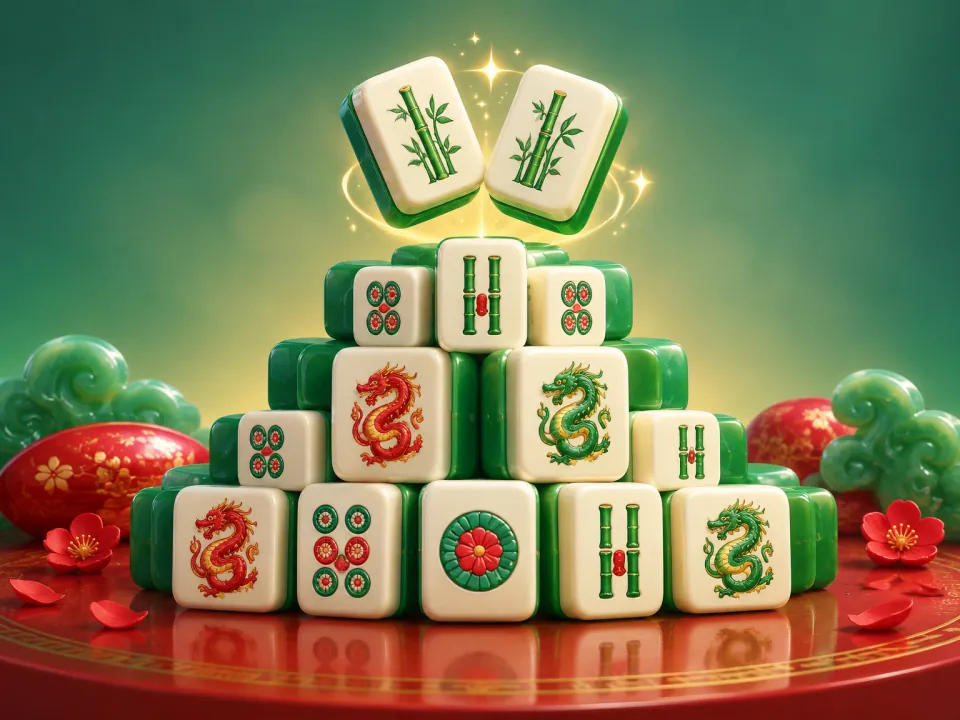
Memory Match is a free online memory game: a grid of face-down cards hides pairs of matching pictures, and your job is to uncover every pair by flipping two cards at a time. It is the classic card game also known as Concentration, Pairs or Match Up — simple enough for young kids, yet surprisingly competitive once you start racing the clock.
Every turn is a tiny memory test. The first card you flip tells you something; the second either completes a pair or gives you one more location to remember. Good players build a mental map of the board as they go, and by the end they can clear several pairs in a row without a single miss.
Our matching game has four board sizes, six card themes (Animals, Fruit & Treats, Space, Sports, Emoji and Shapes), smooth 3D card flips, a star rating for efficient play and global leaderboards for the fastest times. It works on phones, tablets and computers, and your game is saved if you leave the page.
How to play Memory Match
- 1
Choose a board and a theme
Pick a board size from the toolbar. 4×4 (8 pairs) is a quick warm-up, 6×6 (18 pairs) is a real workout, and 4×5 or 5×6 sit in between for practice. The theme menu changes the pictures on the cards — pick whichever you find easiest (or hardest) to remember.
- 2
Flip two cards
Click or tap any card to turn it over, then flip a second one. The timer starts with your very first flip. If you are using a keyboard, move the orange highlight with the arrow keys and press Enter to flip.
- 3
Keep pairs, remember misses
When the two pictures match, the pair locks in place with a green check. When they don't, both cards shake and flip back after a moment. You don't have to wait — clicking a third card flips the mismatched pair back instantly, so fast players never lose time.
- 4
Clear the board
Find every pair to finish. Your result shows your time, your move count, a 1–3 star rating and your best streak of back-to-back matches. On the ranked 4×4 and 6×6 boards your time goes on the leaderboard.
Controls
| Input | Action |
|---|---|
| Click / tap | Flip a card |
| Arrow keys | Move the highlight around the board |
| Enter / Space | Flip the highlighted card |
| N | Deal a new game |
Advertisement
Memory Match tips and strategy
Flip the unknown card first
Start each turn by flipping a card you have never seen. If its partner is somewhere you remember, you can match it immediately. If you flip a known card first, you learn nothing new when the second card misses.
Sweep the board in order
Early in the game, explore row by row instead of clicking at random. A systematic sweep makes positions easier to recall later ("the rocket was third along the top row").
Name what you see
Quietly say each picture and its spot — "cat, top left; banana, middle". Adding a verbal label to a visual memory makes it stick better, especially on the big 6×6 board.
Use color as a shortcut
Every picture has its own colored disc. On a crowded board it is often faster to remember "the orange one was near the corner" than the exact icon.
Chunk the board into zones
Split the grid into quarters and remember which pictures live in each zone. Recalling "the ghost is somewhere in the bottom-right" narrows your next flip to a handful of cards.
Don't burn moves on guesses you know are wrong
If you flip a new card and don't know where its partner is, use your second flip to reveal another unseen card rather than re-checking one you already know. Every flip should add information.
Stars first, speed second
Three stars mean you found every pair in close to the ideal number of moves. Once you can reliably get three stars, start pushing your time — fewer wasted moves is the biggest time saver anyway.
Scoring, stars and the leaderboard
Each time you flip two cards counts as one move. A perfect game — where every pair is found on the first try — would take exactly as many moves as there are pairs, which only happens with a lot of luck.
Your star rating depends on moves:
- 3 stars: up to about 1.6 moves per pair (13 moves on 4×4, 29 on 6×6)
- 2 stars: up to about 2.25 moves per pair (18 moves on 4×4, 41 on 6×6)
- 1 star: anything more — you still found them all!
Leaderboards rank the fastest time on the 4×4 and 6×6 boards. Your personal best is saved for every board size, including the practice boards.
A short history of Concentration
Matching-pairs card games have been played with ordinary decks for generations — lay the cards face down and take turns flipping two, keeping any pair you find. The game became famous in the United States as Concentration, the long-running TV game show that premiered in 1958, where contestants matched prizes hidden behind numbered squares.
Picture-card versions for children followed, and the format moved naturally onto computers and phones. The rules have barely changed because they don't need to: two cards, one question — do you remember where you saw that before?
Why matching games are good brain exercise
A game of Memory Match leans on short-term visual memory and spatial memory — remembering what you saw and where you saw it — plus attention and focus as the board fills with half-remembered positions. It is a calm, low-pressure way to give your brain a workout, and a great first strategy game for kids.
Want more? Try Simon Says for sequence memory, the Number Memory test for digit span, or Pattern Recognition for visual recall. You'll find all of them in our memory games collection.
Frequently asked questions
How do you play the memory matching game?
Turn over two cards per turn. If they show the same picture, they stay face up; if not, they flip back. Keep going until you have found every pair, using what you remember from earlier flips.
What is a good score in Memory Match?
A good goal is three stars: about 13 moves or fewer on the 4×4 board and 29 or fewer on 6×6. For time, clearing a 4×4 board in under 30 seconds is quick, and experienced players can finish 6×6 in around two minutes.
Is Memory Match good for kids?
Yes. The rules are simple, there is no reading required, and the Animals, Fruit & Treats and Shapes themes are designed to be friendly and easy to tell apart. The 4×4 board is a great starting point for young players.
What is the difference between Memory, Concentration and Pairs?
They are different names for the same game. "Concentration" comes from the classic TV show, "Pairs" is common in the UK, and "Memory" is the name used by many board game publishers.
Does the card theme affect my score?
No. Every theme has the same number of distinct pictures and the same scoring. Switching themes only changes the artwork, so pick the one that suits you.
Can I pause or leave in the middle of a game?
Your board and time are saved automatically, and the clock pauses when you switch tabs. Come back to the same board size later and you can pick up where you left off.
Is this matching game free?
Yes — Memory Match is completely free, with no download or sign-up. It runs in any modern browser on phone, tablet or desktop.