

About our brain training games
These free brain training games are short, focused exercises for specific mental skills: Reaction Time and Color Match for speed and attention, Number Memory, Simon Says and Pattern Recognition for memory, and Sudoku, KenKen and Logic Puzzles for reasoning. There is no subscription, no app and no sign-up. Open a game and you are training in seconds.
We built this page as an honest guide rather than a sales pitch. Below you will find which skill each game targets, a ten-minute daily routine you can follow using only games on this site, and a plain-English summary of what research does and does not say about brain training.
Your personal bests and daily streak are saved privately in your browser, and every game has a leaderboard, so you can see your progress over weeks rather than guessing.
Where to start
 Color MatchA fast Stroop-style test of focus: read the word, ignore the ink, answer in time.
 Number MemoryThe clearest working memory test on the site. It adds one digit every round.
 Reaction TimeA 30-second check of processing speed, averaged over five attempts.
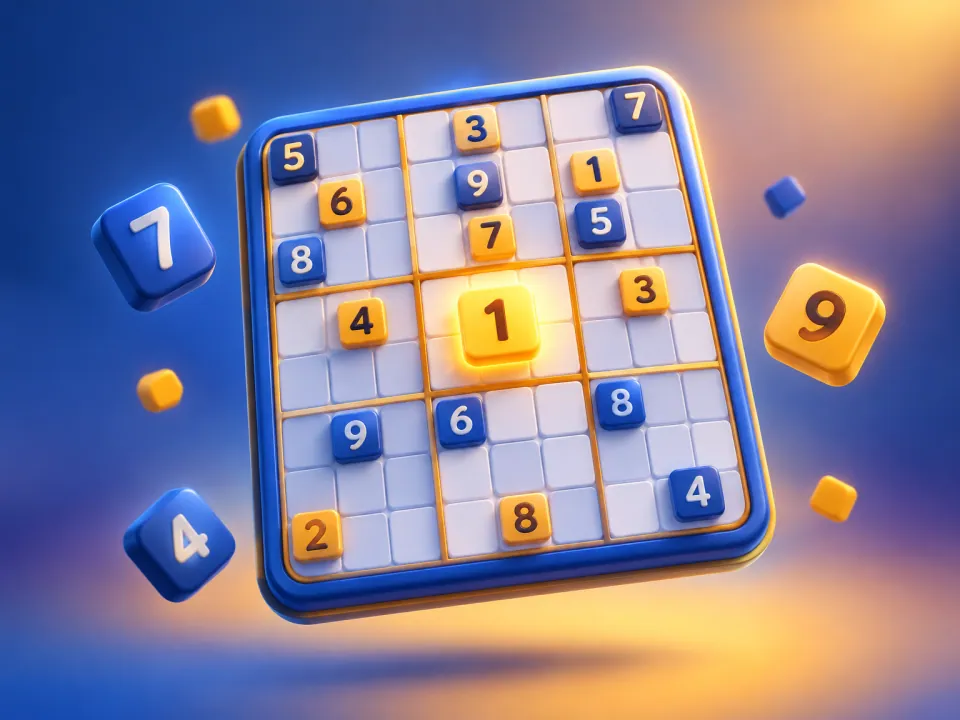
 SudokuThe best daily reasoning workout, from quick Easy grids to Expert.
 Pattern RecognitionVisual memory training that grows harder as you level up.
 TriviaA lighter option: recall facts across 10 categories and learn something new.
Advertisement
Which skill does each game train?
Brain training works best when you know what you are practicing. Here is how our games map to the main cognitive skills:
- Processing speed (how quickly you take in information and respond): Reaction Time, Color Match, the sprint mode in Math Puzzles, and the Typing Test.
- Attention and inhibitory control (focusing on what matters and ignoring distractions): Color Match is based on the Stroop effect, first described by psychologist J. Ridley Stroop in 1935, in which the meaning of a word interferes with naming its ink color.
- Working memory (holding and using information for a few seconds): Number Memory, Simon Says and Pattern Recognition. KenKen also leans on it, since you juggle possible numbers for several cells at once.
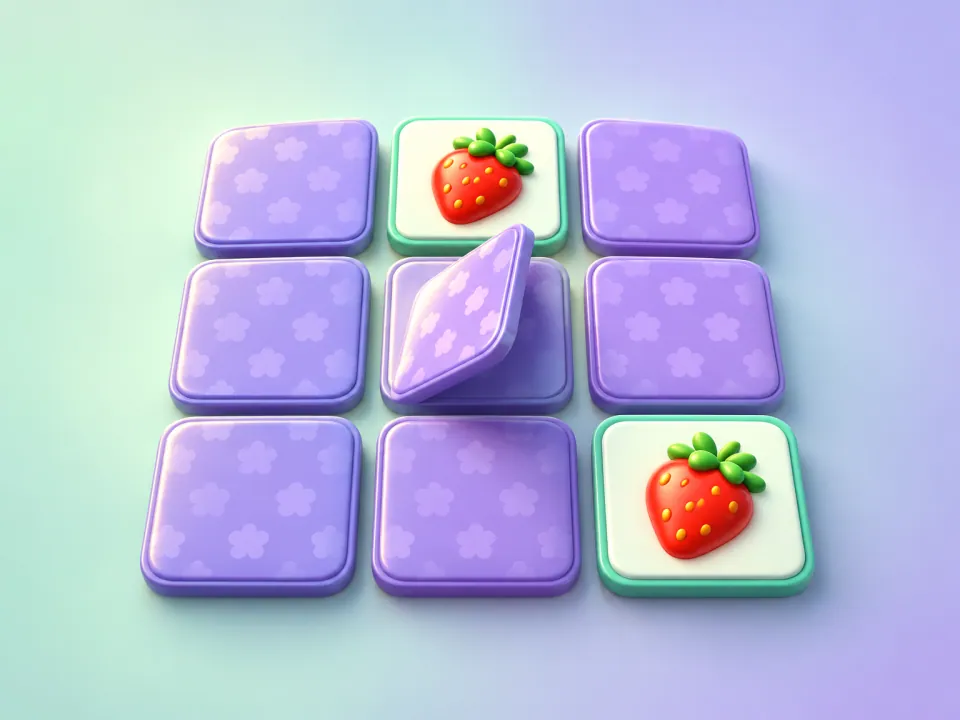
- Visual-spatial memory (remembering where things are): Memory Match and Pattern Recognition.
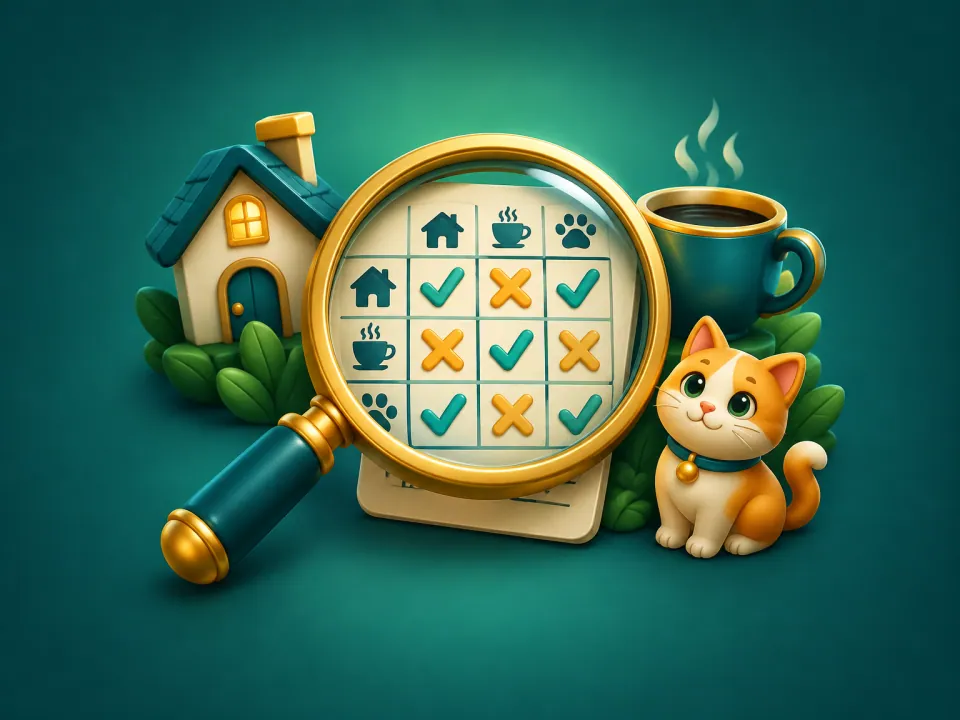
- Reasoning and problem solving (working step by step to a conclusion): Sudoku, KenKen and Logic Puzzles.
- Knowledge and recall (retrieving facts you already know): Trivia.
Mixing skills is more interesting than repeating one game, and it gives you a broader picture of how your mind is performing on a given day.
A 10-minute daily brain training routine
This routine uses only games on this page and fits into a coffee break. Treat the times as rough guides.
- Warm up with speed (1 minute). Play Reaction Time. It wakes up your attention and gives you a quick read on how alert you are today.
- Focus drill (2 minutes). Play a round of Color Match. Aim for accuracy before speed.
- Working memory (2 minutes). Alternate days between Number Memory and Pattern Recognition. Try chunking digits into groups of three.
- Reasoning (4 minutes). Solve a small 4x4 KenKen, or do a sprint in Math Puzzles. On days with more time, swap in the daily Sudoku or a Logic Puzzle.
- Cool down (1 minute). Finish with Simon Says or a few questions of Trivia.
Keep it consistent rather than long. Ten focused minutes most days is easier to sustain than an hour once a week, and our site-wide daily streak gives you a small nudge to come back. For extra variety, the Daily Challenge page lists every game with a fresh daily puzzle.
What the research says
It is worth being clear about the evidence, because brain training is often oversold.
Practice clearly improves the practiced task. If you play Number Memory daily, your digit span in that game will very likely rise. This is consistent across many studies.
Transfer to other skills is more limited. A major 2016 scientific review of the brain-training field concluded that there is good evidence people improve on trained tasks, less evidence for improvement on closely related tasks, and little convincing evidence of gains in everyday cognitive performance. That same year, the US Federal Trade Commission settled with a well-known brain-training company over advertising claims it said were not supported by science.
Some findings are encouraging. The long-running ACTIVE study of older adults in the United States found that structured training in memory, reasoning or processing speed improved those specific abilities, and some benefits could still be measured years later.
No game is proven to prevent dementia. Being mentally active through life is associated with better cognitive health, but association is not the same as cause. Regular physical activity, good sleep, managing blood pressure and staying socially connected are also linked to healthier brain aging.
So: play these games because they are enjoyable and give you a useful, honest snapshot of your focus and memory. For more detail, read our guides to the cognitive benefits of games and the benefits of puzzles.
How to track your progress fairly
Your scores will naturally bounce around from day to day. Tiredness, caffeine, stress and even the device you use all make a difference, and reaction times on a phone are affected by the screen and touch hardware. To see real trends:
- Play at a similar time of day and on the same device when you can.
- Compare weekly averages rather than single sessions.
- Expect the fastest gains in your first few weeks, then a slower climb as you approach your natural ceiling.
- Celebrate consistency: your streak is a better measure of a healthy habit than any one score.
Frequently asked questions
Do brain training games actually work?
They reliably make you better at the games you practice. Whether that improvement spreads to everyday thinking is much less certain; reviews of the research find limited evidence of broad "far transfer". Brain games are best treated as an enjoyable mental workout rather than a cure-all.
Can brain training prevent dementia or Alzheimer's?
No game has been shown to prevent dementia or Alzheimer's disease. Staying mentally, physically and socially active is associated with healthier aging, but these are associations, not guarantees. If you have concerns about your memory, please speak to a doctor.
How long should I do brain training each day?
Around 10 to 15 minutes on most days is a sensible amount for most people. Short regular sessions are easier to stick with than long occasional ones. The routine on this page takes about 10 minutes.
What is a good reaction time?
For a simple "click when it turns green" test, many adults score somewhere around 200 to 300 milliseconds. Your device, screen and mouse add some delay, so compare your results over time on the same setup rather than against a single number. Try the Reaction Time test to find your average.
Are free brain games as good as paid brain training apps?
Most brain training apps use variations of the same kinds of tasks you will find here: reaction speed, Stroop-style attention tests, memory span and logic puzzles. There is no strong evidence that paid programs produce better real-world results than free ones.
Are brain training games suitable for kids?
Yes, as a fun activity. Memory Match, Simon Says and Math Puzzles are especially popular with children. Like adults, kids get better at the specific games they play, so variety and balance with other activities is a good approach.