About our memory games
Our free memory games online are short, focused challenges that test how much you can hold in mind at once: Memory Match for finding pairs, Simon Says for sequences of lights and sounds, Number Memory for strings of digits, and Pattern Recognition for remembering which tiles lit up.
Each game gets harder as you succeed, so you always find your own limit rather than a fixed test. Your best level or time is saved in your browser, and every game has a leaderboard so you can see how your memory compares with other players.
A round takes anywhere from 30 seconds to a few minutes, the games work with a mouse or a fingertip, and there is nothing to download. They suit kids learning to concentrate just as well as adults who want a quick mental warm-up.
Where to start
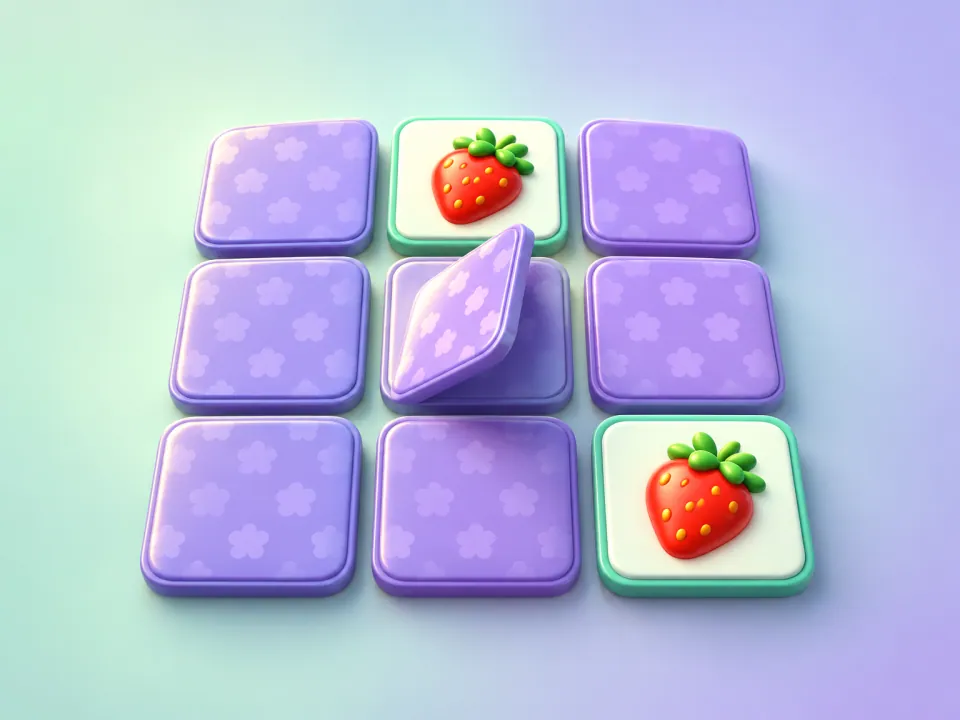
 Memory MatchThe classic pairs game. Best for kids and families, with several grid sizes and themes.
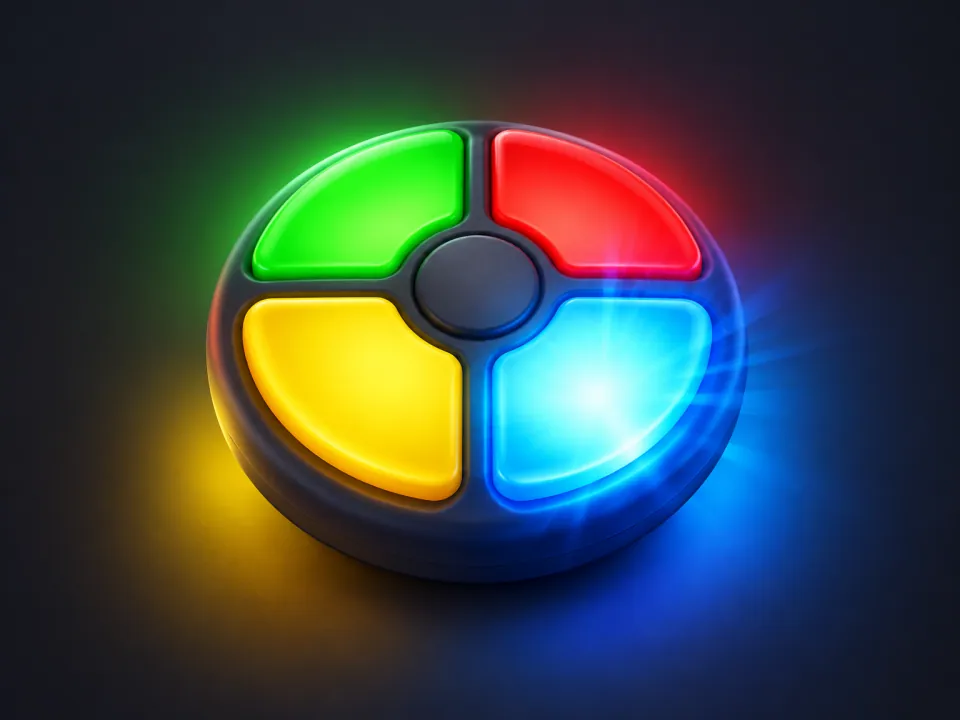
 Simon SaysTest your sequence memory as the pattern grows by one step each round.
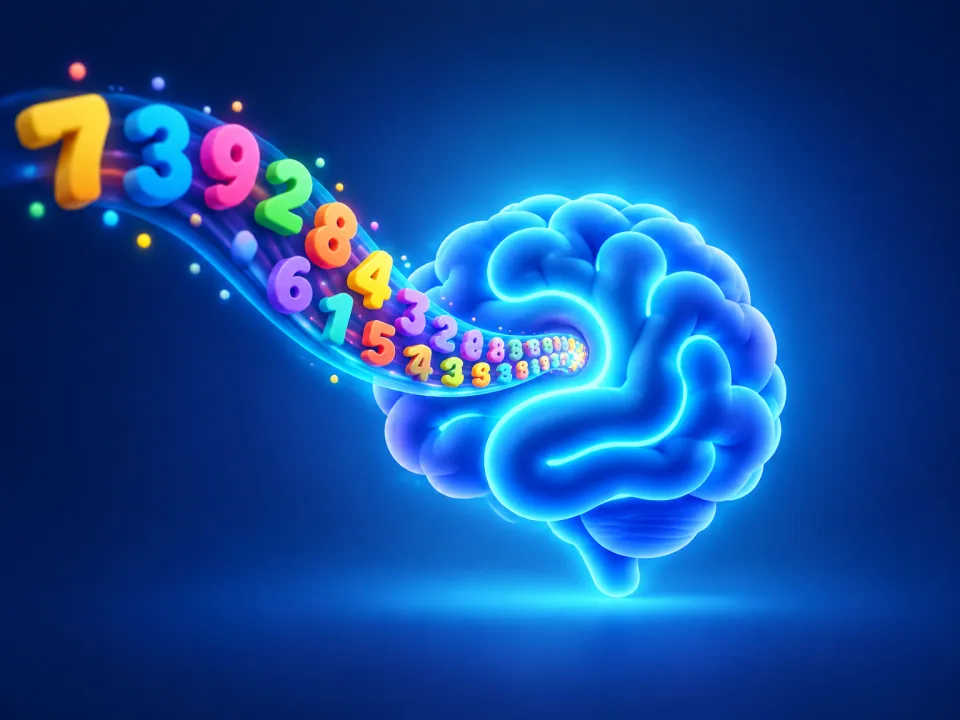
 Number MemoryFind your digit span in about two minutes and try to beat it tomorrow.
 Pattern RecognitionVisual memory under pressure: remember the lit tiles as the grid gets bigger.
Advertisement
What each memory game tests
Psychologists describe several kinds of memory, and each game here leans on a different one.
- Visual-spatial memory is remembering where things are. Memory Match asks you to recall the position of each card you have flipped, and Pattern Recognition asks you to recall a layout of highlighted tiles after it disappears.
- Sequential memory is remembering the order of things. Simon Says adds one step to a sequence of colors and tones every round.
- Verbal and numerical short-term memory is holding information like a phone number in mind for a few seconds. Number Memory is a digit span task, a type of test psychologists have used for over a century.
All four also rely on working memory, the mental scratchpad you use to hold and manipulate information in the moment, and on sustained attention. A lapse of focus is often what ends a run.
Techniques that help you remember more
Memory champions rarely have extraordinary brains; they use techniques. A few that work in these games:
- Chunking. Group digits into small clusters. Remembering 482 715 93 is easier than 48271593. This is the single most useful trick for Number Memory.
- Say it or sing it. In Simon Says, naming the colors under your breath ("red, red, blue, green") or noticing the rhythm of the tones gives your memory a second channel.
- Make shapes. In Pattern Recognition, see the lit tiles as a picture, such as an L, a diagonal or a smiley face, rather than as separate squares.
- Work systematically. In Memory Match, flip unknown cards in a consistent order, row by row, so their positions are easier to recall.
With practice, most people improve steadily at these games. Much of that improvement comes from better strategies like these, which is worth knowing when you think about what memory training can and cannot do.
Realistic expectations about memory training
Playing memory games reliably makes you better at those games. Whether that improvement carries over to everyday memory, like remembering names or where you left your keys, is less clear, and researchers continue to debate how much transfer to expect.
The healthiest way to see these games is as an enjoyable way to exercise attention and concentration, not as a treatment. Sleep, physical activity and staying socially and mentally engaged are all associated with better memory as we age. If you are worried about changes in your own memory, talk to a doctor.
For a full daily workout that includes memory, speed and reasoning, see our brain training guide, or read more on the cognitive benefits of games.
Frequently asked questions
Do memory games actually improve your memory?
They improve your performance on the games themselves, partly through better focus and strategies such as chunking. Evidence that this transfers to everyday memory is mixed, so it is best to enjoy them as mental exercise rather than expect dramatic real-world changes.
What is a good score on Number Memory?
Classic psychology research puts typical short-term memory at about seven items, plus or minus two, so recalling around seven digits is a common result. Using chunking, many people can push beyond that with practice.
What is the best memory game for kids?
Memory Match is the easiest to learn and has smaller grids and friendly themes for young players. Simon Says is also popular with children because of its lights and sounds.
How do I get better at Simon Says?
Rehearse the sequence silently while it plays, name the colors in your head, and listen to the tones as a tune. Staying relaxed matters too: rushing is a common cause of mistakes on long sequences.
Are memory games good for older adults?
Many older adults enjoy them as a way to stay mentally active, and staying mentally engaged is associated with healthy aging. They are not a proven way to prevent memory loss or dementia, so they work best alongside exercise, sleep and social activity.