Visual Memory Games: How to Train Picture Recall and Cognitive Speed
Discover how visual memory games can sharpen your mind. Explore 2025 research on brain aging, neuroplasticity, and the best techniques to improve picture recall.
By Free To Play Puzzles Editorial Team 12 min read
Have you ever walked into a room and forgotten why you were there, or struggled to recall the face of someone you met just yesterday? These moments are often tied to our "mind's eye," or the ability to store and retrieve visual information. Engaging in visual memory games is one of the most effective ways to sharpen this mental faculty. Whether you are looking to boost your professional productivity or simply keep your mind sharp as you age, training your brain through picture memory games offers a scientifically backed path to better cognitive health.
In this guide, we will dive into the latest 2025 research regarding neuroplasticity, explore how visual memory differs from simple picture recognition, and provide actionable strategies to help you get the most out of your training sessions.
The Science of Visual Memory in 2025
The landscape of cognitive science has shifted dramatically in recent years. We no longer view the adult brain as a static organ. Instead, we understand it as a dynamic system capable of significant change.
Reversing the "Brain Clock"
A landmark 2025 study published in Nature Communications provided some of the most encouraging data to date. Researchers found that individuals who engaged regularly in complex action video games and creative visual activities exhibited brain-activity patterns judged to be 4 to 7 years younger than non-experts of the same chronological age. This suggests that the consistent use of visual memory games does more than just help you remember where you put your keys; it actually maintains the functional "youth" of your neural networks.
The Speed Advantage
Speed is just as important as accuracy when it comes to memory. 2024 research from the University of Limerick highlighted that regular gamers performed 12.7% to 17.4% faster on tasks measuring executive function and visuospatial memory. This "cognitive speed" allows for quicker decision-making in real-world scenarios, such as driving in heavy traffic or navigating a new city.
Understanding Picture Memory vs. Visual Memory
While people often use these terms interchangeably, they represent different layers of cognitive processing. Understanding the distinction can help you tailor your Brain Training more effectively.
What is Picture Memory?
Picture memory is a specific subset of visual memory. it refers to the ability to recognize or recall static images—like a photograph, a logo, or a specific illustration. When you play a classic matching game, you are primarily utilizing picture memory.
The Broader Scope of Visual Memory
Visual memory is a more comprehensive system. It encompasses:
- Spatial Arrangements: Remembering where objects are located in a 3D space.
- Sequences: Recalling the order of cards in a deck or the path a character took on a screen.
- Abstract Visualization: The ability to manipulate shapes or concepts in your "mind's eye" without a physical reference.
Advertisement
3 Real-World Examples of Visual Memory Games
To get started, you don't need expensive equipment. You can find many effective options within the Memory Games category. Here are three distinct types of games that target different areas of recall:
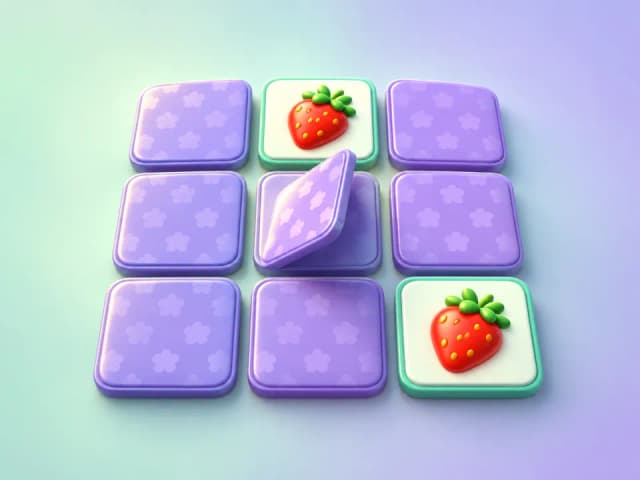
1. The Classic Grid Match (Static Picture Memory)
This is the foundational "Concentration" game. You are presented with a grid of face-down cards and must flip them over two at a time to find pairs.
- How it helps: It builds the "near transfer" skill of associating a visual image with a specific coordinate on a grid.
- Expert Advice: As soon as you can clear a 4x4 grid without effort, move to a 6x6 or 8x8. Staying in the "Flow" zone requires constant escalation of difficulty.
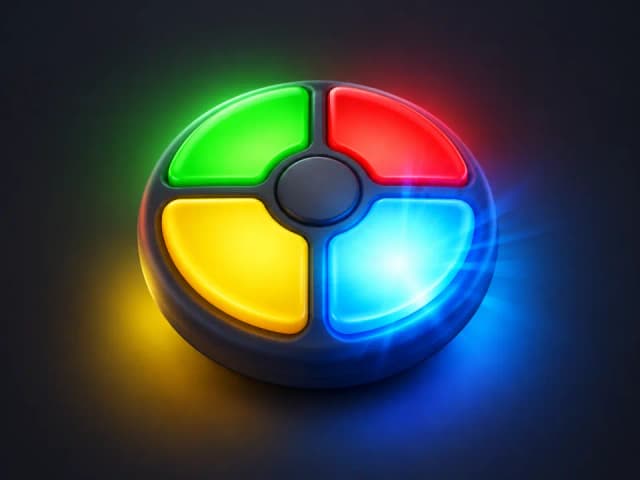
2. Sequence Mimicry (Temporal Visual Memory)
Games like Simon Says require you to remember a growing sequence of colors and sounds.
- How it helps: This moves beyond static images and trains the brain to handle "working memory"—the ability to hold and update information in real-time.
- 2025 Trend: Modern versions of these games now use biofeedback to speed up the sequence if your heart rate remains calm, pushing your cognitive limits.
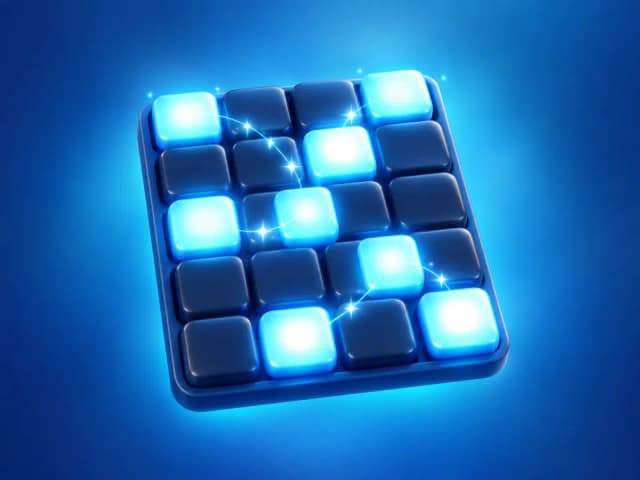
3. Spatial Navigation Puzzles
In these games, you might be shown a map or a room layout for 30 seconds and then asked to place objects back in their original positions.
- How it helps: This simulates real-life tasks like remembering where you parked or finding your way through a building.
- AR Integration: By 2026, many of these exercises are moving into Augmented Reality (AR), where players must remember where virtual objects are hidden in their actual living room.
| Game Type | Primary Skill | Recommended Duration |
|---|---|---|
| Grid Match | Static Recall | 10-15 Minutes |
| Sequence Mimicry | Working Memory | 10-15 Minutes |
| Spatial Puzzles | Visuospatial Mapping | 20 Minutes |
Best Practices for Effective Brain Training
As a Mathematical Logic Instructor, I often see students try to "brute force" their way through memory tasks. This is rarely effective. Instead, use these expert-recommended strategies.
Prioritize Novelty over Mastery
One of the biggest mistakes people make is playing the same game until they become an expert. Once you master a game, your brain enters "autopilot" mode. At this point, the cognitive benefit drops significantly. Neurologists recommend switching to a new game as soon as the current one feels easy.
Use the "Memory Palace" Technique
Instead of trying to memorize a picture in isolation, associate it with a familiar physical location. If you are trying to remember a sequence of items, "place" them mentally along the hallway of your childhood home. This uses your brain's powerful spatial navigation hardware to support your visual recall.
Multi-Sensory Integration
Don't just look; speak. When playing picture memory games, say the name of the object out loud. If you see a card with a blue umbrella, say "Blue Umbrella." This engages both the visual and auditory pathways, creating a stronger "memory trace" in the brain.
Recent Trends (2025–2026)
The world of Memory Games: Train Your Brain is evolving rapidly thanks to AI and wearable technology.
AI-Driven Personalization
Modern apps now use machine learning to adjust game difficulty in real-time. If the software detects you are struggling, it might slightly increase the contrast or slow down the sequence to keep you from disengaging. Conversely, if you are performing too well, it will introduce "distractor" images to increase the cognitive load.
Brain Clocks and Neuroimaging
New diagnostic tools are allowing users to track a "Brain Age" score. By analyzing your performance across various Memory Games for Seniors or adults, these tools provide a metric of how your cognitive health is trending over months or years.
Biofeedback and Stress Management
Integration with wearables like the Apple Watch allows games to track your stress levels. If your stress spikes, the game may transition to a "calm" visual mode. This prevents cognitive burnout and ensures that your training remains productive rather than frustrating.
Advertisement
Common Mistakes to Avoid
Even with the best intentions, many people fall into traps that hinder their progress.
- The "Magic Pill" Myth: Many believe that playing an app for 10 minutes a day is enough. Experts emphasize that physical exercise and sleep are actually more impactful on long-term brain health than any game. Without 7-8 hours of sleep, your brain cannot "consolidate" the memories you practiced during the day.
- The 10% Myth: People still mistakenly believe we only use 10% of our brain and that games "unlock" the rest. Brain scans show we use nearly 100% of our brain at various times. Games don't "unlock" hidden areas; they strengthen the connections (synapses) between existing ones.
- Relying on "Cheatable" Games: Simple puzzles that don't change or that allow you to guess by process of elimination offer little benefit. High-benefit games must require real-time adaptation and active processing.
- Discovery vs. Instruction: Assuming you will just "get better" by playing is a mistake. Research suggests that explicit instruction—learning specific visualization techniques like the Feynman Technique—is far more effective than trial-and-error play alone.
Frequently Asked Questions
Can visual memory actually be improved in adults?
Yes. While children's brains are more plastic, research confirms that neuroplasticity remains high into adulthood. By using structured gaming and mnemonic techniques, adults can significantly sharpen their recall and even delay the onset of age-related cognitive decline.
What are the signs of a visual memory deficit?
Common indicators include difficulty recognizing faces (prosopagnosia), struggling to copy notes from a screen to a notebook, poor spelling of words that don't follow phonetic rules, and trouble remembering the "shape" or pattern of phone numbers.
How long should I play memory games each day?
Experts suggest 30 to 60 minutes of structured, moderate play. Like physical exercise, "overtraining" your brain can lead to diminishing returns and mental fatigue. Consistency over weeks is more important than the duration of a single session.
What is the best time of day to train?
Most cognitive researchers suggest training when you are most alert, typically in the morning after a full night's sleep. However, the most important factor is consistency.
Conclusion
Visual memory games are a powerful tool in the modern quest for cognitive longevity. By moving beyond simple picture matching and embracing complex, novel challenges, you can effectively "reverse" your brain's functional age and improve your daily performance. Remember to balance your gaming with healthy sleep habits, use techniques like the Memory Palace, and always seek out new challenges to keep your brain in the "Flow" zone.
The rapid growth of the brain training market—expected to reach over $115 billion by 2034—underscores how vital these tools have become. Whether you are using AI-driven apps or classic puzzles, the goal remains the same: a sharper, faster, and more resilient mind.
Ready to Start?
Challenge your mind with our curated collection of memory exercises.
Put it into practice
Keep reading
Memory Games
Memory Games: Train Your Brain - The Ultimate Cognitive Exercises Guide
Discover the ultimate memory games guide to boost cognitive health. Learn how brain training memory exercises can make your brain feel 10 years younger.
Jun 20, 2026 22 min

Memory Games
Location Memory Games: The Science of Spatial Memory Training
Explore how location memory games and spatial memory training can boost math skills, increase hippocampal volume, and improve cognitive health across all ages.
Jul 23, 2026 12 min
Memory Games
The Ultimate Guide to Free Memory Games Online (2025–2026)
Discover the best free memory games online for 2025. Boost cognitive health with expert-reviewed sites, AI trends, and senior-friendly brain training tools.
Oct 6, 2026 12 min
Advertisement