Memory Games: Train Your Brain - The Ultimate Cognitive Exercises Guide
Discover the ultimate memory games guide to boost cognitive health. Learn how brain training memory exercises can make your brain feel 10 years younger.
By Free To Play Puzzles Editorial Team 22 min read
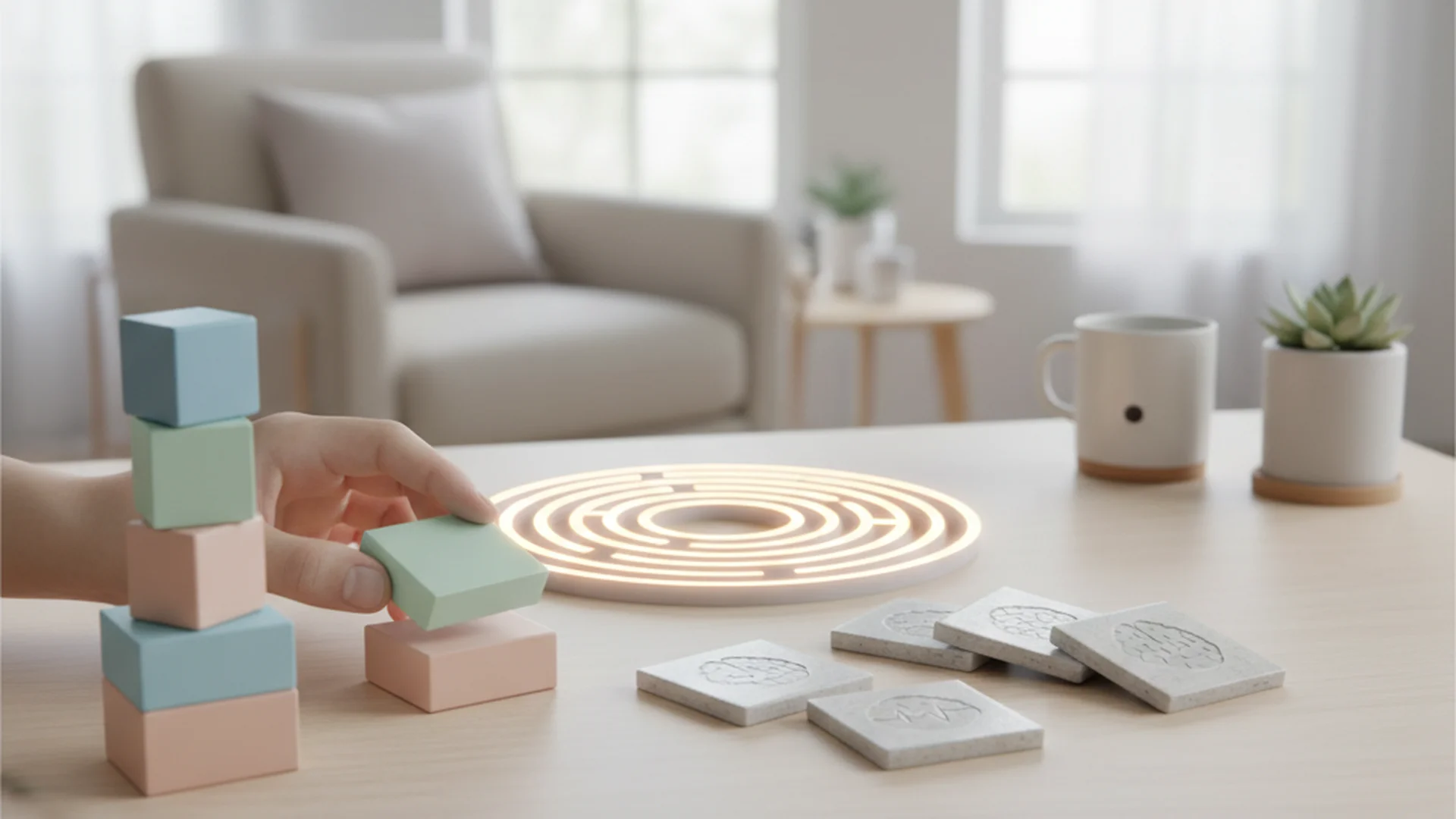
What if 30 minutes of gaming could make your brain feel 10 years younger? New clinical trials from 2025 suggest this isn't science fiction—it's neuroplasticity in action. In an era where digital distractions are at an all-time high, the demand for a comprehensive memory games guide has never been more urgent. Whether you are a student looking to ace exams, a professional aiming for peak productivity, or a senior focused on longevity, understanding how to leverage brain training memory exercises is the key to unlocking your cognitive potential.
Researchers have spent decades studying the "plastic" nature of the human brain. We used to believe that the brain was a static organ that only declined with age. We now know that the brain is more like a muscle; with the right stimuli, it can reorganize itself, create new neural pathways, and improve its processing speed well into late adulthood.
The Science of Brain Training: Why Memory Games Work
To understand why memory games are effective, we must first look at the biological mechanisms of the brain. Memory isn't a single "box" where information is stored; it is a complex web of connections involving the hippocampus, the prefrontal cortex, and the neurotransmitters that facilitate communication between neurons.
The landmark INHANCE clinical trial, published in JMIR Serious Games in October 2025, provided groundbreaking evidence for the efficacy of digital cognitive exercises. The study found that older adults who engaged in targeted brain exercises for just 30 minutes a day over a 10-week period restored their "cholinergic health." This refers to the chemical systems responsible for memory and attention. The participants' brain function reached levels typically seen in individuals a full decade younger.
Neuroplasticity and BDNF
When you engage in a Memory Match game or a complex logic puzzle, you aren't just passing time. You are stimulating the production of Brain-Derived Neurotrophic Factor (BDNF). Think of BDNF as "miracle-grow" for your brain. It supports the survival of existing neurons and encourages the growth of new ones.
Types of Memory Games and Their Benefits
Not all games are created equal. A truly effective memory games guide must distinguish between different types of cognitive loads. To maximize your results, you should incorporate a variety of challenges that target different regions of the brain.
1. Working Memory Games
Working memory is your "mental scratchpad." It’s what you use to remember a phone number while looking for a pen.
- Examples: Simon Says, N-Back tasks, and Word Scramble.
- Benefit: Improves focus and the ability to multi-task without losing information.
2. Visual-Spatial Memory Games
These games require you to remember the location of objects or the layout of a grid.
- Examples: Memory Match Games for Brain Training and Sliding Puzzle.
- Benefit: Enhances navigation skills and helps you remember where you placed physical objects like keys or glasses.
3. Logic and Strategy Games
Strategy games require executive function, which involves planning, reasoning, and error correction.
- Examples: Sudoku, 2048, and Minesweeper.
- Benefit: A 2024 study in NeuroImage showed that strategy gamers have significantly higher brain connectivity in regions responsible for visual attention.
| Game Category | Primary Brain Region | Key Benefit |
|---|---|---|
| Pattern Match | Visual Cortex | Spatial Recall |
| Logic Puzzles | Prefrontal Cortex | Problem Solving |
| Word Games | Temporal Lobe | Verbal Fluency |
| Strategy | Frontal/Parietal | Executive Function |
Advertisement
Best Practices for Effective Brain Training
To see real results from Brain Training, you cannot simply play the same easy crossword every morning. You must follow scientifically-backed best practices to ensure your brain continues to adapt.
Prioritize Novelty
The brain is an efficiency machine. Once it learns how to solve a specific type of puzzle, it begins to "automate" the process, requiring less energy and fewer new connections. To keep growing, you must switch games frequently. If you have mastered the 2048 Strategy Guide, it’s time to move on to Advanced Sudoku Techniques.
The "Whole-Body" Approach
Memory training does not exist in a vacuum. To maximize the impact of your gaming sessions, you must support your biological hardware:
- Aerobic Exercise: 150 minutes of moderate activity per week increases the size of the hippocampus.
- Quality Sleep: Sleep is when "memory consolidation" happens. Without 7–9 hours of rest, the neural connections you built during the day will not stick.
- Social Interaction: Playing games with others (like Connect Four) provides a social-emotional boost that solo apps cannot replicate.
Advanced Mnemonic Systems: The Gold Standard
While digital games are excellent for maintenance, ancient mnemonic systems remain the "gold standard" for long-term retention. These techniques have been used for centuries to memorize vast amounts of information.
The Memory Palace (Method of Loci)
This involves visualizing a familiar place (like your home) and "placing" pieces of information in specific rooms. When you need to recall the information, you mentally "walk" through the house and pick up the items.
Spaced Repetition
This is the practice of reviewing information at increasing intervals. Instead of "cramming," you review the data after 1 day, then 3 days, then a week, and then a month. This moves information from short-term "working" memory into long-term storage.
Recent Trends in Brain Training (2025–2026)
The field of cognitive health is evolving rapidly. We are moving away from "one-size-fits-all" apps toward personalized, AI-driven experiences.
AI-Driven Personalization
In 2025, researchers at Northeastern University pioneered apps that use machine learning to predict a user's fatigue levels. If the algorithm detects that you are making "tired" mistakes, it adjusts the difficulty or suggests a break to prevent cognitive burnout.
Cognitive Therapeutics
"Brain training" is now being used as a medical intervention. A June 2025 trial showcased a game called PainWaive, which helps patients manage chronic nerve pain by training them to regulate their own brainwaves through focused attention tasks.
Action Gaming for Learning Speed
Perhaps the most surprising trend is the rise of "action gaming" for brain health. New research suggests that fast-paced games (like Asteroids) improve the brain's "probabilistic inference"—the ability to make quick decisions based on limited information. This improves how fast you can learn any new skill.
Advertisement
Real-World Examples of Memory Training Success
Example 1: The High-Stakes Professional
A 45-year-old executive noticed she was forgetting names during meetings. By spending 20 minutes each morning on Face Name Memory Games and practicing the "Chunking" method, she improved her recall by 60% within three months.
Example 2: The Proactive Senior
A 70-year-old retired teacher began using Memory Games for Seniors to combat a family history of cognitive decline. By alternating between Crosswords and Sudoku, she reported feeling more "mentally sharp" and was able to learn a new language more effectively.
Example 3: The Student
A university student struggling with biology terms utilized Auditory Memory Games to improve his lecture retention. He coupled this with "Active Recall" techniques, moving from a C-average to the Dean's List.
Common Mistakes to Avoid
Even with the best memory games guide, many people fail to see results because of a few common misconceptions.
- The Transfer Fallacy: This is the belief that getting a high score in a specific game will automatically make you better at unrelated tasks. To avoid this, you must choose games that mimic real-world challenges.
- Ignoring the "Basics": No amount of brain training can overcome a poor diet or a total lack of sleep. Think of the games as the software and your health as the hardware.
- Digital Isolation: While apps are convenient, the most protected brains are those that stay socially active. Invite a friend to play Hangman or Word Ladder to add a social layer to your training.
- The 10% Myth: Stop believing you only use 10% of your brain. You use 100%. Memory games aren't about "unlocking" hidden parts; they are about making the parts you use every day more efficient.
Frequently Asked Questions
Do brain games actually prevent dementia?
While they do not "cure" or "stop" Alzheimer's, research from 2025 suggests they can build "cognitive reserve." This acts as a buffer, allowing the brain to function normally for longer even if physical pathology is present. For more on this, read about Brain Health and Puzzles: Science of Cognitive Gaming.
Is a paid app better than a free crossword?
Not necessarily. Paid apps often offer "adaptive difficulty," which is excellent for neuroplasticity. However, traditional crosswords are often more effective for those already experiencing mild cognitive impairment because they require deep linguistic retrieval. If you want to improve your crossword skills, check out these 10 Crossword Solving Strategies.
How many minutes a day do I need to train?
Consistency is the most important factor. Most experts recommend 20–30 minutes, 3–5 times per week. Daily "micro-sessions" are much better than one four-hour session on the weekend.
Can video games like Wordle or Sudoku make me smarter?
They improve specific skills—like vocabulary or logical deduction—but they don't necessarily raise your general IQ. Think of them as "mental maintenance" rather than a "brain upgrade."
What is the best game for a beginner?
Memory Match is an excellent starting point because it is intuitive and provides immediate feedback on your visual-spatial accuracy.
Conclusion
Your brain is the most complex machine in the universe, and like any machine, it requires regular maintenance and upgrades. By following this memory games guide and incorporating a mix of logic, strategy, and pattern-recognition exercises, you can significantly improve your mental clarity and long-term cognitive health. Remember: the goal isn't just to get a high score on an app; the goal is to build a brain that is resilient, sharp, and ready for whatever life throws at it.
Ready to Start?
Begin your brain training journey with our free collection of games.
Put it into practice
Keep reading
Memory Games
The Ultimate Guide to Free Memory Games Online (2025–2026)
Discover the best free memory games online for 2025. Boost cognitive health with expert-reviewed sites, AI trends, and senior-friendly brain training tools.
Oct 6, 2026 12 min
Therapy
The Ultimate Guide to Cognitive Rehabilitation Puzzles and Brain Injury Games
Discover how cognitive rehabilitation puzzles and brain injury games use neuroplasticity to accelerate recovery after TBI or stroke. Expert tips for 2025.
Sep 21, 2026 12 min
Memory Games
Memory Games by Age: Which Brain Training Works Best for Your Life Stage?
Discover the science-backed guide to memory games by age. From toddler development to senior cognitive health, learn how to train your brain effectively in 2025.
Jan 16, 2026 12 min
Advertisement