10 Crossword Solving Strategies the Pros Use
Master the art of the grid with these 10 professional crossword solving strategies. Learn how elite solvers decode clues and finish puzzles in record time.
By Free To Play Puzzles Editorial Team 12 min read
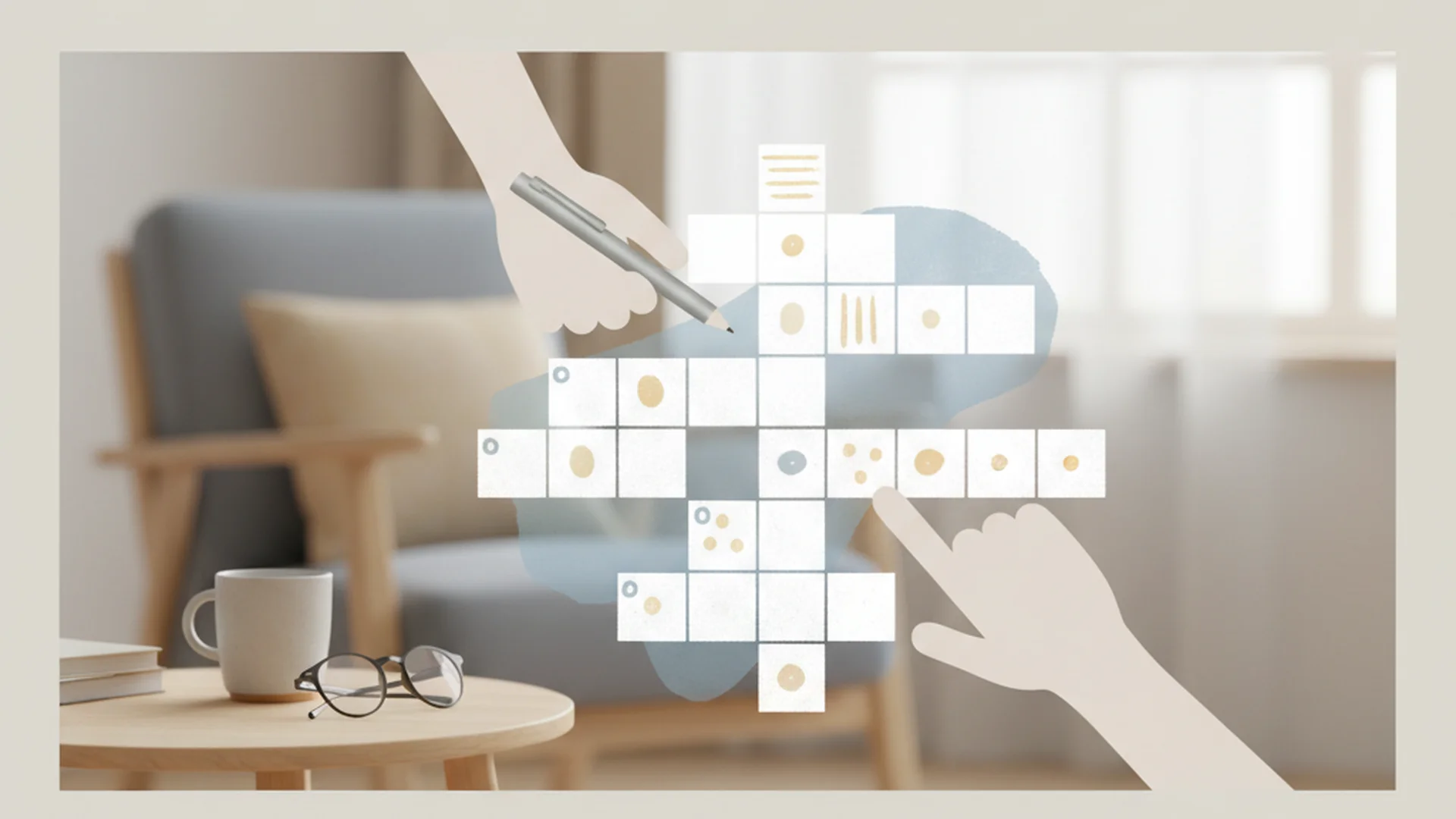
For many, the morning crossword is a quiet ritual—a cup of coffee, a sharpened pencil, and a slow dance with the clues. But for those of us in the competitive world of cruciverbalism, the grid is a battlefield where every second counts. Whether you are looking to shave minutes off your personal best or simply want to stop getting stuck on a Thursday rebus, understanding professional crossword solving strategies is the key to evolving from a casual solver to a grid master.
Looking at a grid the way a constructor does reveals a lot: the traps constructors set for you and the shortcuts they leave behind. The U.S. puzzle market is booming, projected to reach $1.01 billion in 2025, and with that growth comes a new era of sophisticated wordplay. If you want to keep up with the likes of Paolo Pasco or Dan Feyer, you need more than just a large vocabulary; you need a systematic approach to decoding the constructor’s mind.
The Competitive Landscape of 2025
Crossword solving has transformed from a solitary hobby into a high-speed esport. At the 2025 American Crossword Puzzle Tournament (ACPT), Paolo Pasco stunned the community by completing a 15x15 grid in under four minutes. While you might not be aiming for a trophy in Philadelphia, these elite techniques are designed to build "grid momentum"—the psychological state where the answers flow as fast as you can write them.
| Day of the Week | Difficulty Level | Typical Goal Time (Pro) | Focus Strategy |
|---|---|---|---|
| Monday | Easy | 2–4 minutes | Pure Speed |
| Wednesday | Medium | 5–8 minutes | Theme Decoding |
| Friday/Saturday | Hard | 10–15 minutes | Misdirection |
| Sunday | Medium-Hard | 12–18 minutes | Persistence |
10 Professional Crossword Solving Strategies
1. Prioritize "FITB" (Fill-in-the-Blank)
The easiest way to break into a cold grid is to find the "Fill-in-the-Blank" (FITB) clues. These are the "lowest hanging fruit" because they rely on recognition rather than lateral thinking.
Pro Technique: Scan the clue list specifically for blanks. Clues like "___ of the Tiger" (EYE) or "Star Wars: A New ___" (HOPE) give you immediate, confirmed letters. These letters serve as anchors for more difficult intersecting clues.
2. Match Part of Speech and Tense
This is a non-negotiable rule of crossword construction: the answer must always match the clue's grammar. If a clue is a plural noun, the answer is a plural noun. If it is a past-tense verb, the answer ends in "-ED" (usually).
- Example: If the clue is "Runs quickly," the answer might be DASHES or SPRINTS.
- Example: If the clue is "Ran quickly," the answer must be DASHED or SPRINTED.
3. Master "Crosswordese"
"Crosswordese" refers to those short, vowel-heavy words that rarely appear in daily conversation but are essential for constructors to bridge difficult sections of a grid. If you want to use pro crossword techniques, you must memorize these staples.
Common Crosswordese includes:
- ERIE: The go-to Great Lake.
- OREO: The world's most "crossworded" cookie.
- ALOE: The standard four-letter succulent.
- ETUI: A small case for needles (a classic "old-school" word).
- OLIO: A miscellaneous collection or medley.
By internalizing these, you can fill in 3- and 4-letter gaps instantly, allowing you to focus your brainpower on the long, themed entries. To help expand this specific skill, check out our guide on Building Crossword Vocabulary.
4. The "Question Mark" Alert
In the world of professional solving, a question mark at the end of a clue is a siren. It indicates that the literal meaning is a lie and wordplay is afoot.
- Standard Clue: "Mental block?" -> This isn't asking for a psychological condition; it’s a RUBIKS CUBE.
- Standard Clue: "Flower of London?" -> This isn't a rose; it’s the THAMES (something that "flows").
When you see a question mark, stop thinking about definitions and start thinking about puns, homophones, and double-entendres.
5. Build "Grid Momentum"
Rookie solvers often try to solve the puzzle in numerical order, starting at 1-Across and grinding through. Pros never do this. Instead, they "hopscotch" through the grid.
Once you get an answer, stay in that area. Work the intersections of that word until you have a "bridgehead"—a solid block of solved squares—then expand outward. This is far more efficient than jumping to a completely blank corner where you have no starting letters.
6. Seek Out High-Value Letters
In 2025, constructors are increasingly using "scrabbly" letters (J, Q, X, and Z) to add flair to their grids. These are often easier to solve because there are fewer words that contain them. If you suspect a word might contain a "Z" (like in the clue "Shun," which could be AZURE or LAZY depending on the context), check the crossers immediately. If you find a "Z," it often unlocks the entire corner because the intersecting word is likely something like "JAZZ" or "ZIGZAG."
7. Think in Pencil (The Guess-and-Check)
Elite solvers aren't necessarily smarter; they are just faster at being wrong. If you have a strong hunch that an answer is "AMUSE," write it in. Then, look at the downward intersections. If the crossers seem impossible (e.g., creating a word that starts with "ZJ"), erase it immediately. This "guess-and-check" method prevents you from staring at a blank space for ten minutes.
8. Directional Scanning
Before diving deep into one corner, do a "rapid-fire" scan. Read every single Across clue and fill in only what you know 100%. Then, do the same for all Downs. This "first pass" builds a mental map of the puzzle. Often, your subconscious will work on a clue from the first pass while you are actively solving something else, leading to a sudden realization minutes later.
9. Leverage the Theme
Most mid-week and Sunday puzzles have a theme. Identifying the theme is the single most important of all crossword tips for Wednesday through Sunday. The theme usually involves the longest entries in the puzzle.
In 2025, we are seeing more "rebus" puzzles, where multiple letters (like "CAT" or "HEART") fit into a single square. If you find a word that seems three letters too long for the space provided, you’ve likely found a rebus. Once you know the gimmick, the other themed long-form clues become much easier to predict.
10. The "Fresh Eyes" Reset
If you find yourself staring at the same clue for three minutes, you are likely stuck in a cognitive loop. You have assigned a meaning to a word that is incorrect. Pros use the "Fresh Eyes" technique: they walk away. Whether it’s a 5-minute coffee break or sleeping on a Saturday puzzle, your brain continues to process the wordplay in the background. When you return, the "aha!" moment often arrives within seconds.
Advertisement
Recent Trends: The Future of Crosswords (2025–2026)
The world of crosswords is evolving rapidly. One of the biggest shifts is the AI Controversy. Late in 2025, tools from Amuse Labs began using AI to suggest clues. While some solvers enjoy the precision, purists argue that AI lacks the "human soul"—the specific, quirky wordplay that a constructor like Robyn Weintraub provides.
Another major trend is the rise of Puzzmo. This platform has revolutionized the "social solving" aspect, allowing users to compare their "solve paths" with friends in real-time. This has made the hobby much more interactive and appealing to younger generations who grew up on Wordle.
Furthermore, the 3D Crossword World Championship is gaining traction. These puzzles require spatial reasoning, as words might wrap around a cube or intersect in three dimensions. While these require a different set of crossword solving strategies, the core principles of grammar and "crosswordese" remain the same.
Common Mistakes to Avoid
Even seasoned solvers fall into traps. Here are the most common pitfalls:
- Fixating on One Meaning: In a crossword, "Lead" can be a metal (PB), a verb (GUIDE), or the starring role in a play (HERO). If a word isn't fitting, change its definition in your mind.
- Ignoring the "Abbr." Tag: If a clue ends with "Abbr." or contains an abbreviation (like "Hwy." for Highway), the answer must be an abbreviation (RTE).
- The "S" Trap: Many people see a plural clue and immediately put an "S" in the last box. However, many constructors use words like "ALUMNI" or "DATA" to thwart this. Always check the crosser before committing to that final "S."
- Typo Troubles: In digital apps, a single typo can stop the "Solve" animation from triggering. If you think you're done but the timer is still running, check your vowels first. Most typos happen there.
Best Practices for Mastery
If you are serious about improving, you should treat crossword solving like any other skill.
- Solve Daily: Consistency is better than intensity. Solving seven Mondays in a row will teach you more about basic structure than struggling through one Saturday.
- Study the "Voice": Every constructor has a style. Some love puns; others love trivia. Knowing you are solving a Brendan Emmett Quigley puzzle tells you to expect contemporary indie music and edgy slang.
- Don't Fear "Cheating": If you are truly stuck on a piece of trivia (e.g., "The capital of Uzbekistan"), look it up. Pros call this "researching." By looking it up, you are adding that fact to your mental corpus, ensuring you won't get stuck on it next time.
- Compare American vs. British: If you find standard puzzles too easy, try a cryptic crossword. You can learn the fundamental differences in our guide on American vs British Crosswords.
Advertisement
Frequently Asked Questions
Is it cheating to use a dictionary or search engine?
Professional solvers generally agree that looking up a specific fact you don't know is part of the learning process. However, using a "crossword solver" app that gives you the answer based on the grid pattern is considered a way to "finish" but not necessarily "solve" the puzzle.
How do I get faster at solving?
The secret to speed is reducing the "stare time." Pros spend less time thinking and more time filling. This comes from mastering "crosswordese" so that the short words become automatic, leaving your brain free to tackle the complex clues.
What is a "rebus" in a crossword?
A rebus is a puzzle where multiple letters, a symbol, or even a picture are squeezed into a single square. These usually appear on Thursdays in the NYT or in specialized Sunday puzzles.
Why do some clues have a city or country in parentheses?
If a clue says "Friend (Fr.)," it indicates that the answer is the word for "friend" in French (AMI). Always look for these parenthetical indicators as they tell you the language or the specific region the answer belongs to.
Are crosswords good for your brain?
Yes! Studies consistently show that word puzzles can improve cognitive flexibility and may help delay the onset of memory-related decline. For more on this, see our article on Puzzle Benefits.
Conclusion: Entering the Grid
Mastering crossword solving strategies isn't about being a walking encyclopedia; it's about learning the language of the constructor. By matching tenses, hunting for FITBs, and recognizing the "crosswordese" that holds the grid together, you can tackle even the most daunting Saturday puzzles with confidence.
Remember, the goal is to enjoy the process of discovery. Whether you are solving on a high-tech platform like Puzzmo or a traditional newsprint page, every square you fill is a small victory for your logic and vocabulary.
Ready to Test Your Skills?
Put these strategies to use right now with our latest puzzles.
Put it into practice
Keep reading
Crosswords
USA Today Crossword Tips: Master the Grid Like a Pro
Master the USA Today crossword with expert tips, 2025-2026 trends, and strategies for solving everything from Daily Quick Cross to Freestyle Thursdays.
Apr 28, 2025 12 min
Crosswords
Cryptic Crosswords: A Beginner’s Introduction
Unlock the mystery of cryptic crosswords for beginners. Learn the essential logic, clue types, and expert strategies to solve even the toughest puzzles.
Sep 4, 2026 12 min
Crosswords
Mastering the LA Times Crossword: Expert Tips and Strategies
Unlock the secrets of the Los Angeles Times crossword with expert tips from a cognitive neuroscientist. Learn strategies for every difficulty level.
Mar 2, 2026 12 min
Advertisement