




About Sliding Puzzle
This free online sliding puzzle is the classic 15 puzzle: fifteen numbered tiles in a 4×4 frame with one empty space. Slide the tiles around, one gap at a time, until they read 1 to 15 in order. It sounds simple, but every move shuffles something else out of place, so you have to plan a few steps ahead.
Pick the 3×3 board (the "8 puzzle") for a quick warm-up, the classic 4×4, or step up to 5×5 and 6×6 for a real marathon. Switch to Picture mode to slide pieces of a photo — a fox in the snow, a coral reef, hot-air balloons and more — instead of numbers.
Every shuffle is guaranteed to be solvable, your progress is saved if you leave the page, and your best move count on each board is tracked. The 3×3, 4×4 and 5×5 boards have global leaderboards ranked by fewest moves.
How to play Sliding Puzzle
- 1
Find the gap
One square on the board is empty. Only tiles in the same row or column as the gap can move. Tiles that can move light up when you hover over them.
- 2
Slide tiles into it
Tap a tile to slide it into the gap. If the tile is further along the row or column, every tile in between slides too, just like a real wooden puzzle. You can also swipe, drag, or use the arrow keys.
- 3
Put the numbers in order
The goal is 1, 2, 3… reading left to right, row by row, with the gap finishing in the bottom-right corner. Turn on Highlight to mark every tile that is already in its home square.
- 4
Beat your move count
The counter adds one for every tile that moves. When the last tile clicks into place the missing piece pops in (in Picture mode the tiles merge into the finished image) and your moves and time are recorded. On 3×3 we also show the fewest moves that were possible.
Controls
| Input | Action |
|---|---|
| Click / tap a tile | Slide it (and any tiles between it and the gap) into the gap |
| Swipe or drag | Push a tile into the gap in that direction |
| Arrow keys / WASD | Move the tile next to the gap in the arrow's direction |
| P | Peek at the solved puzzle |
| Enter | Start a new puzzle after solving |
Advertisement
Sliding Puzzle tips and strategy
Solve the top row first
Work row by row from the top. Once the first row is complete, never disturb it again — treat the rest of the board as a smaller puzzle.
Place the last two tiles of a row together
The final two tiles of a row are the tricky part. Park the last tile directly below its home, bring the second-to-last into the corner, then rotate the pair into place in one smooth move.
Finish the last two rows column by column
When only two rows remain, stop working in rows. Solve them one column at a time from the left, placing the top and bottom tile of each column as a pair.
Think in cycles
Moving the gap around a 2×2 square rotates three tiles. Almost every advanced technique is built from these small loops, so practice cycling a tile around without breaking what you have already solved.
Use multi-tile slides
Tapping a tile far from the gap moves the whole line at once. It costs the same number of moves as sliding each tile separately, but it's much faster when you're racing the clock.
Picture mode: start with the edges
In Picture mode, look for tiles with strong lines — horizons, rooftops or the frame of the image. Keep the numbers on (the # button) while you learn, then switch them off for a real challenge.
Peek, don't guess
If you lose track of where a picture piece belongs, press Peek (or P) to see the finished image for a moment. It doesn't cost anything.
A short history of the 15 puzzle
The 15 puzzle appeared in the United States in the 1870s and is usually credited to Noyes Palmer Chapman, a postmaster in Canastota, New York. By 1880 it had become a full-blown craze across America and Europe, played in offices, trains and parlors.
The famous puzzle maker Sam Loyd later claimed to have invented it and popularized a version with the 14 and 15 tiles swapped, offering a prize to anyone who could solve it. Nobody could: mathematicians had already shown that exactly half of all possible arrangements can never be solved by sliding. Our shuffles only ever produce arrangements from the solvable half, so every puzzle you get can be finished.
How scoring and the leaderboards work
Your score is the number of tiles you moved — fewer is better. Sliding three tiles with one tap counts as three moves, which keeps results fair no matter how you play. Time is recorded too and shown in your results.
The 3×3, 4×4 and 5×5 boards each have their own leaderboard. The 6×6 board is a practice board: it still saves your personal best, but it isn't ranked. Every 3×3 position can be solved in 31 moves or fewer, and computer searches have shown that no 4×4 position needs more than 80 — so beating a few hundred moves on the classic board is a great result.
Board sizes and picture mode
- 3×3 (8 puzzle): fast and friendly. Great for learning, and you'll see the fewest possible moves when you finish.
- 4×4 (15 puzzle): the classic. Expect a few minutes of thinking.
- 5×5 (24 puzzle): noticeably tougher — solve the top two rows and left two columns first.
- 6×6 (35 puzzle): a long, relaxing grind for dedicated sliders.
Picture mode works on every size. Choose from twelve illustrated scenes or tap Surprise me. If you enjoy rebuilding images, try our Jigsaw Puzzles next.
More puzzles to try
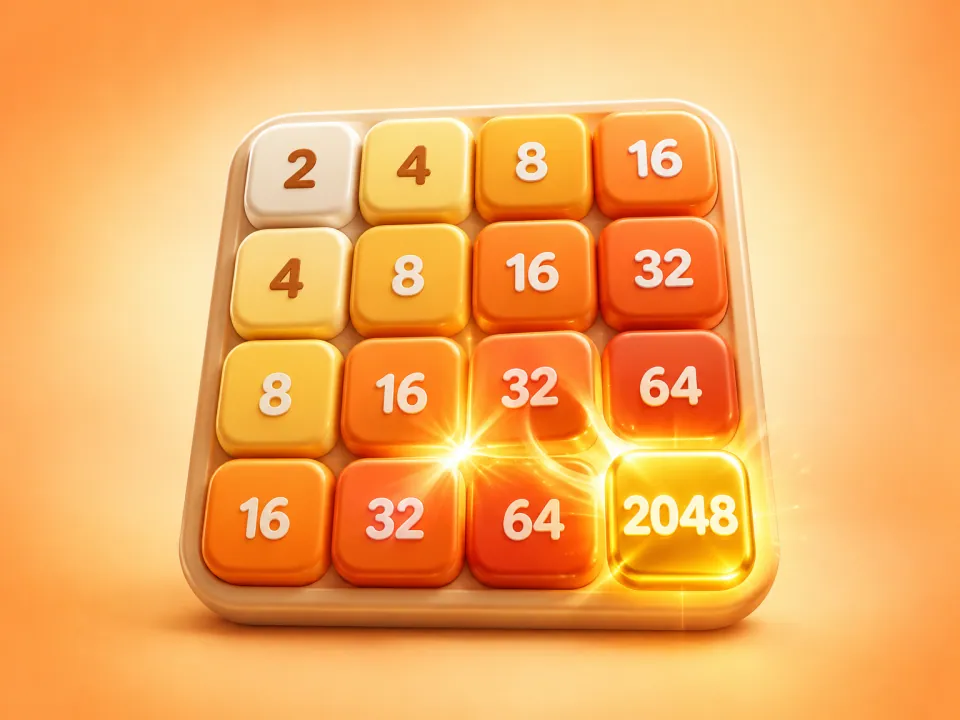
Sliding puzzles train planning and spatial reasoning. For more of the same, try 2048, another sliding-tile classic, arrange shapes in Tangram, or clear a minefield with logic in Minesweeper. You'll find the full collection in our puzzle games.
Frequently asked questions
Is every sliding puzzle solvable?
No — exactly half of all possible tile arrangements can't be solved by sliding. Our game only generates arrangements from the solvable half, so every shuffle you get can be completed.
What is the fastest way to solve a 15 puzzle?
Most people solve it row by row: finish the top row, then the second row, then solve the last two rows one column at a time. Placing the last two tiles of each row as a pair is the key trick.
How are moves counted?
Every tile that moves counts as one move. If you tap a tile three squares from the gap, three tiles slide and three moves are added. The leaderboards rank the fewest moves.
What is the minimum number of moves to solve a 15 puzzle?
It depends on the shuffle. Computer searches have shown that no 4×4 position needs more than 80 moves, and no 3×3 position needs more than 31. On 3×3 our results screen tells you the fewest moves that were possible for your puzzle.
Can I play with a picture instead of numbers?
Yes. Tap Picture under the board and pick one of twelve images. You can keep small numbers on the tiles as a guide or hide them with the # button.
Does the game save my progress?
Yes. Each board size keeps its own game in progress on your device, including your move count and time, so you can close the page and carry on later.
Is the sliding puzzle free?
Completely free. There's nothing to download and no account needed — it works in any modern browser on phones, tablets and computers.