Therapeutic Puzzles: Clinical Applications and the Science of Brain Games
Explore the clinical benefits of therapeutic puzzles and brain games. Learn how structured puzzling boosts acetylcholine, improves IQ, and aids occupational therapy.
By Free To Play Puzzles Editorial Team 12 min read
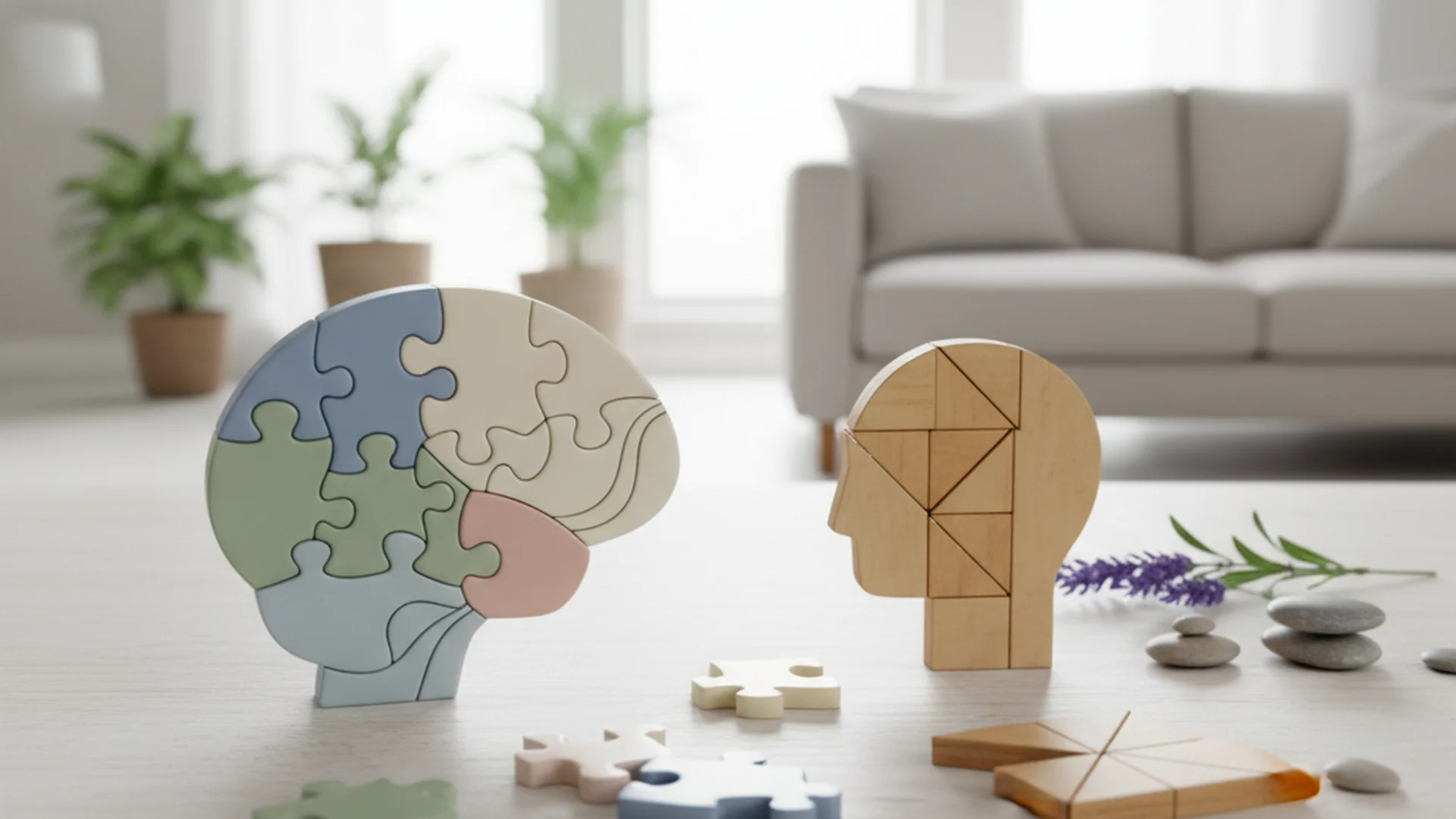
In the modern clinical landscape, the image of a patient in a sterile environment is being replaced by something far more engaging: the sight of an individual deeply immersed in a complex jigsaw puzzle or a strategically demanding digital game. The perception of "play" has shifted from a leisure activity to a rigorous clinical intervention. Today, therapeutic puzzles are being prescribed with the same precision as pharmaceuticals, serving as a primary tool for cognitive rehabilitation, mental health management, and physical recovery.
The transition from 2025 into 2026 has marked a "golden age" for cognitive health research. We are no longer guessing if puzzles help the brain; we are measuring exactly how they rewire it. Whether it is a wooden jigsaw on a hospital tray or an AI-driven app on a tablet, these clinical brain games provide the targeted stimulation necessary to maintain neuroplasticity throughout the human lifespan.
The Neuroscience of the "Snap": Biochemical Impacts
When you fit a puzzle piece into its correct slot, you aren't just completing a picture; you are triggering a sophisticated biochemical cascade. For years, we understood that puzzles were "good for the brain," but 2025 research from McGill University has provided the molecular proof.
The Acetylcholine Breakthrough
A landmark study conducted in early 2025 followed older adults who engaged in 30 minutes of clinical brain training daily for a 10-week period. The results were staggering: participants showed a 2.3% increase in acetylcholine levels. Acetylcholine is a neurotransmitter critical for memory, attention, and learning. In clinical terms, this training effectively restored the "cholinergic health" of the participants to levels typically seen in individuals 10 years younger.
Fluid Intelligence and IQ Gains
Beyond neurotransmitters, puzzles impact our "fluid intelligence"—the ability to solve new problems and identify patterns without relying on previously acquired knowledge. Research led by Dr. Susanne Jäggi at the University of Michigan indicates that just 25 minutes a day of challenging puzzle games can increase a person’s IQ by approximately 4 points. This improvement stems from the constant demand puzzles place on working memory and executive function.
Digital vs. Tactile: Choosing the Right Modality
A common question is whether a patient should use a digital app or a traditional physical puzzle. The answer depends entirely on the therapeutic goal.
The Case for Traditional Puzzles
Traditional puzzles—such as crosswords, jigsaws, and Sudoku—offer unique sensory benefits. The tactile feedback of handling a wooden piece provides sensory input that digital screens cannot replicate.
- Sustained Focus: Studies suggest that physical puzzles encourage longer periods of "deep work" and sustained attention.
- Sensory Integration: For patients recovering from a stroke, the weight and texture of puzzle pieces provide vital feedback to the nervous system.
The Case for Clinical Brain Games
Digital interventions, often referred to as clinical brain games, excel in their ability to adapt. Programs like those found in our Brain Training section use algorithms to ensure the user is always in the "Goldilocks Zone"—the difficulty level that is challenging enough to promote growth but not so hard that it causes frustration.
- Processing Speed: Digital games are superior for training the brain to process visual information rapidly.
- Data Tracking: For clinicians, digital tools provide real-time metrics on a patient's progress, which is invaluable for adjusting treatment plans.
| Feature | Traditional Puzzles | Digital Brain Games |
|---|---|---|
| Sensory Input | High (Tactile) | Low (Visual/Auditory) |
| Difficulty | Static | Adaptive (AI-Driven) |
| Portability | Low | High |
| Social Interaction | High (In-person) | Moderate (Leaderboards) |
Advertisement
The Occupational Therapy Toolkit: Puzzles in Physical Rehab
Occupational therapists (OTs) have long used puzzles as a cornerstone of rehabilitation. In 2025, the integration of Occupational Therapy Puzzles has become even more sophisticated, focusing on "scaffolding"—a method where the therapist provides just enough support to let the patient succeed.
Developing the Pincer Grasp
One of the most critical physical skills for daily living is the pincer grasp (the coordination of the index finger and thumb). This skill is essential for everything from buttoning a shirt to writing a check. Picking up small puzzle pieces is one of the most effective ways to rehabilitate this fine motor skill.
Bilateral Coordination
Many puzzles require the use of both hands simultaneously—one to hold the frame and the other to place a piece. This encourages bilateral coordination, which is the brain's ability to coordinate both sides of the body. This is a primary goal in Cognitive Rehabilitation Puzzles for patients with traumatic brain injuries.
The "Sensory Scavenging" Technique
To maximize neuroplasticity, OTs recommend a technique called "Sensory Scavenging."
- Take a standard puzzle.
- Hide the pieces in a bucket filled with dry rice, beans, or sand.
- Have the patient "dig" for the pieces. This modification improves tactile discrimination—the ability to identify objects by touch—and adds a layer of motor precision to the cognitive task.
Mental Health: Puzzles for Anxiety and ADHD
The therapeutic benefits of puzzles extend far beyond physical and cognitive recovery; they are powerful tools for emotional regulation.
Inducing the Flow State
Puzzles are unique in their ability to induce a "flow state"—a psychological condition where a person is fully immersed in an activity, losing their sense of time and self-consciousness. This state is chemically similar to meditation. It lowers cortisol (the stress hormone) and provides a "mental break" from the ruminating thoughts associated with anxiety and depression.
ADHD and "Stopping Power"
For individuals with ADHD, puzzles are used to build sustained attention. Unlike fast-paced action games that can overstimulate the brain, Logic Puzzles and Memory Games require deliberate, slow thinking. This helps build "stopping power" against impulsivity, teaching the brain to pause and evaluate options before acting.
Advanced Trends for 2026: AI and VR Integration
As we look toward 2026, the technology behind therapeutic puzzles is evolving rapidly. We are moving away from "one-size-fits-all" puzzles toward hyper-personalized experiences.
Agentic AI Customization
New "agentic AI" tools are being deployed in clinical settings. These AI agents observe a user's solving patterns in real-time. If the AI detects that a user is struggling with spatial rotation but excels at pattern recognition, it will dynamically adjust the puzzle's geometry to target the weakness. This ensures that the user's neuroplastic capacity is always being pushed to its limit.
Somatic Puzzling and Biofeedback
A major trend for 2026 is "Somatic Puzzling." In this modality, digital puzzles are paired with physical sensors that track heart rate and skin conductance. If the user becomes stressed or frustrated, the game might change color or slow down, teaching the patient to maintain a calm physiological state while solving complex problems. This is particularly useful for post-traumatic stress recovery.
VR and "Far Transfer"
Virtual Reality "Escape Room" puzzles are now being used to help patients practice "far transfer" skills. The goal is to take the logic learned in a game and apply it to real-life navigation, such as finding one's way through a grocery store or a new city.
Advertisement
Clinical Efficacy: What the Data Says
A massive meta-analysis of 16 randomized controlled trials (RCTs) published in PubMed in June 2025 confirmed that structured brain training produces statistically significant improvements (P < 0.05) in processing speed and working memory.
Post-Operative Recovery
Clinical trials on ClinicalTrials.gov are currently testing the use of puzzles to prevent Postoperative Cognitive Dysfunction (POCD). This condition often affects elderly patients after major surgeries like hip replacements. By treating puzzles as "mental physical therapy" before and after surgery, researchers hope to reduce the incidence of post-operative confusion and long-term cognitive decline.
The Role in Dementia Care
While puzzles cannot "cure" Alzheimer’s, they are vital for building cognitive reserve. This is the brain's ability to improvise and find alternate ways of getting a job done. Patients with higher cognitive reserve can often function normally for longer, even as the underlying pathology of dementia progresses.
Common Mistakes to Avoid
Patients and caregivers often make the same mistakes, which can negate the therapeutic benefits of puzzles.
1. The "Far Transfer" Fallacy
The biggest misconception is that getting a high score in a specific memory game will automatically make you better at finding your car keys. This is rarely the case. Improvement is usually "near transfer"—you get better at the specific task you are practicing. To see real-life benefits, you must vary the types of puzzles you play. Don't just do crosswords; mix in Sliding Puzzles and Math Puzzles.
2. The 10% Brain Myth
Many brain game marketing campaigns claim to "unlock the other 90% of your brain." As neuroscientists, we know we use 100% of our brain. Puzzles don't "unlock" hidden areas; they strengthen the connections (synapses) between existing active regions.
3. Multitasking Confusion
Many people try to solve puzzles while watching television or listening to podcasts. Experts agree that multitasking is a myth; the brain is simply switching tasks rapidly. This causes cognitive fatigue and prevents the brain from entering the restorative flow state. For therapeutic benefit, puzzles require your undivided attention.
4. Duration over Consistency
A four-hour "puzzle marathon" once a week is far less effective than 15 to 20 minutes of daily engagement. The brain requires consistent, repeated stimulation to trigger long-term potentiation—the process by which synaptic connections are permanently strengthened.
Frequently Asked Questions
Do brain games actually prevent dementia or Alzheimer’s?
While no activity can guarantee the prevention of dementia (due to genetics and other lifestyle factors), 2025 research suggests that regular engagement in Cognitive Benefits activities can significantly slow the progression of symptoms and help build "cognitive reserve," allowing the brain to function better for longer.
Are digital apps better than traditional jigsaw puzzles?
Both have merits. Traditional puzzles are generally better for tactile sensory benefits, fine motor skills, and deep focus. Digital apps are superior for targeted, adaptive skill-building in areas like processing speed and visual-spatial rotation because they can adjust difficulty in real-time.
How long do I need to play to see results?
Consistency is more important than duration. Studies generally recommend a period of 8–12 weeks of daily 20–30 minute sessions to notice measurable cognitive "transfer" to daily tasks and improved mental clarity.
Can puzzles help with ADHD or anxiety?
Yes. For anxiety, puzzles induce a "flow state" that lowers cortisol levels. For ADHD, therapeutic puzzles are used to build sustained attention and executive function. By requiring a slow, methodical approach, they help train the brain to resist impulsive reactions.
What is the "Goldilocks Rule" in puzzling?
The "Goldilocks Rule" suggests choosing puzzles that are neither too easy (which leads to boredom and no cognitive growth) nor too hard (which leads to frustration and cortisol spikes). A therapeutic puzzle should be just challenging enough that it requires your full concentration but remains solvable.
Conclusion: Your Next "Mental Workout"
As we move deeper into 2026, the evidence is clear: puzzles are not just a way to pass the time; they are a vital component of a holistic health regimen. By engaging in therapeutic puzzles, you are actively participating in the maintenance and repair of your most valuable asset—your brain.
The "Whole-Body Approach" recommended by experts at The Mind Company suggests that for maximum benefit, you should combine 20 minutes of puzzling with 20 minutes of physical exercise and social interaction. This trifecta creates the ideal environment for neurogenesis and long-term cognitive health.
So, whether you are picking up a pencil for a Crossword or opening a mobile app to play 2048, remember that you are doing more than playing a game. You are strengthening your synapses, boosting your acetylcholine, and building a more resilient mind.
Ready to Start?
Begin your cognitive health journey today with our selection of brain-boosting games.
Put it into practice
Keep reading
Therapy
The Ultimate Guide to Cognitive Rehabilitation Puzzles and Brain Injury Games
Discover how cognitive rehabilitation puzzles and brain injury games use neuroplasticity to accelerate recovery after TBI or stroke. Expert tips for 2025.
Sep 21, 2026 12 min
Therapy
Puzzles Physical Therapy: The Science of Cognitive-Motor Recovery
Explore how puzzles in physical therapy (PT) are revolutionizing recovery in 2025. Learn how cognitive activities and physical movement accelerate healing.
May 18, 2026 12 min
Science
Science of the Solved: What Brain Imaging Puzzles Reveal About Neuroplasticity
Explore the latest 2024-2026 research on brain imaging puzzles. Learn how fMRI studies reveal the "Aha!" moment's impact on memory and cognitive aging.
Feb 6, 2026 12 min
Advertisement