The Ultimate Guide to Cognitive Rehabilitation Puzzles and Brain Injury Games
Discover how cognitive rehabilitation puzzles and brain injury games use neuroplasticity to accelerate recovery after TBI or stroke. Expert tips for 2025.
By Free To Play Puzzles Editorial Team 12 min read
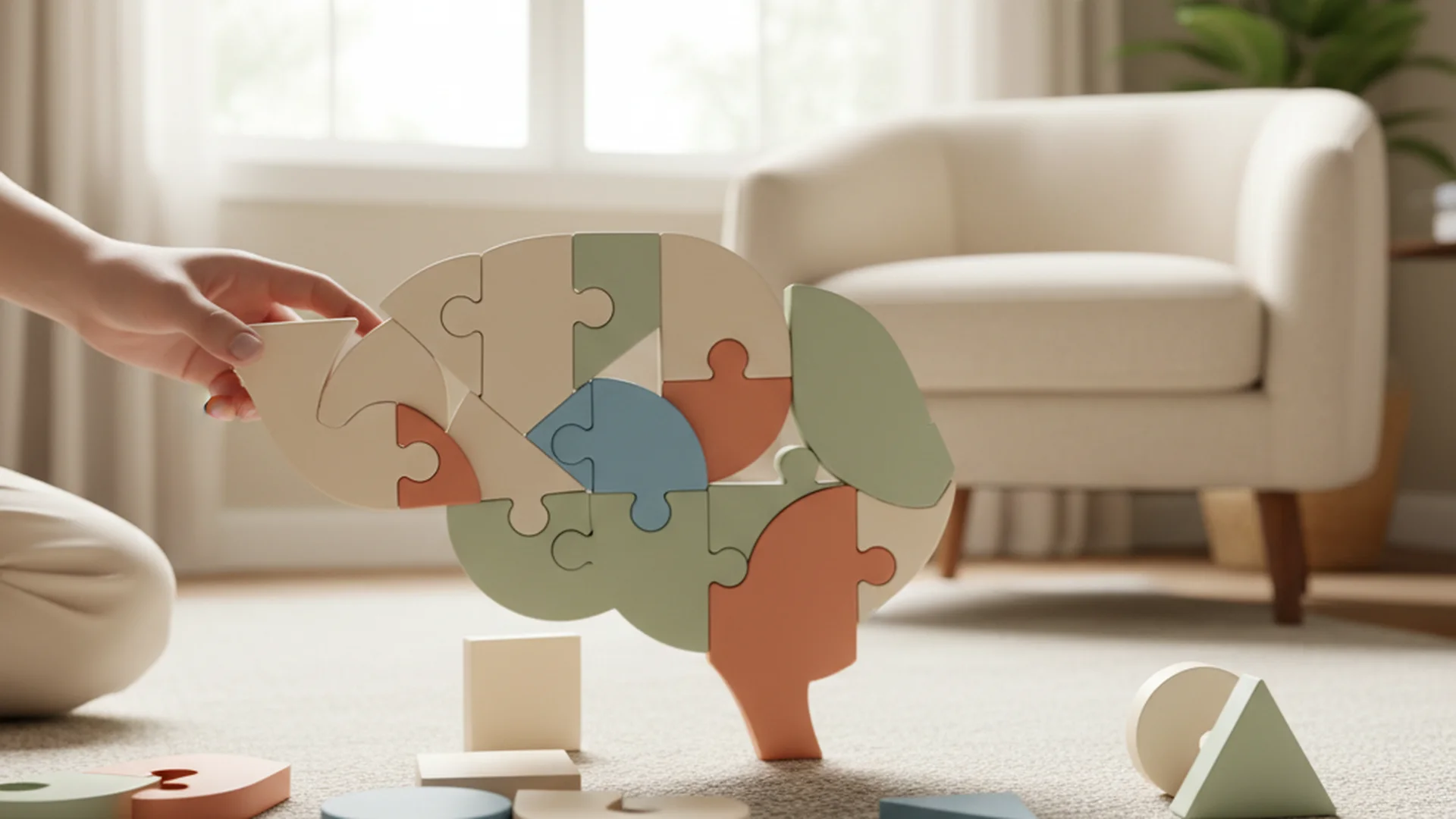
In the world of neurological recovery, we are witnessing a paradigm shift. What were once dismissed as simple pastimes—crosswords, logic grids, and memory matches—have been elevated to clinical staples. Today, cognitive rehabilitation puzzles are at the forefront of non-invasive therapy for Traumatic Brain Injury (TBI), stroke, and neurodegenerative conditions. Seeing the same mechanisms the brain uses to deconstruct language and logic put to work rebuilding lives is remarkable.
Using targeted brain injury games isn't just about "keeping the mind busy." It is about the deliberate application of neuroplasticity—the brain’s incredible ability to reorganize itself by forming new neural connections. In 2025, the integration of high-tech AI tools with traditional tactile puzzles has created a multi-dimensional approach to healing that is faster and more effective than ever before.
The Science of the Rewired Brain
To understand why puzzles work, we must first understand the damage. A brain injury often disrupts the "highways" of the mind—the white matter tracts that allow different regions to communicate. When a patient engages with a puzzle, they aren't necessarily fixing the broken highway; they are building a detour.
This process is fueled by repetition and challenge. When you struggle to find a word in a Crossword or determine the placement of a number in Sudoku, your brain releases neurotransmitters that encourage the growth of new synapses. This isn't a theory; it is a measurable biological response.
Studies from 2024 and 2025 indicate that when patients engage in technology-enhanced cognitive rehabilitation, they see a significant reduction in recovery times. By isolating specific deficits—such as attention, which affects 80% of TBI patients—puzzles provide a controlled environment for the brain to "work out."
Choosing the Right Puzzle for the Deficit
Not all puzzles are created equal. In clinical settings, therapists categorize games based on the "cognitive domain" they target. To see real-world results, a survivor's regimen must be balanced across these different areas.
Verbal and Linguistic Puzzles
For those struggling with aphasia or word-finding difficulties, linguistic games are essential. These tasks force the brain to access the "lexicon" and navigate the associations between meanings and sounds.
- Best Options: Crosswords, Word Scramble, and Word Ladder.
- Clinical Benefit: Improves verbal fluency and retrieval speed.
Logical and Executive Function Games
Executive function involves planning, decision-making, and error correction. When this is impaired, daily tasks like cooking or managing finances become nearly impossible.
- Best Options: Sudoku, Minesweeper, and 2048.
- Clinical Benefit: Strengthens deductive reasoning and sequential processing.
Visual-Spatial and Fine Motor Tools
Physical coordination often takes a hit alongside cognitive skills. Puzzles that require "scanning" a field or manipulating small pieces bridge the gap between mental and physical rehab.
- Best Options: Tangram, Jigsaw puzzles, and Sliding Puzzle variants.
- Clinical Benefit: Enhances spatial awareness and fine motor coordination.
| Puzzle Type | Primary Cognitive Domain | Suggested Frequency |
|---|---|---|
| Crosswords | Verbal Recall | Daily (15-20 min) |
| Sudoku | Logical Reasoning | 3x Weekly |
| Memory Match | Visual Memory | Daily (10 min) |
| VR Games | Functional Life Skills | 2x Weekly |
Advertisement
Real-World Examples of Recovery
To see the impact of these tools, let’s look at three specific scenarios where puzzle-based therapy changed the trajectory of recovery.
Example 1: The Stroke Survivor and Verbal Recall
Arthur, a 62-year-old teacher, suffered a stroke that left him with expressive aphasia. He struggled to name common objects. His therapy included daily sessions of Word Search to improve visual scanning, followed by Crosswords. By starting with "Monday-level" (easy) grids, he rebuilt his confidence. Over six months, his ability to participate in conversation improved by 40%, as the puzzles forced his brain to practice the "search and find" mechanism of word retrieval.
Example 2: TBI and Attention Deficits
Maya, a college student, suffered a TBI in a car accident. Her main struggle was "sustained attention"—she couldn't focus on a task for more than two minutes. Her therapist introduced Simon Says for sequential memory and Sudoku for focused logic. By using the "Goldilocks" principle (starting with 4x4 grids and moving to 9x9), Maya eventually regained the focus necessary to return to her studies.
Example 3: Fine Motor and Spatial Coordination
A patient recovering from a traumatic injury used Sliding Puzzle games on a tablet to regain fine motor control. The tactile requirement of moving tiles, combined with the spatial logic of where they belonged, provided a dual-stimulus environment that traditional physical therapy alone could not replicate.
The 2025–2026 Landscape: AI and VR
We are entering an era where cognitive rehabilitation puzzles are becoming "smart." The following trends are currently revolutionizing the field:
AI-Personalized Puzzles
In 2025, platforms have emerged that use AI to track a patient’s reaction time and error rates in real-time. If the system detects that you are solving a Sudoku too quickly, it doesn't just give you a harder puzzle; it introduces specific "distraction elements" to test your focus, keeping you in the optimal learning zone.
Digital Twin Therapy
Some advanced clinics now use "Digital Twin" technology. A virtual model of the patient's brain is created using MRI data, allowing doctors to predict which puzzles will stimulate the specific damaged pathways. For instance, if the damage is in the parietal lobe, the system might prioritize Tangram or 3D spatial puzzles.
Immersive VR Rehabilitation
Virtual Reality is bridging the gap between games and life. Patients can now solve puzzles within a "virtual kitchen" or "virtual grocery store." This helps transition "game skills" (like sorting colors) into "life skills" (like organizing a pantry), addressing the "Far Transfer" myth.
Best Practices for Effective Rehabilitation
To turn a puzzle into a therapeutic tool, you must approach it with a strategy. Randomly solving a puzzle once a week will yield minimal results.
- Consistency over Intensity: 15–20 minutes every single day is far more effective than a three-hour marathon. The brain needs regular, rhythmic stimulation to form new connections.
- The "Goldilocks" Difficulty: If a puzzle is too easy, you are on "autopilot" and no learning is occurring. If it is too hard, you will experience "cognitive burnout." Aim for a level where you are slightly challenged but successful.
- Rotate Your Domains: Don't become a one-trick pony. Rotate between verbal, logical, and visual tasks. If you love Crosswords, make sure you also spend time on Memory Match.
- Control the Environment: Brain injury survivors are often sensitive to noise and light. Practice in a quiet, low-stimulus room to allow for "deep focus."
- Strategy Integration: Don't just guess. Use internal strategies. If you are playing a memory game, try "association" (linking a card to a familiar story). This adds a second layer of cognitive work.
Advertisement
Common Mistakes to Avoid
Competitive solvers and people in recovery tend to run into the same pitfalls. Avoid these to ensure your progress doesn't stall.
- The "Far Transfer" Myth: Thinking that being good at Sudoku will automatically make you remember your car keys. Puzzles are a part of a recovery plan; they must be combined with functional, real-world training.
- Overtraining: More is not always better. The brain repairs itself during rest. Pushing through intense headaches or extreme fatigue can actually set your recovery back.
- The Autopilot Trap: If you can do a word search while talking on the phone, it is no longer therapy—it is a habit. True rehabilitation requires active, conscious effort.
- Sticking to "Easy" Wins: We all like to feel smart, but staying with puzzles that you can solve without thinking won't help your brain rewire. You must be willing to fail and try again.
Frequently Asked Questions
Can puzzles actually "rewire" the brain after an injury?
Yes. Through neuroplasticity, the brain can create new pathways to bypass damaged areas. Repetitive, challenging puzzles provide the "signal" the brain needs to initiate this growth.
Are digital brain games better than paper puzzles?
Neither is objectively "better." Digital games offer adaptive difficulty and data tracking, which is great for seeing progress. Paper puzzles offer tactile stimulation and are better for patients with light sensitivity or those who need a break from screens.
How long should I practice each day?
Most experts recommend 20 to 30 minutes of focused engagement. Beyond this, cognitive fatigue sets in, which can lead to diminished returns and increased frustration.
Which puzzles are best for improving memory?
For visual memory, try Memory Match. For sequential memory, Simon Says is excellent. For verbal memory, Crosswords or word-recall games are the gold standard.
What if I get frustrated and want to quit?
Frustration is actually a sign that your brain is working hard! However, if it becomes overwhelming, drop down a difficulty level. The goal is "effortful success," not total failure.
Conclusion
Cognitive rehabilitation puzzles are more than just a way to pass the time; they are the building blocks of a new life for many brain injury survivors. By combining the classic logic of Sudoku and Crosswords with the cutting-edge AI and VR tools of 2025, patients have more power than ever to take control of their recovery.
Remember that the journey of a thousand neural connections begins with a single tile or a single word. Be patient with yourself, stay consistent, and don't be afraid to challenge your mind. The "detours" your brain builds today will become the highways of your tomorrow.
Ready to Challenge Your Mind?
Start your recovery journey with our collection of logic and memory games.
Put it into practice
Keep reading
Therapy
Therapeutic Puzzles: Clinical Applications and the Science of Brain Games
Explore the clinical benefits of therapeutic puzzles and brain games. Learn how structured puzzling boosts acetylcholine, improves IQ, and aids occupational therapy.
May 10, 2025 12 min
Brain Health
Brain Games After Stroke: The 2025 Guide to Cognitive Rehabilitation
Explore how brain games after stroke can accelerate recovery. Learn about neuroplasticity, AI-driven puzzles, and expert-backed strategies for rehabilitation.
Jul 13, 2026 12 min
Memory Games
Memory Games: Train Your Brain - The Ultimate Cognitive Exercises Guide
Discover the ultimate memory games guide to boost cognitive health. Learn how brain training memory exercises can make your brain feel 10 years younger.
Jun 20, 2026 22 min
Advertisement