Brain Games After Stroke: The 2025 Guide to Cognitive Rehabilitation
Explore how brain games after stroke can accelerate recovery. Learn about neuroplasticity, AI-driven puzzles, and expert-backed strategies for rehabilitation.
By Free To Play Puzzles Editorial Team 12 min read
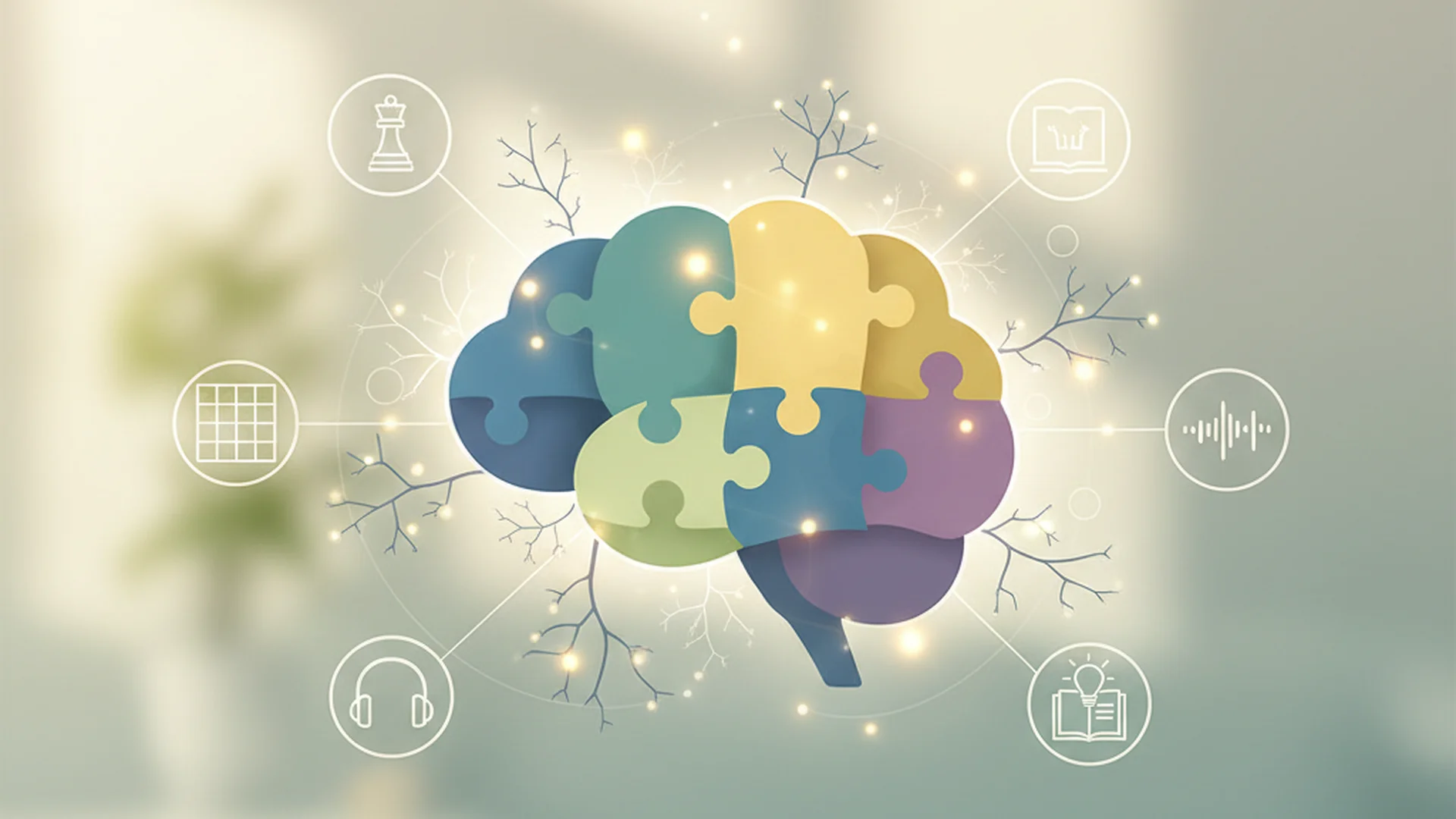
For decades, stroke recovery was primarily focused on physical therapy—relearning how to walk, grip, and speak. However, as we move into 2025, the medical community has recognized a critical missing piece: the cognitive workout. Utilizing brain games after stroke is no longer just a way to pass the time; it is a clinical necessity. Modern research identifies these puzzles as "neural catalysts" that spark neuroplasticity, the brain's remarkable ability to reorganize itself by forming new neural connections.
Whether you are a survivor or a caregiver, understanding how to leverage stroke rehabilitation puzzles can be the difference between a plateau and a breakthrough. By engaging in targeted mental exercises, survivors can "bridge" the gaps left by damaged tissue, reclaiming independence one puzzle at a time.
The Science of Rebuilding: How Brain Games Impact Recovery
The primary goal of any post-stroke intervention is to stimulate neuroplasticity. When a stroke occurs, a portion of the brain loses its blood supply, leading to cell death. However, the surrounding healthy tissue is often capable of taking over the functions of the damaged areas. This is where brain games become essential.
Recent clinical trials from early 2025 have shown that information processing speed—the rate at which we absorb and respond to information—can be improved by an average of 64% through targeted computerized cognitive training. This isn't just about getting better at a game; it’s about the brain learning to fire neurons more efficiently.
The Power of Repetition
One of the most significant shifts in 2025-2026 rehabilitation is the focus on the "Repetition Threshold." In traditional therapy, a patient might perform 30 to 40 repetitions of a task. However, gamified systems like the TrAIT (Training of Affective Information Transfer) have shown that survivors can reach up to 1,000 repetitions per session when the task is presented as a game. This high-volume repetition is the "secret sauce" that cements new neural pathways.
Choosing the Right Stroke Rehabilitation Puzzles
Not all games are created equal. Depending on the area of the brain affected, different types of stroke rehabilitation puzzles will be more effective.
1. Language and Aphasia Recovery
For those struggling with word retrieval or fluency, language-based puzzles are the gold standard.
- Word Searches: These help with visual scanning and word recognition.
- Crosswords: These stimulate the retrieval of "latent" vocabulary and improve semantic memory.
- Word Scramble: These exercises help the brain reorganize letters into meaningful patterns.
Explore our Word Search and Word Scramble tools to start practicing today.
2. Logic and Problem Solving
Damage to the frontal lobe often affects executive function—the ability to plan, sequence, and solve problems.
- Sudoku: Excellent for pattern recognition and logical sequencing.
- Connect Four: This classic game requires spatial awareness and the ability to anticipate an opponent's move.
- Minesweeper: A digital classic that encourages deductive reasoning and careful planning.
Check out our guide on Brain Games for Problem Solving for more specific strategies.
3. Memory and Attention
Many survivors struggle with "neglect" or short-term memory loss.
- Memory Match: A simple but effective tool for strengthening the hippocampus.
- 2048: This sliding tile game is perfect for improving numerical processing and mental stamina.
- Simon Says: A great game for improving auditory attention and sequential memory.
Advertisement
2025-2026 Trends: The High-Tech Future of Recovery
The landscape of stroke rehabilitation has changed rapidly over the last year. We are moving away from static paper-and-pencil tasks toward dynamic, AI-integrated environments.
AI-Powered Virtual Coaches
New versions of apps like Peak and Elevate now include AI "Coaches." These algorithms don't just track your score; they analyze the time it takes you to make a decision and adjust the difficulty in real-time. This ensures you are always in the "Flow Zone"—the sweet spot where a task is challenging but not frustrating.
Vagus Nerve Stimulation (VNS)
A major trend in 2025 is the use of the FDA-approved Vvivstim System. This involves a small implant that sends pulses to the vagus nerve while the survivor plays "game-like" rehab exercises. This physical-cognitive "pairing" has been shown to double the rate of hand and arm function recovery compared to traditional therapy alone.
Virtual Reality (VR) Immersion
VR is no longer just for entertainment. Non-immersive and fully immersive VR training is now considered "feasible and safe" for home use. These games allow survivors to practice real-life tasks—like grocery shopping or navigating a busy city street—in a safe, controlled environment. This helps bridge the gap between "game skills" and "life skills."
| Feature | Traditional Puzzles | 2025 Gamified Tech |
|---|---|---|
| Personalization | Manual/Static | AI-Driven/Real-time |
| Feedback | Self-Correction | Haptic & Visual Data |
| Repetition | Low (30-50) | High (1,000+) |
| Monitoring | In-Clinic Only | Remote Telerehabilitation |
Best Practices: How to Game Your Way to Recovery
To see the best results with brain games after stroke, you must approach them with a strategic mindset.
Frequency Over Duration
One of the most common mistakes is trying to "power through" an hour of puzzles. The post-stroke brain fatigues much faster than a healthy one.
- The Strategy: Aim for 10-minute sessions, three times a day.
- The Goal: Provide consistent "sparks" to the brain without triggering the extreme fatigue that can stall neuroplasticity.
The "Just Right" Challenge
If a game is too easy, the brain isn't learning. If it’s too hard, it triggers cortisol (the stress hormone), which actually hinders the growth of new neural connections. You want a game where you succeed about 70-80% of the time.
Dual-Tasking: The 2026 Gold Standard
The most advanced recommendation for 2026 is "Dual-Tasking." This involves performing a cognitive task while doing a physical one.
- Example: Play a game of Memory Match while standing on one leg (with support) or walking on a treadmill.
- Why it works: It forces the brain to allocate resources to both balance and cognition, mimicking the complexities of real-world movement.
Common Mistakes and Misconceptions
Understanding what not to do is just as important as knowing the best games to play.
- The "One-Year Window" Fallacy: Many survivors are told that recovery stops after 12 months. This is a myth. Modern science confirms that neuroplasticity remains active decades after a stroke. Improvements have been recorded in patients 15–20 years post-stroke.
- Passive Recovery: Simply waiting for time to heal the brain is a mistake. Recovery is an active process. The brain needs the "thousands of repetitions" to create new pathways.
- Neglecting Non-Motor Symptoms: It is easy to focus on a limp or a weak hand, but "hidden" challenges like memory and attention are often what prevent survivors from returning to work or driving. Cognitive Brain Training is essential for a holistic recovery.
- Social Isolation: Playing digital games is great, but don't forget the power of social interaction. Playing Connect Four or Sudoku with a partner provides emotional stimulation that an app cannot replicate.
Advertisement
Recommended Resources for 2025
If you are ready to start your journey, here are the top-rated tools for 2025:
- Clinical Apps:
- Constant Therapy: Specifically designed for speech and cognitive recovery.
- BrainHQ: Focused on processing speed and memory. See our review of Brain Games for Memory.
- Digital Classics:
- Sudoku for logic.
- 2048 for mental stamina.
- Word Search for language.
- Physical/Motor Games:
- Nintendo Wii Sports: Great for balance.
- MusicGlove: Specialized for hand dexterity.
- Tangrams: Excellent for spatial reasoning. Try our Tangram puzzles for a digital version.
Frequently Asked Questions
Which puzzles are most effective for speech recovery?
Crossword puzzles and word searches are highly recommended because they stimulate the parts of the brain responsible for language fluency and word retrieval. This is particularly helpful for survivors dealing with Aphasia. You might also find Word Logic Games beneficial for rebuilding the connection between thoughts and words.
How long should a survivor play brain games each day?
Research suggests that 20–30 minutes daily is the "sweet spot." It is better to break this into two or three 10-minute sessions to avoid the mental fatigue that can occur after a stroke. Consistency is much more important than the total number of minutes in a single sitting.
Are digital apps better than traditional board games?
Both have unique values. Digital apps offer adaptive difficulty and data tracking, which is great for monitoring progress. Traditional board games, like Scrabble or Jenga, provide social interaction and fine motor skill practice. A healthy recovery plan includes a mix of both.
Can I still see results if my stroke was years ago?
Absolutely. Recent studies confirm that the brain never loses its ability to rewire itself. While progress may be slower than in the initial months after a stroke, patients up to 20 years post-stroke have seen significant cognitive gains through consistent Brain Training.
What if I get frustrated while playing?
Frustration is a natural part of recovery, but it can be counterproductive. If a game feels too difficult, move to a simpler level or a different type of game. The goal is the "Just Right Challenge." If you feel your stress levels rising, take a break. Recovery is a marathon, not a sprint.
Conclusion
The evolution of brain games after stroke has transformed rehabilitation from a tedious chore into an engaging, high-tech journey toward independence. By embracing the science of neuroplasticity and utilizing the AI-driven tools available in 2025, survivors can take an active role in their own healing.
Remember, the brain is like a muscle—it requires consistent, challenging, and varied exercise to stay strong. Whether you are solving a Sudoku puzzle or mastering 2048, every move you make is a step toward a clearer, sharper, and more independent life.
Ready to Start?
Begin your cognitive recovery journey with our science-backed puzzles.
Put it into practice
Keep reading
Brain Health
Brain Health: The Complete 2026 Guide to Cognitive Wellness
Explore the definitive brain health guide for 2026. Learn about neuroplasticity, the SAFEST BRAINS protocol, and the latest research in cognitive longevity.
Sep 14, 2026 25 min
Therapy
The Ultimate Guide to Cognitive Rehabilitation Puzzles and Brain Injury Games
Discover how cognitive rehabilitation puzzles and brain injury games use neuroplasticity to accelerate recovery after TBI or stroke. Expert tips for 2025.
Sep 21, 2026 12 min
Brain Health
Brain Training Myths Debunked: What Really Works for Your Mind in 2025?
Explore the science behind brain training myths. Learn why most apps fail at far transfer and discover the 2025 trends that actually improve cognitive health.
Aug 20, 2026 12 min
Advertisement