Mastering Divided Attention Games: Science, Strategy, and 2025 Brain Training Trends
Explore how divided attention games can improve cognitive processing speed and help mitigate the 40% multitasking productivity tax in 2025.
By Free To Play Puzzles Editorial Team 12 min read
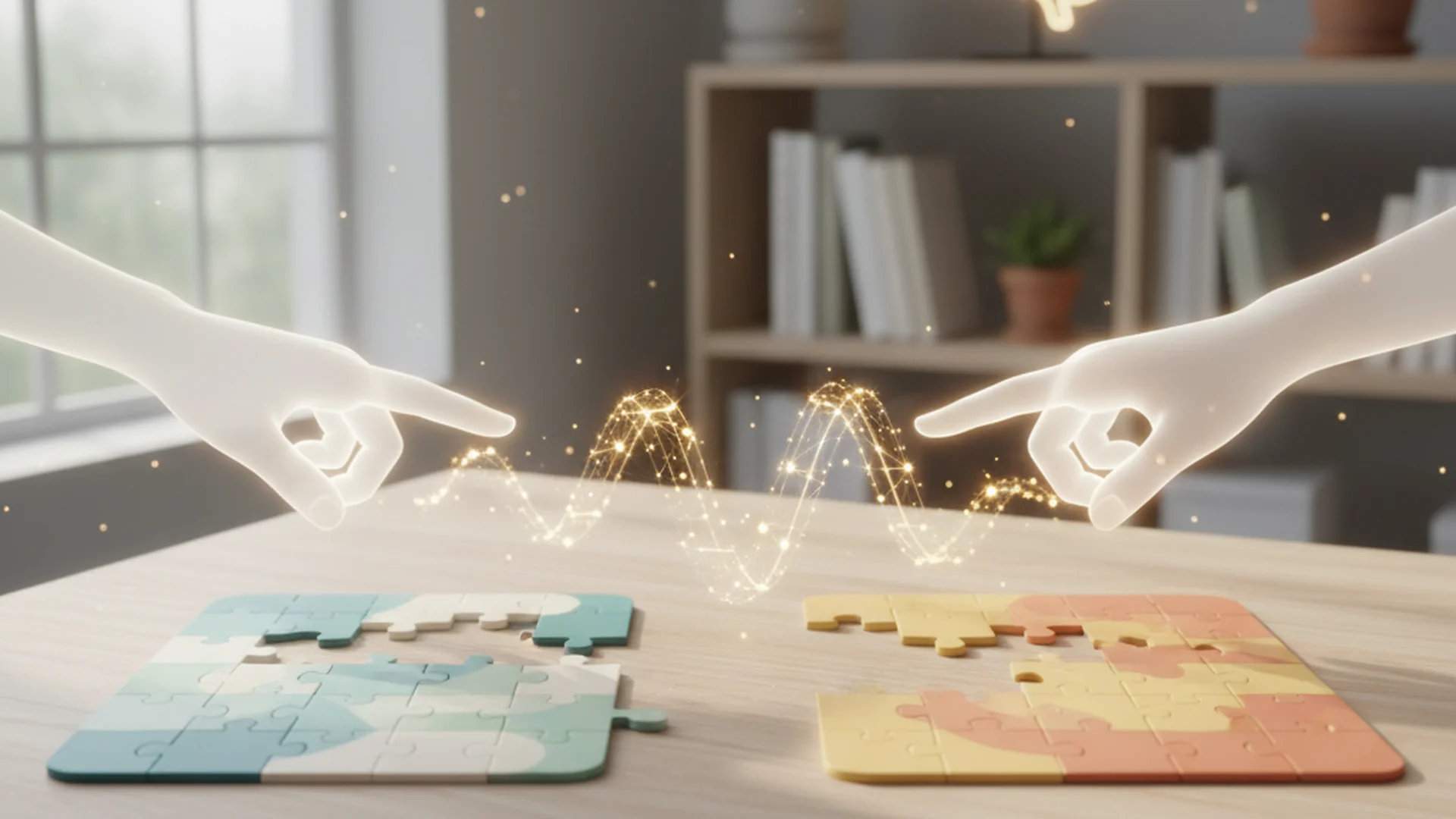
In the year 2025, the human mind is under siege. Our average attention span has plummeted to a mere 8.25 seconds—shorter than that of a goldfish—and we find ourselves switching between screens every 47 seconds. In this landscape of constant digital noise, divided attention games have emerged not just as entertainment, but as vital tools for cognitive preservation. As a strategic gameplay analyst, I have watched the evolution of these "multitasking brain games" from simple arcade diversions to the sophisticated, AI-driven neuro-simulations we see today.
The core challenge of the modern era isn't a lack of information; it is the inability to process multiple streams of data without suffering a total cognitive breakdown. By engaging in structured divided attention training, we aren't just playing games—we are refining the very neural pathways that allow us to navigate a complex, hyper-connected world.
The Neuroscience of Divided Attention vs. Multitasking
To master divided attention games, we must first dispel a common myth: the idea that humans can actually "multitask." Neuroscientists clarify that what we call multitasking is usually "rapid task-switching." Every time you move your focus from an email to a text message and back again, your brain pays a "switch cost."
Research from the NeuroLeadership Institute (2024/25) shows that this constant switching can reduce effective productivity by up to 40%. This is the "Productivity Tax" we pay for a fragmented focus. Divided attention is the cognitive ability to manage these switches or process multiple streams simultaneously—such as listening to a podcast while navigating a car through traffic.
The 2% "Supertasker" Phenomenon
Can anyone become a master of multitasking? Not exactly. Research suggests that only about 2% of the population are "supertaskers"—individuals who can perform multiple high-level cognitive tasks simultaneously without any drop in performance. For the other 98% of us, training isn't about becoming a simultaneous processor; it’s about increasing the speed of information processing in the prefrontal cortex.
The Evolution of Divided Attention Games
As a historian of play, I find the transition from the 1980s "multitasking" games like Tapper or Defender to modern Brain Training programs fascinating. Today, we use "Serious Games" not just for fun, but as non-invasive diagnostic tools.
The Gold Standard: Dual N-Back
If you are looking for the most scientifically validated exercise in the world of divided attention games, the Dual N-Back task remains the undisputed champion. This exercise requires you to track both a visual position on a grid and an auditory stimulus (like a letter) simultaneously. You must identify when the current stimulus matches the one from "N" steps back.
This game forces the brain to maintain two separate streams of information in working memory, directly challenging the "processing speed" limitations of the 2025 brain.
Real-World Examples of Divided Attention Training
- The Professional Driver: Using track-based games (like Train of Thought) to improve situational awareness. These games require you to manage multiple moving objects simultaneously, mimicking the split-second decisions required on a highway.
- The Social Dancer: A 2025 Harvard-highlighted study suggests that freestyle social dancing reduces dementia risk by 76%. Why? Because it requires physical coordination, musical timing, and social interaction all at once.
- The Retro Gamer: High-speed arcade classics like Asteroids or Space Invaders serve as primitive but effective divided attention trainers, requiring players to track multiple projectiles and enemies across a screen.
Advertisement
2025–2026 Trends in Brain Health Technology
The world of multitasking brain games is currently undergoing a massive shift fueled by Artificial Intelligence and wearable tech.
AI Personalization and Real-Time Tracking
By 2026, leading platforms like Elevate and Neurobics have moved beyond static puzzles. They now use Real-Time Cognitive Tracking. Using your smartphone’s camera for eye-tracking and AI algorithms to monitor reaction speed, these games adjust their difficulty in milliseconds. If the AI detects your focus is wavering, it increases the "noise" to force your brain to re-engage, or it scales back to prevent "cognitive burnout."
Neurofeedback Integration
We are also seeing the rise of neurofeedback devices, such as Mendi, which users wear while playing divided attention games. These devices provide live data on oxygenated blood flow to the prefrontal cortex. This "gamification of brain activity" allows you to see exactly when your brain is in the "flow state" and when it is struggling to manage multiple tasks.
| Feature | Traditional Games | 2025-2026 Serious Games |
|---|---|---|
| Difficulty | Manual/Static | AI-Driven Adaptive |
| Feedback | Score-based | Live Neurofeedback |
| Goal | Entertainment | Skill Transfer (Near & Far) |
| Detection | None | Early ADHD/Alzheimer's Detection |
Best Practices for Effective Training
To see real results from divided attention games, you cannot simply play them sporadically. You need a structured approach, much like a physical workout.
The 15-Minute Rule
Consistency is the most critical factor. Experts at Verywell Mind (2025) recommend 10–15 minutes of daily training. "Binge-playing" for three hours on a Sunday is far less effective than a daily 15-minute session. The brain needs regular, short bursts of stimulation to trigger neuroplasticity.
Prioritize "Near Transfer"
When choosing your games, look for those that offer "Near Transfer." This means the skills you learn in the game are closely related to the skills you need in real life. If you find yourself struggling with office distractions, choose games that require you to filter out "visual noise" while performing a task.
Use Adaptive Difficulty
If a game is too easy, you are essentially on "autopilot." Once your brain masters a pattern, it stops forming new neural connections. Always ensure you are playing on a level that feels slightly uncomfortable.
Common Mistakes to Avoid
Many users fall into traps that prevent them from seeing any real cognitive gain. If you want to improve your Memory Games performance and focus, avoid these pitfalls:
- The "Brain as a Muscle" Fallacy: You cannot "bulk" your brain. Training works by refining neural pathways and increasing the speed of chemical signaling, not by growing "attention cells."
- The Intelligence Myth: Playing brain games will not necessarily increase your general IQ. It makes you better at the specific tasks within the game and closely related real-world actions.
- The Consistency Gap: Many people expect results in a week. Meaningful changes in neural efficiency require long-term, structured training over months.
Advertisement
Frequently Asked Questions
Is divided attention the same as multitasking?
In general conversation, yes. However, neuroscientists distinguish the two. Multitasking is usually the act of rapid task-switching, while divided attention is the underlying cognitive ability to manage those switches and process multiple streams of information simultaneously.
Can anyone become a "Supertasker"?
Evidence suggests that "Supertaskers" (those who can multitask with zero performance drop) represent only 2% of the population. For the rest of us, training focuses on improving the speed and efficiency of our task-switching rather than reaching true simultaneous execution.
Do these games prevent dementia?
While digital games like Lumosity or BrainHQ improve specific cognitive skills, social and physical activities like freestyle dancing are often more effective. A 2025 Harvard study showed that dancing, which combines physical, social, and musical divided attention, can reduce dementia risk by 76%.
What is the "Gold Standard" game?
The Dual N-Back task remains the most scientifically validated exercise for increasing both working memory and the ability to manage divided attention.
Conclusion: Reclaiming Your Focus
The "40% productivity tax" is a heavy price to pay for living in the digital age. However, by engaging with divided attention games, we can begin to reclaim our cognitive autonomy. Whether you are using AI-driven apps to sharpen your professional focus or playing 10 Minute Puzzle Games to keep your mind active, the goal is the same: to move from being a victim of distraction to a master of focus.
Remember, the goal isn't to become a machine that can do everything at once. The goal is to train your brain to handle the complexities of the modern world with speed, grace, and efficiency. Start your 30-Day Brain Training Challenge today and see how a focused mind can transform your daily life.
Ready to Level Up?
Start your cognitive journey with our curated selection of brain trainers.
Put it into practice
Keep reading
Brain Health
Mastering the Mind: The Science-Backed Guide to Long Term Memory Games
Explore the latest 2025-2026 research on long term memory games. Discover how strategy games, AI tutors, and recall training can reverse brain age by up to 10 years.
May 1, 2026 12 min
Brain Health
Estimation Games: Mastering the Art of Approximation for Brain Health
Explore how estimation games and approximation brain games are revolutionizing cognitive training. Learn expert techniques like the Fermi Method to sharpen your mind.
Apr 1, 2026 10 min
Brain Health
Best Brain Games Ranked: Science-Backed Picks for 2025–2026
Explore the best brain games ranked by scientific efficacy. From Elevate to Chess, discover which cognitive tools actually improve memory and focus in 2025.
Oct 3, 2026 15 min
Advertisement