Brain Games for Leadership: How Executive Brain Training Sharpens Decision-Making
Discover how brain games leadership techniques and executive brain training enhance cognitive flexibility, reduce burnout, and improve decision-making for senior leaders.
By Free To Play Puzzles Editorial Team 12 min read
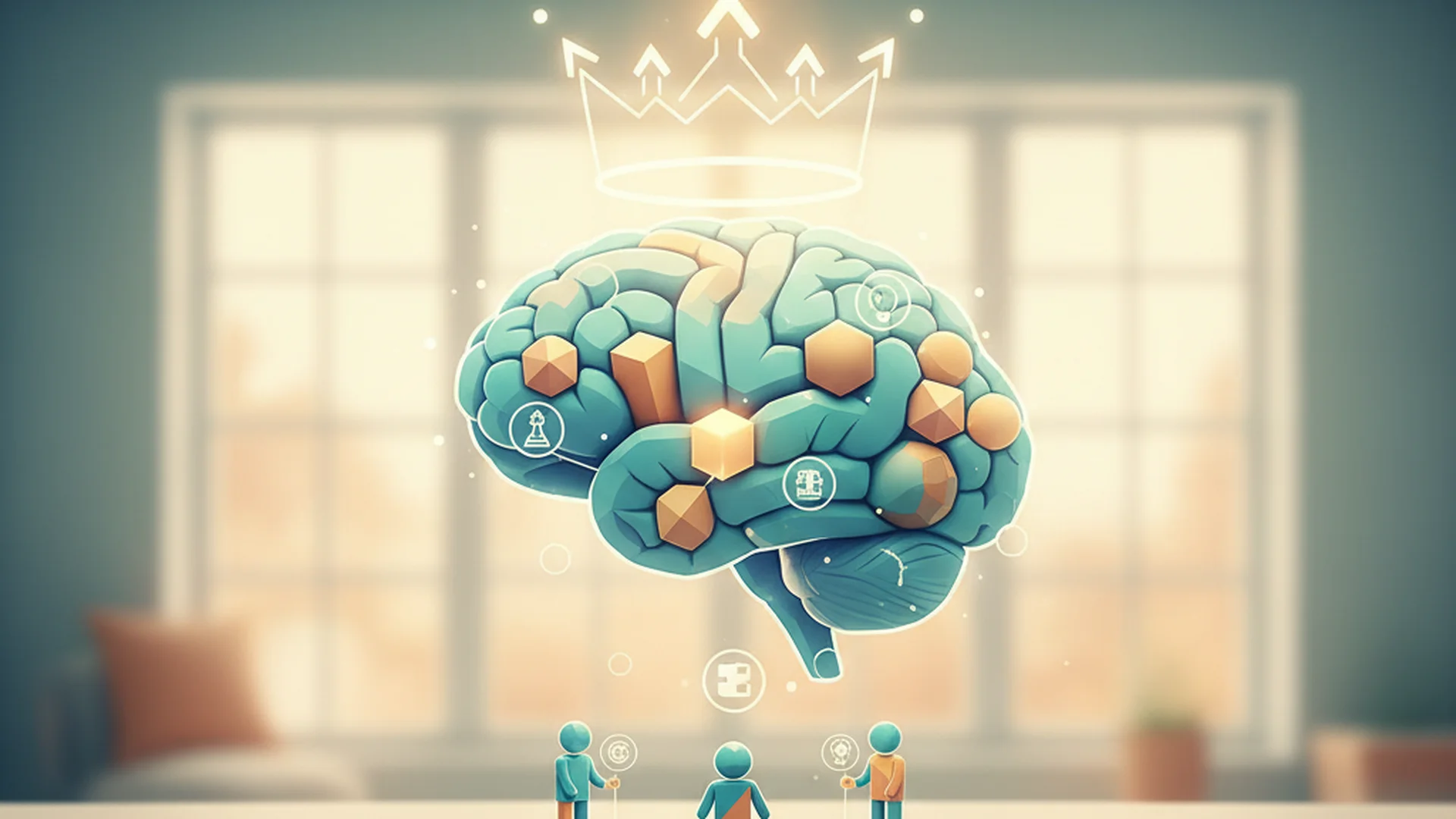
In the high-pressure corridors of modern corporate power, the most valuable asset isn't a company's stock price or its proprietary tech—it is the cognitive clarity of its leaders. As the business landscape becomes increasingly volatile, the concept of brain games leadership has shifted from a niche hobby to a critical component of professional development. For senior executives, the ability to remain calm under fire and process complex data streams isn't just a soft skill; it is a biological requirement.
Today’s leaders are turning to executive brain training to combat the rising tide of burnout and decision fatigue. By engaging in targeted cognitive exercises, executives can essentially "re-wire" their neural pathways to handle higher workloads with less stress. This isn't about simply solving a puzzle; it's about sharpening the metacognitive tools that allow a CEO to pivot during a market crash or a manager to resolve a high-stakes team conflict.
The Three Pillars of the Executive Brain
To understand how brain training impacts leadership, we must look at the three core "Executive Functions" (EFs). These are the cognitive processes that allow us to plan, focus, and multitask successfully.
1. Working Memory
Working memory is the "internal whiteboard" of the brain. It allows a leader to hold multiple pieces of information—such as quarterly earnings, competitor moves, and internal HR issues—simultaneously and manipulate them to reach a conclusion. Without a strong working memory, decision-making becomes fragmented and reactive.
2. Cognitive Flexibility
In a world of "black swan" events, the ability to switch between different concepts or think about multiple concepts simultaneously is vital. This is cognitive flexibility. It is what allows a leader to move from a technical engineering meeting to a creative marketing brainstorm without losing momentum.
3. Inhibitory Control
This is perhaps the most critical pillar for those in high-stakes roles. Inhibitory control is the ability to suppress impulses and natural gut reactions in favor of a reasoned, strategic response. It is the mental "brake system" that prevents a leader from making an emotional, ego-driven decision during a board meeting.
The ROI of Cognitive Training in the Workplace
Investing time in brain games is no longer seen as "slacking off." In fact, organizations that integrate neuroscience-backed training into their leadership tracks see measurable returns. Statistics from 2025 indicate that leadership behaviors—such as empathy, clarity of communication, and strategic foresight—improve by up to 28% following consistent cognitive intervention.
The corporate segment is currently the fastest-growing lane in the cognitive assessment market, expanding at over 18% annually. This growth is fueled by a sobering reality: 56% of senior executives report high burnout levels, with many planning to exit their roles by 2027. Brain games serve as "mental armor," providing the resilience needed to survive the 70-hour workweek without cognitive decline.
Advertisement
Modern Trends: AI and Immersive VR in 2026
We are entering a new era of personalized mental performance. Gone are the days of one-size-fits-all puzzles.
AI-Enhanced Personalization
Platforms like Degreed Maestro now use AI to analyze a leader's specific cognitive gaps. For example, if a leader frequently makes errors in the late afternoon, the AI identifies "decision fatigue" and adapts game difficulty in real-time to build endurance in that specific window.
Agentic AI Coaching
Tools like NILES (Neuro-Intelligent Leadership Enhancement System) are now being used to provide "metacognitive nudges." These AI agents listen to meetings and provide real-time feedback on team inclusion, helping leaders recognize when their inhibitory control is slipping and they are dominating the conversation.
Immersive VR Roleplay
Virtual Reality (VR) platforms such as Virti allow leaders to step into high-stress scenarios—like a cybersecurity breach or a hostile board takeover. This allows for the practice of "cold" logic under "hot" emotional pressure, a transfer of skill that traditional Memory Games cannot provide alone.
Best Practices for Executive Brain Training
If you are a leader looking to start your journey, follow these expert-vetted recommendations to ensure your efforts translate to the boardroom.
The "Exercise Snacking" Model
Neural plasticity—the brain's ability to change—is most effectively triggered by consistency rather than intensity. Instead of a two-hour session on Sunday, aim for 10 to 15 minutes of "exercise snacking" daily. This keeps the prefrontal cortex primed for high-level work throughout the week.
The AMPLIFY Framework
The NeuroLeadership Institute recommends the AMPLIFY framework for high-level cognitive growth:
- Humility: Admitting what you don't know to open up new neural pathways.
- Flexibility: Actively seeking out puzzles or games that you find difficult or frustrating.
- Vigilance: Using brain games to spot your own cognitive biases, such as the "sunk cost fallacy."
Combine with Physical Movement
The most effective brain training isn't sedentary. Activities like yoga or "walking meetings" increase Brain-Derived Neurotrophic Factor (BDNF). This protein acts like "Miracle-Gro" for the brain, making it much easier for the cognitive benefits of games to "stick."
| Activity | Primary Cognitive Benefit | Best For |
|---|---|---|
| Sudoku | Logical Deduction | Strategic Planning |
| Brain Games for Focus | Sustained Attention | Long Meetings |
| VR Simulations | Inhibitory Control | Crisis Management |
| Group Strategy Games | Social Cognition | Team Building |
Common Mistakes to Avoid
Even the most well-intentioned leaders fall into cognitive traps when starting a training regimen.
The Multitasking Fallacy
Many leaders use games to try and get better at multitasking. However, neuroscience proves that multitasking is actually "rapid task-switching." This habit increases cortisol levels and can actually lower your effective IQ by 10 points. Your training should focus on sustained focus on a single complex problem.
Near vs. Far Transfer
A common mistake is thinking that becoming a world-class crossword solver will automatically make you a better negotiator. This is "near transfer." To achieve "far transfer," you must choose games that mirror the mechanics of your job. If your job involves complex resource management, play games like 2048 or resource-allocation simulations rather than simple word searches.
Relying on Willpower Alone
Rewiring the brain requires habit repetition. If you rely on willpower to remember your brain games, you will likely fail. Instead, anchor your training to an existing habit—such as doing a 10-minute session immediately after your morning coffee.
Advertisement
Frequently Asked Questions
Do brain games actually make me a better leader?
While they improve performance on specific tasks, their real value for leaders lies in sharpening metacognition. This is the ability to monitor and regulate your own thinking processes during high-stakes decision-making. It helps you recognize when you are being biased or when your focus is drifting.
How much time is required to see results?
Experts suggest that 10 to 15 minutes of daily practice is sufficient to see cognitive improvements within 4 to 6 weeks. Consistency is significantly more important than the duration of the sessions.
Are digital apps better than traditional puzzles?
Digital apps offer precision data and AI-driven difficulty scaling, which is excellent for individual progress. However, traditional group-based games develop social-cognitive skills and "common language" problem-solving that apps currently cannot replicate. A mix of both is often the best approach.
What is the best age to start executive brain training?
It is never too early or too late. For younger leaders, it builds a foundation of cognitive resilience. For senior leaders, it helps maintain mental sharpness and staves off age-related decline. You can read more about the Best Age for Brain Training to see how needs change over time.
Conclusion
In the evolving world of leadership, the competitive edge belongs to those who treat their minds with the same rigor as an elite athlete treats their body. By integrating brain games leadership principles into your daily routine, you aren't just playing games—you're building the neural infrastructure for a more resilient, focused, and effective professional life. Whether you are navigating a corporate merger or leading a small startup, your brain is your most powerful tool. Keep it sharp.
Enhance Your Focus
Discover our curated selection of cognitive challenges designed for the modern professional.
Put it into practice

Keep reading

Brain Health
Mastering Divided Attention Games: Science, Strategy, and 2025 Brain Training Trends
Explore how divided attention games can improve cognitive processing speed and help mitigate the 40% multitasking productivity tax in 2025.
Jun 9, 2026 12 min

Brain Health
Best Brain Games Ranked: Science-Backed Picks for 2025–2026
Explore the best brain games ranked by scientific efficacy. From Elevate to Chess, discover which cognitive tools actually improve memory and focus in 2025.
Oct 3, 2026 15 min
Brain Health
15 Best Brain Games for Seniors to Stay Sharp in 2025
Discover the best brain games for seniors backed by 2025 research. Learn how senior brain training and cognitive games can delay decline and improve memory.
Sep 10, 2026 12 min
Advertisement