Puzzles for Depression: Can Brain Games Help Your Mood?
Explore how puzzles for depression and brain games can act as digital therapeutics. Learn about dopamine loops, cortisol reduction, and the latest 2025 mental health trends.
By Free To Play Puzzles Editorial Team 12 min read
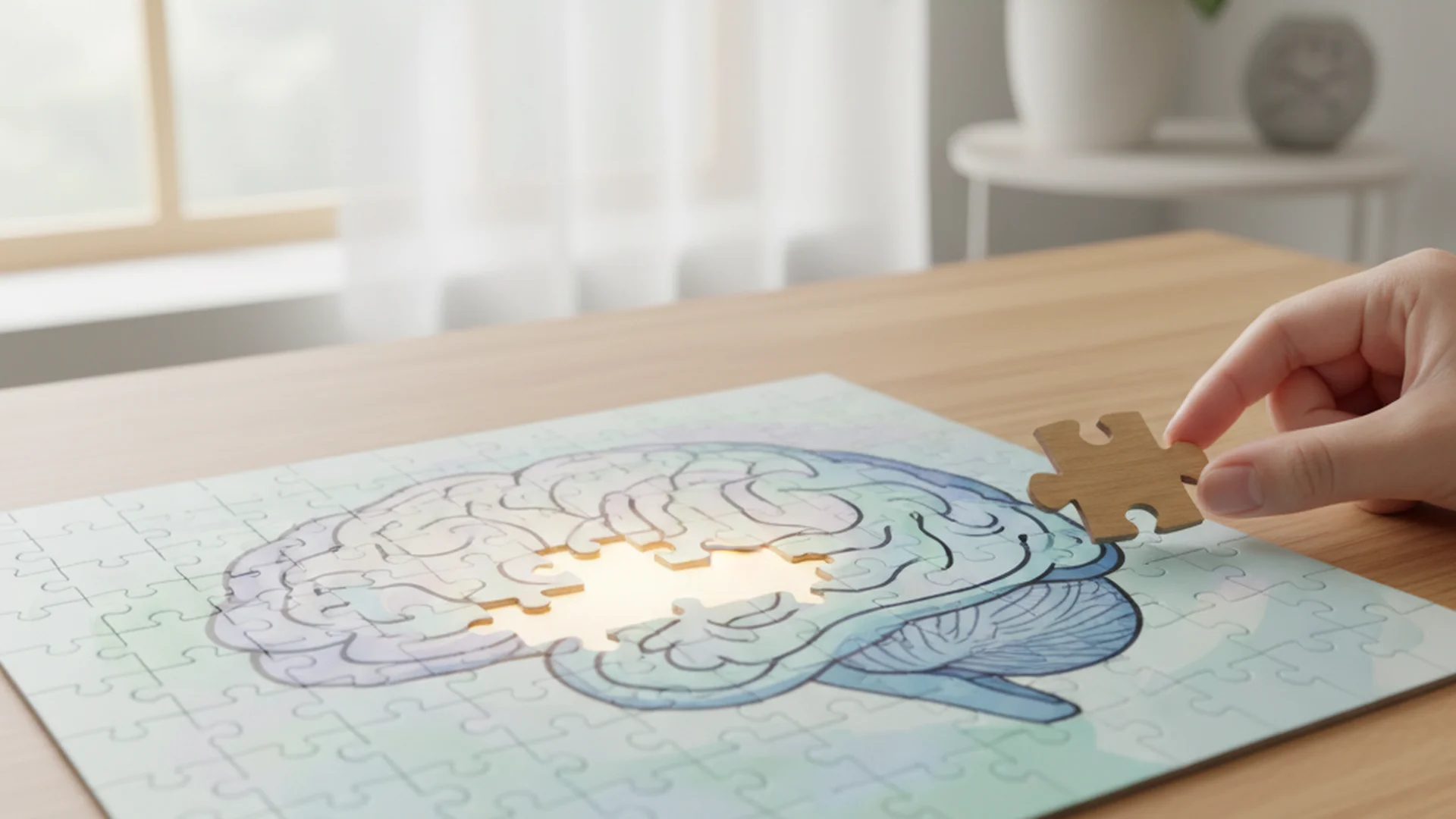
In the landscape of modern mental health, we often look for groundbreaking clinical interventions to manage the heavy fog of depression. However, as a retro gaming historian and gameplay analyst, I’ve observed a fascinating shift over the last few years. As we move into 2025 and 2026, the humble jigsaw, the complex crossword, and the strategic digital puzzle have transcended their roles as simple hobbies. Today, puzzles for depression are recognized by mental health professionals as legitimate "digital therapeutics"—tools for cognitive-behavioral maintenance that offer more than just a distraction.
For many of the 332 million people worldwide living with depression, the search for "micro-wins" is a daily struggle. Depression often brings with it anhedonia—a loss of interest in activities once enjoyed. This is where the strategic structure of a puzzle becomes a bridge back to engagement. By providing a low-stakes, high-reward environment, brain games depression management becomes a tangible, accessible part of a self-care routine.
The Neuroscience of the "Micro-Win"
The therapeutic power of puzzles is rooted deeply in our neurobiology. When you find that one elusive edge piece or solve a difficult clue in a Daily Challenge, your brain releases a small burst of dopamine. This neurotransmitter is the cornerstone of our reward system, the very system that depression often suppresses.
Dopamine and Mood Regulation
In a depressive state, the brain's reward circuitry can feel "numb." Solving even a small puzzle creates a feedback loop of success. Each piece fitted correctly serves as a "micro-win," signaling to the brain that effort leads to progress. Over time, these small hits of dopamine can help regulate mood and improve the ability to concentrate, which is often severely impaired during depressive episodes.
From Beta to Alpha: Cortisol Reduction
Engaging in a puzzle requires a specific type of focus that shifts our brain activity. Most of our waking life is spent in a "Beta" state—alert, often stressed, and reactive. Research shows that puzzling can shift the brain into an "Alpha" state. This state is characterized by relaxed alertness, similar to the state we enter while dreaming or during light meditation.
Breaking the Cycle of Rumination
One of the most debilitating symptoms of depression is rumination—the repetitive, intrusive, and negative thinking patterns that trap a person in their own distress. This is where the concept of "The Flow State" becomes a vital psychological tool.
Entering the Flow State
The "Flow State," a term coined by psychologist Mihaly Csikszentmihalyi, refers to a state of total immersion in an activity. When you are deep into a game of Sudoku or a complex Sliding Puzzle, your brain is forced to focus on the immediate task. This immersion acts as a "pattern interrupt" for rumination. You cannot easily obsess over past failures or future anxieties when your cognitive resources are fully dedicated to identifying spatial patterns or logical sequences.
Dual-Hemisphere Engagement
Puzzles are unique because they demand "whole-brain" participation.
- The Left Brain: Handles the logic, order, and sequential thinking required to categorize pieces or follow rules.
- The Right Brain: Manages creativity, spatial awareness, and the "big picture" visualization.
Depression can sometimes lead to a "thinning" of the neural connections between these hemispheres. By engaging both simultaneously, puzzles help maintain and even strengthen these vital pathways. This is why many clinicians recommend Best Brain Games Ranked as part of a comprehensive mental health strategy.
Advertisement
The Evolution of Puzzles in 2025-2026
We have entered a new era of "Immersive Puzzling." While physical jigsaws remain a gold standard for a tactile "digital detox," the digital world has caught up with sophisticated, health-oriented features.
AI-Driven Personalization
Modern 2025-era apps now use AI to monitor what we call "cognitive biomarkers." For instance, an app might track the speed of your piece placement or the frequency of your "undo" actions. If the AI detects a significant slowing or a pattern of frustration, it can adapt the difficulty level in real-time or suggest a "reset" game to prevent the user from spiraling into a sense of failure.
VR and AR Sensory Therapy
In 2026, Virtual Reality puzzles have become a cornerstone of sensory therapy. Imagine stepping into a 360-degree virtual Japanese garden where you must assemble floating lanterns to the sound of running water. These environments provide a level of escapism that traditional puzzles cannot match, offering a total sensory "reset" for those feeling overwhelmed by their physical environment.
Strategic Selection: What Puzzles Work Best?
Not all puzzles are created equal when it comes to mental health. The key is to find the "Sweet Spot"—the balance between challenge and ease.
| Puzzle Type | Mental Health Benefit | Best For |
|---|---|---|
| Jigsaw Puzzles | Mindfulness & Spatial Awareness | Reducing Anxiety & Nighttime Rumination |
| Crosswords | Language Processing & Memory | Cognitive Maintenance & Mental Sharpness |
| Logic Puzzles | Sequential Thinking | Breaking Rumination Loops |
| VR Puzzles | Sensory Immersion | Acute Stress Relief & Escapism |
Real-World Example: The "Puzzle-Before-Bed" Routine
Consider "Sarah," a 30-year-old marketing executive suffering from high-functioning depression and insomnia. Her mind would race the moment she hit the pillow. Her therapist recommended a 15-minute analog puzzle routine—no screens, just a 500-piece landscape puzzle. Within two weeks, Sarah found that the tactile sorting of colors helped transition her brain from "work mode" to "rest mode," significantly reducing her nighttime rumination.
Real-World Example: The Workplace "Puzzle Break"
A tech firm in Seattle integrated a communal jigsaw puzzle in their breakroom in 2025. They found that employees used the puzzle as a "focus point" for social interaction. For those struggling with social energy due to depression, the puzzle provided a way to be around others without the pressure of direct eye contact or intense conversation. It acted as a social "safety net."
Common Mistakes and Misconceptions
While brain games depression management is effective, there are pitfalls to avoid. As a gameplay analyst, I see users often fall into these traps:
1. Binge Puzzling as Avoidance
Spending five or six hours straight on a puzzle might feel like a win, but if it's being used to avoid work, hygiene, or social obligations, it becomes a form of avoidance behavior. This can actually deepen depressive symptoms by creating a cycle of guilt once the puzzle is finished.
2. The "Winning is Everything" Mindset
If you get frustrated because you can't finish a "Hard" level of Sudoku, you are missing the point. In therapeutic puzzling, the process is the therapy, not the completion. The act of sorting, looking, and trying is what triggers the beneficial brain states.
3. Using Puzzles as a Solo Solution
Advertisement
Best Practices for Maximum Benefit
To get the most out of puzzles for depression, follow these expert-backed guidelines:
- Seek Adaptive Challenge: Don't start with a 2,000-piece solid white puzzle. Start with something that offers a "Sweet Spot" of engagement. If it’s too easy, you’ll get bored; if it’s too hard, you’ll get stressed.
- Choose Therapeutic Themes: Images of water, forests, or serene landscapes have a more calming effect on the nervous system than chaotic or abstract imagery.
- Set a Timer: Limit your sessions to 20–30 minutes to ensure the activity remains a tool for wellness rather than a form of escape.
- Combine with Other Senses: Listen to calming lo-fi music or a nature soundscape while you play to enhance the "Alpha" brain wave transition.
For those looking to support a loved one, especially seniors, choosing the right platform is key. You might find our guide on Best Brain Games for Seniors helpful for selecting age-appropriate challenges.
Frequently Asked Questions
Can puzzles actually cure depression?
No. Puzzles are a management tool, not a cure. They are best used as a "mental grounding technique" alongside professional therapy and medication. They help manage symptoms like rumination and lack of focus but do not address the underlying biological or psychological causes of clinical depression.
Are digital brain games better than physical puzzles?
Both have unique benefits. Physical puzzles offer a tactile "digital detox" and are better for reducing blue light exposure before bed. Digital games, especially 2025-era apps, use AI to adapt to your skill level and can track your progress over time. For more on this, see our article on Best Brain Games Ranked.
How long should I play to see a difference?
Experts suggest that as little as 10–20 minutes a day is sufficient to achieve a meditative state and break a cycle of negative thinking. Consistency is more important than the length of any single session.
What kind of puzzles are best for mental health?
Jigsaw puzzles are generally top-rated for mindfulness and anxiety reduction. Crosswords and Word Logic Games are excellent for those looking to maintain cognitive plasticity and "brain health."
Are there specific games for focus?
Yes, games that require sustained attention and pattern recognition, such as Minesweeper or Brain Games for Focus, are excellent for training the brain to stay on task.
Conclusion
As we navigate the complexities of mental health in 2025, it is clear that the tools for wellness are often found in the most unexpected places. Whether it's the strategic depth of a Sudoku board or the immersive peace of a VR garden, puzzles for depression offer a unique, science-backed way to reclaim our focus and regulate our mood.
By understanding the neuroscience of dopamine and the psychological power of the "Flow State," we can transform a simple pastime into a powerful ritual of resilience. Remember, the goal isn't just to finish the puzzle—it's to give your mind the space to heal, one piece at a time.
Ready to Start?
Begin your cognitive wellness journey with our daily puzzles.
Put it into practice
Keep reading
Brain Health
Brain Games for Insomnia: Using Sleep Puzzles to Quiet Your Mind
Discover how specific brain games for insomnia and sleep puzzles can stop cognitive hyperarousal. Learn expert techniques from a pro cruciverbalist.
Aug 4, 2026 12 min
Brain Health
Puzzles and Neuroplasticity: How Brain Games Reshape Your Mind
Discover how puzzles and neuroplasticity work together to reverse brain age, increase gray matter, and improve cognitive health through strategic gameplay.
Jun 7, 2026 12 min
Brain Health
Brain Games for Problem Solving: Sharpen Your Critical Thinking in 2025
Unlock your cognitive potential with the best brain games for problem solving. Explore science-backed strategies, trends for 2025, and expert tips to boost logic.
Sep 4, 2026 12 min
Advertisement