15 Best Brain Games for Seniors to Stay Sharp in 2025
Discover the best brain games for seniors backed by 2025 research. Learn how senior brain training and cognitive games can delay decline and improve memory.
By Free To Play Puzzles Editorial Team 12 min read
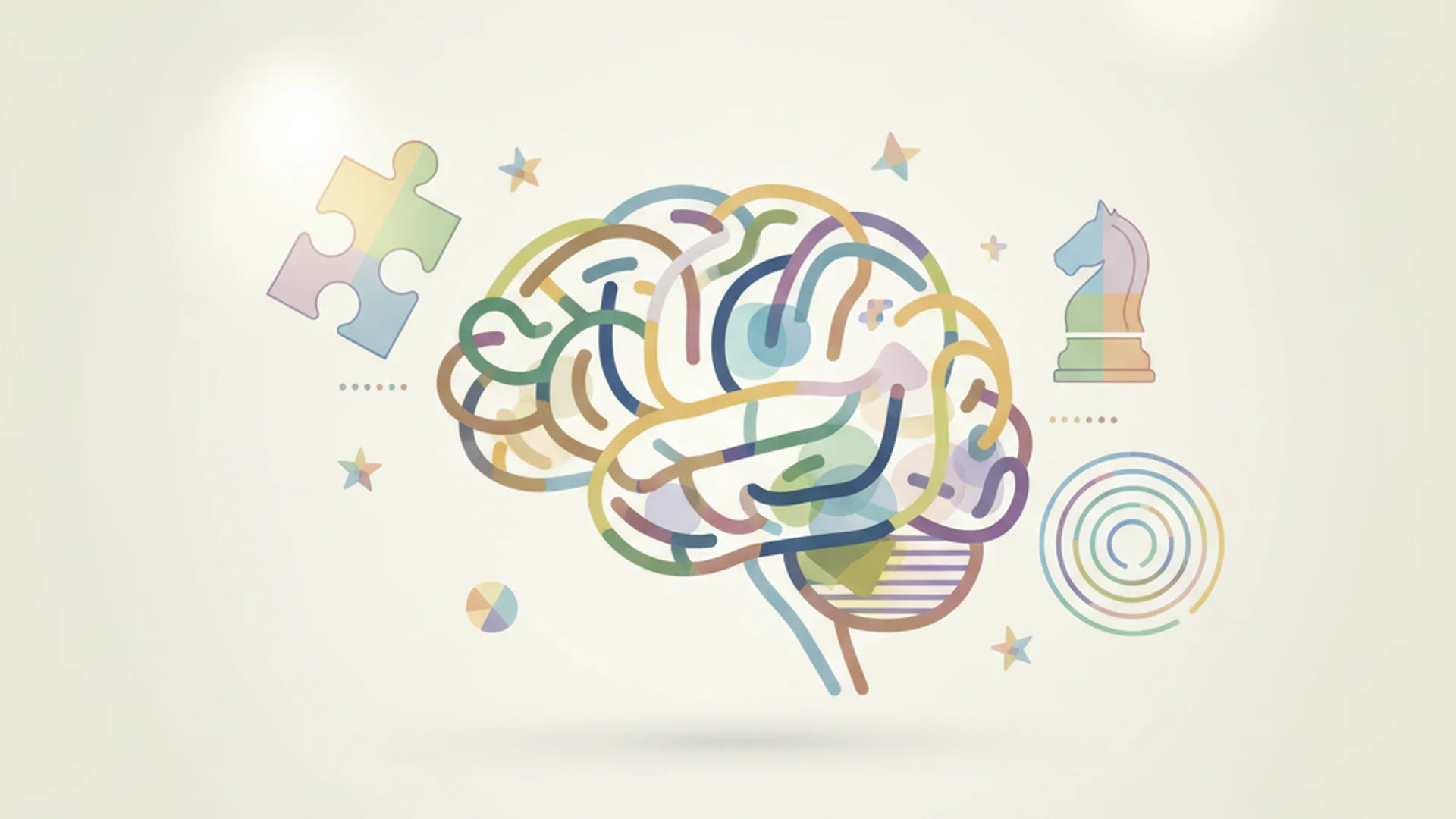
As we navigate the landscape of 2025, cognitive health has moved to the forefront of healthy aging. With approximately 7 million Americans aged 65 and older currently living with Alzheimer’s—a number projected to nearly double by 2050—the search for effective brain games for seniors has never been more critical. Whether you are looking to sharpen your own focus or supporting a loved one, understanding which activities actually provide a "neuroprotective" benefit is the key to maintaining independence and mental clarity.
The 2025 Landscape of Senior Brain Health
The science of neuroplasticity—the brain’s ability to reorganize itself by forming new neural connections—has advanced significantly in the last year. We no longer view cognitive decline as an inevitable slide. Instead, researchers now focus on "cognitive reserve." This is essentially a buffer of strong neural connections that can help the brain "work around" age-related changes.
Recent data shows that consistent engagement with puzzles isn't just a pastime; it's a preventative measure. Seniors who regularly tackle Crosswords or Sudoku have been found to possess brain function equivalent to individuals eight years younger than their actual chronological age.
The McGill Study: Why 2025 Changed Everything
In December 2025, a landmark study from McGill University provided a breakthrough in our understanding of how senior brain training affects brain chemistry. Researchers found that 30 minutes of intensive cognitive training using AI-driven platforms increased acetylcholine levels by 2.3%.
Acetylcholine is a vital neurotransmitter responsible for learning and memory. This increase effectively restored "cholinergic health" to levels typically seen in adults a full decade younger. This study is significant because it proves that the right kind of digital interaction can cause physical, chemical changes in the brain, moving beyond mere "game-playing" into the realm of clinical intervention.
Advertisement
The "Classics" vs. The "Clickers"
When choosing cognitive games for the elderly, a common debate arises: Are traditional board games better than modern apps? The answer lies in the specific cognitive function you wish to target.
Traditional Board Games and Puzzles
Classic games like Chess, Bridge, and Logic Puzzles offer something that digital apps often lack: social complexity.
- Bridge: Requires memory, strategic planning, and cooperation with a partner.
- Chess: Enhances pattern recognition and foresight.
- Crosswords: Excellent for "fluency" and verbal memory.
Modern Digital Training
Digital platforms excel at "speed of processing." Apps like Neurobics and BrainHQ use real-time AI to ensure you are always playing at the edge of your ability. A long-term study found that speed-of-processing training reduced the risk of dementia by 29% over a 10-year period.
Top 5 Brain Games for 2026
Based on the latest clinical recommendations, these five activities provide the most "bang for your buck" in terms of cognitive health.
1. Advanced Sudoku and Logic Puzzles
As a Sudoku tournament director, I’ve seen firsthand how Sudoku challenges the brain's deductive reasoning. To get the most benefit, you must move beyond the "Easy" levels. Once a puzzle becomes easy, the brain stops growing.
2. Strategy-Based Card Games (Bridge and Hearts)
These games require "executive function"—the ability to plan, focus attention, and juggle multiple tasks. Because these are usually played with others, they also combat social isolation, which is a major risk factor for cognitive decline.
3. Action Video Games
While it might seem counterintuitive to see a 70-year-old playing a 3D action game, 2025 research suggests these games improve the brain's "ability to learn how to learn." They tax visual attention and spatial awareness in ways that stationary puzzles cannot.
4. Crossword Puzzles
Regular crossword solving has been shown to delay the onset of memory decline by an average of 2.5 years. For those looking to improve, check out these 10 Crossword Solving Strategies the Pros Use.
5. Memory Match and Pattern Recognition
Games like Memory Match or Simon Says help maintain short-term visual memory. These are particularly useful for maintaining the ability to recognize faces and locations.
| Game Type | Primary Benefit | Recommended Frequency |
|---|---|---|
| Sudoku | Logical Reasoning | 3-4 times weekly |
| Crosswords | Verbal Fluency | Daily |
| Bridge | Social Strategy | Weekly |
| 3D Games | Spatial Awareness | 2 times weekly |
The "Challenge Rule": Why Boredom is the Enemy
The most important takeaway for senior brain training is what I call the "Challenge Rule." For a game to benefit the brain, it must be difficult enough to be slightly frustrating.
If you can complete a Word Search while watching television and holding a conversation, your brain is on "autopilot." While this is relaxing, it isn't building new neural pathways. To achieve "Far Transfer"—where game skills translate to real-life benefits—you must constantly increase the difficulty or switch to an entirely new game type.
Advertisement
How to Build a 30-Minute "Brain Routine"
You don't need to spend hours a day to see results. Consistency is more important than duration. Here is a sample schedule:
- Minutes 1-10: Warm-up with a familiar game like 2048 or Minesweeper.
- Minutes 11-25: High-intensity challenge. This should be a new or difficult puzzle, such as a Nonogram or an advanced Daily Challenge.
- Minutes 26-30: Cool down with a social or verbal task, like a Word Ladder.
Common Mistakes to Avoid
Even the best intentions can be sidelined by common misconceptions about brain health.
1. The "Near Transfer" Trap
Many seniors become masters at one specific game, like Snake or Tetris, and assume their overall memory is improving. In reality, they are often just getting better at that specific game. This is "Near Transfer." To achieve "Far Transfer," you must cross-train across different categories (Logic, Word, Spatial).
2. The Multitasking Myth
Neuroscience in 2025 confirms that humans do not multitask; we "task-switch" rapidly. This increases brain fatigue and reduces the effectiveness of the training. When playing brain games for seniors, turn off the TV and focus entirely on the task at hand.
3. Falling for Fear-Based Ads
Be wary of apps that use "negativity bias" in their marketing. If an ad implies you will get dementia unless you buy their specific product, proceed with caution. Look for tools backed by peer-reviewed research in journals like Nature or The BMJ.
4. Ignoring Physical Health
Brain games are a supplement, not a replacement, for a healthy lifestyle. Physical exercise increases blood flow to the brain, which provides the oxygen and nutrients needed for those new neural connections to form.
Frequently Asked Questions
Can brain games actually prevent dementia?
While no game can "prevent" dementia entirely, they help build "cognitive reserve." This buffer of strong neural connections can delay the appearance of symptoms and slow the rate of decline once it begins. It's about life quality and extending the period of independence.
Are digital apps better than traditional puzzles?
Neither is objectively "better," as they serve different purposes. Digital apps are superior for improving processing speed and visual attention due to their fast-paced nature. Traditional games, however, offer social interaction and complex strategic thinking that apps often lack. A mix of both is ideal.
When is it "too late" to start brain training?
It is never too late. A 2025 study showed that even participants in their 80s with lower baseline cognitive scores saw significant benefits from starting new brain training programs. The brain remains "plastic" and capable of change throughout the entire lifespan.
How long should a senior play daily?
Experts recommend 15 to 30 minutes of focused, challenging play. Playing for hours on end at an "easy" level is less effective than 15 minutes of a game that truly challenges your thinking.
Beyond the Screen: The Role of Lifestyle
While games are a vital tool, they work best as part of a holistic approach to brain health.
- Social Multiplier: Playing games like Connect Four or Hangman with grandchildren provides emotional benefits that enhance cognitive training.
- Dual-Task Training: A major trend for 2026 is the rise of "dual-task" games. This involves performing a mental task while doing a light physical activity, such as solving Math Puzzles while walking. This targets "executive function" better than sitting still.
- Diet and Sleep: No amount of Sudoku can overcome a chronic lack of sleep or a poor diet. Ensure you are fueling your brain with the nutrients it needs to build those new connections.
Conclusion
Cognitive health is not a destination but a lifelong journey of curiosity. By incorporating a variety of brain games for seniors into your daily routine, you aren't just passing the time—you are actively fortifying your mind against the challenges of aging. Whether you prefer the tactile feel of a newspaper crossword or the sleek interface of a modern app, the most important step is to start today and keep the challenge high.
Ready to Start?
Begin your cognitive health journey with our daily puzzles.
Put it into practice
Keep reading
Brain Health
Best Brain Games Ranked: Science-Backed Picks for 2025–2026
Explore the best brain games ranked by scientific efficacy. From Elevate to Chess, discover which cognitive tools actually improve memory and focus in 2025.
Oct 3, 2026 15 min
Brain Health
Brain Games for Problem Solving: Sharpen Your Critical Thinking in 2025
Unlock your cognitive potential with the best brain games for problem solving. Explore science-backed strategies, trends for 2025, and expert tips to boost logic.
Sep 4, 2026 12 min
Brain Health
Brain Games After Stroke: The 2025 Guide to Cognitive Rehabilitation
Explore how brain games after stroke can accelerate recovery. Learn about neuroplasticity, AI-driven puzzles, and expert-backed strategies for rehabilitation.
Jul 13, 2026 12 min
Advertisement