Brain Games for Focus: The 2025 Guide to Improving Concentration
Discover how specific brain games for focus can rejuvenate your cognitive pathways. Explore the latest 2025 research on concentration games and cognitive health.
By Free To Play Puzzles Editorial Team 12 min read
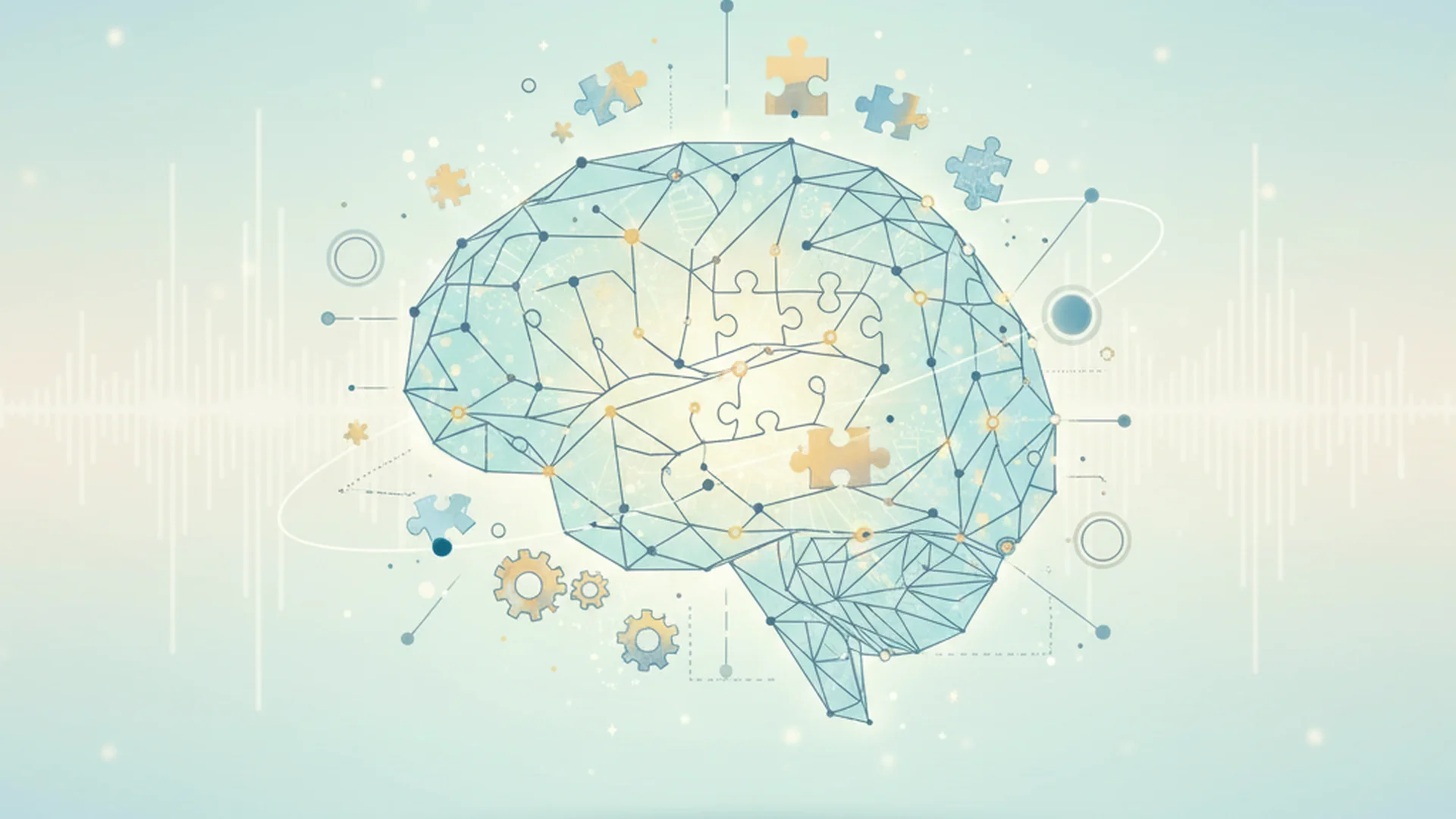
Crossword constructors and competitive solvers depend on sustained attention: when building a complex grid, a single slip in concentration can undo hours of work. In that world, focus isn't just a soft skill—it’s a measurable cognitive asset.
The quest for better mental performance has led many to explore brain games for focus, but the landscape has changed dramatically as we move through 2025. We are moving away from the era of "sensationalist" brain training and into a period of clinical precision. Recent research suggests that while not every game is a magic bullet, the right concentration games—played with the right methodology—can effectively turn back the clock on your cognitive age.
The Science of Cognitive Rejuvenation in 2025
The most significant breakthrough in recent months comes from McGill University. A 2025 clinical study monitored older adults who engaged with specific brain games for 30 minutes a day over a 10-week period. The results were staggering: participants showed increased levels of acetylcholine—a neurotransmitter essential for focus and learning—at levels typically observed in individuals 10 years younger.
However, the science also highlights a "Specificity Trap." A 2025 meta-analysis confirmed that while players improve significantly within the games they practice (a statistically significant improvement at $P < 0.05$), "far transfer"—the ability to apply that focus to unrelated real-life tasks like writing a report or driving—remains a hurdle. To bridge this gap, your training must be intentional.
Traditional Puzzles vs. Digital Apps: The UCLA Findings
While the brain training app market is exploding—projected to reach $39 billion by 2033—research from UCLA Health (2024–2025) suggests that we shouldn't abandon traditional paper-and-pencil puzzles.
The study found that completing number puzzles, such as Sudoku, more than once a day was correlated with cognitive performance levels 8 years younger than the user's chronological age. Traditional puzzles often require a different type of tactile engagement and "deep work" that fast-paced digital apps sometimes bypass.
Why Traditional Puzzles Win on Focus
- Reduced Distraction: No notifications or "freemium" interruptions.
- Sustained Engagement: Completing a difficult Crossword requires 20-40 minutes of uninterrupted thought.
- Visual-Spatial Mapping: Physically writing numbers or letters aids in memory encoding.
Advertisement
The "Cross-Training" Approach to Focus
Just as you wouldn't go to the gym and only train your left bicep, you cannot achieve peak focus by playing only one type of game. We recommend a "Cognitive Cross-Training" regimen.
To maximize the benefits of brain games for focus, you should rotate your activities based on three primary cognitive pillars:
| Pillar | Game Examples | Primary Benefit |
|---|---|---|
| Language | Crosswords, Word Scramble | Verbal fluency and retrieval speed |
| Logic/Math | Sudoku, 2048, Minesweeper | Pattern recognition and executive function |
| Spatial/Action | Tetris, Snake, StarCraft | Visual attention and reaction time |
Real-World Example: The "Daily Trifecta"
Imagine a professional developer who starts their morning with a quick round of 2048 to wake up their logic circuits, tackles a Daily Challenge at lunch for a quick dopamine boost, and ends the day with a hard Sudoku to practice sustained, quiet concentration. This variety prevents the "plateau effect."
New Trends: AI Personalization and the "Personal Curriculum"
As we move into 2026, two major trends are reshaping how we use concentration games.
1. AI and Biometric Feedback
New versions of apps like CogniFit and Elevate have introduced "Generative Difficulty." Using smartphone sensors to track heart rate variability or eye-tracking data, the AI adjusts the game’s difficulty in real-time. If the AI detects that you are breezing through a level, it immediately spikes the difficulty to keep you in the "Flow State"—that sweet spot between boredom and anxiety.
2. The Personal Curriculum Craze
A fascinating trend popularized on platforms like TikTok in early 2026 is the "Personal Curriculum." To combat "brain rot" caused by short-form video consumption, users are setting monthly deep-dive topics (e.g., "The History of Architecture" or "Quantum Physics Basics"). They use these topics as a form of high-level brain training, combining reading with logic-based memory games to synthesize the information.
The Holistic Formula: Exercise + Gaming
One of the most vital findings of 2025 is the synergy between physical and mental exercise. Research shows that aerobic exercise increases the production of BDNF (Brain-Derived Neurotrophic Factor), a protein that acts like fertilizer for your brain.
If you play brain games for focus immediately after a 20-minute walk or jog, your brain is significantly more "plastic" and ready to form new neural connections. This combination is the gold standard for anyone looking to improve their brain health.
Advertisement
Common Mistakes to Avoid
Even the best concentration games can be ineffective if used incorrectly. Avoid these common pitfalls:
- Chasing High Scores, Not Skill: Many users find "glitches" or patterns to get high scores without actually focusing harder. If you aren't feeling a slight sense of frustration, you aren't growing.
- The "10% Myth": Some apps claim to "unlock the other 90% of your brain." This is scientifically false. You use 100% of your brain; games simply improve the efficiency of existing neural pathways.
- Neglecting Sleep: Sleep is the period when your brain "saves" the progress you made during your games. Training while sleep-deprived is like trying to write on water.
- Overtraining: Playing for more than 60 minutes often leads to diminishing returns. Stick to the 15–30 minute window for optimal results.
Frequently Asked Questions
Do brain games actually work or are they just games?
Current 2025 research suggests they work for "near transfer." This means if you play games that require visual attention, your visual attention in real-life tasks will likely improve. However, they are a supplement to, not a replacement for, a healthy lifestyle and formal education.
How long should I play to see results?
Consistently playing for 15 to 30 minutes daily is the recommended dose. Most studies, including the recent McGill study, show that results begin to manifest after about 8 to 10 weeks of consistent practice.
Can brain games prevent Alzheimer's?
There is no definitive proof that games can "prevent" or "cure" Alzheimer's disease. However, they are highly effective at building "cognitive reserve." This acts as a buffer, allowing the brain to function better for longer, even if some age-related cell damage occurs.
Are video games like StarCraft better than "brain apps"?
In some cases, yes. Complex action video games require high-speed executive function, multitasking, and visual-spatial reasoning. 2025 data indicates these games can be more efficient at improving specific types of visual attention than simpler "tap-and-match" apps.
Is there a "best" time of day to play?
Most experts recommend playing when your "cognitive load" is naturally starting to dip, or immediately following physical exercise. Using a 5-minute concentration game as a "brain break" during work can also help reset your focus for the next task.
Conclusion: Building Your Cognitive Reserve
The brain is remarkably resilient and adaptable. Whether you are solving a complex Crossword, navigating a Sliding Puzzle, or testing your logic in Sudoku, you are doing more than just passing time. You are reinforcing the very scaffolding of your mind.
The key to using brain games for focus in 2025 is intentionality. Don't just play for the sake of the game—play for the challenge. Seek out the puzzles that make you sweat a little, combine them with physical movement, and maintain a daily puzzle habit. Your brain, 10 years from now, will thank you for the effort you put in today.
Ready to Level Up?
Start your focus training today with our curated collection of puzzles.
Put it into practice
Keep reading
Brain Health
Brain Games After Stroke: The 2025 Guide to Cognitive Rehabilitation
Explore how brain games after stroke can accelerate recovery. Learn about neuroplasticity, AI-driven puzzles, and expert-backed strategies for rehabilitation.
Jul 13, 2026 12 min
Brain Health
Brain Teasers vs Puzzles: Key Differences for Brain Health
Explore the vital differences between brain teasers vs puzzles. Discover which cognitive exercises offer the best benefits for mental longevity and focus in 2025.
Apr 17, 2026 10 min
Brain Health
Best Brain Games Ranked: Science-Backed Picks for 2025–2026
Explore the best brain games ranked by scientific efficacy. From Elevate to Chess, discover which cognitive tools actually improve memory and focus in 2025.
Oct 3, 2026 15 min
Advertisement