Puzzles and Neuroplasticity: How Brain Games Reshape Your Mind
Discover how puzzles and neuroplasticity work together to reverse brain age, increase gray matter, and improve cognitive health through strategic gameplay.
By Free To Play Puzzles Editorial Team 12 min read
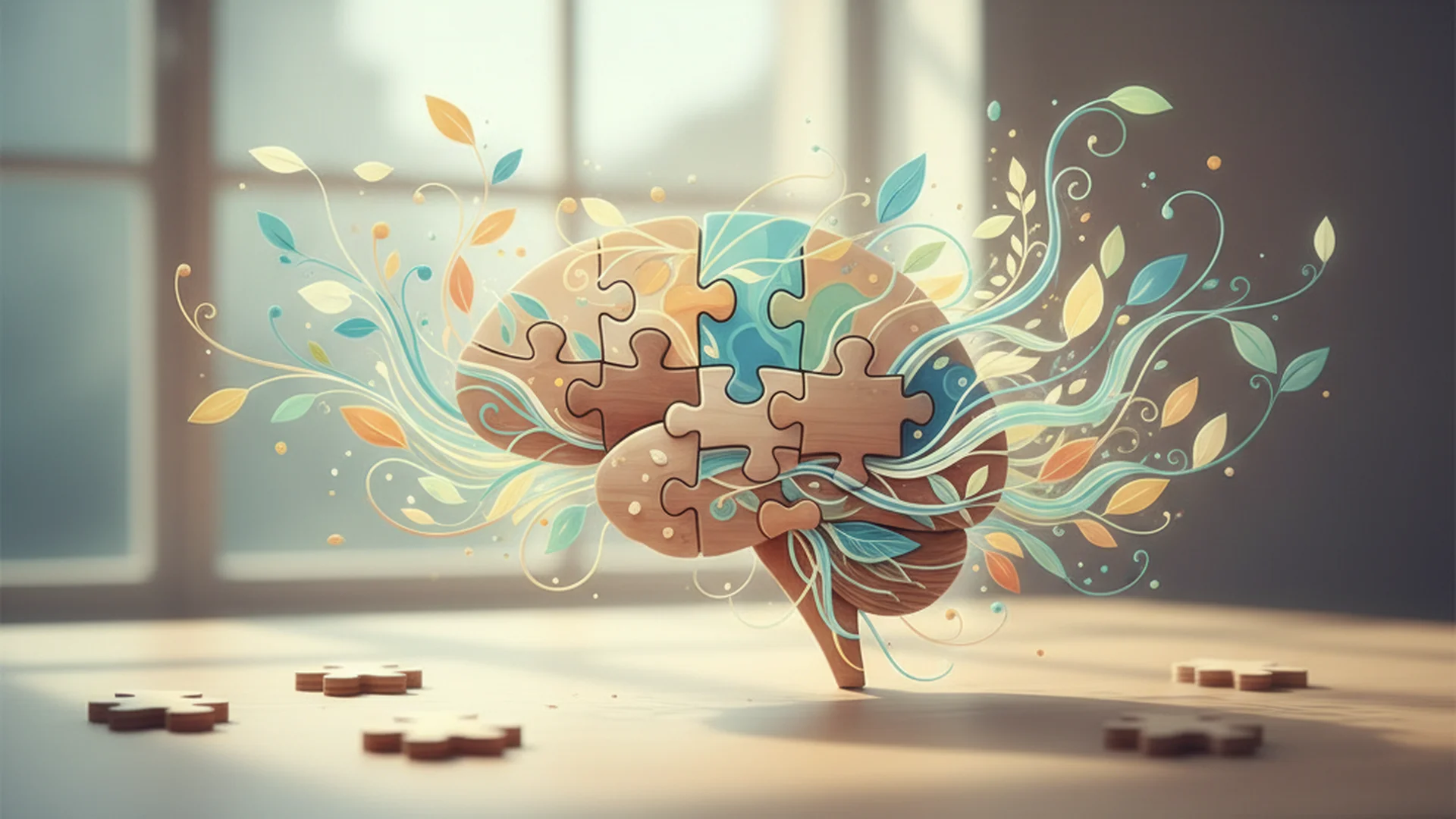
For decades, the scientific community believed that the adult brain was a static, unchanging organ—that once we reached maturity, our neural pathways were "hard-wired" and destined for a slow, inevitable decline. However, the emergence of modern neuroscience has shattered this myth. We now know that the brain possesses a remarkable quality called neuroplasticity: the ability to reorganize itself by forming new neural connections throughout life.
When we engage with puzzles neuroplasticity becomes the primary mechanism through which we maintain and even improve our cognitive health. Strategic gameplay—from ancient logic puzzles to 8-bit classics—challenges the architecture of the mind. Today, we are seeing that brain games reshape brain structures in ways that were previously thought impossible.
The Science of "The Win": Neurotransmitters and Brain Age
What happens in the brain when you finally find that missing piece of a jigsaw or solve a difficult Sudoku grid? It isn't just a moment of satisfaction; it is a chemical cascade that facilitates learning and structural change.
The Role of Acetylcholine and the INHANCE Trial
A landmark 2025 study from McGill University, known as the INHANCE trial, provided some of the most compelling evidence to date regarding cognitive restoration. Researchers found that 10 weeks of adaptive brain training restored cholinergic health—specifically the levels of the neurotransmitter acetylcholine—in adults aged 65–83. The results were staggering: their chemical profiles returned to levels typically seen in individuals 10 years younger.
Acetylcholine is the brain's "delivery system" for attention and learning. By engaging in targeted puzzles, you are essentially "greasing the gears" of your neural transmission, making it easier for your brain to process new information and focus on complex tasks.
The Dopamine Reward Loop
Every "mini-win" in a puzzle triggers the release of dopamine. While often associated solely with pleasure, dopamine is actually a critical component of neuroplasticity. It signals to the brain that a specific pathway was successful, encouraging the strengthening of those specific synapses. This reward-based learning is why a Daily Challenge can be so effective; it creates a consistent loop of effort, success, and neurological reinforcement.
Cross-Training Your Mind: The V.N.C. Protocol
Just as you wouldn't expect a full-body workout from only doing bicep curls, you cannot expect total brain health from doing the same type of puzzle every day. To truly harness how brain games reshape brain tissue, neurologists now recommend the "V.N.C." Protocol: Variety, Novelty, and Consistency.
Variety: Targeting Different Lobes
Different puzzles stimulate different regions of the brain. If you only play Word Search, you are primarily exercising your language and pattern recognition centers. To achieve a well-rounded "neuro-fitness" profile, you must branch out:
- Crosswords and Word Games: These stimulate the temporal lobe, which is responsible for language and long-term memory.
- Sudoku and Logic Puzzles: These activate the parietal lobe, which handles spatial and logical reasoning.
- Retro Strategy Games: Games like Space Invaders or Tetris improve processing speed and reaction time, engaging the motor cortex and visual processing centers.
Novelty: The Harvard "Stop Rule"
Experts from Harvard Medical School have introduced what is known as the "Stop Rule." The moment a puzzle becomes "relaxing" or easy, its neuroplastic benefit drops significantly. To keep the brain reshaping itself, you must constantly seek out novelty. If you are a master of Math Puzzles, your greatest cognitive gains will actually come from trying Crosswords. Forcing the brain to navigate unfamiliar territory is what builds new neural pathways.
Consistency: The Power of 15 Minutes
Neuroplasticity is not built through occasional marathons. A 3-hour puzzle session once a week is far less effective than 15–30 minutes of daily engagement. Daily repetition allows for "synaptic pruning" and strengthening to occur during sleep, solidifying the gains made during the day. For more on this, see our guide on the Daily Puzzle Habit: Building a Routine.
| Puzzle Type | Primary Brain Region | Cognitive Benefit |
|---|---|---|
| Number Puzzles | Parietal Lobe | Logical Reasoning |
| Word Games | Temporal Lobe | Language/Memory |
| Jigsaws | Occipital/Parietal | Spatial Awareness |
| Strategy Games | Prefrontal Cortex | Executive Function |
Advertisement
Beyond the Screen: The "Secret Sauce" of Physical Exercise
One of the most exciting developments in 2025/2026 research is the discovery of how physical activity acts as a catalyst for mental training. When we exercise, our bodies produce a protein called BDNF (Brain-Derived Neurotrophic Factor).
BDNF is often described by neuroscientists as "Miracle-Gro" for the brain. It supports the survival of existing neurons and encourages the growth of new ones.
The Dual-Task Approach
For maximum neuroplastic benefit, experts now recommend the "Dual-Task" approach. This involves combining mental puzzles with physical activity.
- Example 1: Listening to a challenging riddle-based podcast while on a brisk walk.
- Example 2: Playing a memory-based game like Simon Says during rest periods of a workout.
- Example 3: Engaging in "Exergaming," where physical movement is required to solve on-screen puzzles.
By increasing blood flow and BDNF through movement, you create a fertile environment for the brain to rewire itself more efficiently during puzzle-solving.
Recent Trends: The Future of Neuro-Fitness (2026)
As we move through 2026, the intersection of technology and neuroscience is creating personalized ways to keep our minds sharp.
Digital Twin Modeling
High-resolution MRI (up to 11.7T) is now being used to create "digital twins" of individual brains. This allows researchers to simulate how different types of puzzles will affect a specific person's neural architecture. This level of precision means that in the near future, your doctor might prescribe a specific regimen of Logic Puzzles to target a weakness in your working memory.
Real-Time Biofeedback
A growing trend in "Neuro-Fitness" centers involves wearing EEG headbands while playing games. These devices measure brain activity in real-time, adjusting the difficulty of a Minesweeper or 2048 session based on your current cognitive fatigue. If your brain is in a "flow state," the game pushes you harder; if you are hitting a wall of frustration, it recalibrates to keep you in the optimal learning zone.
Common Mistakes to Avoid
While the benefits of puzzles are vast, there are several pitfalls that can hinder your progress.
- The "Magic Bullet" Fallacy: Many believe that puzzles alone can offset a poor lifestyle. In reality, puzzles neuroplasticity works best when supported by the "Four Pillars": quality sleep, Omega-3-rich nutrition, physical exercise, and social connection.
- Multitasking While Puzzling: Solving a puzzle while watching television or scrolling social media negates almost all neuroplastic benefits. True structural change requires deep, focused attention.
- Staying in Your Comfort Zone: If you are a "math person," doing more math puzzles offers diminishing returns. You must cross-train with word or spatial puzzles to see real growth.
- The "10% of the Brain" Myth: Do not fall for marketing that claims to help you "unlock the other 90% of your brain." We use 100% of our brain; puzzles simply help the different parts communicate more efficiently, improving "functional connectivity."
Advertisement
Frequently Asked Questions
Do brain games make me smarter in real life?
Science distinguishes between "near transfer" and "far transfer." Near transfer means you get better at the specific game you are playing. Far transfer means those skills translate to daily life. While puzzles may not increase your "general IQ," they significantly improve executive functions like processing speed, working memory, and focus, which are essential for navigating real-world challenges.
Is Sudoku better than Crosswords?
Neither is inherently "better." They target different regions. Sudoku is excellent for logical deduction and spatial reasoning (parietal lobe), while Crosswords focus on verbal memory and fluid intelligence (temporal lobe). For the best results, you should incorporate both into your routine. You can explore Advanced Sudoku Techniques to keep the challenge fresh.
Can puzzles prevent Alzheimer’s?
It is important to be precise: puzzles do not "cure" or "prevent" the underlying pathology of dementia. However, they build "cognitive reserve"—a buffer that helps the brain function effectively despite damage. Research suggests that high levels of cognitive engagement can delay the onset of symptoms by an average of 2.5 years.
I’m in my 70s; is it too late for my brain to change?
Absolutely not. This is the biggest "neuro-myth." While children's brains are more "plastic" or spongy, adult brains retain the ability to form new synapses throughout the entire lifespan. The process may require more repetition as we age, but the brain's ability to reshape itself never truly disappears.
7-Day Brain Reshape Plan
To get started on your journey of neuro-fitness, follow this simple 7-day protocol designed to maximize variety and novelty.
- Day 1 (Logic): Spend 20 minutes solving Sudoku or Minesweeper.
- Day 2 (Language): Switch to Word Scramble or a crossword puzzle.
- Day 3 (Spatial): Try a Sliding Puzzle or Tangram to challenge your visual-spatial skills.
- Day 4 (Strategy): Play a round of 2048 and focus on long-term planning. Read our 2048 Strategy Guide for tips.
- Day 5 (Memory): Test your recall with Memory Match or Simon Says.
- Day 6 (Dual-Task): Go for a walk while solving verbal riddles or playing a word-association game with a friend.
- Day 7 (Novelty): Pick the game type you found most difficult this week and tackle it at a higher difficulty level.
Conclusion
The evidence is clear: our brains are not set in stone. Through the deliberate use of puzzles, we can influence our neural architecture, boost critical neurotransmitters like acetylcholine and dopamine, and build a robust cognitive reserve. By following the V.N.C. protocol and embracing the "Stop Rule," you can ensure that your daily gaming habit is more than just a pastime—it’s a powerful tool for lifelong brain health.
Strategy and play have always helped define the human experience. Whether you’re mastering Advanced Sudoku Techniques or revisiting the classics, remember that every challenge you face is an opportunity for your brain to grow stronger.
Ready to Start?
Challenge your mind with our daily selection of brain games.
Put it into practice

Keep reading
Brain Health
Brain Games for Insomnia: Using Sleep Puzzles to Quiet Your Mind
Discover how specific brain games for insomnia and sleep puzzles can stop cognitive hyperarousal. Learn expert techniques from a pro cruciverbalist.
Aug 4, 2026 12 min
Brain Health
Puzzles for Dementia Prevention: Strengthening Your Cognitive Reserve
Discover how puzzles dementia prevention strategies work. Learn the science behind brain games dementia research and how mental exercise delays cognitive decline.
Apr 10, 2026 15 min
Brain Training
Puzzles and Neuroplasticity: How Brain Games Reshape Your Mind
Discover how puzzles leverage neuroplasticity to rewire your brain. Science-backed insights on cognitive enhancement through Sudoku, crosswords, and more.
Jan 19, 2025 12 min
Advertisement