Harmonizing the Mind: The Rise of Music Therapy Puzzles
Discover how music therapy puzzles and musical brain games therapy improve memory, mood, and neuroplasticity through interactive auditory challenges.
By Free To Play Puzzles Editorial Team 10 min read
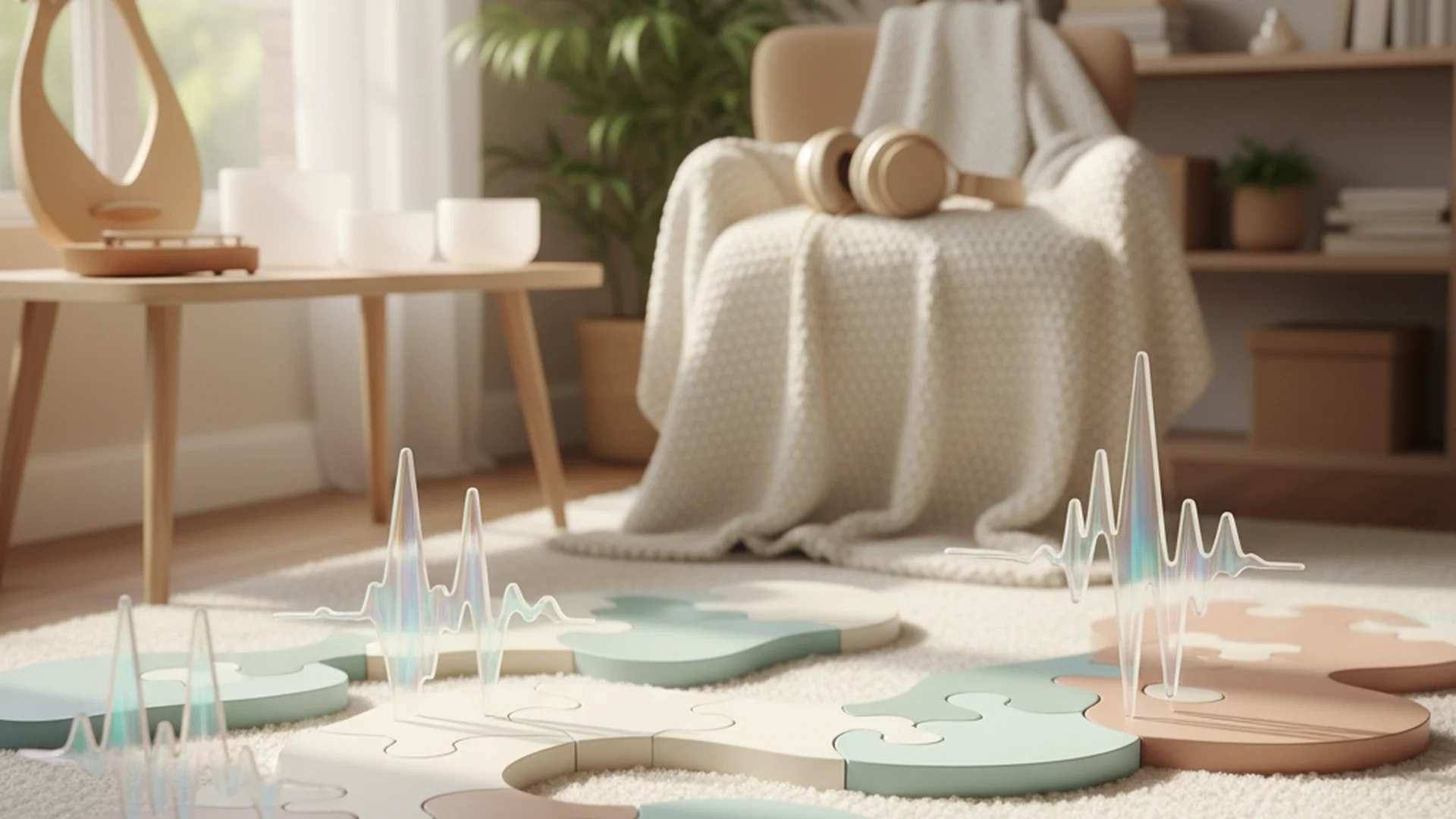
Imagine the precise logic of a crossword puzzle blending seamlessly with the rhythmic soul of a symphony. This isn't just a creative exercise; it is the foundation of music therapy puzzles, a burgeoning field that uses sound to unlock cognitive potential. As we navigate 2025, the intersection of auditory stimulation and strategic gameplay has evolved into a clinical powerhouse known as Musical Brain Games Therapy. By leveraging the way our brains process patterns, rhythm, and melody, these puzzles offer a multi-sensory approach to mental health that traditional games often overlook.
The Science of Musical Brain Games Therapy
The human brain is wired for rhythm. When we engage with musical brain games therapy, we aren't just "listening"—we are activating the prefrontal cortex, the hippocampus, and the motor cortex simultaneously. This "whole-brain" activation is what makes music therapy uniquely effective for cognitive rehabilitation puzzles.
Recent research published in Frontiers in Psychology (2025) highlights that rhythmic sessions can lead to a 60% improvement in memory performance for older adults. This occurs because music provides a "scaffold" for the brain, making it easier to store and retrieve information. When a puzzle is added to this mix—such as identifying a missing note in a sequence or matching a rhythm to a visual pattern—the brain’s neuroplasticity is kicked into high gear.
Real-World Examples of Music Therapy Puzzles
To understand how these concepts work in practice, let’s look at how music is being gamified for therapeutic outcomes.
1. Musical Bingo and Pattern Recognition
In many clinical settings, traditional bingo is replaced with song snippets. Participants must not only recognize the tune but also categorize it by genre or decade. This requires active recall and pattern matching, transforming a simple game into a powerful cognitive exercise.
2. Rhythmic Sequencing Challenges
Digital tools now allow users to engage in "rhythm puzzles." A user might hear a four-beat pattern and be asked to replicate it using a visual interface, similar to a high-tech version of Simon Says. This is particularly effective in speech therapy games where rhythm and cadence are essential for language recovery.
3. AI-Driven Personalization
Platforms like Endel and Brain.fm use artificial intelligence to create "closed-loop" soundscapes. These aren't just background noise; they are interactive puzzles for the subconscious. The music adapts in real-time to your heart rate and circadian rhythm, challenging your brain to synchronize its internal clock with the external beat.
Advertisement
The Multi-Sensory Advantage
One of the most significant trends in 2026 is "Multi-Sensory Integration." This involves combining auditory puzzles with visual or tactile tasks. For example, a patient might be asked to assemble a jigsaw puzzle while a specific frequency of music plays. If they slow down, the music shifts tempo, providing an auditory cue to refocus.
This "cross-talk" between the brain's hemispheres is why music therapy is so effective for sensory processing puzzles. By forcing the brain to manage two different types of input—sound and logic—we strengthen the neural pathways that connect our senses to our executive functions.
Modern Trends: Brain Flossing and EEG Closed-Loops
The field is moving fast. Two of the most exciting developments for 2025-2026 include:
- Brain Flossing: This involves spatialized, 360-degree audio puzzles. The user must track a sound as it moves through a virtual space, requiring intense spatial awareness and auditory focus. It is designed to "flush out" brain fog and enhance mental clarity.
- EEG-Based Therapy: Clinical settings now use EEG headbands to monitor brainwaves during gameplay. If the user’s cognitive load becomes too high, the musical puzzle automatically simplifies its rhythm to help the user stay in a "flow state."
For those working with specific conditions, such as neurodivergence, these trends are life-changing. You can read more about tailored approaches in our guide to autism and puzzles.
Common Mistakes to Avoid
While the benefits are vast, there are several common pitfalls that can hinder progress:
- Passive vs. Active: Simply having music on in the background is not "puzzles music therapy." True benefit requires active problem-solving.
- Over-Generalization: What works for one person may distract another. Puzzles must be personalized to the individual's musical taste and cognitive baseline.
- Lack of Consistency: Neuroplasticity—the literal rewiring of the brain—takes time. Expecting instant results after one session is a mistake. Experts recommend 3 to 5 sessions per week.
- Replacing Tradition: Music therapy is a powerful tool, but it is a complementary approach. It should be used alongside physical or occupational therapy, not as a total replacement.
Advertisement
Frequently Asked Questions
Do I need to be a musician to benefit from these games?
No. The goal of music therapy puzzles is therapeutic intervention, not musical performance. Success is measured by how your brain engages with the problem-solving aspects of the music, not your ability to carry a tune or play an instrument.
Is this just for seniors with memory loss?
While it is highly effective for dementia and Alzheimer’s, musical brain games therapy is also used for ADHD, stroke rehabilitation, autism, and general stress management for adults of all ages. It is a versatile tool for anyone looking to improve cognitive "processing speed."
Can I do this at home, or do I need a therapist?
Many digital tools like Brain.fm or Spiritune are designed for self-guided use. However, if you are seeking help for specific clinical goals—such as gait training after a stroke or speech rehabilitation—it is best to consult a board-certified music therapist (MT-BC).
How long does a session need to be to see results?
Research suggests that even "micro-sessions" of 10 to 20 minutes can yield immediate improvements in mood and focus. For long-term cognitive "rewiring," a consistent routine over several months is necessary.
| Goal | Frequency | Recommended Game Type |
|---|---|---|
| Mood Boost | Daily (10 min) | AI-Generated Soundscapes |
| Memory Retention | 3x Weekly (20 min) | Musical Bingo / Recall |
| Focus & Productivity | Daily (During Work) | Rhythmic Sequencing |
Conclusion
The evolution of music therapy puzzles represents a bridge between art and science. By turning the act of listening into an act of solving, we provide our brains with a unique workout that improves memory, lowers the risk of dementia, and enhances our daily mood. Whether you are using a high-tech EEG headband or a simple rhythm-matching game on your phone, the key is active participation.
As we look toward the future of cognitive health, the integration of sound and logic will only become more sophisticated. For now, the message is clear: if you want to keep your mind sharp, stop just listening to the music—start solving it.
Ready to Harmonize Your Mind?
Explore our collection of brain-boosting games and puzzles today.
Put it into practice
Keep reading
Therapy
Therapeutic Puzzles: Clinical Applications and the Science of Brain Games
Explore the clinical benefits of therapeutic puzzles and brain games. Learn how structured puzzling boosts acetylcholine, improves IQ, and aids occupational therapy.
May 10, 2025 12 min
Therapy
Puzzles Physical Therapy: The Science of Cognitive-Motor Recovery
Explore how puzzles in physical therapy (PT) are revolutionizing recovery in 2025. Learn how cognitive activities and physical movement accelerate healing.
May 18, 2026 12 min
Therapy
The Ultimate Guide to Cognitive Rehabilitation Puzzles and Brain Injury Games
Discover how cognitive rehabilitation puzzles and brain injury games use neuroplasticity to accelerate recovery after TBI or stroke. Expert tips for 2025.
Sep 21, 2026 12 min
Advertisement