Rewiring the Recovery Brain: How Addiction Recovery Puzzles Facilitate Long-Term Sobriety
Discover how addiction recovery puzzles and sobriety brain games help rewire the brain, reduce cravings by 20%, and support long-term neuro-rehabilitation.
By Free To Play Puzzles Editorial Team 12 min read
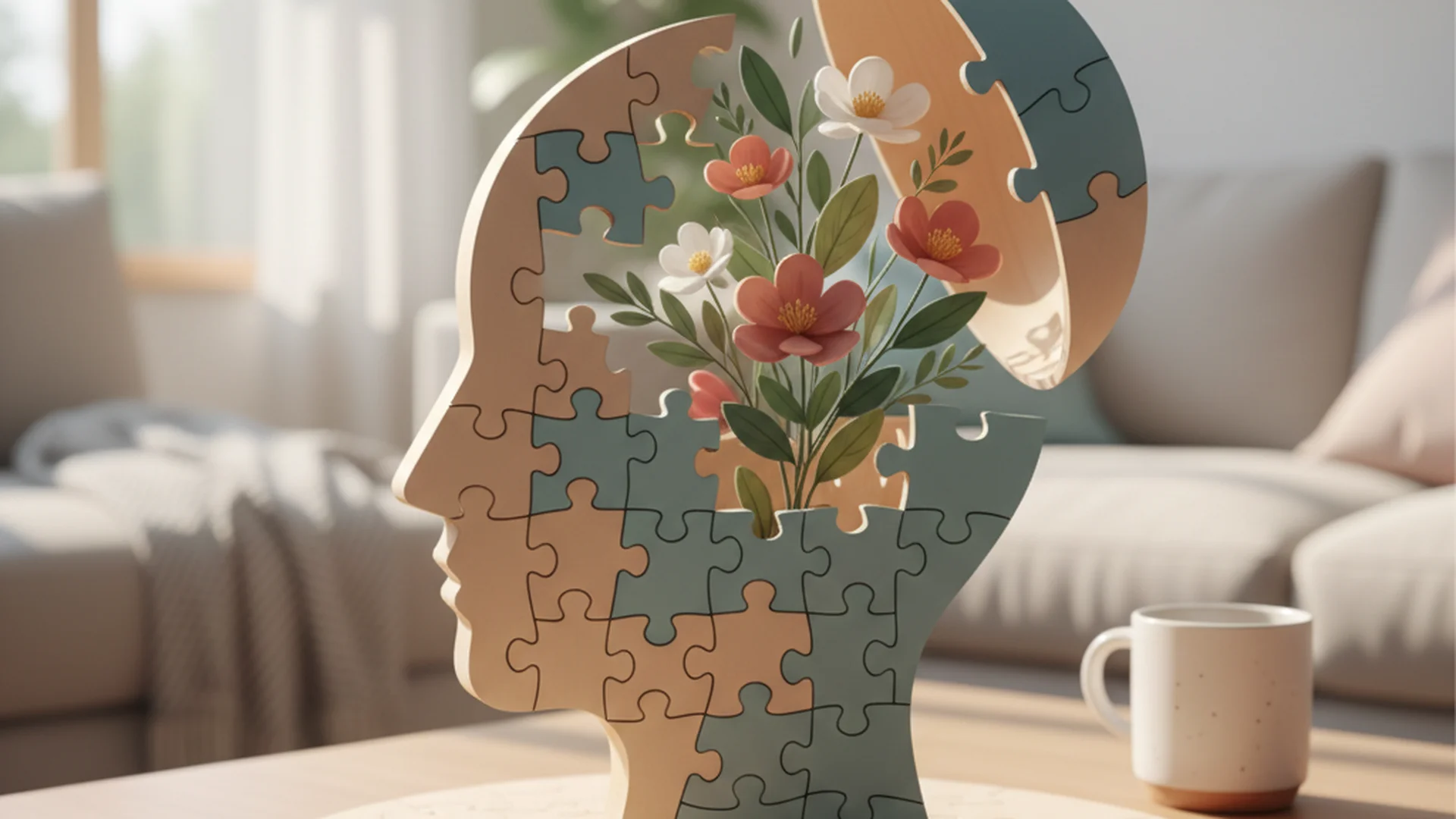
In the landscape of modern medicine, the tools we use for healing are evolving. As we move into 2025 and 2026, the focus of substance use disorder (SUD) treatment has shifted toward "holistic neuro-rehabilitation." While traditional clinical therapy remains the cornerstone of treatment, we are increasingly seeing the integration of addiction recovery puzzles as evidence-based instruments for physical brain repair.
The human brain possesses an incredible capacity for neuroplasticity—the ability to reorganize itself by forming new neural connections. For an individual in recovery, this means the damage caused by chronic substance use is not necessarily permanent. By engaging in specific Brain Training exercises, we can "rewire" the cognitive pathways responsible for impulse control, emotional regulation, and reward processing.
The Neuroscience of the "Tetris Effect"
One of the most significant breakthroughs in cognitive recovery is the discovery of how visual-spatial tasks disrupt the cycle of a craving. A landmark study revealed that playing visually stimulating puzzles like Tetris for as little as three minutes can reduce the intensity of cravings for drugs, alcohol, or even food by roughly 20%.
This phenomenon is known as the "Tetris Effect." Cravings are not just feelings; they are complex mental images. When a person craves a substance, their brain is occupied by the visual and sensory anticipation of using that substance. Because the brain has limited "bandwidth" for mental imagery, engaging in a high-intensity spatial puzzle "blocks" the mental imagery required to sustain the craving.
Restoring the Dopamine Reward System
Chronic addiction desensitizes the brain's reward system. Substances provide an artificial flood of dopamine that natural activities simply cannot match, leading to a state where nothing feels pleasurable during early sobriety. This is where sobriety brain games play a critical role.
Solving a puzzle—whether it’s a difficult Sudoku grid or a complex Word Search—provides "micro-doses" of natural dopamine. These small victories help the brain relearn how to feel a sense of achievement and pleasure from non-substance-related activities. Over time, this helps reset the reward threshold, making it easier for individuals to find joy in everyday life.
Strategic Implementation: The 15-Minute Rule
In clinical practice, we often recommend the "15-Minute Rule." A peak craving cycle typically lasts between 10 and 15 minutes before its intensity begins to fade. During this high-risk window, the brain is caught in an "obsessive loop."
By forcing the brain to pivot toward logic or spatial awareness, you create a "pattern interrupt." If you can engage with a game like Minesweeper or 2048 for the duration of that 15-minute window, you effectively bridge the gap until the neurological urge subsides.
Diversifying Your Cognitive Workout
Just as you wouldn't only train one muscle group at the gym, cognitive recovery requires a diverse approach. Different puzzles engage different neural circuits.
| Puzzle Type | Primary Cognitive Benefit | Best Used For... |
|---|---|---|
| Spatial (Jigsaws, Tetris) | Visual-spatial processing | Immediate craving interruption |
| Logic (Sudoku, Nonogram) | Deductive reasoning | Long-term impulse control |
| Word Games (Crosswords, Word Ladder) | Verbal memory & Fluency | Mental clarity and focus |
| Strategy (Connect Four, 2048) | Forward planning | Improving decision-making |
Advertisement
2025-2026 Trends in Cognitive Recovery
The field of neuro-rehabilitation is currently being transformed by technology. We are seeing a move away from "one-size-fits-all" games toward highly personalized digital therapeutics.
AI-Personalized "Brain-Biotyping"
New tools in 2026 now analyze a user's "cognitive biotype." By tracking performance in Logic Puzzles and combining it with wearable data (such as heart rate and sleep patterns), AI can serve specific challenges designed to strengthen an individual's weakest cognitive areas—whether that is working memory or sustained attention.
VR Cue Exposure Therapy
Virtual Reality (VR) puzzles are being used to simulate "high-risk" environments, such as a simulated bar or a stressful social gathering. Users are tasked with solving puzzles within these environments to "habituate" their brain to triggers while remaining in a safe, sober state. This builds "cognitive resilience" before the user encounters these triggers in the real world.
Biofeedback Integration
2025 has seen the rise of puzzle apps that sync with smartwatches. When the watch detects a spike in stress levels or a heart rate variability (HRV) pattern associated with anxiety, it automatically triggers a notification suggesting a "calming puzzle" to prevent a craving before the user even consciously realizes they are at risk.
Practical Examples of Puzzles in Recovery
To understand how this looks in a real-world setting, consider these three applications:
- The Sober Living Jigsaw: Many recovery homes now keep a large, communal jigsaw puzzle in common areas. This creates a "gamified socialization" environment where residents can bond and talk without the presence of substances, rebuilding social neural pathways.
- The "Pre-Therapy Warm-up": Some therapists now suggest 10 minutes of Word Logic Games before a session. This "warms up" the prefrontal cortex, leading to more focused and productive therapeutic breakthroughs.
- The Travel Kit: For individuals in early recovery, traveling or commuting can be a major trigger. Keeping 15 Minute Puzzle Challenges on a smartphone provides a portable safety net for high-stress environments.
Common Mistakes to Avoid
While addiction recovery puzzles are powerful, they must be used correctly to be effective.
Using High-Stress Games
In early recovery, the nervous system is often hyper-sensitive. Avoid "hyper-competitive" or high-frustration games. If a puzzle causes a significant stress spike, it can trigger the "escape" urge—the very feeling that often leads to substance use. The goal is "flow," not frustration.
The "Substitute Addiction" Trap
It is possible to develop a "substitute addiction" to gaming. While a Sudoku habit is infinitely safer than substance use, obsessive gaming can still trigger compulsive reward-seeking pathways. Balance is key.
Replacing Professional Treatment
A common misconception is that puzzles are a cure-all. They are a supplement, not a replacement. You cannot "solve" your way out of the need for clinical therapy or medical supervision. Think of puzzles as the physical therapy for your brain, while counseling is the surgery.
Advertisement
Frequently Asked Questions
Can a simple game really stop a relapse?
No game is a "cure," but puzzles serve as a vital "pattern interrupt." By forcing the brain to focus on logic or spatial awareness, they break the "obsessive loop" of a craving. This gives the individual enough time for their rational mind to take back control.
Is there a specific type of puzzle that works best?
It depends on the goal. Spatial puzzles like Tetris or jigsaw puzzles are best for immediate craving interruption because they occupy the brain's visual-spatial scratchpad. Logic puzzles like Sudoku or Math Puzzles are better for long-term cognitive repair and rebuilding impulse control.
Can I get "addicted" to the puzzles instead?
Yes, this is known as a "substitute addiction." While significantly less harmful than substance use, it is important to monitor your usage. If puzzle-playing becomes compulsive and begins to interfere with your daily life, it is important to discuss this with a counselor.
I'm not the "puzzle type." Will this still work for me?
Absolutely. The neurological benefit doesn't come from being "good" at the puzzle or even finishing it. The benefit comes from the mental effort of the brain trying to solve the problem. Even if you struggle with a Sliding Puzzle, your brain is still building those essential neural connections.
Building Your Cognitive Resilience
Integrating addiction recovery puzzles into your life is about more than just "killing time." It is a deliberate act of Mindfulness Puzzle Practice that aids in the physical restoration of your brain. By understanding the science of the Tetris effect and the importance of dopamine restoration, you can turn a simple hobby into a lifeline.
As we look toward the future of therapy, the evidence is clear: the path to sobriety is not just about what you stop doing, but about what you start doing to help your brain heal. Whether you are using Occupational Therapy Puzzles or simple mobile games, you are taking an active role in your neuro-rehabilitation.
Start Your Brain Health Journey
Explore our collection of brain-boosting games designed to improve focus and resilience.
Put it into practice
Keep reading
Therapy
The Ultimate Guide to Cognitive Rehabilitation Puzzles and Brain Injury Games
Discover how cognitive rehabilitation puzzles and brain injury games use neuroplasticity to accelerate recovery after TBI or stroke. Expert tips for 2025.
Sep 21, 2026 12 min
Therapy
Puzzles Physical Therapy: The Science of Cognitive-Motor Recovery
Explore how puzzles in physical therapy (PT) are revolutionizing recovery in 2025. Learn how cognitive activities and physical movement accelerate healing.
May 18, 2026 12 min
Therapy
Therapeutic Puzzles: Clinical Applications and the Science of Brain Games
Explore the clinical benefits of therapeutic puzzles and brain games. Learn how structured puzzling boosts acetylcholine, improves IQ, and aids occupational therapy.
May 10, 2025 12 min
Advertisement