The Best Puzzle Games for Couples to Boost Brain Health and Connection
Discover the best puzzle games for couples to enhance relationship longevity, boost IQ by 4 points, and reduce stress. Expert guide.
By Free To Play Puzzles Editorial Team 12 min read
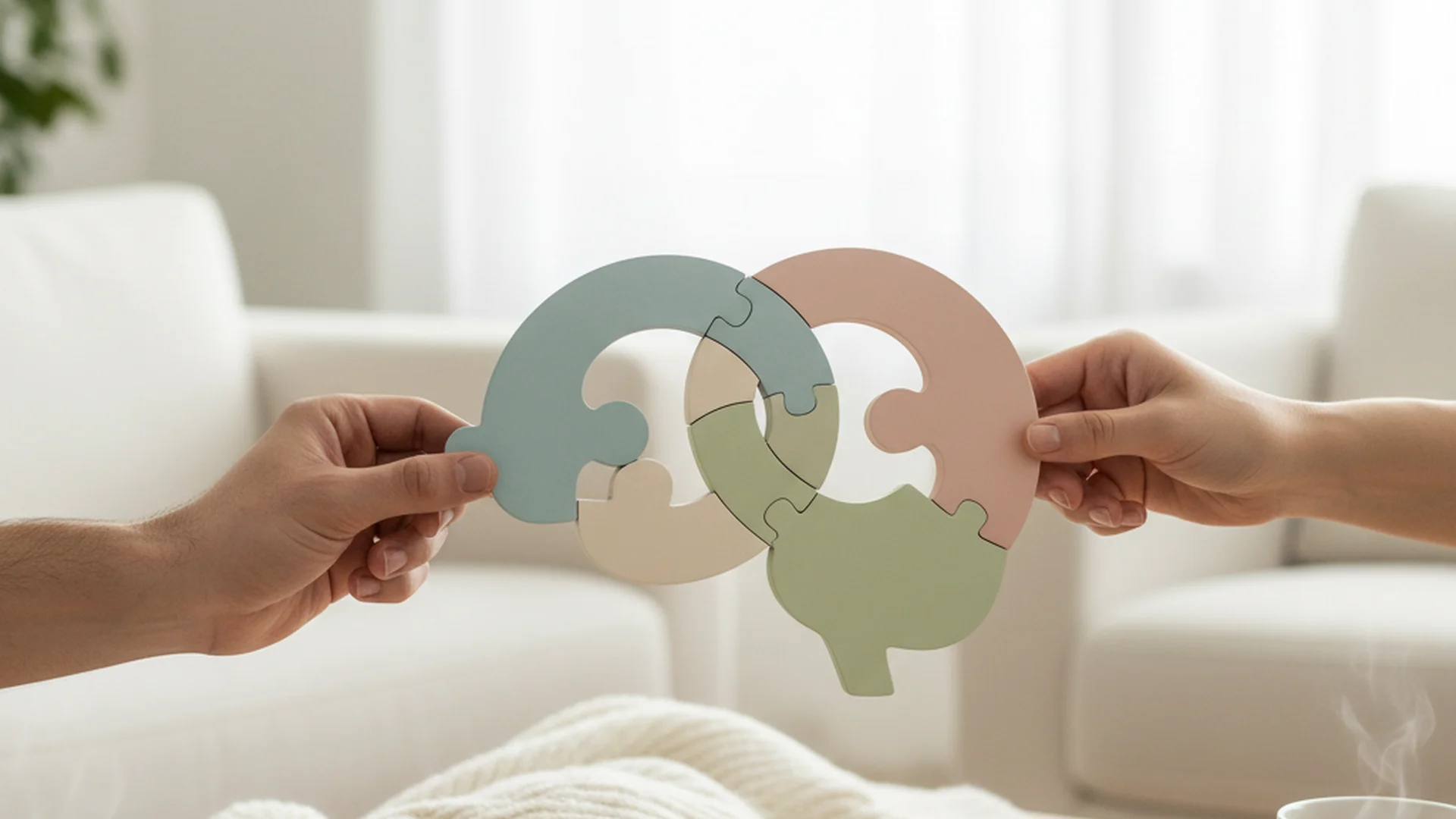
Forget the standard dinner-and-a-movie routine. In 2025, the secret to a long-lasting, cognitively sharp relationship might just be found in a box of cardboard pieces or a digital co-op challenge. Finding the right puzzle games for couples isn't just about passing the time; it’s a scientifically backed method to strengthen your emotional bond while giving your cognitive faculties a serious workout.
Whether you are navigating a complex digital escape room or sorting through a 1,000-piece landscape on your coffee table, you are engaging in a shared mental exercise that pays dividends for your brain health. In this guide, we’ll explore why couples brain games are surging in popularity and how you can choose the perfect activity for your next date night.
The Science of Shared Solving: Why Puzzles Bond Us
The appeal of puzzling together isn't just anecdotal. According to research from the University of Oxford, couples who actively participate in shared activities and games are 67% more likely to stay together over a two-year period compared to those who don’t. This isn't just about the fun—it’s about the neurochemistry of collaboration.
The Dopamine and Cortisol Connection
When you and your partner finally click that last piece into place or solve a difficult riddle in a digital game, your brains release dopamine. This neurotransmitter regulates mood, concentration, and motivation. For couples, this "shared win" creates a positive emotional anchor, associating your partner with the thrill of success.
Furthermore, engaging in these activities has been shown to significantly reduce salivary cortisol, the primary stress hormone. A study from the University of Michigan suggests that adults can boost their IQ by 4 points after spending just 25 minutes a day playing puzzle games. For couples, this means a 13-minute session isn't just a distraction—it’s a shared cognitive upgrade.
Digital vs. Physical: Finding Your Couple Style
One of the most common questions I receive as a logic instructor is whether digital or physical puzzles are "better." The truth is that they serve different needs and offer distinct Puzzle Benefits.
| Feature | Digital Puzzle Games | Physical Puzzles/Escape Kits |
|---|---|---|
| Mechanics | Mind-bending physics and 3D space | Tactile, "unplugged" experience |
| Pace | Often faster, reactive | Slow, meditative, and relaxing |
| Portability | High (Phones, Tablets, Consoles) | Low (Requires dedicated table space) |
| Social | Can be played remotely | Best for side-by-side bonding |
The Case for Digital Co-op
Digital games like Portal 2 or the newer 2025 release Split Fiction offer mechanics that physical puzzles simply cannot replicate. These often involve "asymmetrical gameplay," where each partner sees something the other doesn't, forcing high-level communication. If you're looking for a modern approach, check out our list of the Best Free Brain Training Apps 2025.
The Case for Physical Tactility
Physical puzzles, such as the iDventure Cluebox or traditional Sudoku booklets, offer a break from screen fatigue. This "unplugged" time is essential in our hyper-connected world. It allows couples to focus on each other's presence without the blue light of a monitor.
Advertisement
The 2025 Buyer’s Guide: Top Game Recommendations
The puzzle market has evolved. We are seeing a massive 911% increase in interest for "Block Puzzle" games, signaling a shift toward mobile, easy-to-start "snackable" puzzles. Here are the top recommendations for 2025 and 2026.
Top Digital Co-op Games
- Split Fiction (2025 Release): A narrative-driven puzzler where partners must solve linguistic riddles to progress.
- Operation: Tango: An asymmetrical spy thriller where one person is the "Hacker" and the other is the "Agent."
- The Past Within: A creepy, atmospheric puzzle game that requires two players to communicate across different time periods.
Best Physical and Tabletop Puzzles
- iDventure Cluebox: These are 3D wooden "escape rooms in a box" that require tactile manipulation to unlock.
- EXIT: The Game Series: A one-time-use escape room experience that is highly immersive and challenging.
- The Conundrum Box: A subscription-based service that brings a new mystery to your door every month.
Mobile Brain Apps for Couples
- Flamme: A dedicated app for couples that includes daily puzzles and relationship-building prompts.
- Peak: While often solo, comparing scores on Peak's daily brain workouts can be a fun way to engage in "friendly friction."
- Monument Valley II: A beautiful, meditative experience that two people can enjoy side-by-side.
How to Play Without Fighting: Communication Hacks
Even the best puzzle games for couples can lead to frustration if not approached correctly. In high-stress co-op games, voices can rise, and "friendly friction" can turn into a genuine argument.
Assigning Roles: Sorter vs. Edger
In my experience as a tournament director, I always recommend role delegation. In a jigsaw puzzle, assign one person as the "Sorter" (who organizes by color and pattern) and the other as the "Edger" (who builds the frame). This prevents you from reaching for the same pieces and creates a sense of shared responsibility rather than competition.
Avoiding the "Alpha Puzzler" Pitfall
A common mistake is "quarterbacking"—where one partner takes over and tells the other exactly what to do. This kills the collaborative benefit. Instead, focus on asking questions: "What do you think of this piece?" or "Where do you think we should look next?"
Common Mistakes to Avoid
- Difficulty Mismatch: Don't start with a 2,000-piece puzzle or a "hardcore" digital logic game. Start with "Gateway Games" (500-piece puzzles or medium difficulty) to build momentum.
- The Solo Mindset: Many people think puzzles are "me-time." To make it a couple's activity, you must make an active effort to discuss the strategy out loud.
- Ignoring Environment: Trying to solve Logic Puzzles in a loud, cluttered room can increase stress. Set the mood with "cozy" lighting and perhaps some lo-fi music.
Advertisement
Recent Trends (2025-2026)
The world of puzzles is changing. We are moving away from high-stress "bomb-defusal" styles toward "Cozy Puzzlers." These games, like Whisper of the House, focus on relaxing environments and slow-burn narrative discovery.
Puzzles as Functional Decor
A major 2025 trend is "functional puzzles"—3D puzzles that turn into usable items once completed. Think of a wooden clock you build together that actually keeps time, or a 3D puzzle lamp.
AR and Sustainability
Augmented Reality (AR) is also making waves. Some modern jigsaws "come to life" through your smartphone app once a certain section is finished. Furthermore, brands like Ravensburger are leading the charge in sustainability, using bamboo and recycled plastics for their 2026 collections.
Frequently Asked Questions
Is it better to play cooperatively or competitively?
Experts suggest that for bonding, cooperative (CO-OP) games are superior because they build communication. Competitive games are better for high-energy date nights where both partners enjoy "friendly friction." If you want to test your individual skills first, try these 10 Crossword Solving Strategies.
What if one of us is much faster at solving than the other?
This is where asymmetrical gameplay is vital. In games like Keep Talking and Nobody Explodes, one person has the manual and the other has the bomb. Since the roles are entirely different, speed is relative to your specific task, reducing the "Alpha Puzzler" dynamic.
Are digital puzzle games better than physical ones?
Neither is objectively better. Digital games offer complex, mind-bending mechanics (like the physics in Portal 2), while physical puzzles offer tactile "unplugged" time that is superior for reducing screen fatigue and lowering cortisol.
How do we stay motivated on a large puzzle?
Set "mini-goals." Instead of focusing on the whole 1,000-piece image, focus on completing one specific color patch or the border. This provides frequent dopamine hits (the "shared win") that keep the momentum going.
Conclusion: Unplug and Reconnect
The world of puzzle games for couples offers a unique opportunity to sharpen your mind while softening your heart. From the 4-point IQ boost to the 67% increase in relationship longevity, the data is clear: playing together stays together. Whether you choose a high-tech AR puzzle or a classic round of Sudoku, the key is the conversation and collaboration that happens along the way.
Next time you're planning a date night, put down the remote, clear the coffee table, and challenge your partner to a shared solve. Your brain—and your relationship—will thank you.
Ready to Start?
Enhance your relationship and your brainpower today.
Put it into practice
Keep reading
Brain Health
Best Brain Games Ranked: Science-Backed Picks for 2025–2026
Explore the best brain games ranked by scientific efficacy. From Elevate to Chess, discover which cognitive tools actually improve memory and focus in 2025.
Oct 3, 2026 15 min
Brain Health
15 Best Brain Games for Seniors to Stay Sharp in 2025
Discover the best brain games for seniors backed by 2025 research. Learn how senior brain training and cognitive games can delay decline and improve memory.
Sep 10, 2026 12 min
Brain Health
Brain Games for Leadership: How Executive Brain Training Sharpens Decision-Making
Discover how brain games leadership techniques and executive brain training enhance cognitive flexibility, reduce burnout, and improve decision-making for senior leaders.
Jul 6, 2026 12 min
Advertisement