Mastering Crossword Tournament Prep: A Champion Guide to Competitive Success
Prepare for the ACPT and beyond with expert crossword tournament prep. Learn speed solving techniques, gear choices, and mental stamina tips from the pros.
By Free To Play Puzzles Editorial Team 12 min read
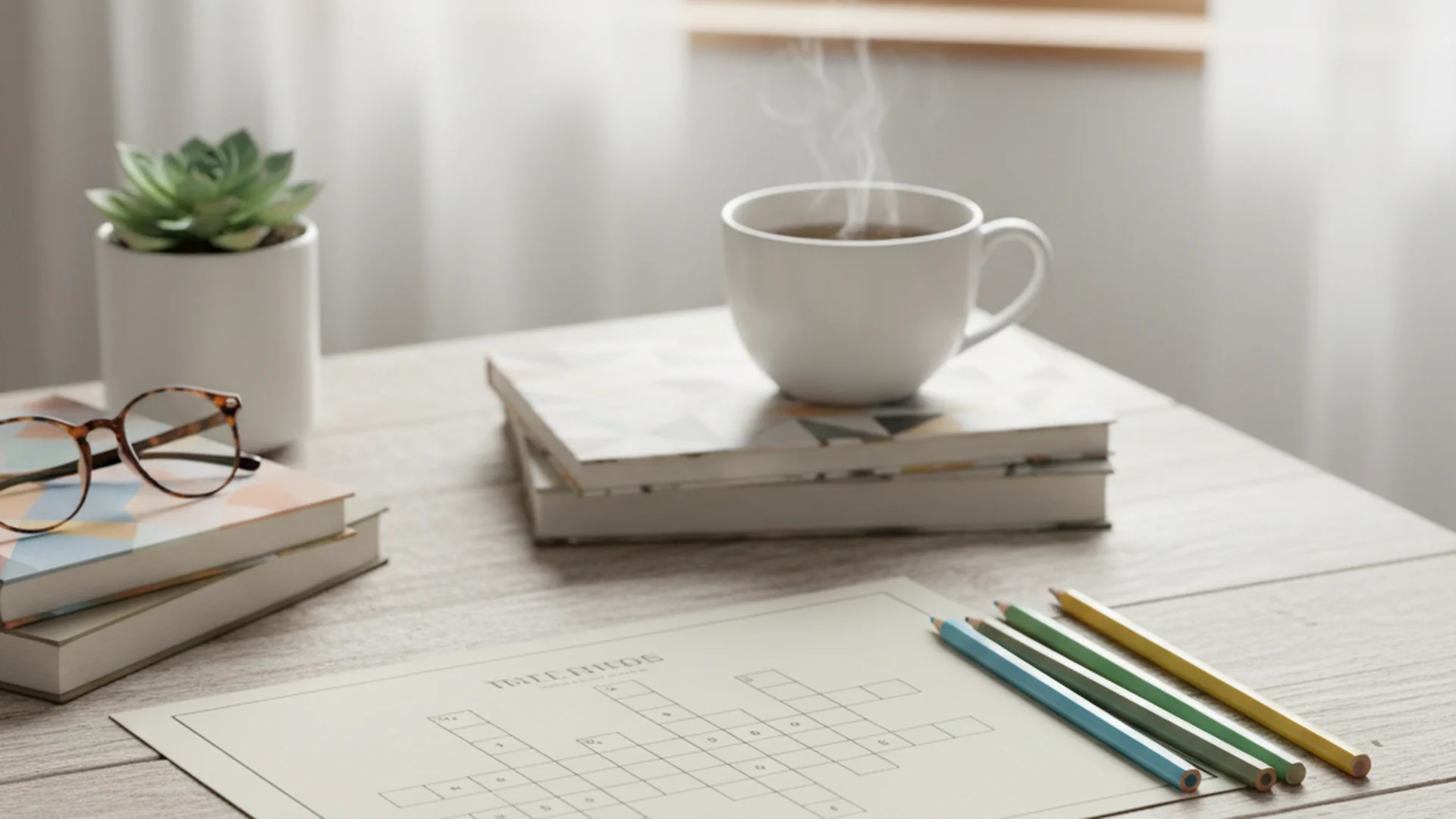
For many enthusiasts, solving the daily puzzle over a morning coffee is a relaxing ritual. However, when you step into the arena of competitive crossword solving, the atmosphere shifts from casual leisure to high-stakes mental athletics. Often referred to as the "Nerd Olympics," the world of crossword tournaments demands a unique blend of linguistic agility, pattern recognition, and psychological fortitude.
If you are looking to elevate your game, your crossword tournament prep must go beyond simply solving more puzzles. It requires a systematic approach to speed, accuracy, and the physical mechanics of the grid. Whether you are aiming for the main stage at the American Crossword Puzzle Tournament (ACPT) or competing in a local regional league, this guide will provide the framework you need to compete at your highest level.
Understanding the Competitive Landscape
Before diving into specific drills, it is vital to understand what you are up against. The American Crossword Puzzle Tournament (ACPT), founded by legendary editor Will Shortz in 1978, remains the gold standard. In 2025, the event saw a record-breaking 889 in-person contestants and hundreds more participating virtually.
The scoring dynamics in these environments are punishing. While you earn 10 points for every correct word, the real movement on the leaderboard comes from the 150-point clean grid bonus and speed bonuses (usually 25 points for every minute saved). In a tournament setting, a single typo can wipe out several minutes of hard-earned speed bonuses, making accuracy the ultimate priority for anyone serious about competitive crossword solving.
The Benchmark of the Elite
To know where you stand, look at the benchmarks set by champions like nine-time winner Dan Feyer or 2025 champion Paolo Pasco. These solvers can finish a Monday New York Times puzzle in under two minutes and tackle a grueling tournament final in under four minutes. While these speeds are astronomical, they serve as a reminder of what is possible with dedicated practice and the right building crossword vocabulary habits.
Tactical Training: The Zone Approach
Champion solver Trip Payne famously advocates for the "Zone Approach." In casual play, you might jump around the grid to find the easiest clues. In a tournament, this is inefficient.
Mastering Sectional Solving
The Zone Approach involves focusing on a specific "corner" or quadrant of the grid and staying there until it is complete. This maximizes the benefit of crossing letters. When you finish a corner, you have a solid "anchor" to branch out from, which reduces the mental fatigue of scanning the entire grid for a starting point.
The Look-Ahead Technique
One of the most sophisticated skills in crossword tournament prep is the "Look-Ahead." This is a mental warm-up technique where you train your eyes to read the next clue while your hand is still physically writing the letters for the current answer. This eliminates the "dead time" between entries and keeps your momentum fluid.
Advertisement
Transitioning from Digital to Paper
A common pitfall for modern solvers is the "Digital Crutch." If you primarily use the best crossword apps, you are used to "Check Word" features or the "happy pencil" chime that tells you when you've finished correctly. In a tournament, there is no such feedback.
The Paper Training Regimen
At least 2 to 4 weeks before a major event, you must switch to paper and pencil. The physical mechanics of hand-writing letters are vastly different from tapping a screen. Furthermore, the eye movement required to scan between a printed clue list and a physical grid is a muscle that needs training.
Tactical Gear: The Pencil Choice
Pro solvers almost universally recommend using a pencil to allow for quick corrections. However, not just any pencil will do.
- Lead Thickness: Use 0.7mm or 0.9mm lead. The 0.5mm leads commonly found in office supplies are too thin and frequently snap under the high-pressure, high-speed scribbling of a timed round.
- Eraser Quality: Ensure you have a high-quality white polymer eraser. Smudging your grid can lead to reading errors during your own final check.
Constructor Scouting and Meta-Knowledge
Every crossword constructor has a "signature." A major part of advanced crossword tournament prep is researching the roster of constructors for the event.
| Constructor Style | What to Expect |
|---|---|
| Brendan Emmett Quigley | Rock music, indie vibes, and modern slang. |
| Robyn Weintraub | Conversational, breezy colloquialisms and smooth fill. |
| Traditional ACPT "Puzzle 5" | Extremely difficult wordplay and complex gimmicks. |
By studying the previous work of these individuals, you can begin to anticipate their cluing style. For example, if you know a constructor loves puns, you’ll be quicker to identify common crossword clue types that involve question marks.
Mental Stamina and Sports Psychology
Solving seven high-pressure puzzles in a 24-hour period is an exhausting feat of endurance. It is common for solvers to "crash" on Puzzle 6 or 7 due to mental fatigue.
Building Solving Stamina
To prevent the late-tournament slump, incorporate "stamina sessions" into your practice. Instead of solving one puzzle and walking away, sit down and solve 3 or 4 puzzles back-to-back without a break. This simulates the tournament environment and helps you recognize the signs of mental fatigue before they lead to errors.
Mindfulness in the Arena
Top-tier solvers are increasingly adopting athletic mental prep. Techniques such as box breathing (inhaling, holding, exhaling, and holding for 4 seconds each) can help lower your heart rate during the high-stakes "Puzzle 5." Visualization is also key—imagine yourself calmly working through a difficult grid when the timer is ticking down.
Advertisement
Common Mistakes to Avoid
Even the most seasoned solvers can fall into traps when the pressure is on. Here are the most frequent errors seen in competitive crossword solving:
- Ignoring the Title or Blurb: Unlike the daily New York Times, tournament puzzles often feature a title or a small "blurb" at the top. These are frequently essential meta-clues to the theme. Skipping them can leave you baffled by a gimmick for 10 minutes.
- Fixating on One Meaning: Beginners often get "married" to a specific definition. If an answer isn't working, immediately pivot. Is the word "Object" a noun or a verb? Is "Lead" a metal or a command?
- The Over-Correction: In a rush to be fast, solvers often second-guess their first instinct. Research shows that your first linguistic intuition is usually correct; only change an answer if you find a definitive conflict in the crossing words.
- Neglecting the "Sanity Check": Because there is no digital validation, you must develop a habit of reading your completed entries in both directions to ensure they actually form real words.
Recent Trends (2025–2026)
The world of competitive puzzles is evolving. In 2025 and 2026, we have seen a massive surge in Hybrid League Play. Organizations like Boswords now offer "seasonal" competitive play, allowing solvers to train in a league format year-round.
Another significant trend is the rise of Pairs Competition. The ACPT saw over 100 pairs competing together in 2025, leading to new collaborative solving strategies. If you find the solo pressure too intense, training with a partner can be an excellent entry point into the hobby.
Finally, tournaments are becoming more accessible through Clue Difficulty Tiers. You might see the same grid offered in "Smooth" (Easy), "Choppy" (Medium), and "Stormy" (Hard) versions, allowing everyone from beginners to experts to enjoy the same event.
Frequently Asked Questions
Is tournament difficulty higher than the NYT?
Generally, no. Most tournament puzzles range from "Wednesday" to "Saturday" NYT difficulty. However, "Puzzle 5" at the ACPT is traditionally the hardest and is often more difficult than a standard Saturday.
Should I use pen or pencil?
Experts almost universally recommend a mechanical pencil with 0.7mm or 0.9mm lead. This allows for quick corrections and prevents lead breakage during high-speed solving.
How do I know if I'm ready for a tournament?
Organizers suggest that if you can solve a "medium" (Wednesday/Thursday) puzzle in under 15 minutes, you will be competitive. If you are consistently under 10 minutes, you are likely to place in the top half of your division.
Can I solve digitally at the ACPT?
While most major tournaments now offer a virtual "at-home" track via platforms like Amuse Labs, the main championship titles and prizes are still contested on paper for in-person participants.
What is the most important skill for a beginner?
Accuracy. While speed is flashy, the 150-point bonus for a clean grid is the foundation of a good score. One wrong letter can cost you more points than five minutes of speed ever could.
Conclusion
Preparing for a crossword tournament is as much about discipline and strategy as it is about vocabulary. By transitioning to paper, studying constructor styles, and building your mental stamina, you can transform from a casual solver into a formidable competitor. Remember that every champion started with a single grid and a desire to improve their logic puzzles skills.
The 48th Annual ACPT is scheduled for April 10-12, 2026, in Stamford, CT, before the move to Philadelphia in 2027. Now is the perfect time to start your training.
Ready to Compete?
Download our training word lists and start your journey to the main stage.
Put it into practice
Keep reading
Crosswords
Mastering the Music Crossword: A Guide to Songs, Artists, and Solving Trends
Unlock the secrets of the music crossword. Learn expert solving strategies, explore 2025 trends like AI puzzles, and master common artist and song clues.
Oct 14, 2026 10 min
Crosswords
Mastering Acrostic Puzzles: A Complete Guide to the Crossword’s Literary Cousin
Discover the logic and history of acrostic puzzles. Learn expert strategies, explore 2025 trends, and master the art of the Double-Crostic with this guide.
Jul 2, 2026 12 min
Crosswords
Crossword Abbreviations Guide: Mastering Common Short Answers
Master crossword abbreviations with our comprehensive 2025 guide. Learn the "Telegraph Rule," modern Gen Z slang, and strategies to solve tricky short-form clues.
Jun 27, 2026 12 min
Advertisement