Brain Games in the Workplace: Elevating Corporate Cognitive Performance
Discover how brain games in the workplace drive productivity, employee engagement, and mental agility. Explore 2025 trends in corporate cognitive training.
By Free To Play Puzzles Editorial Team 12 min read
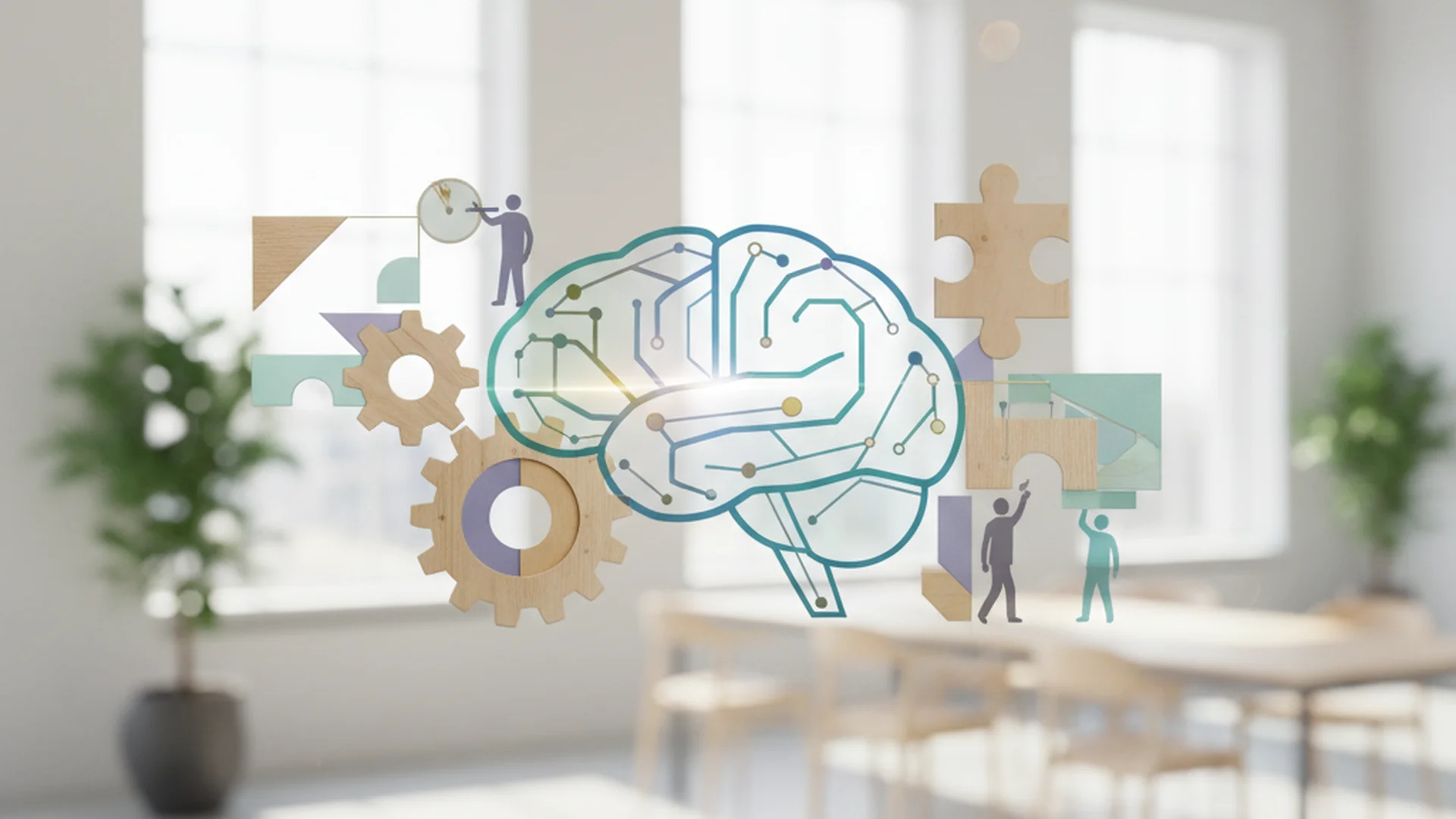
In the modern high-stakes office environment, the traditional coffee break is being replaced by a more potent stimulant: the cognitive break. Implementing brain games workplace strategies is no longer just a trend for Silicon Valley startups; it has become a fundamental pillar of corporate infrastructure. Structured mental challenges have long been valued for sharpening the mind, and the data for 2025 shows that these benefits translate directly into the bottom line of global enterprises.
The shift we are seeing today is the transition from "entertainment" to "optimization." When employees engage in corporate brain training, they aren't just solving puzzles; they are fine-tuning the biological hardware required for decision-making, pattern recognition, and focus. In an era where AI handles the routine, the human capacity for complex logic and creative problem-solving is the ultimate competitive advantage.
The Business Case for Cognitive Training
The financial and operational arguments for integrating brain games into the workweek are staggering. Recent analysis from Deloitte suggests that companies investing in cognitive training see an average 20% increase in overall productivity. This isn't magic; it is the result of reduced "brain fog" and improved processing speeds.
Furthermore, McKinsey has identified a strong correlation between cognitive capability and profitability. Organizations that prioritize the mental agility of their staff are 50% more likely to achieve above-average profitability compared to their peers. When your team can process information faster and with fewer errors, every hour of the workday becomes more valuable.
Bridging the Skills Gap
According to the World Economic Forum, by the end of 2025, approximately 35% of the core skills demanded in the workforce will have changed. We are living in a period of unprecedented "skills churn." To keep up, employees need more than just new information; they need the cognitive adaptability to learn how to learn.
Digital vs. Traditional: Choosing Your Tools
A common debate in the corporate world is whether to provide digital apps or physical puzzles like Sudoku and crosswords. The answer depends on the specific cognitive "muscles" you wish to exercise.
| Training Type | Best For | Cognitive Benefit |
|---|---|---|
| Digital Apps | Task-switching & Speed | Improves processing speed and executive function. |
| Traditional Puzzles | Long-term Memory | Stronger correlation with neuro-protective benefits. |
| VR Simulations | Stress Management | High-pressure decision-making and "calm under fire." |
| Social Gaming | Group Cohesion | Collaborative logic and team communication. |
Digital tools are excellent for improving "near transfer"—the ability to get better at a specific, repetitive task. However, for those looking for broader puzzle benefits, incorporating traditional word and logic games can provide deeper linguistic and memory-based advantages. For example, crosswords require a unique blend of retrieval and lateral thinking that digital "clicker" games often lack.
Advertisement
Best Practices for Workplace Implementation
To move beyond simple "play" and into "performance," HR leaders and department heads should follow established neuroscientific principles.
The 75/33 Rule and "Un-focusing"
The human brain is not designed for eight hours of continuous deep work. Experts now recommend a 75/33 work-rest ratio: 75 minutes of intense, focused work followed by 33 minutes of rest or cognitive play.
This rest period isn't "dead time." By engaging in a quick session of brain games for focus, employees can "un-focus" from their primary stressor. This intentional distraction allows the brain’s "Default Mode Network" to activate, which often leads to "Aha!" moments and creative breakthroughs. A 20-minute puzzle break can provide 1–3 hours of subsequent mental clarity.
Micro-dosing Cognitive Exercises
Avoid the mistake of scheduling long, grueling training sessions. The brain’s peak concentration window is roughly 20 minutes. Training that exceeds this leads to diminishing returns and "cognitive fatigue."
Real-World Examples: Brain Games in Action
To understand how this looks in practice, let's look at three distinct implementations from the 2025–2026 period:
- The High-Pressure VR Lab: A global logistics firm implemented VR-based cognitive labs for their dispatchers. These simulations forced employees to solve complex routing puzzles while being bombarded with "noise" and interruptions. This trained their "calm under fire" decision-making, leading to a 15% reduction in shipping errors.
- Gamified Onboarding: A major retail chain replaced their traditional employee handbooks with a series of gamified cognitive modules. By turning policy learning into a pattern-recognition game, they saw a 22% increase in information retention among new hires.
- The Collaborative Logic Hour: A software engineering team started using team-based brain games every Tuesday morning. By solving logic puzzles as a group, they improved their collaborative communication and reduced the time spent in unproductive debugging meetings by 10%.
Trends Shaping 2025 and 2026
The landscape of corporate brain training is evolving rapidly. We are moving away from simple solo apps toward more immersive and integrated experiences.
AI as a "Co-worker" Training
Instead of merely using AI to do work, employees are now participating in simulations where they must collaborate with AI agents to solve logic puzzles. This sharpens their "critical auditing" skills—the ability to spot when an AI is hallucinating or providing suboptimal logic.
Cognitive Wellness as a Benefit
In 2026, "Cognitive Wellness" is becoming as common as dental insurance. Forward-thinking companies are providing subsidized subscriptions to elite brain training platforms and even offering brain games for seniors as part of family-inclusive benefit packages for employees caring for aging parents.
Immersive VR/AR Cognitive Labs
We are seeing a move toward spatial reasoning challenges in VR. These "labs" simulate high-pressure scenarios, such as emergency room triage or stock market crashes, to help professionals build the neural pathways necessary to remain logical during a crisis.
Advertisement
Common Mistakes to Avoid
While the benefits are clear, poorly implemented programs can backfire.
- Forcing Participation: If employees feel "forced" to play, their cortisol levels rise. High stress (cortisol) actually inhibits the neuroplasticity the games are meant to encourage. Always make these programs voluntary or "incentive-based."
- Lack of ROI Tracking: Many companies implement brain games as "perks" but fail to link them to business KPIs. To see real results, track metrics like error rates, time-to-completion for tasks, and employee burnout scores.
- The "Older Employee" Myth: There is a common misconception that older employees benefit less from brain games. In reality, employees over 50 often show the most significant relative gains in processing speed and memory from consistent cognitive training.
- Mindless Gaming: Not all games are created equal. Scrolling social media or playing "clicker" games that require no strategy does not stimulate the brain. To count as corporate brain training, the task must require active logic, memory, or spatial reasoning.
Frequently Asked Questions
Do brain games actually increase general intelligence (IQ)?
Research in 2025 indicates that brain games are excellent for "near transfer." This means if you play games focused on pattern recognition, you will become significantly better at pattern recognition in your daily job. However, there is limited evidence for "far transfer," or the idea that playing a game will automatically make you a genius in unrelated fields. They are tools for sharpening specific professional skills, not for increasing baseline IQ.
How much time should employees spend on these games?
The sweet spot is 15–20 minutes per day. This provides enough stimulation to encourage the growth of new neural connections (neuroplasticity) without causing the mental exhaustion that can lead to errors in actual work tasks.
Is digital brain training better than traditional puzzles?
Neither is objectively "better," as they serve different purposes. Digital apps are superior for improving reaction time and task-switching. Traditional puzzles, like crosswords or Sudoku, are often better for linguistic depth and long-term memory retention. A healthy corporate program includes both.
Are brain games a substitute for physical exercise?
Absolutely not. A 2024 study from Western University found that while games improve the "machinery" of cognition, physical exercise is essential for the mental health and anxiety management needed to apply that cognition. Think of exercise as the power supply and brain games as the software updates.
Conclusion
The integration of brain games workplace programs represents a shift toward a more scientific, human-centric approach to productivity. By understanding the limits of the human attention span and the benefits of structured "un-focusing," companies can unlock levels of performance that traditional "grind" culture simply cannot reach.
As we move through 2025 and 2026, the organizations that thrive will be those that treat their employees' brains not just as tools to be used, but as assets to be developed. Whether through a 10-minute digital sprint or a collaborative logic puzzle, the goal remains the same: a sharper, faster, and more resilient workforce.
Ready to Elevate Your Team?
Explore our full suite of logic and memory puzzles to start your cognitive journey.
Put it into practice
Keep reading
Brain Health
Sleep and Brain Performance: Why Rest is the Ultimate Cognitive Enhancer
Discover the critical link between sleep and brain performance. Learn how rest impacts cognitive function, prevents brain aging, and boosts logic skills.
Jul 31, 2026 12 min
Brain Health
5-Minute Brain Games: Quick Mental Workouts for Peak Performance
Discover the power of quick brain games. Learn how 5-minute mental workouts can boost memory, attention, and cognitive health based on 2025 research.
Jul 30, 2026 12 min
Brain Health
Brain Games After Stroke: The 2025 Guide to Cognitive Rehabilitation
Explore how brain games after stroke can accelerate recovery. Learn about neuroplasticity, AI-driven puzzles, and expert-backed strategies for rehabilitation.
Jul 13, 2026 12 min
Advertisement