2048 High Score Tips: Master the Grid and Reach Beyond
Master the ultimate 2048 high score strategies. Learn corner techniques, the three-direction rule, and 2025-2026 trends to reach the 32,768 tile and beyond.
By Free To Play Puzzles Editorial Team 12 min read
Since its viral debut over a decade ago, Gabriele Cirulli’s masterpiece has evolved from a simple browser distraction into a global competitive phenomenon. Achieving a massive 2048 high score is no longer a matter of luck or frantic swiping; it has become a discipline of mathematical precision and spatial management. In 2025, the community has pushed the boundaries of what is possible, utilizing advanced algorithms and rigid organizational structures to reach tiles once thought impossible.
To truly understand how to reach 2048 and push into the legendary 16,384 or 32,768 tiers, you must treat the 4x4 grid as a finite resource that requires strict governance. This guide breaks down the high-level mechanics and psychological endurance required to join the elite ranks of 2048 masters.
The Mathematical Foundation of a High Score
Before diving into directional strategies, one must respect the internal logic of the game. Every move you make triggers a random event: the spawning of a new tile. In the 2025 version of the game, the mechanics remain pure: a "2" tile spawns approximately 90% of the time, while a "4" tile appears 10% of the time.
A common misconception is that the game is "rigged" to give you the wrong tile at the wrong time. In reality, a high score is a battle against entropy. Every time you move a tile without creating a merge, you reduce the available "real estate" on the board. The higher your score, the more critical each empty square becomes.
The Power of Powers: Why 131,072 is the Limit
The theoretical maximum score on a standard 4x4 board is 3,932,156 points. This is achieved by building up to the 131,072 tile. To reach this, you must fill the rest of the board with the next descending powers of two (65,536, 32,768, and so on). This leaves exactly zero room for error. While most human players aim for the 2048 or 4096 mark, understanding this limit helps you appreciate the importance of tile placement early in the game.
The Master Strategy: The "Anchor" in the Corner
The single most effective way to secure a 2048 high score is the Corner Strategy. This involves choosing one corner of the board—usually the bottom-right or bottom-left—and treating it as the "anchor" for your largest tile.
Why the Corner Works
When your largest tile is in the corner, you effectively limit the number of directions that can move it. If your 1024 tile is in the bottom-right, you want it to stay there forever. If it shifts to the middle of the board, it becomes an obstacle that prevents smaller tiles from merging behind it.
Real-World Example: The 2024 Speedrun Analysis In the current world record run (reaching the 2048 tile in 1 minute and 34 seconds), the player utilized the bottom-right corner exclusively. By keeping the high-value tiles anchored, they were able to perform "blind" muscle-memory swipes because they knew exactly where the foundation of their build was located.
Advertisement
The Three-Direction Rule
To maintain your anchor in the corner, you must restrict your movements to only three directions. If you have chosen the bottom-right corner as your anchor, your allowed moves are:
- Down
- Right
- Left
The Danger of the Fourth Direction
In this scenario, "Up" is your enemy. Why? Because if you move "Up," every tile on the board shifts upward, including your anchored high-value tile. This leaves an empty space in your bottom row. If a new "2" or "4" spawns in that empty bottom corner, your 1024 or 2048 tile is now "trapped" above a smaller number. This is often the point where a high-score run ends.
Building the "Immutable Row" and the "Snake"
Advanced players don't just put one tile in a corner; they build a hierarchy. This is often referred to as the "Snake" strategy. You should aim to have your tiles arranged in a descending chain. For example:
- Bottom Row: 1024 | 512 | 256 | 128
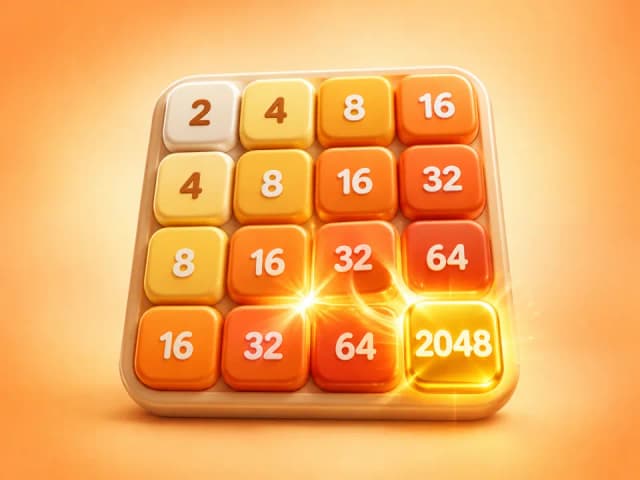
- Third Row: 8 | 16 | 32 | 64
By lining them up this way, you can trigger a "cascade." When you merge two 8s into a 16, it merges with the existing 16 to make a 32, which merges with the 64, and so on. This chain reaction clears massive amounts of board space in a single move.
Maintaining the Row
The "Immutable Row" concept means keeping your bottom row completely full. If your bottom row is 1024 | 512 | 256 | 128, moving "Left" or "Right" won't shift these tiles because there are no empty spaces for them to slide into. This provides a stable foundation to work on the rows above.
Common Mistakes to Avoid
Even the most seasoned players fall into specific traps that end a high-score run prematurely. Understanding these "death sentences" is key to strategic gameplay.
1. The "Flat Board" Trap
This occurs when you have a row like 2 | 4 | 2 | 4. None of these tiles can merge with each other. If your other rows are also "flat" and you have no vertical merges available, you will be forced to move in your "forbidden" direction (e.g., Up).
2. Chasing Large Tiles
Many players see a 128 on one side of the board and another 128 on the other side and desperately try to bring them together. If doing so requires moving your 2048 tile out of the corner, don't do it. It is better to build a new 128 near your anchor than to ruin your board's geometry.
3. Ignoring the "Trash" Tiles
Small tiles (2s and 4s) that are scattered across the board are more dangerous than a single misplaced high tile. They act as "blockers" that prevent you from sliding your larger tiles. Focus on clearing these "trash" tiles whenever possible to keep your movement lanes open.
| Error Type | Consequence | Mitigation Strategy |
|---|---|---|
| Moving Up | High tile dislodged | Keep the bottom row full at all times. |
| Board Clog | No moves left | Prioritize merging small tiles over building big ones. |
| Corner Shift | Gap behind high tile | Immediately move back to the corner or fill the gap. |
Advertisement
2025-2026 Trends in 2048
The world of number games has seen a resurgence in 2048-style mechanics, thanks to new platforms and redesigned versions.
Official Redesigns and Power-Ups
In late 2024, a major redesign of the mobile version was released by Solebon. This version includes haptic feedback that helps players "feel" when a merge happens, allowing for faster play without looking at the numbers as closely. It also introduced a "Power-Up" mode, though traditionalists seeking a 2048 high score typically stick to the "Classic" mode for leaderboard validity.
3D and Physics Variations
On platforms like TikTok and YouTube, physics-based variations like "Jelly Run 2048" have become massive hits. These games take the core logic—merging powers of two—and apply them to 3D obstacles. While these versions are more about reflexes, the fundamental strategy of keeping your largest "number" centered or anchored still applies.
The Rise of "Time Attack" and "Clash"
The competitive scene in 2025 has shifted toward "Time Attack" modes. In these matches, players have 60 seconds to reach the highest score possible. This rewards speed and pattern recognition over the long-term planning required for a 32,768 tile. Additionally, "Multiplayer Clash" modes now allow players to compete on identical boards with identical tile spawns, finally removing the "luck" element from competitive play.
Real-World Example: AI Dominance Modern AI programs using "expectiminimax" algorithms have essentially solved 2048. By calculating every possible tile spawn and move outcome, these bots reach the 32,768 tile with an 86% success rate. Watching these bots play reveals the "Three-Direction Rule" in its most perfect form—they almost never deviate from their primary axes.
Frequently Asked Questions
Is 2048 rigged?
No, the game is not rigged. While the tile spawns are random (2 or 4), the board state is a direct result of your previous moves. Most "bad luck" is actually a result of poor board management that left you with only one possible move.
Can you play after reaching 2048?
Yes! Most modern versions of the game offer an "Endless Mode." This allows you to continue merging tiles to reach 4096, 8192, 16,384, and the ultimate 131,072 tile. Your 2048 high score continues to accumulate as long as you have valid moves.
Is there an "undo" button?
While the original 2014 version did not have an undo button, many 2025 mobile apps and web versions include one. However, using the undo button usually disqualifies your score from official global leaderboards and is considered "practice mode" by the hardcore community.
What is the "Snake" strategy?
The Snake strategy is an advanced layout where tiles are arranged in a continuous, winding descending order across the rows. This allows for massive chain reactions where one single merge at the "tail" of the snake triggers merges all the way up to your largest tile.
How do I recover if a tile spawns in my corner?
If a small tile spawns in your anchor corner because you were forced to move "Up," your goal is to merge that small tile as quickly as possible or shift the row again to "push" the larger tile back into place. It requires careful maneuvering of the rows above it to create a gap.
Strategic Conclusion
Mastering 2048 is a journey of patience. The most common cause of failure is moving too fast and accidentally hitting the "Up" key or swiping in the wrong direction. By slowing down, adhering to the Three-Direction Rule, and maintaining your "Anchor," you can turn what seems like a game of chance into a predictable science.
If you are just starting out, we recommend checking out 2048 Tips for Beginners to get your first win. For those who have already conquered the 2048 tile and want to push for the world record, our 2048 Strategy Guide: How to Win Every Time offers even deeper technical insights into board geometry.
Ready to Conquer the Grid?
Put these high-score strategies to the test right now.
Put it into practice

Keep reading

Number Games
2048: Complete Game Guide & Strategy Handbook
Master the 2048 tile with our 2025 game guide. Learn the corner strategy, snake pattern, and expert tips to join the elite 1% of winners.
Oct 11, 2026 20 min
Number Games
Numbrix Puzzles Guide: Master the Logic of Marilyn vos Savant’s Brain Teaser
Master Numbrix puzzles with our comprehensive guide. Learn expert strategies from Marilyn vos Savant, explore difficulty flavors, and avoid common solving mistakes.
Jul 18, 2026 12 min
Number Games
Mastering the Minesweeper Speedrun: Tips and Tactics for Faster Times
Learn how to master a Minesweeper speedrun with expert tips on 3BV, chording, and pattern recognition. Improve your times and climb the global leaderboards.
Jun 11, 2026 12 min
Advertisement