Numbrix Puzzles Guide: Master the Logic of Marilyn vos Savant’s Brain Teaser
Master Numbrix puzzles with our comprehensive guide. Learn expert strategies from Marilyn vos Savant, explore difficulty flavors, and avoid common solving mistakes.
By Free To Play Puzzles Editorial Team 12 min read
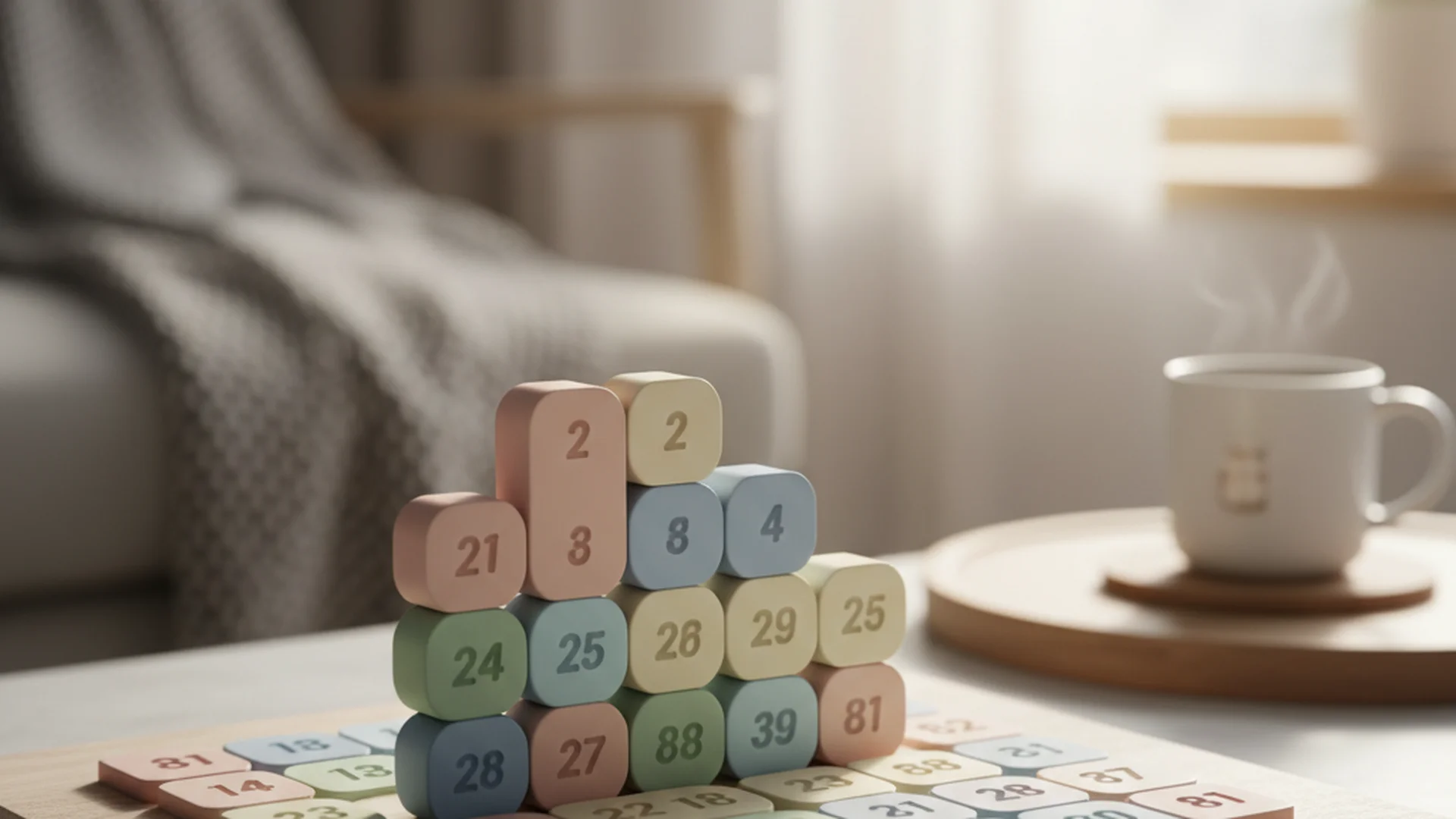
In the world of logic-based brain teasers, few games have captured the collective imagination as quickly as numbrix puzzles. Since its debut in 2008, this elegant number game has become a staple for enthusiasts seeking a challenge that relies on fluid intelligence rather than complex arithmetic. Created by Marilyn vos Savant, the famed Parade magazine columnist known for her record-breaking IQ, Numbrix offers a refreshing alternative to the standard numerical grid games. Whether you are a seasoned logic veteran or a newcomer looking to sharpen your cognitive skills, understanding the nuances of Numbrix is the first step toward mastery.
The Origin and Evolution of Numbrix Puzzles
Numbrix puzzles were introduced to the public in 2008 by Marilyn vos Savant. Unlike many modern puzzles that rely on algorithms and computer-generated grids, every official Marilyn vos Savant Numbrix puzzle is hand-crafted. This human touch ensures that every grid has a unique, logical solution path that a human mind can deduce without resorting to brute-force guessing.
Originally appearing in the weekly print version of Parade, the game's popularity sparked a digital revolution. Today, you can find Numbrix as a daily feature on Parade.com, complete with interactive elements that have modernized the experience for a new generation of solvers. While the format has evolved into the digital "Daily Game" ecosystem—featuring leaderboards and social sharing—the core logic remains unchanged.
The Grid Structure
The standard Numbrix puzzle consists of a 9x9 grid containing 81 squares. However, variations exist in 7x7 and 10x10 formats to provide shorter or longer challenges. The objective is deceptively simple: fill the squares with a continuous path of numbers from 1 to the grid's maximum (usually 81) so that each number is adjacent—horizontally or vertically—to the next sequential number.
Understanding the Five "Flavors" of Difficulty
Marilyn vos Savant uses a unique "flavor" system to categorize the difficulty of Numbrix puzzles. Instead of the standard "Easy" or "Hard" labels found in games like Sudoku, Numbrix levels are determined by the number of "givens" or clues provided at the start.
| Flavor | Clues Provided | Difficulty Level |
|---|---|---|
| Vanilla | 32 Clues | Easiest |
| Strawberry | 28 Clues | Easy/Intermediate |
| Caramel | 24 Clues | Intermediate |
| Pistachio | 20 Clues | Hard |
| Blueberry | 16 Clues | Expert |
As the number of clues decreases, the logical leaps required to connect the path become larger. In a Blueberry puzzle, you may find vast "white spaces" on the grid that require you to visualize the path several steps ahead.
Advertisement
The Core Rules: How to Navigate the Grid
Before diving into advanced strategies, it is essential to understand the fundamental constraints of the game.
No Diagonal Moves
The most critical rule in Numbrix is that you can only move horizontally or vertically. Moving diagonally is strictly prohibited. This restriction defines the game’s logic and differentiates it from other path-finding games.
The Continuous Chain
The numbers must form an unbroken chain from 1 to 81. Every cell in the grid must be visited exactly once. If you reach the end and find an empty cell, or if your path "dead-ends" before reaching the final number, you must retrace your steps to find the break in logic.
Expert Strategies for Solving Numbrix Puzzles
As a logic instructor, I always emphasize that Numbrix is about "wall-following" and spatial awareness. Here are the professional techniques used to crack even the toughest Blueberry puzzles.
1. The "Savant Scan"
This is the foundational technique recommended by the inventor herself. Start at number 1 and scan the surrounding cells for the location of number 2. If it isn't a "given," look at the surrounding numbers to see where the path must go. Simultaneously, perform the same scan from the highest number (81) downward. By working from both ends, you will eventually meet in the middle, closing the loop.
2. Corner Logic
In any grid-based logic puzzles, corners are the most restricted areas. A corner cell only has two possible neighbors (the cells directly above/below and to the left/right). If a corner is empty and you see a sequential gap in the nearby clues, the path must almost always pass through that corner to avoid isolating it.
3. Counting the Gaps
If you see the number 10 and the number 15 on the board, you know there are exactly four numbers (11, 12, 13, 14) that must fit into the empty cells between them. Expert solvers "count" the available squares to see if there is only one possible physical path that can accommodate those four numbers.
4. The "Ink" Mindset
Marilyn vos Savant encourages players to visualize the path as if they are writing in ink. This doesn't mean you shouldn't use a pencil; rather, it means you should only fill in a number when the move is logically forced. Relying on trial and error (guessing) often leads to "The Isolation Error," where you accidentally wall off a section of the grid.
Real-World Examples of Numbrix Logic
To better understand how these strategies apply, let's look at three common scenarios solvers encounter:
- The Forced Corner: You have a 1 at (1,1) and a 3 at (2,2). Since you cannot move diagonally, the 2 must go in either (1,2) or (2,1). If (2,1) is already occupied by the number 40, the path for 2 is logically forced into (1,2).
- The Narrow Corridor: If the numbers 50, 51, and 52 form a "wall" along a row, any path trying to get from the top of the grid to the bottom must find a different "opening." Recognizing these walls early prevents you from getting trapped in a dead end.
- The Dead-End Check: You are considering placing the number 15 in a cell. However, you notice that placing 15 there would leave an adjacent empty cell with only one neighbor. Since every cell (except 1 and 81) needs an "entry" and an "exit" neighbor, that cell would become a dead end. Therefore, 15 cannot go there.
Advertisement
Numbrix vs. Other Number Games
Many players come to Numbrix after mastering Sudoku or looking for something different than Math Puzzles. Here is how they compare:
| Feature | Numbrix | Sudoku | Hidato |
|---|---|---|---|
| Goal | Single continuous path | 1–9 in every row/col/box | Single continuous path |
| Movement | Horizontal/Vertical only | No movement (placement) | Horizontal/Vertical/Diagonal |
| Arithmetic | None | None | None |
| Logic Type | Path-finding/Spatial | Elimination | Path-finding/Spatial |
Common Mistakes to Avoid
Even experienced puzzle solvers can fall into traps when tackling a difficult Numbrix grid.
- The Diagonal Trap: As mentioned, this is the #1 mistake. Always double-check your path to ensure every connection is a straight line.
- Guessing Too Early: In Blueberry or Pistachio puzzles, the path isn't always obvious. If you guess a "50/50" path, you might not realize you're wrong until 20 steps later. Always look for a forced move elsewhere first.
- Ignoring the "Givens": The numbers already printed on the board are your anchors. Many beginners try to build only from 1 upward. Use the higher "givens" to work backward; they are there to guide the path.
- The Isolation Error: This happens when you create a line of numbers that cuts off a section of the grid, leaving empty squares with no way in or out. Always ensure every empty square has a "pathway" to the rest of the puzzle.
The Future of Numbrix: Human vs. AI
As we move through 2025 and 2026, the puzzle world is facing a rise in AI-generated content. However, the Numbrix community remains staunchly committed to the "hand-crafted" philosophy. Enthusiasts often seek out "Savant-certified" puzzles because they offer a "flow state" that computer-generated puzzles often lack. The logical "aha!" moments in Numbrix are designed by a human mind to be discovered by a human mind.
Furthermore, the "analog digitalism" trend has seen a resurgence in players printing out their daily puzzles from Parade.com. There is a tactile satisfaction in tracing the path with a pencil that digital interfaces sometimes struggle to replicate.
Frequently Asked Questions
Do I need math skills to solve Numbrix?
No. Numbrix is a logic and memory puzzle. While it uses numbers to indicate the sequence of the path, you never need to add, subtract, multiply, or divide. If you can count to 81, you have all the "math" skills required.
What is the main rule for moving?
You can only move one square at a time, and only horizontally or vertically. You cannot jump over squares, and you cannot move diagonally.
How does Numbrix differ from Sudoku?
In Sudoku, you are placing numbers 1 through 9 into specific zones without repeating them. In Numbrix, you are creating one single, continuous string of numbers from 1 to 81 that touches every single square on the grid.
Is Numbrix good for brain training?
Absolutely. Numbrix engages your spatial reasoning and working memory. It's often recommended in brain training programs because it requires the solver to hold multiple path possibilities in their mind simultaneously.
What should I do if I get stuck?
The best strategy when stuck is to switch directions. If you were working forward from number 10, try finding the highest number on the board and working backward. Often, the path becomes clear when viewed from the opposite perspective.
Conclusion
Numbrix puzzles offer a unique blend of simplicity and depth. By following the "Savant Scan," respecting the "no-diagonal" rule, and approaching each grid with the "ink mindset," you can master even the most challenging Blueberry flavors. Whether you're playing for a high score on the daily leaderboards or simply looking for a quiet moment of mental clarity, Numbrix provides a rewarding experience that proves logic is the ultimate path to success.
Ready to Start?
Test your logic skills with our collection of daily challenges.
Put it into practice

Keep reading

Number Games
The Ultimate Guide to Hidato Puzzles (2025-2026)
Master Hidato puzzles with our comprehensive guide. Learn expert strategies, understand the history of number snakes, and discover 2026 trends in logic gaming.
Sep 20, 2026 12 min
Number Games
Mastering Sujiko Puzzles: The Ultimate Guide to the Espresso of Number Games
Unlock the secrets of Sujiko puzzles with our comprehensive guide. Learn the Rule of 45, the Central Square formula, and expert logic strategies for 2025.
Aug 29, 2025 10 min
Number Games
Suguru Puzzles Guide: Mastering the Art of Number Blocks
Unlock the secrets of Suguru puzzles with our comprehensive guide. Learn rules, expert strategies, and the cognitive benefits of these addictive number blocks puzzles.
Mar 21, 2025 12 min
Advertisement