2048: Complete Game Guide & Strategy Handbook
Master the 2048 tile with our 2025 game guide. Learn the corner strategy, snake pattern, and expert tips to join the elite 1% of winners.
By Free To Play Puzzles Editorial Team 20 min read
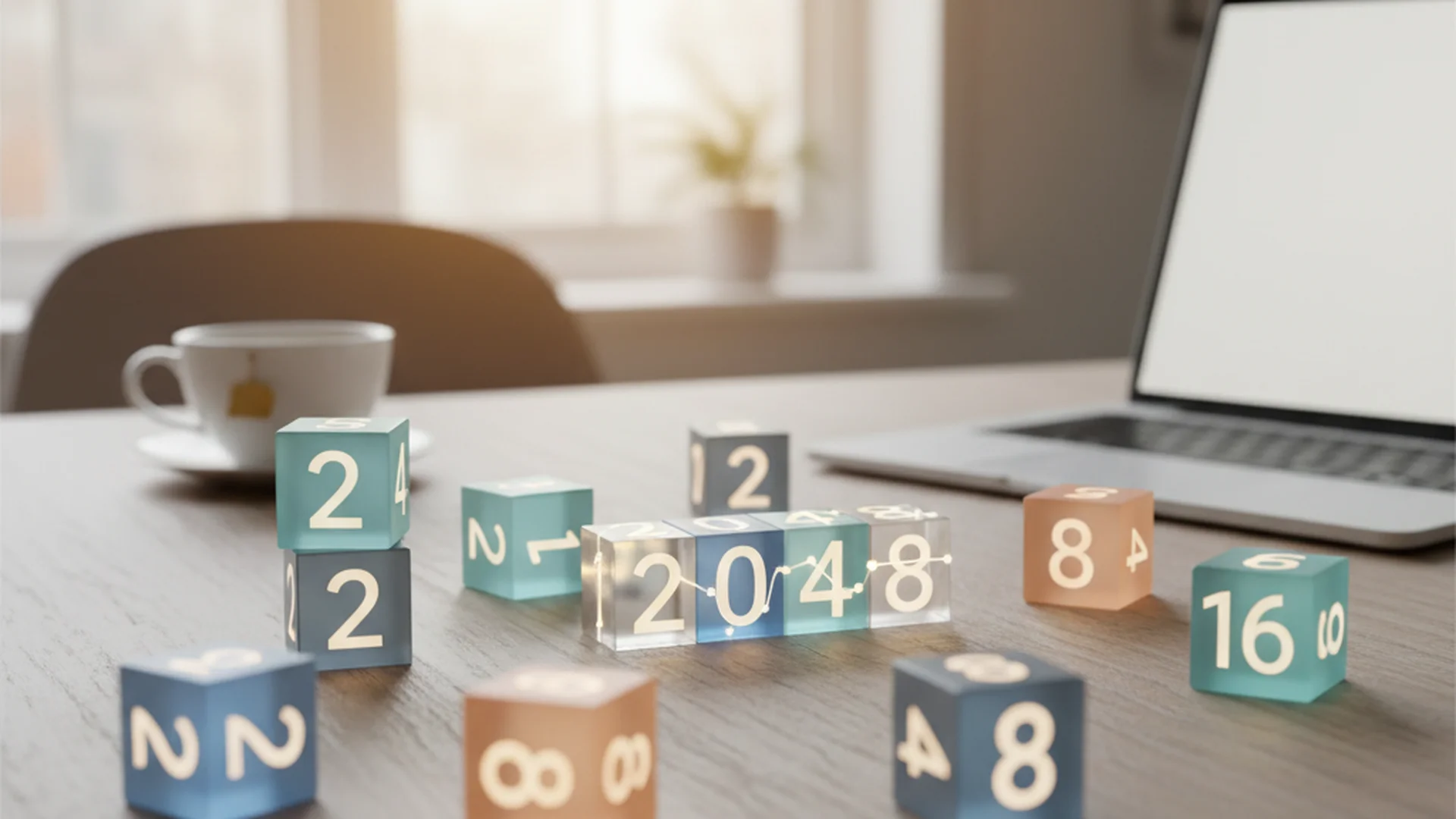
In the vast landscape of digital puzzles, few titles have captured the global zeitgeist quite like 2048. What began as a simple weekend project by a 19-year-old developer has evolved into a cornerstone of the puzzle genre. Whether you are a casual player looking to pass the time or a competitive strategist aiming for the 32,768 tile, this 2048 game guide provides the comprehensive roadmap you need. As we navigate the updates of 2025 and 2026, understanding the core mechanics and advanced maneuvers of this "dopamine goldmine" is essential for any player looking to improve their logic and spatial reasoning.
The Genesis of a Viral Sensation
To truly master the game, one must understand its origins. Released in March 2014 by Italian developer Gabriele Cirulli, 2048 was famously described by its creator as a "clone of a clone." Inspired by the games Threes! and 1024, Cirulli’s version stripped the mechanics down to their most addictive essence.
The viral explosion was unprecedented. In its first week alone, the game saw over 4 million visitors. Within months, that number surpassed 10 million. Despite its simple 4x4 grid and minimalist aesthetic, the challenge was formidable: Cirulli originally estimated that only 1% of all games played actually reached the titular 2048 tile. In 2025, while the community has grown more skilled, that "1% Club" remains an elite status for many new players.
Core Mechanics: How to Play
The rules of 2048 are deceptively simple. You play on a 4x4 grid. Using your arrow keys or swiping on a touchscreen, you move all tiles in one of four directions: Up, Down, Left, or Right.
- Merging: When two tiles with the same number touch, they merge into one tile with their sum (e.g., 2+2=4, 4+4=8).
- Spawning: After every move, a new tile (either a "2" or a "4") appears in an empty spot on the grid. There is roughly a 90% chance of a "2" and a 10% chance of a "4".
- The Goal: Combine tiles until you reach the 2048 tile.
- Game Over: The game ends when the grid is full and no more merges are possible.
For a deeper dive into the fundamental mechanics, check out our 2048 Rules: How to Play.
| Tile Value | Moves to Create (Minimum) | Color Scheme (Classic) |
|---|---|---|
| 2 | 0 (Spawn) | Off-white |
| 16 | 7 | Light Orange |
| 128 | 63 | Yellow-Green |
| 1024 | 511 | Deep Yellow |
| 2048 | 1023 | Golden Glow |
Advertisement
The Gold Standard: The Corner Strategy
If you only learn one technique from this 2048 complete guide, let it be the Corner Strategy. This is the method used by virtually every high-scoring player to maintain control over the board.
Choosing Your Anchor
Pick one corner of the board—usually the bottom-left or bottom-right—and commit to it. This corner will house your highest-value tile. For the sake of this guide, let’s assume you’ve chosen the bottom-right corner.
The 3-Direction Rule
To keep your highest tile anchored in that bottom-right corner, you must strictly limit your movements. In this scenario, you should almost exclusively use:
- Down
- Right
- Left
Never press Up. If you press Up, your largest tile will slide out of the corner, and a new "2" or "4" could spawn in its place. Once a small tile occupies your anchor corner, it becomes incredibly difficult to move the big tile back without cluttering the rest of the board.
Advanced Tactics: The Snake Pattern
Once you have mastered the corner strategy, the next step is the Snake Pattern (also known as the Zigzag). This ensures that your tiles are organized in descending order, making it easy to trigger a "chain reaction" of merges.
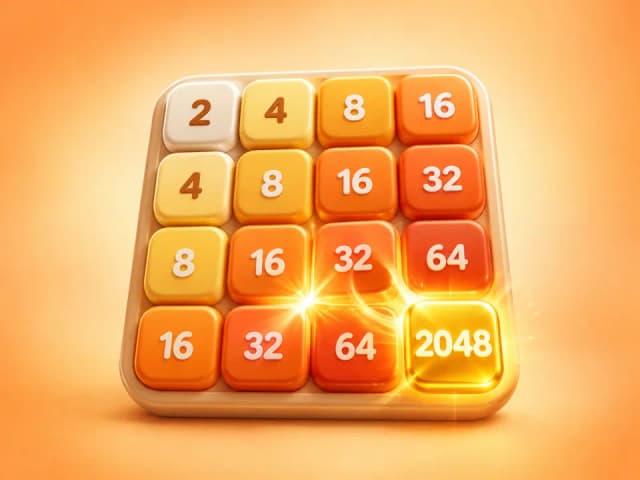
Imagine your grid as a winding path. If your 2048 tile is in the bottom-right, the next largest tile (e.g., 1024) should be directly to its left. The next (512) to the left of that, and the next (256) to the left of that. The row above should then continue the sequence from left to right.
Why the Snake Works
When you build a snake, you create a logistical flow. If you get a new 2 and merge it into a 4, then an 8, then a 16, each merge happens right next to the tile it needs to combine with next. This prevents "orphan tiles"—small numbers stuck between large numbers that can't be merged.
Example Scenario: The Chain Reaction
- Bottom Row: [8] [16] [32] [64]
- You merge a new 8 on the row above.
- You slide it down. The 8 merges with the 8 to become 16.
- The 16 merges with the 16 to become 32.
- The 32 merges with the 32 to become 64.
- The 64 merges with the 64 to become 128.
- Result: You have cleared space and created a high-value tile in one move.
2025–2026: The Modern Era of 2048
As we celebrate over a decade of this puzzle phenomenon, the game has evolved beyond the simple browser window. In late 2024 and 2025, several updates changed how we approach the game.
The 10-Year Anniversary Redesign
A new official version was released featuring a modernized UI, haptic feedback for mobile players, and a "Standard Mode" that balances the original difficulty with smoother animations. This version is now integrated into various platforms, including car consoles and in-flight entertainment systems.
2048 Plus and Power-Ups
For those who find the classic version too punishing, the 2025 "Plus" versions (often found on services like Amazon Prime Gaming) have introduced power-ups:
- Teleport: Allows you to move any tile to an empty spot without shifting the rest of the board.
- Rotate: Shifts the outer ring of tiles clockwise or counter-clockwise.
- Bomb: Clears a 3x3 area, which is a literal lifesaver when you are one move away from a "Game Over."
While purists may scoff, these power-ups allow for "Endless Mode" gameplay, where players attempt to reach the theoretical maximum tile of 131,072.
Advertisement
Human Performance vs. AI Superiority
The mathematical complexity of 2048 has made it a favorite subject for AI researchers. Using expectiminimax algorithms, modern AI can now play the game with near-perfect efficiency.
- AI Success Rate: Can reach the 16,384 tile with a 99.9% success rate.
- The Elusive 65,536: AI reaches this tile approximately 8.4% of the time.
- Human Record: Top-tier humans, like the player known as Popescu, have achieved scores over 840,000, reaching the 32,768 tile.
If you are a beginner looking to bridge the gap between casual play and expert status, our 2048 Tips for Beginners is an excellent starting point.
Common Mistakes to Avoid
Even seasoned players fall into traps that end their runs prematurely. Recognizing these patterns is key to improving your win rate.
1. The "Autopilot" Trap
When the board is relatively empty, it is easy to swipe rapidly. However, expert play requires pausing when the grid is 70% full. At this stage, you must calculate the "spawn risk"—the possibility that a new tile appearing in a specific spot will block your next move.
2. Moving the Big Tile
This is the number one cause of death in 2048. You spend 15 minutes building a 1024 tile in the corner, then you are forced to move it because you have no other legal moves. Usually, this happens because you allowed the "Home Row" to have an empty space.
3. Creating "Islands"
An island is a high-value tile surrounded by much smaller tiles (e.g., a 512 surrounded by 2s and 4s). This effectively "deadlocks" that area of the board. To avoid this, always work on upgrading your smallest tiles first to bring them closer to the value of their neighbors.
The Psychological Impact: Why We Can't Stop Swiping
Neurologists have studied 2048 to understand its addictive nature. It provides a constant stream of "micro-wins." Every time you merge two tiles, your brain receives a small hit of dopamine. This sense of constant progress, combined with the "just one more game" frustration of a near-miss, makes it a powerful tool for cognitive engagement.
Playing 2048 can actually improve:
- Pattern Recognition: Identifying sequences before they are fully formed.
- Risk Assessment: Deciding which move minimizes the chance of a bad spawn.
- Spatial Reasoning: Visualizing how the grid will shift three moves ahead.
For more on how these games affect the brain, read about Brain Health and Puzzles: Science of Cognitive Gaming.
Frequently Asked Questions
Is it possible to get 0 points?
While technically impossible in a normal game (as merging tiles gives you points), a "0" score could only occur in a version where you lose before a single merge happens, or in a glitched/hacked version of the game. In standard play, the act of reaching the 2048 tile will always result in a high score.
Is 2048 good for your brain?
Yes. Experts classify it as a logic-based brain trainer. It encourages strategic planning and foresight. However, because it is highly addictive, it is best played in moderation. If you're interested in other apps, see our analysis: Brain Training Apps: Do They Work?.
Can you play forever?
In the classic 4x4 version without power-ups, no. There is a theoretical maximum score and a maximum tile (131,072). Eventually, the board will fill up. However, the 2025 "Endless Mode" versions with power-ups allow players to keep a game going for weeks.
What is the "2047" game?
Many new players search for "2047," but this is a mathematical impossibility in the context of the game. Because 2048 is based on powers of 2 (2, 4, 8, 16...), you can only ever reach numbers that are sums of these powers. 2047 is an odd number and cannot be formed by merging tiles.
What is the highest possible tile?
On a standard 4x4 grid, the theoretical maximum tile is 131,072. Reaching this requires almost perfect spawns and zero mistakes over thousands of moves.
Beyond the Classic: Variations to Explore
The 2048 engine has been used to create countless themed versions. If you find the numbers a bit dry, these variations offer the same strategic depth with a fresh coat of paint:
- 2048 Cupcakes: Instead of numbers, you merge delicious desserts. This is often considered harder because the visual difference between cupcakes can be subtler than numbers. See our 2048 Cupcakes Strategy.
- 2048 Doge: Featuring the famous Shiba Inu meme. It’s the same logic, but with "much wow" energy. Learn more at 2048 Doge Strategy.
- 2048 3D: Plays on a cube, adding a literal new dimension to the spatial reasoning required.
Conclusion: Mastering the Grid
Becoming a 2048 master isn't about luck; it's about discipline. By sticking to the Corner Strategy, adhering to the 3-Direction Rule, and carefully building Snake Patterns, you can consistently reach the 2048 tile and beyond. As we move through 2025 and 2026, the game continues to be a testament to the power of simple, elegant design. Whether you are playing on your phone during a commute or on a high-end console, the satisfaction of that final merge remains one of the greatest feelings in puzzle gaming.
For more advanced tips on pushing your score into the hundreds of thousands, don't miss our 2048 Strategy Guide: How to Win Every Time.
Ready to Reach the 2048 Tile?
Test your logic and beat the 1% today.
Put it into practice
Keep reading
Number Games
Mastering the 2048 Corner Strategy: The Definitive Guide to Winning
Learn the 2048 corner strategy to master the board. Discover techniques like the Snake Pattern and Directional Lock to reach the 2048 tile and beyond.
Nov 7, 2026 12 min
Number Games
Mastering Arithmagon Puzzles: The Ultimate Strategy Guide
Discover the logic behind arithmagon puzzles. Learn solving strategies, the mathematical "Rule of Two," and how these triangle number puzzles boost mental math.
Aug 7, 2026 10 min
Number Games
Mastering Number Crossword Puzzles: The Ultimate Strategy Guide
Discover the world of number crossword puzzles, also known as cross-figures. Learn rules, solving strategies, and the cognitive benefits of math-based grids.
May 7, 2026 9 min
Advertisement