Why Am I Bad at Puzzles? Understanding the Science Behind the Struggle
Struggling with puzzles? Discover why being bad at puzzles isn't about IQ, but rather cognitive styles, spatial reasoning, and mental frameworks.
By Free To Play Puzzles Editorial Team 12 min read
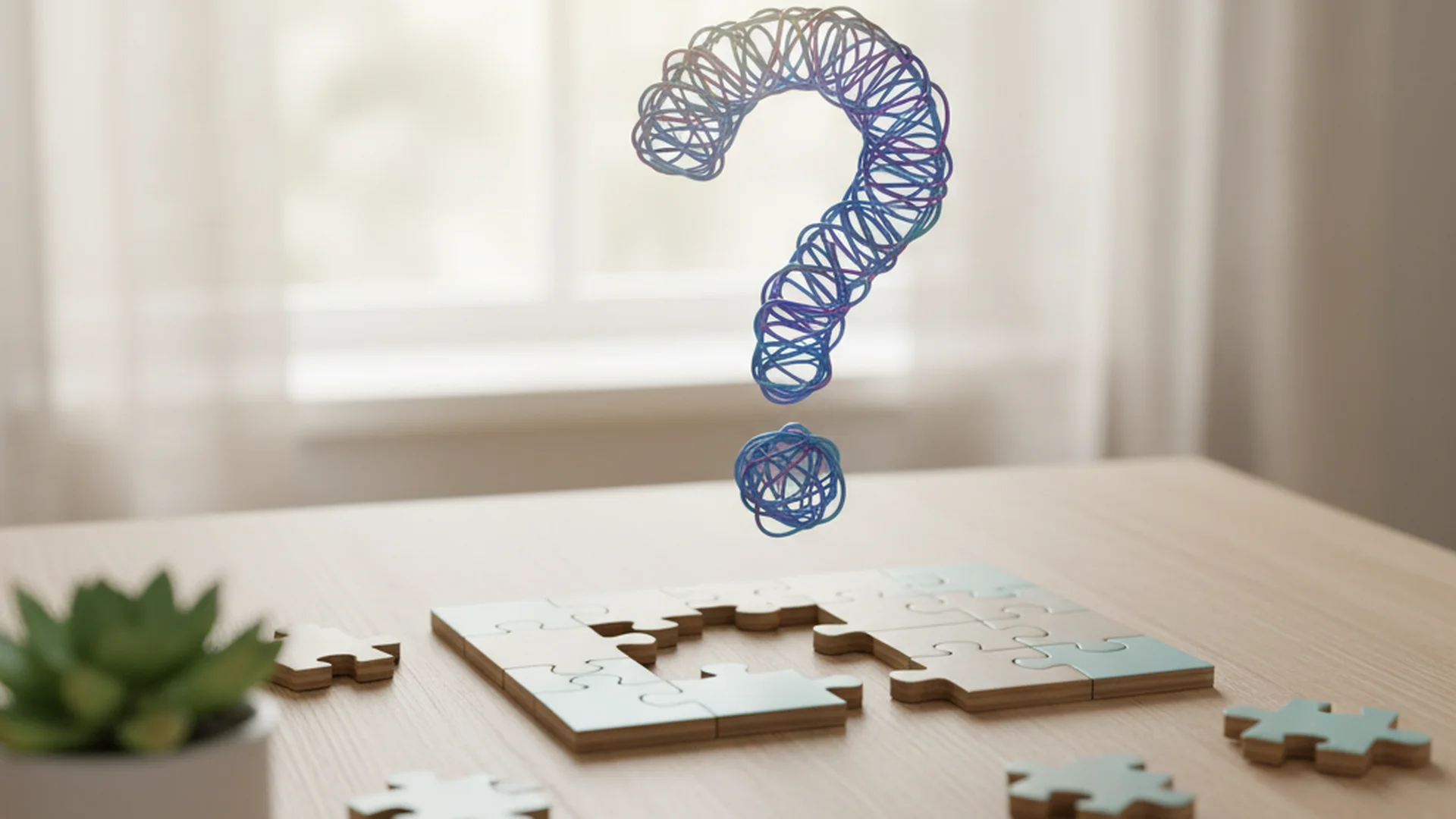
Have you ever sat down in front of a 1,000-piece jigsaw puzzle, a complex Sudoku grid, or a cryptic crossword, only to feel your brain slowly grinding to a halt? You watch others snap pieces together with ease while you feel fundamentally bad at puzzles. It is a common frustration that leads many to question their own intelligence.
However, as a retro gaming historian and gameplay analyst, I have seen thousands of players struggle with these exact same hurdles. The reality is that "puzzle-solving" is not a single, monolithic talent. It is a symphony of distinct cognitive functions working in harmony. If one of those functions is out of sync, the whole experience feels impossible.
The good news? Research from 2024 and 2025 shows that struggling with puzzles is rarely a sign of low IQ. Instead, it typically stems from specific cognitive processing styles, a lack of early childhood exposure, or even simple external factors like stress. Understanding why you struggle is the first step toward mastering the art of the solve.
The Cognitive Science of the "Puzzle Brain"
To understand why you might feel like you are bad at puzzles, we must first look at what the brain is actually doing when you engage with one. Solving a puzzle isn't just one task; it is actually eight different cognitive functions firing at once. According to a 2024 study, the brain must manage mental rotation, working memory, task switching, and visual-spatial scanning simultaneously.
The Role of Visual-Spatial Intelligence
Approximately 65% of the population are visual learners who rely heavily on visual-spatial intelligence. This is the ability to mentally manipulate 2D and 3D objects. If your brain naturally prefers linguistic or logical-mathematical pathways, visual-heavy puzzles like jigsaws or Tetris will feel significantly harder. You aren't "less smart"; your brain is simply trying to use the "wrong" tool for the job.
The "Mental Set" Bias
Have you ever looked at a puzzle and felt your mind go "foggy"? This is often what experts call a "mental set" bias or "solution interference." Your brain attempts to apply a shortcut or a pattern it has used before. When that shortcut fails, the brain gets stuck in a cognitive loop. Instead of looking for a new strategy, it shuts down to save energy, leading to that familiar feeling of mental exhaustion.
Why Intelligence Isn't the Problem
One of the most damaging myths is the "Intelligence Test Fallacy." People often use puzzles to "test" the brilliance of friends or children. However, puzzles measure persistence and specific strategy rather than raw IQ.
IQ vs. Spatial Rotation
IQ is a composite score of many different skills, including verbal comprehension and processing speed. You can have a remarkably high verbal IQ and still struggle with the "spatial rotation" required to see how a jigsaw piece fits. Professional variance proves this: architects and engineers score 20–30% higher on visual-spatial tests because they use these skills daily. Their brains have been trained to see the world in puzzles.
The Plasticity of the Brain
The "Natural Talent" myth suggests you are either born a puzzle genius or you aren't. In reality, spatial reasoning is one of the most "plastic" parts of the human brain. Research shows that even 10 hours of playing a spatial game can improve these specific skills by up to 20%. If you feel you are struggling, you are likely just "under-practiced."
Advertisement
Developmental and Neurodivergent Factors
Sometimes, the reason you are bad at puzzles dates back to your earliest years. Research indicates that children who engage in block play and puzzles before age five show up to 15% higher spatial reasoning abilities later in life. If you didn't have access to these toys as a child, you are essentially learning a new language as an adult.
The Impact of ADHD and Dyscalculia
External and internal cognitive conditions play a massive role in puzzle struggles.
- ADHD: The "sustained attention" required for a 1,000-piece puzzle can be physically exhausting for someone with ADHD. The brain seeks a quick dopamine hit, which a slow-moving puzzle doesn't always provide.
- Dyscalculia: This can make number-based puzzles like Sudoku nearly impossible to process, as the brain struggles to assign meaning to numerical patterns.
- Dyspraxia: This affects visuospatial processing, making it difficult to visualize how two separate shapes will merge into a single form.
Modern Trends: The 2025-2026 Puzzle Landscape
The way we interact with puzzles is changing rapidly. As we move through 2025 and into 2026, new technologies and cultural shifts are redefining what it means to be a "puzzler."
The Rise of Speed Puzzling
In 2025, competitive puzzling exploded into the mainstream. At the 2025 World Jigsaw Puzzle Championship, winners completed 500-piece puzzles in under 22 minutes. This has shifted the hobby from a slow, meditative task into a high-speed "e-sport." For those who feel they are "bad" at puzzles, this trend emphasizes strategy and "physical" speed over abstract intuition.
AR-Enhanced Puzzles and Digital Detox
A major trend for 2026 is the integration of Augmented Reality (AR). New "Smart Puzzles" use smartphone apps to provide real-time hints or "ghost images." This is specifically designed to help those who struggle with mental visualization, providing a "scaffolding" that helps the brain learn the patterns.
| Trend | Benefit for "Bad" Puzzlers | Technology Used |
|---|---|---|
| AR Assistance | Real-time pattern matching | Smartphone Apps |
| Collaborative Online Play | Watching experts solve | Real-time Sync |
| Digital Detox Puzzles | Cognitive grounding | High-art Physical Kits |
Common Mistakes to Avoid
If you want to move from "bad" to "proficient," you must stop making these common tactical errors:
- Forcing the Fit: This is the most common mistake. Trying to "force" a piece because the color looks right actually ruins the "cut" of the puzzle and creates future confusion. Experts say: "If you have to push, it’s not the one."
- Color Obsession: Many beginners only look at color. However, when patterns are similar, you should sort by "Texture" and "Shape" (e.g., "two-holes, two-knobs").
- Ignoring the Scaffolding: Starting in the middle of a puzzle is a recipe for failure. Always build the border first. It provides a physical boundary that reduces the cognitive load on your brain.
- The "Marathon" Mindset: Sitting for five hours straight leads to "functional fixedness." Your brain stops seeing the pieces for what they are.
Advertisement
Expert Recommendations for Improvement
If you are determined to overcome your puzzle struggles, start with these evidence-based strategies used by the World Jigsaw Puzzle Federation:
- Spatial Vocabulary: Use "spatial language" in your daily life. Instead of saying "it's over there," say "it is to the left of the blue book." This primes the brain for spatial reasoning.
- The "Shape-First" Method: In difficult sections, ignore the image entirely and focus only on the geometry of the tabs and blanks.
- Start Small: Don't jump into a 2,000-piece monster. Understand what puzzle you should start with to build confidence.
- Leverage Technology: Use digital versions of games like Minesweeper or Sliding Puzzles to practice logic without the physical cleanup.
Frequently Asked Questions
Does being bad at puzzles mean I have a low IQ?
No. IQ is a broad measurement of many different cognitive abilities. You can be a genius in linguistics, logic, or emotional intelligence and still struggle with the specific spatial rotation required for puzzles. Puzzles measure a specific subset of skills, not your overall human potential.
Why does my mind go blank when I look at a puzzle?
This is usually a result of "cognitive overload." When you look at too many pieces at once, your working memory becomes overwhelmed. To fix this, reduce the "search space" by sorting pieces into smaller groups based on specific attributes like edge type or texture.
Can I actually get better at puzzles, or is it a "born with it" skill?
Spatial reasoning is highly trainable. Studies show that even consistent play of games like Tetris or working through a Puzzle Glossary to understand the mechanics can improve your performance significantly. It is a muscle that grows with use.
How do conditions like ADHD affect solving?
ADHD affects executive function and sustained attention. People with ADHD may find the "middle phase" of a puzzle boring because the "big wins" (completing a section) happen less frequently. Breaking the puzzle into very small, achievable micro-goals can help maintain the dopamine loop needed to finish.
Conclusion
Being bad at puzzles is not a permanent state of being. It is simply a reflection of your current cognitive habits, your developmental history, and your familiarity with the "language" of shapes and logic. By understanding the 8 cognitive functions involved and moving away from the "intelligence myth," you can begin to enjoy puzzles as the brain-training tools they are meant to be.
Whether you are looking to improve your Sudoku skills or you want to understand the benefits puzzles have for the brain, remember that persistence is more important than natural talent.
Ready to Start?
Find the perfect entry-point for your skill level today.
Put it into practice
Keep reading
Reference
The Ultimate Visual Puzzles Overview: Science, Trends, and Mastery
A complete overview of visual puzzles. Discover market trends for 2025-2026, cognitive benefits, and expert strategies for solving and design.
Dec 16, 2025 12 min
Reference
How to Get Better at Puzzles: Expert Strategies for Every Solver
Learn how to get better at puzzles with our comprehensive guide. Improve your puzzle skills using expert logic, environmental optimization, and 2025 trends.
Aug 18, 2026 12 min
Physical Puzzles
The Science of Paper Folding Puzzles: A Neuroscientist’s Guide to Origami Logic
Explore the cognitive benefits and logic behind paper folding puzzles. Learn expert techniques, trends for 2026, and how these brain teasers boost spatial reasoning.
Jul 25, 2026 12 min
Advertisement