The Ultimate Visual Puzzles Overview: Science, Trends, and Mastery
A complete overview of visual puzzles. Discover market trends for 2025-2026, cognitive benefits, and expert strategies for solving and design.
By Free To Play Puzzles Editorial Team 12 min read
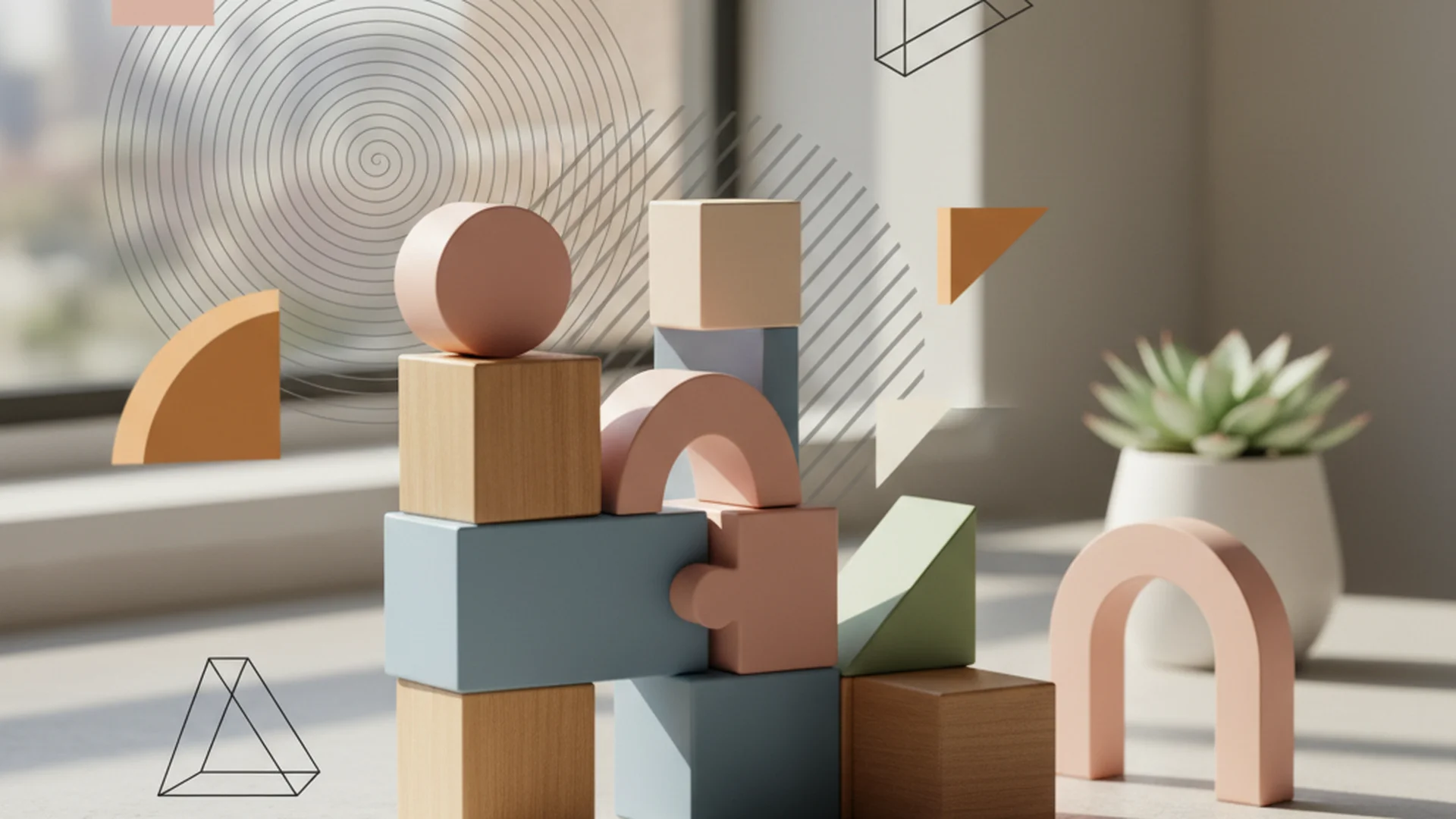
In the landscape of cognitive science, few tools are as versatile and accessible as the visual puzzle. Whether it is a thousand-piece jigsaw spread across a dining table or a complex "spot the difference" digital challenge, visual puzzles represent a unique intersection of art, mathematics, and neurology. Research into how the human brain deciphers imagery makes it clear that these activities are far more than a simple pastime—they are a vital exercise for the modern mind.
In this picture puzzles overview, we will explore the burgeoning market for these challenges, the neurobiological impact of regular solving, and the technological shifts defining the industry in 2025 and 2026.
The Anatomy of Visual Puzzles: More Than Just Jigsaws
To understand the scope of this field, we must first define what counts as a visual puzzle. At its core, a visual puzzle is any logic problem expressed through images rather than words or numbers alone. While many immediately think of the classic jigsaw, the category has expanded significantly.
Modern visual puzzles include:
- 2D Interlocking Puzzles: The traditional jigsaw, now featuring advanced "soft click" technology.
- Search and Find: "Hidden object" games that require intense focused attention.
- 3D Mechanical Puzzles: Objects like Tangram sets or modular architectural models that require spatial manipulation.
- Rebus Puzzles: Word-picture hybrids where images represent syllables or concepts.
- Optical Illusions: Challenges that exploit the brain’s tendency to "fill in the gaps," testing visual closure.
The Cognitive Science: Why Your Brain Craves the "Aha!" Moment
As we look at how puzzles benefit the brain, the data is staggering. The human brain is hardwired for visual processing; we can interpret an image 60,000 times faster than a block of text. When you engage with a visual puzzle, you aren't just looking; you are performing complex mental rotations, pattern recognition, and hypothesis testing.
Impact on Aging and Development
Research indicates that regular engagement with visual challenges has long-term health benefits. Studies from Progress Lifeline suggest that consistent puzzling can delay the onset of dementia symptoms by approximately 2.5 years. This is due to the "cognitive reserve" built through neuroplasticity—the brain’s ability to form new neural pathways in response to challenge.
Furthermore, early childhood development is heavily influenced by these tools. Children who interact with spatial puzzles before the age of five show up to a 15% increase in spatial reasoning abilities later in life. This foundational skill is a primary predictor of success in STEM (Science, Technology, Engineering, and Math) fields.
Advertisement
Expert Strategies for Solving Visual Puzzles
Whether you are tackling a Sliding Puzzle or a massive 5,000-piece landscape, the most successful solvers use a structured approach. Based on cognitive optimization principles, we recommend the following three-step framework.
1. The Quadrant Method
Instead of viewing a puzzle as one monolithic task, divide the workspace into four mental or physical quadrants. This prevents the "overload" response in the prefrontal cortex. By focusing on one section at a time, you maintain a higher rate of dopamine release—the "reward" chemical—which keeps you motivated.
2. Optimize Your Environmental Input
Lighting is often overlooked. To differentiate between subtle color gradients (a hallmark of 2025’s "gradient puzzle" trend), use 5000K LED "daylight" bulbs. Natural light is ideal, but consistent, high-CRI (Color Rendering Index) lighting ensures your eyes aren't fighting against glare or yellow tints.
3. Sort by "Anchor Points"
Before you place a single piece, categorize your components into three bins:
- Edges: The frame of your spatial logic.
- High-Contrast Textures: Logos, faces, or distinct patterns that are easily identifiable.
- Fill Colors: The "noise" of the puzzle, such as sky or water, which should always be saved for last.
Trends Defining 2025 and 2026
The world of visual puzzles is currently undergoing a digital and environmental revolution. We are moving away from simple cardboard cutouts toward "Smart Puzzles" and sustainable art.
AI-Generated Challenges
Artificial Intelligence tools like Ideogram and Midjourney have revolutionized puzzle design. Creators can now generate hyper-complex scenes with thousands of unique, non-repeating details. This has led to the rise of "Expert-Level" adult puzzling, where the level of detail far exceeds what a traditional illustrator could produce in a reasonable timeframe.
Hybrid AR and Functional Art
We are seeing a massive surge in puzzles that bridge the physical and digital worlds. Once a physical puzzle is completed, solvers can use an Augmented Reality (AR) app to scan the image, triggering animations or unlocking a digital logic puzzle. Additionally, 3D puzzles are becoming functional home decor, such as working mechanical clocks or LED-lit "cityscape" desks.
Sustainability and Material Innovation
In response to global environmental concerns, the industry is shifting toward:
- Recycled cardboard and soy-based inks.
- Bamboo and sustainably sourced wood for 3D puzzles.
- Plastic-free packaging and biodegradable "puzzle glue."
| Feature | Traditional Puzzles | 2025-2026 Trends |
|---|---|---|
| Material | Plastic/Cardboard | Bamboo/Recycled/Soy Ink |
| Design | Hand-drawn/Photo | AI-Enhanced/Hyper-Detailed |
| Interaction | Static Image | AR-Integrated/Interactive |
| Purpose | Leisure | Leisure + Functional Decor |
Common Mistakes to Avoid
Even seasoned solvers can fall into traps that lead to frustration. As part of this picture puzzles overview, it is important to address the psychological hurdles of puzzling.
1. "Forcing the Fit"
One of the most common mistakes is attempting to force two pieces together that don't quite align. This can damage the "interlock" of high-quality puzzles. Brands like Ravensburger use "soft click" technology; if it doesn't slide in with a gentle touch, it is not the right fit. Remember: visual puzzles are about logic, not force.
2. Misinterpreting "Seeing" for "Perceiving"
Many puzzles exploit "visual closure"—the brain's tendency to fill in gaps. You might think you see a straight line where there is actually a slight curve. Trust the shapes more than your initial perception of the image.
3. Skipping the Context
Modern "mystery" puzzles often feature a box cover that is intentionally different from the final solved image. If you assume the box is a 1:1 guide, you will find yourself lost. Always read the instructions to see if there is a "twist" involved.
Advertisement
Real-World Examples of Visual Puzzle Impact
Example 1: Competitive Speed Puzzling
The World Jigsaw Puzzle Championship has seen a 40% increase in participation over the last three years. This isn't just about fun; it’s a high-stakes demonstration of rapid visual processing and motor coordination.
Example 2: Therapeutic Memory Care
In many modern nursing facilities, custom-made visual puzzles using family photos are used to stimulate "reminiscence therapy." This helps patients with cognitive decline reconnect with their personal history through visual cues.
Example 3: The "Mystery" Jigsaw Phenomenon
Brands like Wasgij have popularized puzzles where the image you build is the perspective of someone in the box art, rather than the box art itself. This adds a layer of logic puzzle deduction to the visual task.
Frequently Asked Questions
What counts as a visual puzzle?
A visual puzzle is any challenge where the solution is derived through the interpretation of images or spatial relationships. This includes jigsaws, hidden object games, "spot the difference" challenges, and 3D mechanical puzzles.
Are visual puzzles only for seniors or children?
No. While they are excellent for those demographics, there is a massive market for "expert-level" adult puzzling. This includes competitive speed puzzling and complex 5,000+ piece sets designed for stress relief and cognitive maintenance in working adults.
Can visually impaired people enjoy puzzles?
Yes. The industry has made great strides in accessibility. Many puzzles now feature high-contrast color palettes, tactile textures for "blind solving," and specialized tools like lighted magnifiers to assist those with low vision.
How long does it take to see cognitive benefits?
While a single puzzle provides immediate stress relief, long-term cognitive benefits such as improved memory and spatial reasoning usually require consistent engagement over several months.
Conclusion
Visual puzzles are a testament to the human brain's incredible capacity for pattern recognition and spatial logic. From the $5.3 billion market growth to the profound neurological protection they offer against aging, these challenges remain a cornerstone of mental health and education in 2025. By understanding the science of the "Aha!" moment and utilizing expert strategies like the Quadrant Method, you can turn a simple hobby into a powerful tool for brain longevity.
As we move into an era of AI-designed and AR-integrated challenges, the definition of a "puzzle" will continue to evolve, but the core satisfaction of fitting the final piece will remain the same.
Enhance Your Mind
Explore our collection of science-backed brain challenges and visual games.
Put it into practice

Keep reading
Reference
The Ultimate Guide to Types of Puzzles: A 2025–2026 Industry Overview
Discover the complete landscape of puzzle categories, from mechanical and logic grids to modern digital hybrids. Expert analysis for 2025.
Jan 7, 2025 15 min
Reference
Physical Puzzles Overview: The Complete Guide to Mechanical Challenges
Explore the 2025 tactile revival with our physical puzzles overview. Learn about mechanical puzzle types, maintenance tips, and the latest trends in functional art.
Mar 25, 2026 12 min
Reference
Puzzle Difficulty Levels Explained: Finding Your Cognitive Flow State
Unlock the science behind puzzle difficulty levels. From Sudoku givens to the quadratic growth of jigsaws, learn how to choose the perfect challenge for your brain.
Jul 26, 2026 12 min
Advertisement