The Ultimate Guide to Types of Puzzles: A 2025–2026 Industry Overview
Discover the complete landscape of puzzle categories, from mechanical and logic grids to modern digital hybrids. Expert analysis for 2025.
By Free To Play Puzzles Editorial Team 15 min read
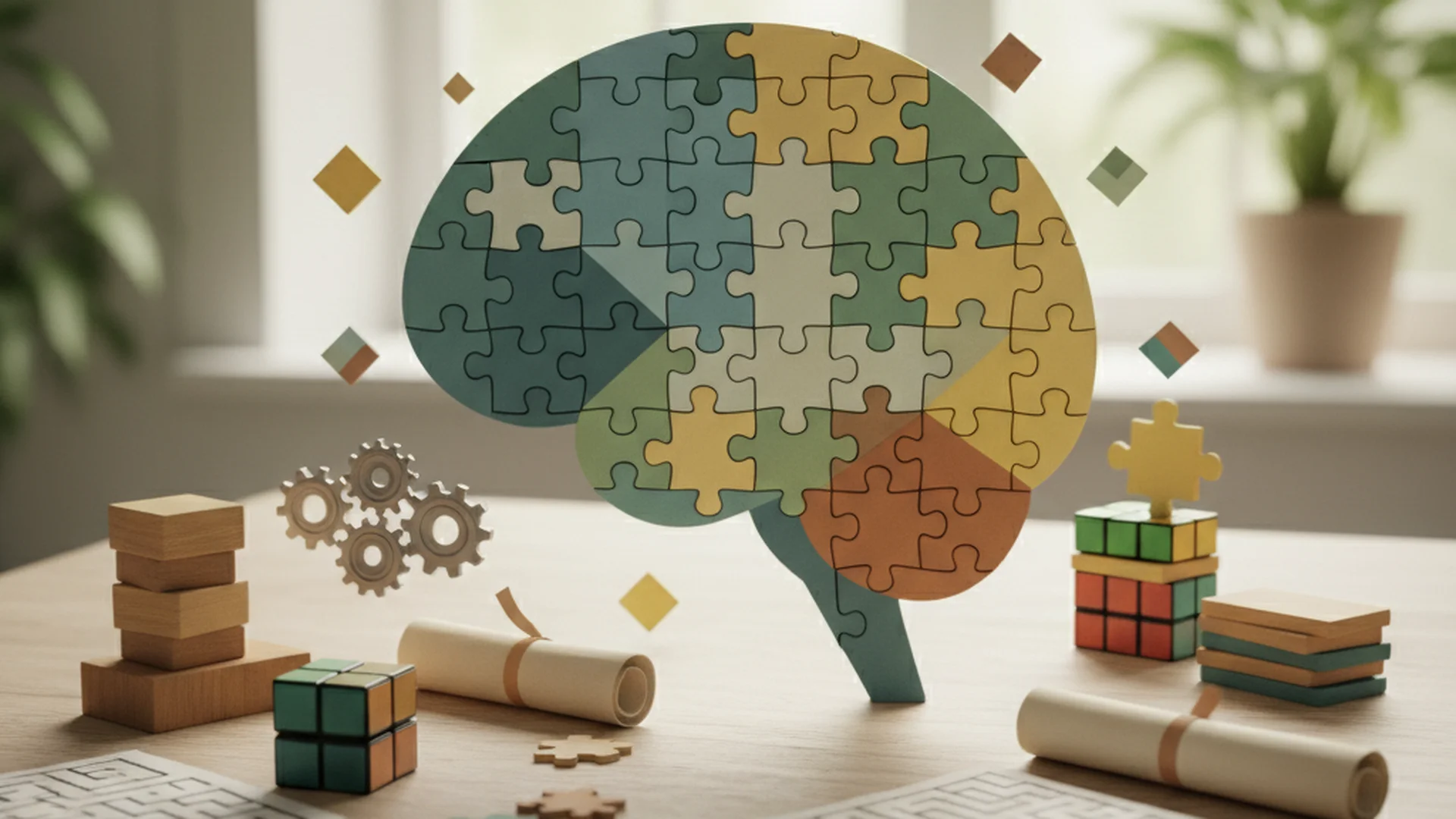
In the modern era of gaming and mental fitness, the sheer variety of types of puzzles available to consumers has reached an all-time high. Whether you are a casual player looking to unwind after a long day or a dedicated strategist seeking to sharpen your cognitive edge, the landscape of puzzle categories offers something for everyone. From the tactile satisfaction of a 1,000-piece jigsaw to the algorithmic complexity of a digital logic grid, puzzles have evolved from simple pastimes into a multi-billion dollar global industry focused on wellness and skill-building.
As a retro gaming historian, I have watched these genres shift from physical cardboard to sophisticated digital interfaces, yet the core psychological appeal remains the same: the human brain's innate desire to find order in chaos. In this comprehensive overview, we will break down the industry trends for 2025–2026 and explore every major category of puzzles currently defining the market.
The State of the Puzzle Industry (2025–2026)
The puzzle industry is no longer a niche market for children and retirees. Driven by a global shift toward "slow living" and mental health awareness, puzzles have become a cornerstone of the modern entertainment budget. Recent data suggests that the global puzzle market (combining digital and physical formats) generated over $21 billion in 2024. As we move through 2025, this figure is expected to climb toward $26 billion.
One of the most interesting shifts is the "Digital-Tactile" merge. While mobile games like 2048 continue to dominate short-burst entertainment, physical jigsaw puzzles are seeing a resurgence through high-end, eco-friendly brands. The 1,000-piece puzzle remains the gold standard for enthusiasts, but the 500-piece segment is the fastest-growing, appealing to the busy professional who wants a weekend project rather than a month-long commitment.
1. Mechanical & Tactile Puzzles
Mechanical puzzles are physical objects that require manual manipulation to solve. These are the most traditional types of puzzles, relying on spatial reasoning and fine motor skills.
Jigsaw Puzzles
The most recognizable sub-category, jigsaw puzzles, has undergone a revolution in design. Beyond the traditional flat cardboard pieces, we now see:
- 3D Puzzles: These allow solvers to build architectural models or globes.
- Wooden Puzzles: Often featuring "whimsy pieces" (pieces cut into specific shapes like animals or trees).
- Gradient Puzzles: Challenging builds that rely entirely on subtle color shifts rather than a distinct image.
Assembly and Disassembly Puzzles
This category includes items like the Rubik’s Cube and Japanese secret opening boxes (Himitsu-Bako). These require a specific sequence of moves to either take the object apart or return it to a "solved" state. In 2025, high-end wooden 3D puzzles—such as functioning clocks or mechanical globes—have become popular as "functional art."
Advertisement
2. Logic & Grid Puzzles
Logic puzzles are rule-based challenges that require deductive reasoning. Unlike jigsaws, which are primarily visual, logic puzzles are purely cerebral.
Grid-Based Logic
Commonly found in magazines and apps, these include Sudoku and Nonogram (also known as Picross). The goal is typically to fill a grid based on numerical clues provided along the axes. For those who enjoy these, learning logic puzzle terminology can significantly improve your solving speed.
Deduction Puzzles
Logic grid puzzles often involve a narrative—for example, "Five people live in five different colored houses; find out who owns the zebra." These require a grid to track what is known and what can be eliminated. This type of "computational thinking" is highly valued in fields like programming and data analysis.
3. Word & Language Puzzles
Word puzzles rely on vocabulary, linguistics, and pattern recognition. These have seen a massive digital resurgence thanks to viral games like Wordle.
Crosswords
The classic crossword remains a staple of the genre. From the "Monday Easy" to the "Sunday Stumper," crosswords test both general knowledge and the ability to recognize puns and cryptic clues. If you're looking to level up your game, check out these 10 crossword solving strategies the pros use.
Word Search and Scrambles
Games like Word Search and Word Scramble are excellent for pattern recognition and are frequently used in educational settings to improve spelling and literacy.
Modern Word Games
The 2025 market is seeing a rise in "competitive word play," where players compete in real-time to find words in a shared grid, similar to Boggle but with digital power-ups and ranking systems.
4. Skill & Dexterity Puzzles
These puzzles test the bridge between the mind and the body. They require steady hands, patience, and often a basic understanding of physics.
Physical Balance Games
Jenga and Mikado (Pick-up Sticks) are classic examples. The "puzzle" aspect involves analyzing the structure to determine which move won't cause a collapse.
Maze Globes
3D maze globes (like the Perplexus) require the player to maneuver a small ball through a complex track by tilting and rotating the sphere. These are excellent for developing hand-eye coordination and spatial awareness.
Digital Dexterity
While often categorized as "action" games, titles like Tetris or Snake are fundamentally dexterity puzzles. They require the player to process spatial information at increasing speeds while executing precise movements.
| Puzzle Category | Primary Skill Used | Top Example |
|---|---|---|
| Mechanical | Spatial Reasoning | Rubik's Cube |
| Logic | Deduction | Sudoku |
| Word | Linguistics | Crosswords |
| Dexterity | Fine Motor Skills | Jenga |
Advertisement
5. Hybrid & Digital Puzzles
As we move further into 2025, the lines between traditional genres are blurring. This is where the most innovation is occurring.
Puzzle-RPGs and Match-3
Match-3 games account for a staggering 65% of mobile puzzle revenue. By adding "Role-Playing Game" elements—like leveling up a character or building a kingdom—developers have created highly addictive loops that keep players engaged for years.
Escape Room-in-a-Box
These kits bring the experience of a physical escape room to the dining room table. They often combine mechanical puzzles, logic riddles, and even AR (Augmented Reality) elements where you must scan a physical clue with your phone to see a hidden video.
AI-Adaptive Puzzles
One of the major trends for 2026 is the implementation of AI to adjust difficulty in real-time. If a player is solving a Nonogram too quickly, the AI might introduce more complex patterns or hidden rules to maintain the "flow state" without leading to frustration.
Recent Trends and Updates (2025–2026)
The puzzle world is currently being reshaped by three major forces: Sustainability, Aesthetic Functionality, and Augmented Reality.
- Sustainability Standard: Eco-conscious consumers are no longer accepting plastic-wrapped puzzles. In 2025, "Zero-plastic" certifications are becoming standard. Expect to see more soy-based inks and 100% recycled cardboard components.
- 3D Puzzles as Home Decor: The trend of "Puzz-core" interior design has taken off. People are moving away from gluing flat puzzles and toward building intricate wooden 3D models that serve as statement pieces on bookshelves.
- AR Integration: High-end jigsaw brands are now including AR features. Once you complete the puzzle, you can view it through a mobile app to see the image "come to life" with animations or use it as a portal to a digital scavenger hunt.
Best Practices & Expert Recommendations
To get the most out of your puzzling experience, whether for fun or cognitive health, follow these strategic recommendations.
Environment Setup
- Lighting: Use "cool-white" lighting (around 5000K). This color temperature is closest to natural daylight and helps you distinguish between similar shades of blue or green in a jigsaw puzzle.
- Surface: Use a dedicated puzzle board. This allows you to move your project if you need to use the table for dinner, preventing the tragedy of a half-finished puzzle being ruined.
The "20-Minute" Break
Cognitive fatigue is real. If you find yourself staring at a Sudoku grid or a pile of jigsaw pieces and seeing nothing, step away. Taking a 20-minute break allows your brain to reset its pattern recognition. You will often find the "missing" piece or the logical breakthrough within seconds of returning.
Sorting Systems
Don't just dig through the box. Use sorting trays to categorize pieces by:
- Color/Texture: The most common starting point.
- Edge Pieces: Always build the border first to define your workspace.
- Shape (Advanced): If you're stuck on a "sky" section, sort pieces by the number of "tabs" and "blanks" they have.
Common Mistakes to Avoid
Even seasoned puzzlers fall into certain traps. Here are the most common mistakes I’ve observed in my analysis of gameplay strategies:
- Starting Too Big: Beginners often buy 2,000-piece puzzles because the image looks great, only to realize they don't have the table space or the 30+ hours required to finish it. Start with 500 pieces to build your "puzzle stamina."
- Forcing the Fit: In high-quality puzzles, a piece should "click" or "snap" into place effortlessly. If you have to push hard, it’s the wrong piece. Forcing it damages the cardboard and leads to alignment issues later.
- Ignoring Negative Space: Most people look for the "tab" on a piece. Instead, try looking at the hole (the negative space) in the puzzle. Your brain is often better at matching shapes than it is at matching protruding tabs.
Frequently Asked Questions
How long does a 1,000-piece puzzle take?
For the average person, a 1,000-piece puzzle takes between 3 and 10 hours. This depends heavily on the "business" of the image. A landscape with a lot of solid blue sky will take much longer than a vibrant, detailed collage.
What are puzzle pieces called?
In the industry, the protruding parts are called tabs or nobs, and the indentations are called blanks or slots.
Are jigsaw puzzles good for the brain?
Yes. They engage both the left hemisphere (logical, analytical) and the right hemisphere (creative, intuitive). This "whole-brain" workout can improve spatial reasoning and short-term memory.
How do I choose the right puzzle for me?
It depends on your goal. If you want relaxation, go for a 500-piece jigsaw or a Word Search. If you want a mental challenge, try a high-difficulty Sudoku or a complex logic grid. Check out our best puzzles for specific goals for more help.
What is the most difficult type of puzzle?
Many consider "Krypt" puzzles (solid color jigsaws) or "Impossible" puzzles (which have no edges and extra pieces) to be the most difficult physical puzzles. In the digital realm, high-level cryptic crosswords or complex logic gates are often cited as the peak of difficulty.
Conclusion
The world of puzzles is vaster than ever, offering a unique blend of historical tradition and cutting-edge technology. Whether you are engaging with types of puzzles that are physical, digital, or a hybrid of both, you are participating in an activity that has challenged and delighted humanity for centuries. As we move through 2025, the focus on sustainability and AI-driven personalization will only make these challenges more accessible and engaging.
By understanding the different categories—from the deductive depth of logic grids to the tactile complexity of 3D mechanical builds—you can better choose the puzzles that will provide you with the most joy and the greatest cognitive reward.
Ready to Start?
Challenge your brain with our collection of digital puzzles and logic games today.
Put it into practice

Keep reading
Reference
The Ultimate Visual Puzzles Overview: Science, Trends, and Mastery
A complete overview of visual puzzles. Discover market trends for 2025-2026, cognitive benefits, and expert strategies for solving and design.
Dec 16, 2025 12 min
Logic Puzzles
The Ultimate Pentomino Puzzles Guide (2025-2026 Edition)
Master pentomino puzzles with our comprehensive guide. Explore historical roots, 12-piece solutions, advanced solving strategies, and 2026 trends in logic gaming.
Sep 22, 2026 12 min
Number Games
The Ultimate Guide to Hidato Puzzles (2025-2026)
Master Hidato puzzles with our comprehensive guide. Learn expert strategies, understand the history of number snakes, and discover 2026 trends in logic gaming.
Sep 20, 2026 12 min
Advertisement