The Puzzler’s Roadmap: How to Choose the Perfect Challenge for Your 2026 Goals
Discover the best puzzles for stress relief, memory improvement, and cognitive growth. A complete comparison matrix and expert guide for 2025-2026.
By Free To Play Puzzles Editorial Team 15 min read
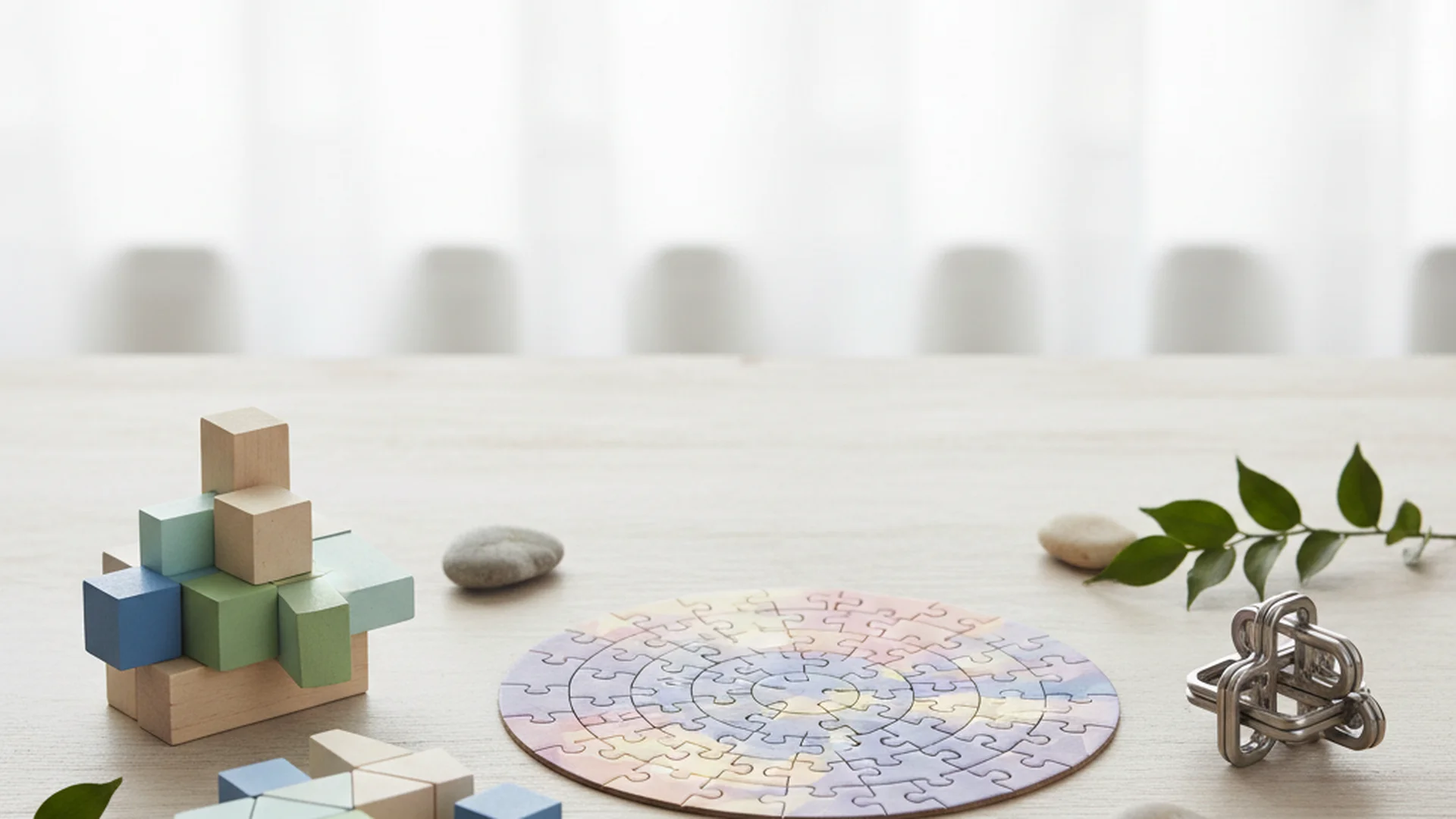
In the fast-paced digital landscape of 2025, a quiet revolution has taken place. The "Dissectologist"—a term once reserved for historical puzzle enthusiasts—has become a mainstream identity. We are no longer just "doing a puzzle" to pass the time; we are engaging in a calculated form of mental wellness. The right challenge can sharpen the mind, but finding the best puzzles for your specific lifestyle goals requires more than just picking a pretty box off a shelf.
Whether you are looking to decompress after a high-stakes board meeting, sharpen your memory to stave off cognitive decline, or build better communication within your remote team, the puzzle you choose matters. The landscape has evolved into a multi-billion-dollar industry where "slow living" meets cutting-edge cognitive science.
The Science of the Snap: Why Puzzles Matter in 2026
The surge in puzzling isn't just a trend; it's a response to "digital fatigue." Scientific research increasingly supports the idea that regular engagement with tactile and logic-based challenges builds "mental reserve." This reserve acts as a buffer against age-related cognitive decline and daily anxiety.
When we talk about the best puzzles for brain health, we are looking at how different activities stimulate different neural pathways. For example, a jigsaw puzzle requires heavy lifting from the parietal lobe (spatial processing), while a crossword puzzle activates the frontal and temporal lobes (language and memory).
To understand more about the underlying mechanics, you might explore Are Puzzles Good for Brain.
The Goal-Oriented Puzzling Matrix
Not all puzzles are created equal. To maximize your time, you should select your "mental workout" based on the specific benefit you want to achieve. Below is a comprehensive puzzle comparison based on 2025-2026 expert recommendations.
| Goal | Recommended Puzzle Types | Cognitive Impact | Specific Examples |
|---|---|---|---|
| Stress Relief | Gradient, fine art, nature jigsaws | Lowers cortisol, induces flow state | Cloudberries Metropolis, BetterCo. Gradients |
| Memory Improvement | Logic grids, crosswords, pattern-recall | Strengthens neural connections | Sudoku, NYT Crossword, Wordle |
| Executive Function | Strategy games, spatial logic | Improves planning and decision making | Tangram, Kanoodle, Chess |
| Fine Motor Skills | 3D mechanical models, wooden sets | Hand-eye coordination, precision | Robotime 3D Models, Melissa & Doug |
| Team Building | Cooperative kits, escape room games | Enhances communication and empathy | Exit: The Game, Codenames |
1. Puzzles for Stress Relief and Anxiety Management
In 2026, the "slow living" movement has embraced the jigsaw puzzle as a form of "analog meditation." When your goal is stress relief, you want to avoid puzzles with high frustration markers (like massive areas of solid black or repetitive patterns).
Instead, look for gradient puzzles. These puzzles use a smooth transition of colors, allowing your brain to rely on color recognition rather than just shape-matching. This creates a "flow state" where the passage of time seems to disappear.
2. Puzzles for Memory and Neuroplasticity
For those focused on long-term brain health, the best puzzles for memory are those that require "active recall." This is why crosswords remain the gold standard. Constructors design grids to pull from various "memory buckets"—pop culture, history, and wordplay.
If you find crosswords intimidating, starting with the basics is key. Check out our guide on Crossword Terminology to build your vocabulary. Logic-based games like Sudoku are also excellent for training the brain to recognize patterns and hold multiple variables in "working memory" simultaneously.
3. Puzzles for Executive Function and Spatial Reasoning
Executive function involves your ability to plan, focus, and multitask. Strategy-based puzzles like Settlers of Catan or spatial challenges like Tangram are perfect here. These puzzles require you to visualize the end goal and work backward through a series of tactical steps.
Advertisement
2025-2026 Trends: The Future of Puzzling
The puzzle industry is no longer stuck in the cardboard age. Recent technological and cultural shifts have introduced new ways to engage with this ancient hobby.
Sustainability and Eco-Materials
We’ve moved past cheap plastics. In 2025, the leading brands have pivoted toward FSC-certified wood, bamboo, and recycled post-consumer plastics. High-quality wooden puzzles are now being treated as "heirloom" items. Brands like Pomegranate and Blue Kazoo focus on "art-first" designs, encouraging users to frame their finished pieces as home decor rather than putting them back in the box.
Augmented Reality (AR) Integration
The most significant tech trend for 2026 is AR integration. Many new puzzle sets allow you to scan the completed image with a smartphone to reveal hidden animations or digital "easter eggs." Imagine finishing a puzzle of a bustling London street and then seeing the buses move and hearing the sounds of the city through your phone. This hybrid approach bridges the gap between tactile play and digital engagement.
AI-Generated Personalization
AI has revolutionized custom puzzling. You can now upload a personal photo to specialized platforms that use AI to optimize the "puzzlability" of the image. The AI adjusts color balance and contrast to ensure the pieces are distinguishable, then uses precision lasers to create a one-of-a-kind cut pattern.
Sensory "Escape" Kits
At-home escape room kits have leveled up. In 2026, these kits include sensory elements. If you’re solving a mystery set in a forest, the kit might include a scent-diffusing card that smells like pine needles or textures that mimic moss and stone. This immersion increases the "team building" efficacy by engaging more parts of the brain.
Expert Strategies: Avoiding the "Boxed In" Feeling
Even with the best puzzles for your goals, a lack of strategy can lead to frustration. We recommend the following "pro-tips":
Measure Your Workspace First
The number one mistake beginners make is buying a 1,000-piece puzzle that is 2 inches wider than their coffee table.
- 500 pieces: Usually fits on a standard laptop desk (approx. 18" x 24").
- 1,000 pieces: Requires a dining table or dedicated puzzle board (approx. 20" x 27").
- 2,000+ pieces: Requires a large dedicated surface and a lot of patience.
The Difficulty Multiplier
Remember: Difficulty does not scale linearly. A 1,000-piece puzzle isn't just "twice as hard" as a 500-piece one—it is approximately four times harder. This is because you have twice as many pieces to sort and twice as many potential locations for every single piece. If you're looking for a relaxing experience, don't feel pressured to go big.
Master the "Negative Space"
When you get stuck, stop looking at the piece in your hand. Instead, look at the shape of the hole (the negative space) on the board. Our brains are often better at identifying missing shapes than matching a fragment of an image to a whole.
For more on improving your skills, read How to Get Better at Puzzles.
Common Mistakes and Misconceptions
To truly enjoy your puzzling journey, you must discard a few outdated myths.
- The "Harder is Better" Fallacy: Many parents buy complex 1,000-piece puzzles for children to "challenge" them. This often leads to "puzzle burnout." For kids, the goal should be success and confidence. Stick to age-appropriate piece counts that allow for a sense of accomplishment.
- The "Senior Hobby" Stereotype: While puzzles are great for seniors, data shows that 55% of the puzzle audience is now aged 25–44. This demographic uses puzzles primarily as a "digital detox" tool to disconnect from screens before bed.
- Ignoring the Social Aspect: People often think puzzles are solo activities. However, collaborative puzzling is one of the most effective tools for corporate retreats. It forces individuals to communicate their thought processes and resolve conflicts over where a specific piece belongs.
Advertisement
Frequently Asked Questions
What are the best puzzles for beginners?
For adults, we recommend starting with a 500-piece puzzle from a high-quality brand like Ravensburger or Galison. Look for images with distinct "zones"—for example, a house with a red roof, a blue sky, and a green garden. This makes sorting much easier.
How do I stop my cat from stealing puzzle pieces?
This is a classic "puzzler's problem." The best solution is a "puzzle stow" or a folding puzzle mat. These allow you to zip up your progress or roll it away when you aren't working on it. Alternatively, keep the puzzle in a room that can be closed off from pets.
Can puzzles actually prevent dementia?
While no activity can "guarantee" the prevention of medical conditions, research suggests that high levels of "cognitive activity" throughout life are associated with a delayed onset of dementia symptoms. Puzzles are a key part of an active mental lifestyle. For a deeper dive, see Can Puzzles Prevent Dementia.
How long should it take to finish a 1,000-piece puzzle?
For a casual puzzler, a 1,000-piece puzzle typically takes between 6 to 10 hours of active work. Experienced puzzlers may finish in under 4 hours, while complex, monochromatic designs can take 20+ hours.
Are digital puzzles as good for the brain as physical ones?
Both have benefits. Digital puzzles (like those found on our All Games page) offer convenience, progress tracking, and endless variety. Physical puzzles offer tactile satisfaction and help reduce eye strain from blue light. A "hybrid" approach—using apps during commutes and physical puzzles at home—is often the most effective for cognitive health.
Conclusion: Finding Your Perfect Fit
The best puzzles for you are the ones that meet you where you are today. If you are exhausted and need to shut off your brain, go for a 500-piece gradient. If you are feeling sharp and want to test your limits, dive into a 2,000-piece fine art masterpiece or a Saturday-level crossword.
Remember, puzzling is not a race. Whether you finish in two hours or two months, the benefits remain the same: a calmer mind, a sharper memory, and the simple, profound joy of making something whole.
Ready to Start?
Challenge your brain with our daily puzzles today.
Put it into practice
Keep reading
Reference
Puzzle Difficulty Levels Explained: Finding Your Cognitive Flow State
Unlock the science behind puzzle difficulty levels. From Sudoku givens to the quadratic growth of jigsaws, learn how to choose the perfect challenge for your brain.
Jul 26, 2026 12 min
Reference
Physical Puzzles Overview: The Complete Guide to Mechanical Challenges
Explore the 2025 tactile revival with our physical puzzles overview. Learn about mechanical puzzle types, maintenance tips, and the latest trends in functional art.
Mar 25, 2026 12 min
Reference
The Ultimate Visual Puzzles Overview: Science, Trends, and Mastery
A complete overview of visual puzzles. Discover market trends for 2025-2026, cognitive benefits, and expert strategies for solving and design.
Dec 16, 2025 12 min
Advertisement