The Science of Paper Folding Puzzles: A Neuroscientist’s Guide to Origami Logic
Explore the cognitive benefits and logic behind paper folding puzzles. Learn expert techniques, trends for 2026, and how these brain teasers boost spatial reasoning.
By Free To Play Puzzles Editorial Team 12 min read
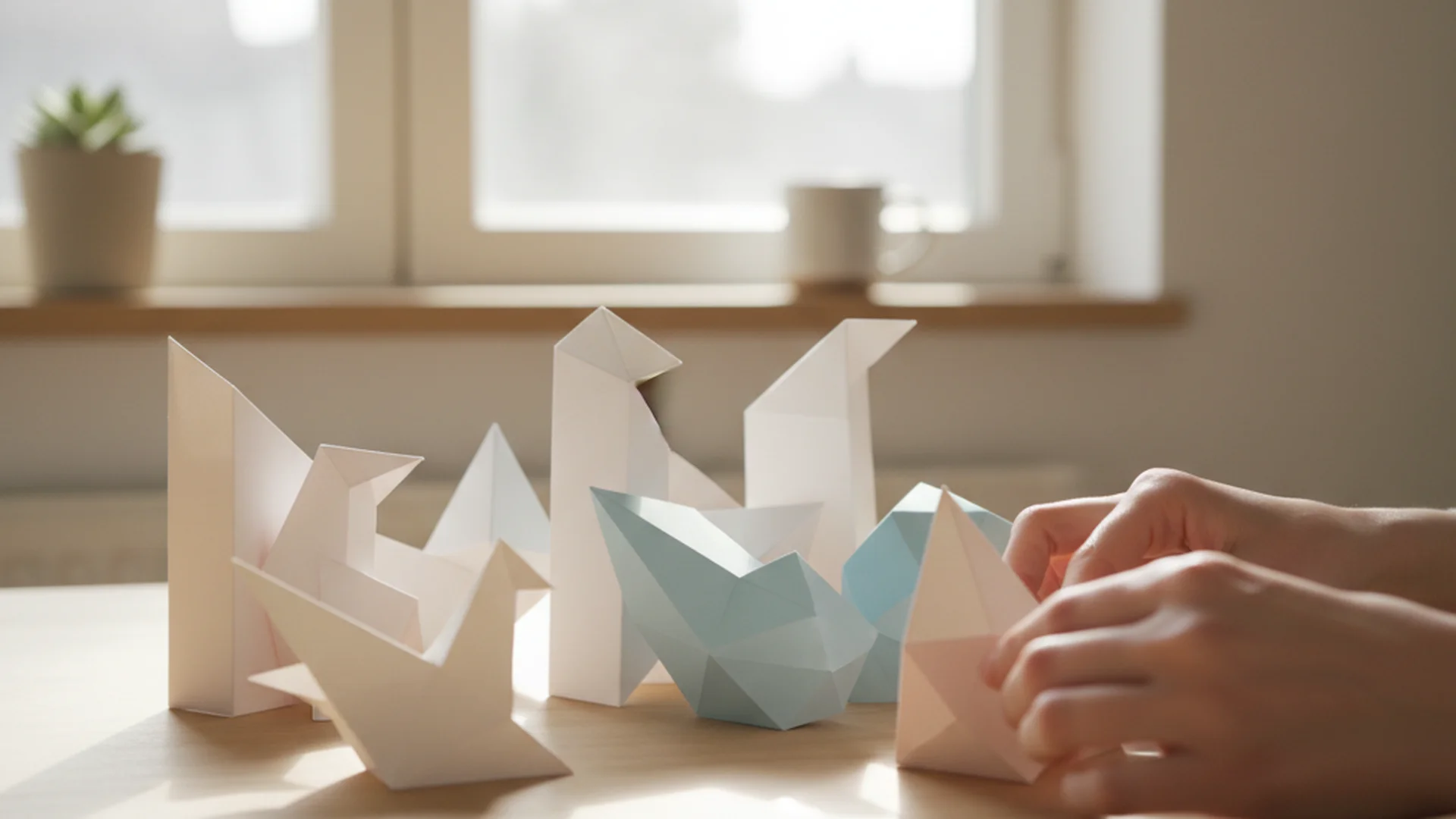
In the world of tactile brain teasers, paper folding puzzles occupy a unique intersection between art and mathematics. While traditional origami is often celebrated for its ability to transform a simple square into a representative bird or flower, origami puzzles challenge the mind in a different way. Instead of following a linear set of instructions to reach a predetermined shape, the solver is presented with a goal—such as making a specific pattern appear on a flat surface—and must use logic to determine the sequence of folds required.
Physically manipulating objects is a powerful way to engage the brain. Paper folding puzzles are more than just a hobby; they are a comprehensive mental workout that engages the prefrontal cortex and the parietal lobe, the areas of the brain responsible for executive function and spatial navigation. Whether you are a student looking to improve your math skills or an adult seeking to maintain cognitive sharpess, these puzzles offer a tangible way to "flex" your brain.
The Cognitive Benefits of Folding
The act of solving paper folding puzzles is a multi-sensory experience. A 2025 systematic review by Mendonça et al. highlighted that origami-based tasks significantly improve focus, memory, and fine motor skills. When you engage with these puzzles, your brain is performing "mental rotation"—the ability to rotate mental representations of two-dimensional and three-dimensional objects.
This is not merely a parlor trick. Research into Cognitive Benefits shows that spatial visualization is a key predictor of success in STEAM (Science, Technology, Engineering, Art, and Math) fields. For children as young as age two, playing with paper and understanding how it transforms can lay the foundation for advanced geometric understanding later in life.
A Brief History: From Orikata to Modern Logic
While we often associate the art of folding with Japan, the history of paper folding likely began in China around the 1st or 2nd century AD, shortly after the invention of paper itself. It wasn't until the 6th century that the practice traveled to Japan. Interestingly, the term "origami" (from oru meaning folding and kami meaning paper) wasn't standardized until 1880. Before that, it was frequently referred to as Orikata, or "folded shapes."
Historically, these shapes were used for ceremonial purposes. However, the transition into the "puzzle" realm is a more modern evolution. Today, designers like Jeremy Shafer and Ilan Garibi have pushed the boundaries of the medium, creating challenges that require complex "computational origami" to solve.
The 7-Fold Myth
You may have heard the common statistic that a piece of paper cannot be folded in half more than seven times. While this holds true for a standard sheet of A4 paper due to exponential growth in thickness, it is technically a myth. In a famous experiment, a team folded a football-field-sized sheet of paper 11 times. The final fold was so thick and resistant that it actually required a forklift to complete.
Advertisement
Getting Started: Materials and Tools
To begin your journey with origami puzzles, you don't need a workshop full of tools, but choosing the right materials can make a significant difference in your success rate.
Choosing Your Paper
Not all paper is created equal. The weight, texture, and "memory" of the paper (its ability to hold a crease) are vital.
| Paper Type | Best For | Characteristics |
|---|---|---|
| Kami | Beginners | Thin, inexpensive, white on one side, holds creases well. |
| Tant | Intermediate | Dyed on both sides, slightly thicker, very durable for repeated folding. |
| Washi | Advanced | Hand-made Japanese paper; beautiful but soft, requires high precision. |
| Bamboo | Eco-Conscious | A 2026 trend; sustainable and has a unique tactile feedback. |
Essential Tools
While your fingers are your primary tools, experts recommend the following to increase precision:
- Bone Folder: A dull-edged tool used to create sharp, crisp creases.
- Self-Healing Mat: Provides a flat, non-slip surface for folding.
- Fingernail: If you don't have a bone folder, using your thumbnail to "burnish" the crease is a classic alternative.
Solving Strategies: The "Logic of Gray"
When tackling a modern paper folding puzzle like Foldology or Manifold, you aren't just folding randomly. You are looking for clues.
One of the most effective strategies is what experts call the "Logic of Gray." In many printed puzzles, certain areas are solid colors or grayed out. If a solid color section is adjacent to a section with a picture or pattern, there is a 100% chance that a fold must occur exactly at that junction. By identifying these "mandatory junctions" first, you can narrow down the possible moves significantly.
Common Mistakes to Avoid
Even seasoned puzzlers can get frustrated by paper. Here are the most common pitfalls:
1. The Perfectionist’s Trap
Many beginners throw away a puzzle if the edges don't align perfectly. However, in complex puzzles, "paper breathing" is necessary. This involves leaving a tiny gap (about 0.5mm) to account for the thickness of the paper as it layers up. If you fold too tightly, the paper will eventually warp or tear.
2. Over-Creasing
It is tempting to press down as hard as possible on every fold. However, "construction folds"—temporary folds used to find a center point—should be light. Applying too much pressure weakens the paper fibers, making it prone to tearing during the final solution phase.
3. Misinterpreting Fold Direction
Treating mountain and valley folds as interchangeable is a recipe for failure. In a puzzle, folding the wrong way doesn't just change the shape; it hides the very image or pattern you are trying to reveal.
Advertisement
Trends for 2025-2026: The Future of Folding
The world of paper puzzles is evolving rapidly. We are moving away from the clinical, digital-first designs of the early 2020s toward something more human.
- "Imperfect by Design": A major aesthetic trend for 2026 is the "Zine-style" puzzle. These feature hand-drawn art, collage layouts, and intentionally "messy" designs that make the experience feel more tactile and personal.
- 3D Mechanical Origami: New 2025 releases have moved beyond flat squares. We are seeing functioning 3D puzzles, such as paper-folded clocks with gears or "kinetic globes" that move once assembled.
- Sustainability: Brands are transitioning to 100% plastic-free packaging and soy-based inks. The rise of "eco-puzzles" made from bamboo and hemp paper is a response to the growing demand for sustainable hobby materials.
- Digital Integration: "Print-on-demand" puzzle subscriptions allow enthusiasts to download a weekly "global challenge." This combines the physical satisfaction of paper with the community aspect of digital leaderboards.
If you enjoy the tactile nature of these challenges, you might also find interest in other physical puzzles. For instance, the logic used in folding is surprisingly similar to the spatial positioning required in a Fortune Teller Paper Game or the strategic movements found in Matchstick Shape Puzzles.
Frequently Asked Questions
Do I need to know origami to solve these puzzles?
No. Most modern folding puzzles are designed to be self-taught. You will learn the required "mountain" and "valley" folds through trial and error. Unlike traditional origami, which focuses on aesthetics, the focus here is on logical sequencing.
What is the difference between an origami puzzle and a paper model?
A model (like a paper crane) provides a set of instructions to reach a result. A puzzle provides only the goal (e.g., "make this side all green") and requires you to figure out the sequence of folds yourself.
At what age can children start?
Simple paper folding puzzles are suitable for children ages 6 and up. However, "super-complex" packs are usually recommended for ages 10 to adult because they require high levels of precision and "computational" thinking.
Will this teach me traditional origami?
Partially. You will master the muscle memory and basic fold types, but the goal is different. Puzzles usually result in a flat 2D square, whereas traditional origami creates 3D shapes.
Is it just for kids?
Absolutely not. While 55.56% of users are children, "Super-Complex" folding puzzles are frequently used by engineers and mathematicians to study geometry and structural integrity.
Conclusion
Paper folding puzzles offer a rare opportunity to disconnect from digital screens and engage in a deeply focused, tactile activity. From a neuroscientific perspective, the benefits of spatial visualization and fine motor control are undeniable. Whether you are navigating the "Logic of Gray" or experimenting with the latest sustainable bamboo papers, each fold is a step toward a sharper, more resilient mind.
The next time you pick up a square of paper, remember that you aren't just folding; you are re-wiring your brain for better problem-solving and creativity.
Ready to Start?
Challenge your mind with our collection of logic and spatial puzzles.
Put it into practice


Keep reading
Physical Puzzles
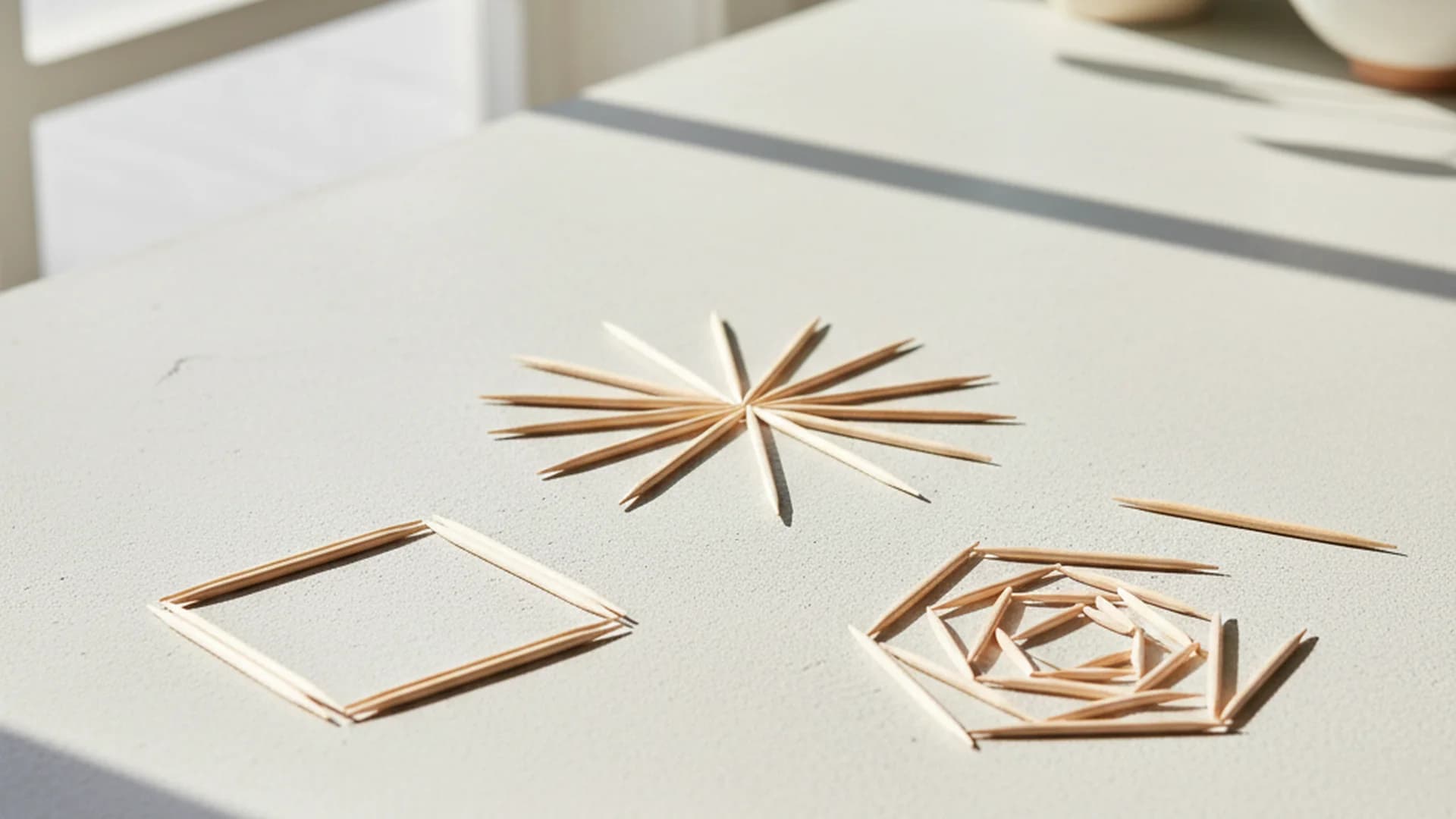
The Ultimate Guide to Toothpick Puzzles: Strategy, Science, and 2025 Trends
Discover the logic and lore of toothpick puzzles. Learn expert strategies, avoid common mistakes, and explore the 2025 digital resurgence of these classic brain teasers.
Mar 10, 2025 10 min

Physical Puzzles
Mastering Matchstick Shapes: The Ultimate Guide to Geometric Puzzles
Discover the history, science, and strategies behind matchstick shapes. Learn how to solve complex geometric match puzzles and improve your spatial reasoning.
Jun 24, 2026 10 min

Physical Puzzles
Coin Puzzles Guide: Mastering Logic with Every Flip
Explore the world of coin puzzles, from the classic 12-coin weighing problem to modern 3D challenges. Master brain teasers with our expert guide.
Aug 1, 2026 12 min
Advertisement