The Ultimate Guide to Toothpick Puzzles: Strategy, Science, and 2025 Trends
Discover the logic and lore of toothpick puzzles. Learn expert strategies, avoid common mistakes, and explore the 2025 digital resurgence of these classic brain teasers.
By Free To Play Puzzles Editorial Team 10 min read
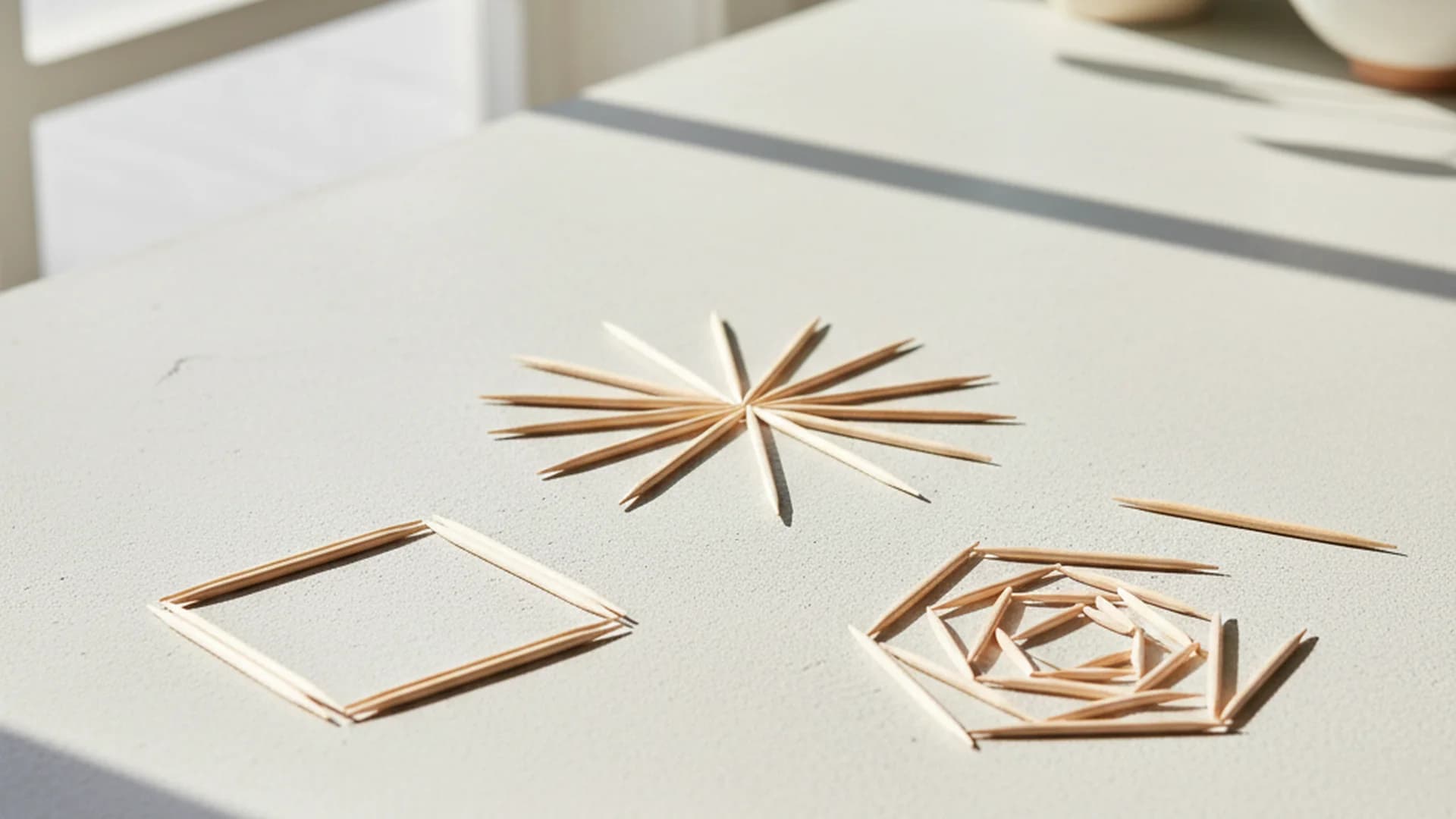
In the world of logic and spatial reasoning, few things are as deceptively simple—yet profoundly challenging—as toothpick puzzles. Whether you are sitting at a restaurant table waiting for your appetizers or engaging with a high-tech simulator on your phone, these stick brain teasers represent a perfect marriage of tactile play and mental gymnastics. Historically known as matchstick puzzles, these challenges have undergone a significant digital and cultural resurgence in 2025, finding their place in both early childhood education and competitive adult gaming circles.
The logic of toothpick puzzles is remarkably similar to that of crosswords and other grid puzzles: it’s about seeing the potential for change within a fixed set of constraints.
The History and Science of Stick Brain Teasers
Toothpick puzzles aren’t just a way to kill time; they are a historical staple of casual gaming. Originating as "matchstick puzzles" in the late 19th century, they were a ubiquitous pastime in bars, cafes, and restaurants. Patrons would use the matchbooks provided for lighting pipes and cigarettes to challenge one another to logic duels.
In 2025, the market for these puzzles is booming. The broader puzzle market is growing at a 15% year-over-year rate, with the global puzzle game industry projected to surpass $30 billion by 2029. But what is driving this growth? It’s the brain science.
The Cognitive Connection
Engaging with these puzzles activates "fluid intelligence"—your ability to solve novel problems without relying on pre-existing knowledge. Specifically, solving a toothpick puzzle targets the parietal lobe, the area of the brain responsible for spatial processing and navigation.
Understanding the Rules of Engagement
To master toothpick puzzles, you must first understand the "laws" of the game. While variations exist, most challenges adhere to a strict set of three actions. If you are looking for a foundational overview, you might want to check out our Matchstick Puzzles Guide.
- Move: Reposition a specific number of sticks to create a new configuration. The total stick count remains the same.
- Remove: Take a stick away from the board entirely to change the shape or equation.
- Add: Introduce a new stick to an existing layout.
The Unwritten "Gold" Rule
In almost every professional-grade puzzle, every stick must be part of a final shape. There are no "leftover" sticks. If you have a stray toothpick that isn't contributing to a square, triangle, or number, your solution is likely incomplete.
Advertisement
Core Categories: Geometry vs. Equations
Generally, these puzzles fall into two distinct buckets: Geometric and Equation-based.
Geometric Challenges
These require you to manipulate squares or triangles. For example, you might be asked to "move two toothpicks to turn four small squares into three large ones." These rely heavily on identifying Matchstick Shape Puzzles and understanding how shapes can share boundaries.
Equation-Based Logic
These puzzles present a false mathematical statement (e.g., 5 + 7 = 2) and ask you to move a single stick to make the equation true. These often utilize Roman numerals or digital-clock-style digits. If you enjoy the mathematical side of things, our guide on Matchstick Math Puzzles explores this in depth.
| Puzzle Type | Primary Skill | Popularity (2025) |
|---|---|---|
| Geometric | Spatial Reasoning | High |
| Equation | Arithmetic Logic | Medium |
| 3D/Stacking | Depth Perception | Rising |
Expert Strategies for Success
If you find yourself stuck, don't immediately start moving the pieces. We recommend these three strategies to sharpen your approach:
1. Visualization First
Before you touch a single stick, try to "see" the solution in your mind. Research indicates that physically moving sticks too early can lead to "looping errors," where the solver repeats the same physical mistakes over and over. By visualizing the move first, you strengthen your spatial memory.
2. The "Hole" Strategy
For puzzles involving grids of squares, look for "shared sides." Often, the solution involves removing or moving a stick that serves as a boundary between two shapes to create a larger, nested shape.
3. Work in Pairs
Solving toothpick puzzles with a partner is an excellent way to catch logic errors. It forces you to articulate your reasoning, which often reveals the flaw in your strategy before you even make the move.
3 Real-World Toothpick Puzzle Examples
Example 1: The Three-Square Shift
The Setup: You have twelve toothpicks arranged to form four small squares in a 2x2 grid. The Goal: Move three toothpicks to create exactly three squares of the same size. The Solution: You must break the "closed" nature of the grid by moving three outer sticks to form a third square that is detached or partially offset from the remaining two.
Example 2: The Fish Flip
The Setup: Eight toothpicks form the shape of a fish swimming left. The Goal: Move three toothpicks to make the fish swim in the opposite direction. The Solution: This requires shifting the "tail" and "fins" to the opposite side of the central body.
Example 3: The Digital Correction
The Setup: The equation "6 + 4 = 4" is laid out in digital-style sticks. The Goal: Move one stick to make the equation correct. The Solution: Move one stick from the "6" to turn it into an "0," making the equation "0 + 4 = 4."
Advertisement
Common Mistakes to Avoid
Even seasoned puzzle fans fall into these traps. Awareness is half the battle when tackling Logic Puzzles.
- The "Nested Shape" Oversight: Many solvers forget that an outer boundary can form a large square that contains smaller ones. If you count four small squares, always check if they collectively form a fifth, larger one.
- Assumption of Symmetry: Our brains have a natural bias for balance. However, many of the most difficult toothpick puzzles have asymmetrical or "irregular" solutions.
- Move vs. Remove Confusion: Beginners often remove a stick from the table when the prompt only allows "moving." In a "move" puzzle, the total number of sticks must remain constant at all times.
- Math Logic Bias: In equations, don't just look at the numbers. Remember that a plus sign (+) can be turned into a minus sign (-) by moving one stick, or even used to turn a "5" into a "6" or "9."
Recent Trends (2025–2026)
The world of toothpick puzzles has evolved beyond the bar counter. In 2025, we have seen several exciting developments:
- Smart Puzzles & Haptics: Apps like Matchstick Puzzle King have dominated the "hybrid-casual" market, using haptic feedback to mimic the tactile sensation of snapping a toothpick into place.
- AR Integration: Newer puzzle books now feature Augmented Reality (AR) codes. You can lay real toothpicks on your desk, scan them with your phone, and see a "ghost" solution superimposed over your physical sticks.
- Sustainability: There is a massive shift toward eco-friendly materials. Most physical sets sold in 2025 are made from FSC-certified bamboo or recycled wood, packaged as minimalist "coffee table" decor.
- Social Media "Appreciation" Trends: A niche trend involves "Appreciation Cakes," where people celebrate milestones with toothpicks and flags. This has led to a spike in "party trick" puzzles used as icebreakers at social events.
Frequently Asked Questions
What are the official rules of toothpick puzzles?
The core rules involve three actions: Move, Remove, or Add. A key requirement is that every stick must be part of a final, closed shape or a valid mathematical character. You generally cannot have "dangling" or unused sticks.
Can I overlap or break the toothpicks?
Standard puzzle etiquette dictates that sticks cannot be broken, bent, or overlapped to create a "double-thick" line unless the specific challenge states otherwise.
Are there different types of toothpick puzzles?
Yes. They are primarily categorized as Geometric (creating shapes) or Equation-based (correcting math statements). Some modern variations also include 3D stacking challenges.
Why are flat toothpicks better for puzzles?
Flat toothpicks (often called craft sticks) are preferred by experts because they don't roll. They allow for a stable layout and are easier to stack if the puzzle requires a 3D element.
Conclusion
Toothpick puzzles are more than just a nostalgic relic of the past; they are a vital tool for maintaining cognitive health and developing spatial reasoning. Whether you are interested in the Cognitive Benefits of puzzling or you simply want to master a new hobby, these stick-based challenges offer endless variety and mental stimulation.
By applying visualization techniques, understanding the "hole" strategy, and keeping an eye out for nested shapes, you can master even the most complex arrangements. As we move further into 2025, the blend of physical and digital puzzle-solving ensures that this classic genre will continue to challenge our brains for generations to come.
Want to test your skills?
Dive into our collection of interactive logic games today.
Put it into practice


Keep reading
Physical Puzzles
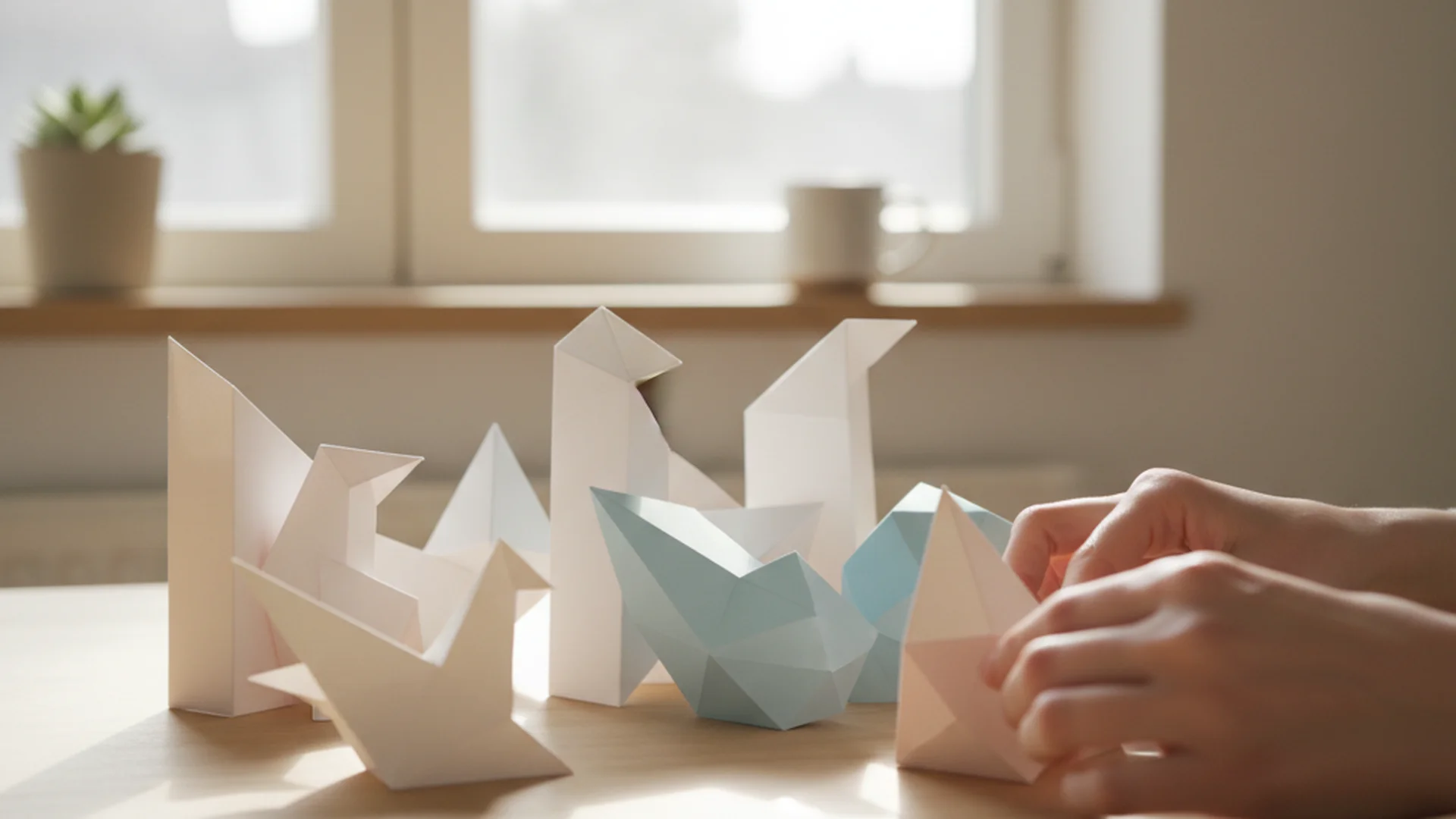
The Science of Paper Folding Puzzles: A Neuroscientist’s Guide to Origami Logic
Explore the cognitive benefits and logic behind paper folding puzzles. Learn expert techniques, trends for 2026, and how these brain teasers boost spatial reasoning.
Jul 25, 2026 12 min
Physical Puzzles
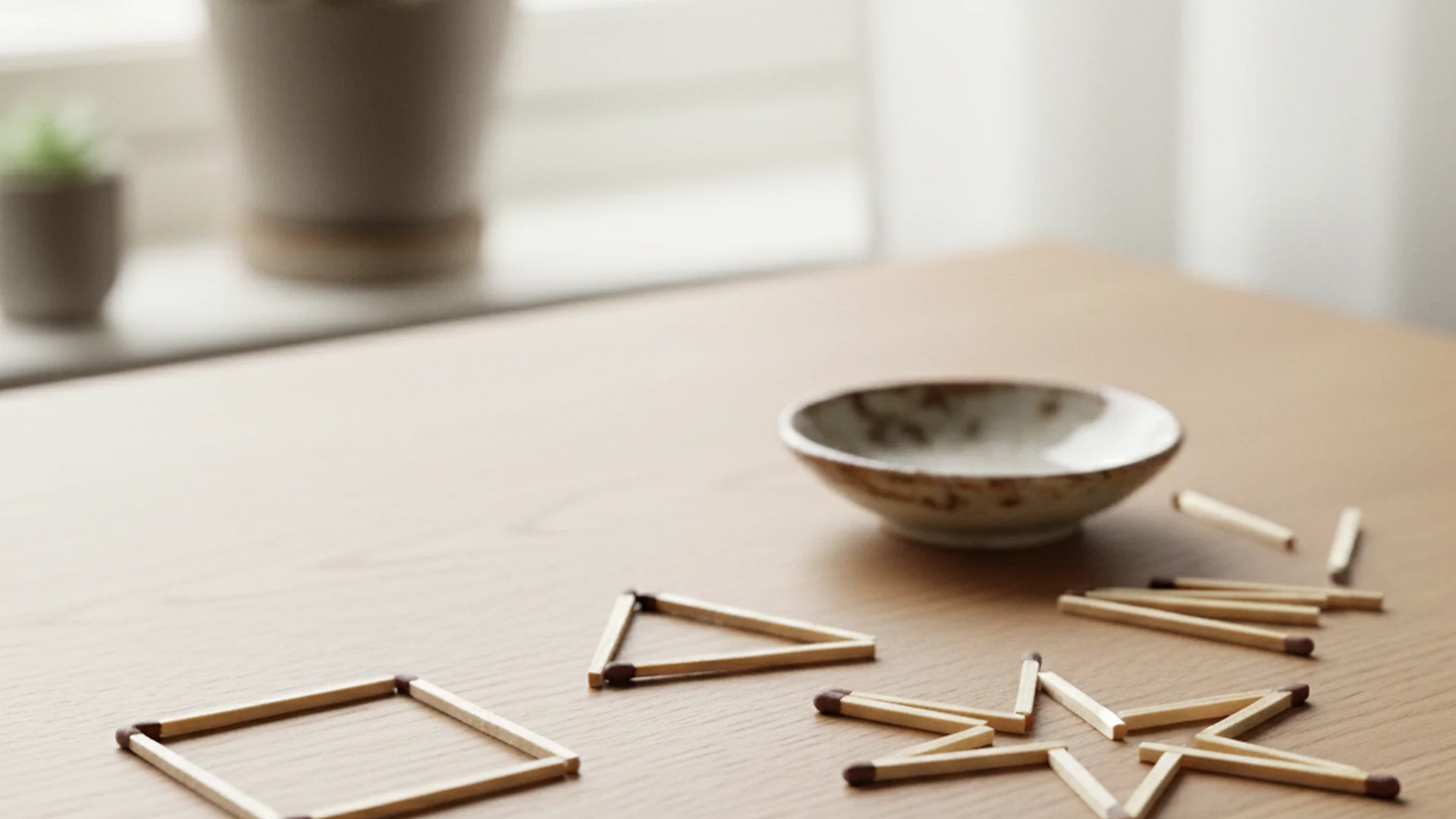
Mastering Matchstick Shapes: The Ultimate Guide to Geometric Puzzles
Discover the history, science, and strategies behind matchstick shapes. Learn how to solve complex geometric match puzzles and improve your spatial reasoning.
Jun 24, 2026 10 min
Physical Puzzles
Coin Puzzles Guide: Mastering Logic with Every Flip
Explore the world of coin puzzles, from the classic 12-coin weighing problem to modern 3D challenges. Master brain teasers with our expert guide.
Aug 1, 2026 12 min
Advertisement