Beyond the Seven Tans: The Surprising Science of Tangram Benefits
Explore the profound cognitive and spatial reasoning tangram benefits. From brain health in seniors to STEM success, learn why this ancient puzzle is a 2026 essential.
By Free To Play Puzzles Editorial Team 12 min read
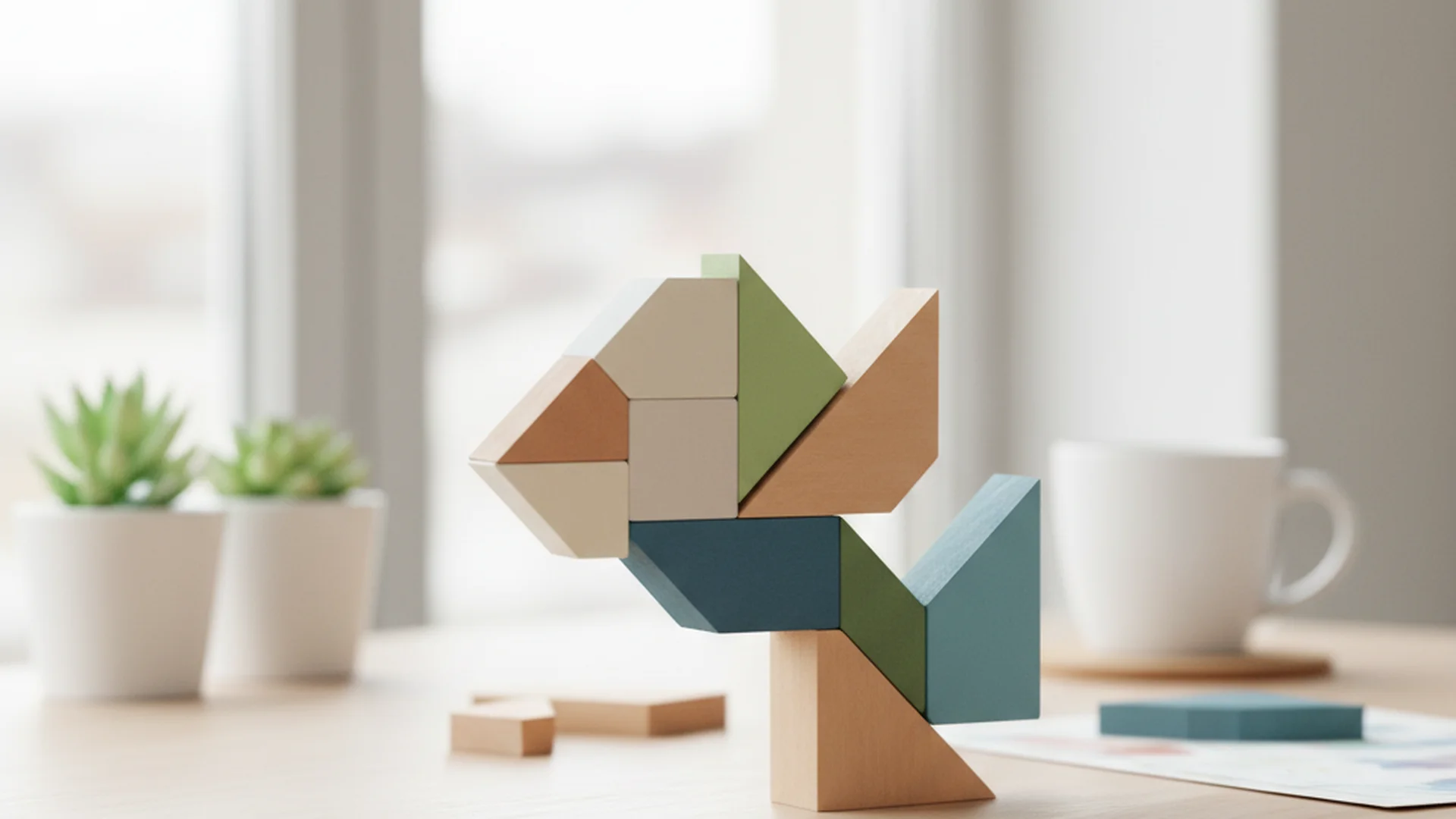
For centuries, a simple set of seven geometric shapes has captivated the minds of emperors, scholars, and children alike. While they may look like humble wooden blocks, the real-world tangram benefits extend far beyond simple recreation. As a retro gaming historian, I’ve tracked the evolution of puzzles from ancient banquet tables to modern AI-driven apps, and the tangram remains one of the most effective tools for cognitive development ever devised.
Whether you are a parent looking to boost your child’s STEM skills, an adult seeking a mental sharpener, or an educator integrating new 2026 technologies into the classroom, understanding the science behind these "Seven Tans" is essential. In this deep dive, we will explore how these shapes activate the brain, improve mathematical proficiency, and foster a level of creative flexibility that few other puzzles can match.
The Anatomy of the Seven Tans
To understand the tangram brain benefits, we must first look at the precision of the puzzle itself. A standard tangram set consists of exactly seven flat shapes, known as "tans":
- Two large right-angled triangles
- One medium-sized right-angled triangle
- Two small right-angled triangles
- One square
- One parallelogram
This specific combination isn't accidental. The geometry of these pieces allows them to be rearranged into an almost infinite variety of silhouettes—over 6,500 documented shapes, to be precise. From animals and people to complex geometric structures, the challenge lies in using all seven pieces without overlapping them to match a specific outline.
Cognitive and Mathematical Superiority
One of the most significant tangram benefits is its impact on formal education. In the realm of mathematics, particularly geometry, tangrams are more than just toys; they are high-performance learning tools.
Significant Gains in Geometry
Recent research from 2024 highlights a "mathematical superiority" in students who engage with tangrams. A study involving Grade 8 students found that those who participated in a six-week tangram intervention outperformed their peers who were taught using traditional textbook methods. The tactile nature of the puzzle helps students visualize concepts like area, perimeter, and congruence in a way that static diagrams cannot.
Spatial Reasoning: The Foundation of STEM
Spatial reasoning—the ability to visualize and manipulate objects in 3D space—is one of the strongest predictors of success in STEM (Science, Technology, Engineering, and Mathematics) careers. By rotating and flipping tans to fit a silhouette, players are essentially practicing "3D-to-2D mental translation." This skill is vital for future architects, engineers, and surgeons.
Advertisement
Tangram Brain Benefits for All Ages
While often associated with childhood development, the cognitive impact of tangram play extends across the entire human lifespan.
Developmental Success in Children
For children aged 5 to 16, tangrams serve as a foundational tool for executive function. Solving a puzzle requires planning, working memory, and inhibition (the ability to stop and rethink a strategy when it isn't working).
Cognitive Health in Seniors
Perhaps most impressively, tangram therapy has emerged as a powerful tool in geriatric care. Studies published between 2023 and 2025 in Psychiatry International have shown that regular engagement with tangrams can lead to measurable improvements in cognitive function and orientation for patients dealing with dementia. Researchers recorded a p-value of 0.016 to 0.000, indicating that the improvement wasn't just luck—it was a statistically significant biological response to the mental exercise.
Brain Activation and the "Struggle"
Interestingly, the brain's activity is actually higher when a person is struggling to solve a tangram than when they find the solution easily. This process exercises the prefrontal cortex—the area of the brain responsible for complex planning and decision-making.
The Tangram Paradox: A Lesson in Perception
A fascinating aspect of this puzzle is the "Tangram Paradox." This occurs when two silhouettes appear almost identical, but one seems to have an extra piece or a missing limb, despite both being made from the exact same seven tans.
A classic example is "The Two Monks." One monk appears to have a foot, while the other does not. At first glance, it seems impossible that both shapes use the same seven pieces. This paradox is a powerful exercise in visual perception, teaching the brain that internal geometry can drastically change the external appearance of an object. This concept is widely used in Deductive Reasoning Puzzles to challenge "first-impression" logic.
2025-2026 Trends in Tangram Technology
Even a centuries-old puzzle can be modernized. We are currently seeing a resurgence in tangram popularity due to several 2025 and 2026 trends:
- AI-Adaptive Puzzles: Modern apps now use AI to track how long you take to place each piece. If you struggle with the parallelogram, the AI will generate silhouettes that specifically test your ability to use that shape, keeping you in a state of "optimal challenge."
- Augmented Reality (AR): New tools allow players to use physical wooden pieces on a desk that are read by a camera and interact with a digital story on a tablet. This combines the sensory benefits of physical play with digital storytelling.
- Sensory and Sustainable Sets: For 2026, there is a major shift toward "Sensory Tangrams." These sets feature different textures (ribbed, smooth, or rough) to assist neurodivergent learners. Furthermore, eco-friendly materials like bamboo and recycled ocean plastics are replacing cheap, traditional plastics in schools.
| Feature | Physical Tangrams | Digital Tangram Apps |
|---|---|---|
| Sensory Feedback | High (Tactile) | Low (Visual only) |
| Difficulty Scaling | Manual | Automatic (AI-driven) |
| Portability | Moderate | High |
| Cognitive Load | High (Manual rotation) | Moderate (Auto-snap) |
Advertisement
Best Practices for Mastering the Puzzles
If you want to reap the full tangram benefits, you should approach the puzzles strategically.
- Scaffolding: If you are a beginner, start with "outlined" templates where the individual shapes are visible within the silhouette. As you improve, move to "solid silhouettes" where you only see the black outline.
- The "Rule of Seven": Always remember that every solution must use all seven pieces. If you think you've solved it with six, you haven't found the true geometric solution.
- Minimalism in Art: Use tangrams to practice graphic design. The puzzle teaches you how to represent complex ideas (like a running man or a soaring bird) using only basic geometric forms.
If you enjoy the logic required for tangrams, you might also find success in other pattern-based challenges like Grid Logic Puzzles: How to Solve Them.
Common Mistakes to Avoid
Even seasoned puzzle solvers can fall into traps when working with the Seven Tans.
- The Overlap Error: The most fundamental rule is that no pieces may overlap. If you find yourself layering a small triangle over a large one to fit a shape, you are breaking the geometric logic of the puzzle.
- The "Only for Math" Myth: Many people relegate tangrams to the math classroom. However, they are equally valuable in art and design to teach "figure-ground" relationships.
- Thinking a Piece is Missing: Because the geometry is precisely calibrated, you cannot form a perfect square with only six pieces. Always ensure your set is complete before starting a session.
- Falling for the "Sam Loyd" Hoax: Many books claim tangrams are 4,000 years old. This was actually a hoax created by puzzle-maker Samuel Loyd in 1908. While they have roots in the Song Dynasty (960–1279), the puzzle as we know it reached the West in the early 19th century. You can read more about the true origins in our History of Tangram article.
Frequently Asked Questions
What age is appropriate for tangrams?
Tangrams are optimal for ages 5–16 for educational development. However, "outline-only" versions can be used by toddlers as young as 3 to develop basic shape recognition, and "blind" silhouettes provide excellent high-level brain training for adults and seniors.
Is it a STEM activity?
Yes. It is considered a foundational tool for spatial reasoning, which is a core component of success in architecture, engineering, and advanced physics. It bridges the gap between abstract geometry and physical problem-solving.
How do I solve the Tangram Paradox?
The paradox is solved by understanding that the "missing" area is actually redistributed throughout the rest of the shape. By slightly shifting the internal placement of the triangles, you can create the illusion of an extra "foot" or "cap" without adding a new piece.
What are "Sensory Tangrams"?
New for 2026, these are tangram sets designed with different textures on each piece. They are specifically used to help neurodivergent children and individuals with sensory processing needs engage more deeply with the puzzle.
Conclusion
The tangram benefits we see today—from improved geometry scores to dementia prevention—prove that this ancient Chinese innovation is more relevant than ever. By engaging with these seven simple shapes, we exercise the very parts of our brain that allow us to innovate, build, and solve the complex problems of the modern world.
Whether you're exploring Inductive Reasoning Puzzles or mastering the Seven Tans, the goal is the same: to keep the mind flexible, creative, and sharp.
Ready to Start?
Challenge your mind with our interactive puzzles today.
Put it into practice


Keep reading
Logic Puzzles
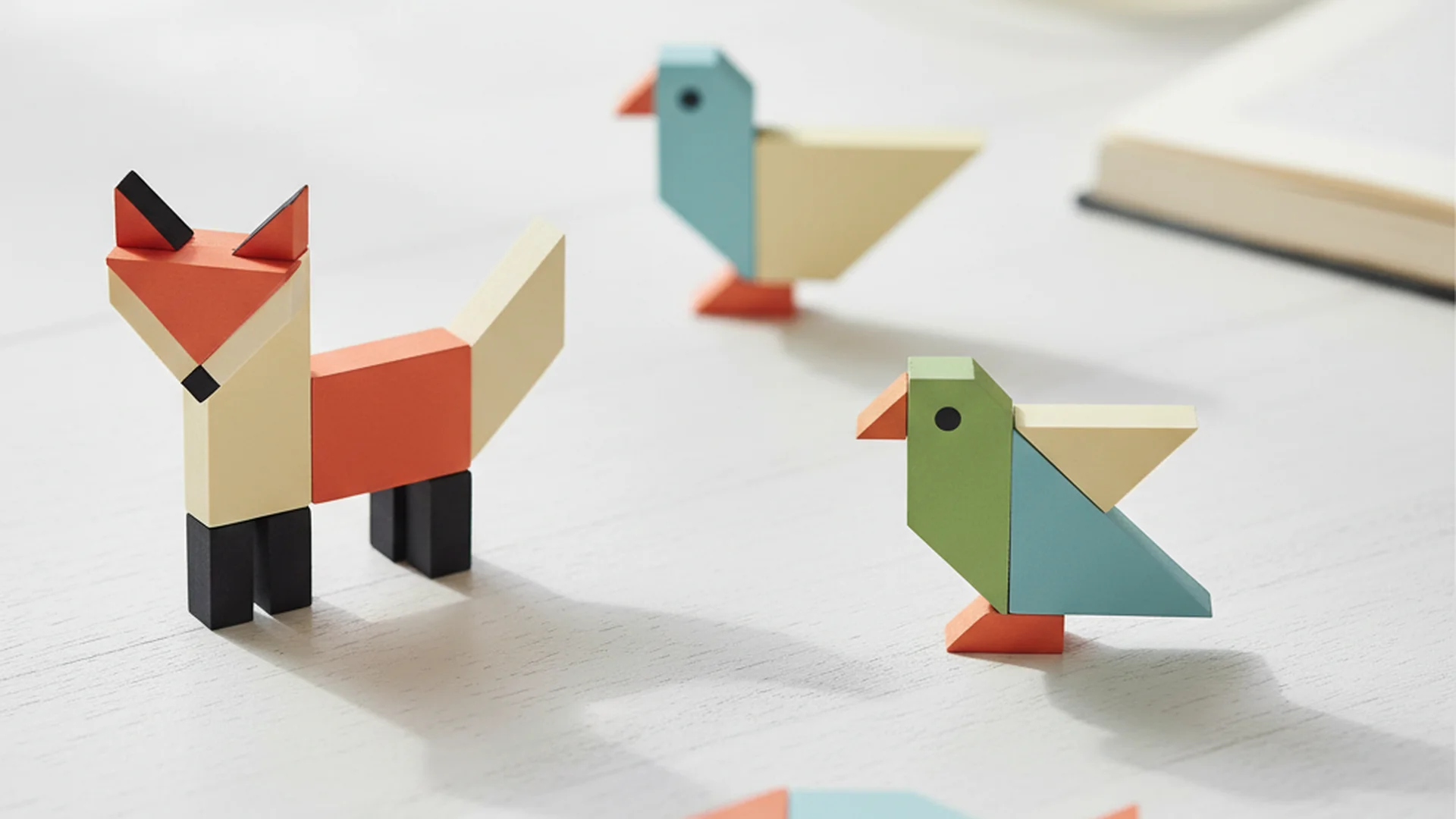
Tangram Animals Guide: Master the Seven Boards of Skill
Learn how to create over 6,500 shapes with our Tangram Animals Guide. Master the rules, difficulty levels, and the mathematical strategy behind these logic puzzles.
Nov 11, 2024 10 min
Logic Puzzles
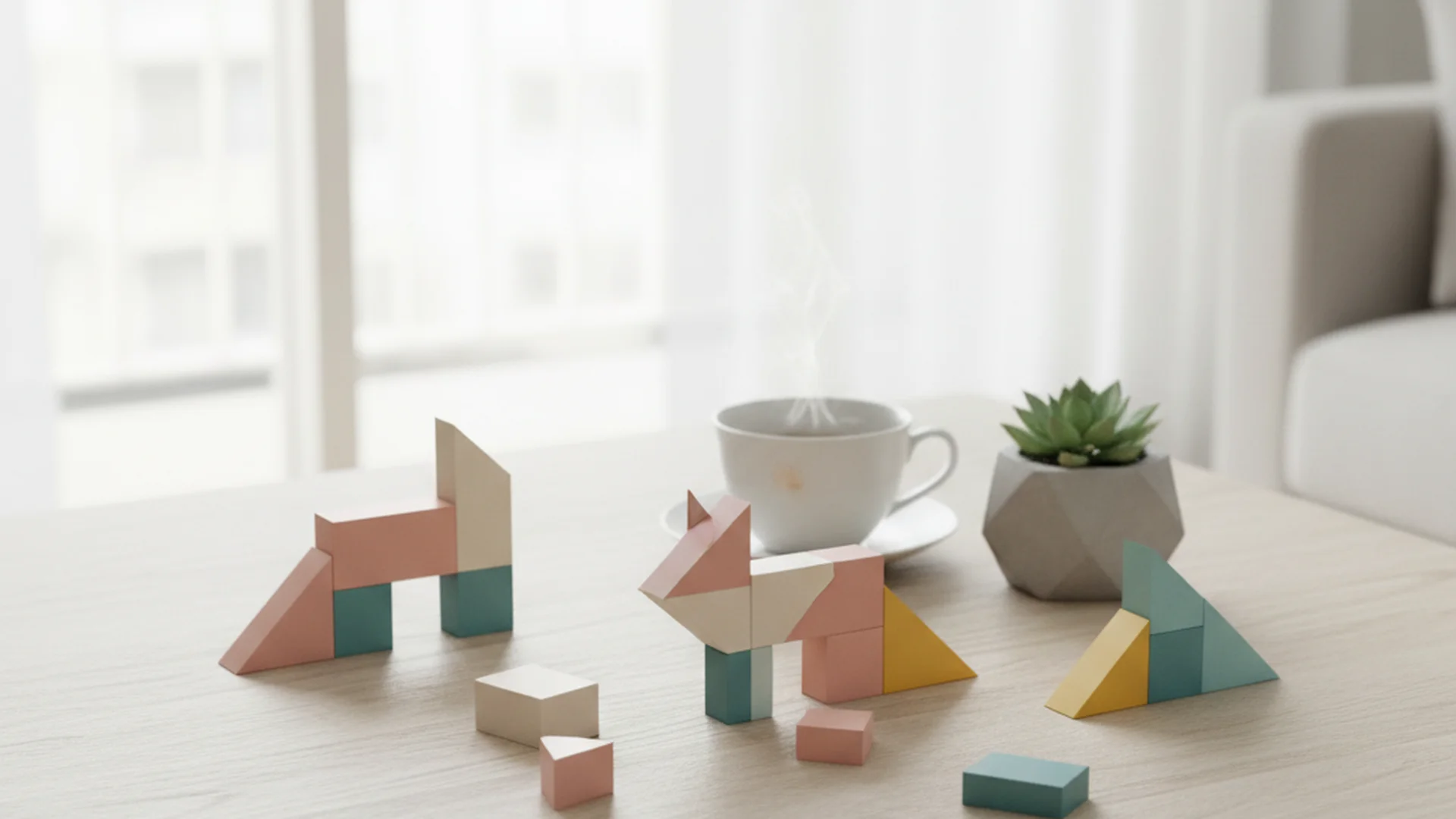
Tangram Strategies: Master the Art of Shape Arrangement
Unlock the secrets of the Seven Boards of Skill. Learn expert tangram strategies, from the decompositional approach to the parallelogram flip, and solve any silhouette.
Sep 12, 2025 12 min

Logic Puzzles
Tangram for Children: The Ultimate Guide to This Educational Powerhouse
Unlock your child's potential with tangrams. Learn how these seven simple shapes boost math skills, spatial reasoning, and creativity in this expert guide.
Jan 13, 2025 12 min
Advertisement