Mastering Deductive Reasoning Puzzles: Train Your Mind for 2025 and Beyond
Discover the science and strategy behind deductive reasoning puzzles. Learn expert techniques, explore 2025 trends, and see how logic can reverse cognitive aging.
By Free To Play Puzzles Editorial Team 12 min read
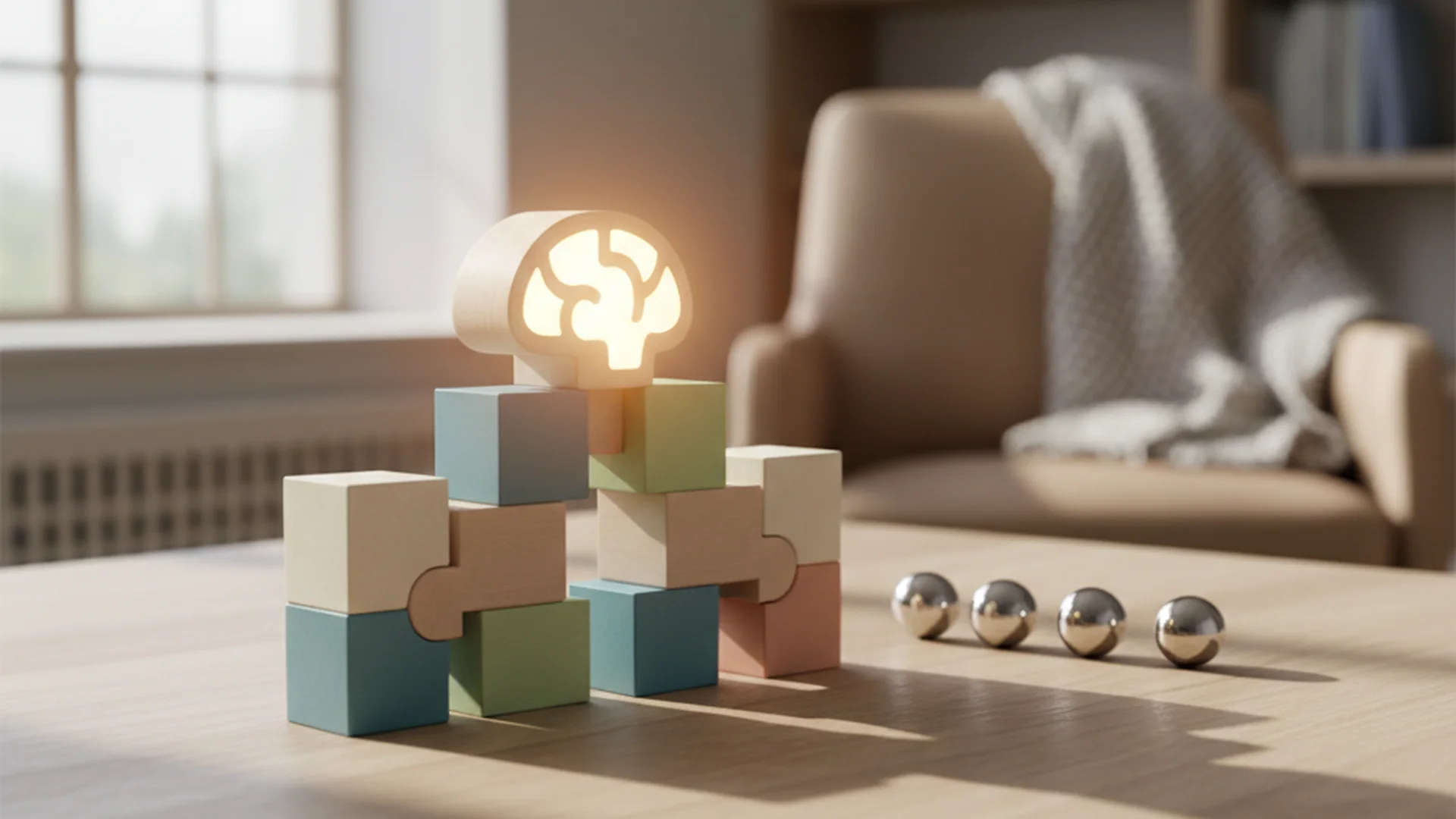
In an era dominated by rapid-fire digital content and short attention spans, a quiet revolution is taking place in the world of cognitive health. As we navigate 2025, deductive reasoning puzzles have transitioned from simple pastime activities to essential tools for mental longevity and professional success. Whether you are a seasoned logic enthusiast or a curious newcomer, understanding the mechanics of these puzzles is like unlocking a manual for your own mind.
Deductive reasoning is the process of moving from general premises to a certain, specific conclusion. Unlike inductive reasoning, which relies on probability and patterns, deduction offers the satisfaction of absolute truth. If the premises are true and the logic is valid, the conclusion must be true. This clarity is why millions of people globally are turning to deduction puzzles to sharpen their focus, improve their memory, and even prepare for high-stakes careers in law and technology.
The Rich History of Logical Deduction
The journey of the deductive reasoning puzzle didn't begin with a smartphone app. It started in the hallowed halls of Ancient Greece. Aristotle, the father of formal logic, first codified the "syllogism"—a three-part logical argument. A classic example is: "All men are mortal; Socrates is a man; therefore, Socrates is mortal."
While Aristotle gave us the foundation, it was the 19th-century author Lewis Carroll (famous for Alice in Wonderland) who brought logic to the masses. In 1886, he published The Game of Logic, a book designed to make formal reasoning accessible through play. By the mid-20th century, Raymond Smullyan, a mathematician and magician, further popularized the genre with his legendary "Knights and Knaves" puzzles, where solvers must determine who is lying and who is telling the truth based on a series of nested statements.
Today, this legacy continues through Knights and Knaves Puzzles and more modern variations that challenge our ability to separate fact from fiction.
The Science of a Younger Brain
Why are so many people obsessed with these challenges? The answer lies in the biology of the brain. A landmark study conducted by UCLA Health in 2024 involving 20,000 adults revealed a startling correlation: individuals who engage with logic and number puzzles daily exhibit cognitive performance levels typical of people eight years younger than their actual age.
Specifically, deductive reasoning puzzles target two critical areas:
- Working Memory: The ability to hold and manipulate multiple pieces of information simultaneously.
- Processing Speed: How quickly your brain can interpret data and reach a valid conclusion.
While these puzzles might not raise your overall IQ, they provide a focused workout for your "mental muscles," enhancing neuroplasticity—the brain’s ability to reorganize itself by forming new neural connections throughout life.
Advertisement
The Expert Toolkit: How to Solve Like a Pro
As a tournament director, I often see beginners get overwhelmed by the sheer volume of information in a complex deduction puzzle. To solve like a professional, you need a systematic approach.
1. The Elimination Grid Method
For grid-based puzzles, never rely on memory alone. The grid is your most powerful weapon. Experts recommend marking "definite nos" first. By narrowing the field of what is impossible, the truth eventually reveals itself. If you are new to this, checking out a guide on Grid Logic Puzzles: Step-by-Step can help you master the layout.
2. Utilize Symbolic Logic
Writing out long sentences is slow and prone to error. Professional solvers use symbols to "nuggetize" truths:
- $A \rightarrow B$ (If A is true, then B must be true)
- $\neg A$ (A is not true)
- $A \neq B$ (A and B are not the same)
For example, if a clue says, "The woman in the blue dress did not win the gold medal," your shorthand becomes: Blue Dress ≠ Gold.
3. Simplify the Premises
Don't get bogged down by the narrative fluff. Deduction puzzles often include "flavor text" to distract you. Strip the sentence down to its bare logic.
Real-World Applications of Deductive Reasoning
Where do we see these puzzles in "the wild"? They are far more than just a hobby.
Example 1: High-Stakes Recruitment
Major corporations like IBM and finance giants use deductive reasoning tests (provided by firms like SHL) to screen candidates. They aren't testing if you know math; they are testing if you can remain calm under pressure while synthesizing complex, often contradictory, information to reach a valid decision.
Example 2: The Legal Profession
Lawyers use deductive reasoning every day. They take a general law (the premise) and apply it to a specific client’s case (the fact) to reach a verdict (the conclusion). This is why Einstein's Riddle is a classic exercise in law schools—it requires the same rigorous elimination of possibilities.
Example 3: Cold Case Investigations
A major trend in 2025 is the "Narrative-Driven Investigation." Products like Cold Case Inc. move away from abstract grids and into the world of fake police reports and witness statements. Solving these requires the same deductive skills as a logic puzzle, but applied to a "layered" 3D environment.
Modern Trends: The Future of Puzzling (2025–2026)
The world of puzzles is not immune to technological and social shifts. As we look toward 2026, several key trends are emerging:
- AI-Personalized Challenges: New apps now use AI to track your solving speed and error rates. If the AI detects that you struggle with "nested" logic (e.g., "If John is not the baker, then Sarah is the pilot"), it will specifically generate more of those challenges to help you improve your weak points.
- AR and VR Integration: Virtual Reality is taking the "Escape Room" concept to the next level. In titles like Escape Simulator 2, you aren't just looking at a grid; you are stepping inside a 3D logic puzzle, moving physical objects to test your deductive theories.
- Sustainable Puzzling: In response to environmental concerns, 2025 has seen a massive shift toward eco-friendly logic sets. Premium brands are ditching plastic for bamboo and FSC-certified wood, proving that brain training can be both smart and green.
Advertisement
Common Mistakes to Avoid
Even the smartest solvers fall into these logical traps. Recognizing them is the first step toward mastery.
The "Outside Knowledge" Fallacy
This is the most frequent error. If a puzzle states, "All dogs can fly," you must accept that as a fact within the context of that puzzle. Do not use your real-world knowledge that dogs cannot fly. If you do, your deductions will be flawed from the start.
Affirming the Consequent
This is a classic logical error. Consider this: "If it rains, the grass gets wet. The grass is wet, therefore it rained." This is false. The grass could be wet because of a sprinkler, a burst pipe, or morning dew. Just because the result is present doesn't mean the specific cause you identified is the culprit.
Ignoring the "Negative" Clues
Beginners often look for what is true. However, in deduction, knowing what is impossible is often more powerful. As Sherlock Holmes famously noted: "When you have eliminated the impossible, whatever remains, however improbable, must be the truth."
Frequently Asked Questions
Do I need math skills to solve logic puzzles?
Generally, no. While some puzzles like Sudoku or 2048 use numbers, the core requirement is logical relationship mapping (if A=B and B=C, then A=C). You don't need to be a mathematician to be a master of deduction.
What is the difference between inductive and deductive reasoning puzzles?
Deductive puzzles give you set rules that guarantee a single, specific conclusion. Inductive puzzles ask you to find a pattern or make a "best guess" based on observations—for example, predicting the next shape in a sequence.
Are these puzzles actually effective for brain health?
Yes, but with a caveat. 2025 research suggests they are excellent for improving "working memory" and "processing speed." However, to gain the most benefit, you should rotate the types of puzzles you play to maintain high levels of neuroplasticity.
How can I solve logic grids faster?
The best way to speed up is to use symbolic shorthand and look for "linkers"—clues that mention the same person or object. By connecting two clues through a common denominator, you can fill in multiple grid boxes at once.
Conclusion: Start Your Mental Transformation
Deductive reasoning puzzles are more than just a way to kill time on your commute; they are a sophisticated method of cognitive enhancement. By engaging with these challenges, you are participating in a tradition that spans from Aristotle to the cutting-edge AI of 2025.
Whether you are looking to stay sharp as you age, prepare for a rigorous job interview, or simply enjoy the thrill of a "eureka" moment, there has never been a better time to start. Dive into a Daily Challenge or explore our collection of Logic Puzzles to begin your journey. Your brain—and your future self—will thank you.
Ready to Start?
Begin your brain training journey today with our curated puzzles.
Put it into practice



Keep reading
Logic Puzzles
Mastering the IQ Puzzle: The Ultimate Guide to Logic and SmartGames (2025-2026)
Discover the cognitive benefits and expert strategies for solving the IQ puzzle. Learn about 2025 trends, SmartGames, and how to sharpen your mind effectively.
Jun 20, 2026 12 min
Logic Puzzles
Mastering Kuromasu Puzzles: The Ultimate Guide to "Where Is Black Cells"
Explore the fascinating world of Kuromasu puzzles. Learn rules, advanced strategies, and the cognitive benefits of this Nikoli classic.
Sep 30, 2026 10 min
Logic Puzzles
The Ultimate Pentomino Puzzles Guide (2025-2026 Edition)
Master pentomino puzzles with our comprehensive guide. Explore historical roots, 12-piece solutions, advanced solving strategies, and 2026 trends in logic gaming.
Sep 22, 2026 12 min
Advertisement