Tangram for Children: The Ultimate Guide to This Educational Powerhouse
Unlock your child's potential with tangrams. Learn how these seven simple shapes boost math skills, spatial reasoning, and creativity in this expert guide.
By Free To Play Puzzles Editorial Team 12 min read
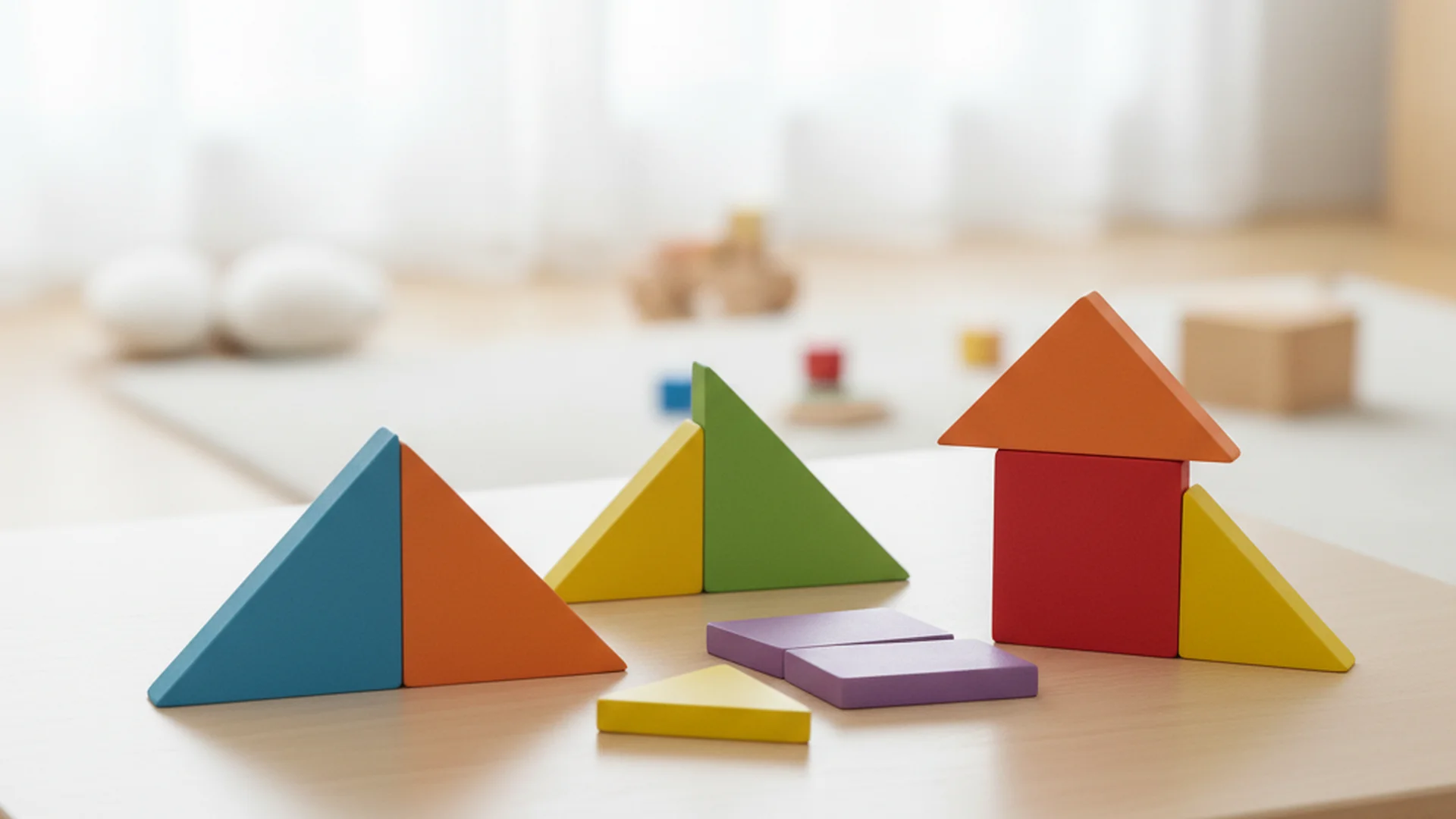
In a world increasingly dominated by digital screens and complex electronics, there is something remarkably profound about a set of seven flat wooden shapes. Every good puzzle is about how pieces fit together to create a cohesive whole. When it comes to early childhood development, few tools are as effective, versatile, or historically proven as the tangram for kids.
Often referred to as the "Seven Boards of Cunning," tangrams are more than just a toy. They are a bridge between abstract mathematical concepts and tangible, hands-on play. Whether your child is just starting to identify shapes or is ready to tackle complex spatial engineering, understanding how to utilize a children tangram set can provide a significant head start in STEM education and logical thinking.
What is a Tangram?
The tangram is a dissection puzzle consisting of seven flat shapes, called tans, which are put together to form various figures. The beauty of the tangram lies in its simplicity. Every set, regardless of whether it is made of wood, plastic, or eco-friendly bioplastic, contains the exact same seven pieces:
- Two large right isosceles triangles
- One medium right isosceles triangle
- Two small right isosceles triangles
- One square
- One parallelogram
These shapes are traditionally cut from a single large square. While the components are few, the possibilities are nearly infinite. From animals and people to letters of the alphabet and numerical digits, the tangram challenges the mind to see beyond the individual pieces and visualize a larger silhouette.
The Mathematical Impact of Tangrams for Kids
Research into cognitive development has consistently shown that spatial reasoning—the ability to visualize and manipulate objects in one’s mind—is a primary predictor of success in STEM (Science, Technology, Engineering, and Math) fields.
A fascinating study revealed that children who engaged with tangram-like puzzles for just 40 minutes before taking a math test performed significantly better than those who did not. This is particularly true for tasks involving spatial estimation and mental rotation. When a child plays with a tangram, they aren't just making a "kitty cat" or a "sailboat"; they are practicing geometry and executive planning.
Brain Activation and Executive Function
Using brain imaging, scientists have observed that solving tangram puzzles activates the right hemisphere of the brain and the prefrontal cortex. These areas are responsible for:
- Spatial Reasoning: Understanding how objects relate to one another in space.
- Executive Planning: Developing a strategy to solve a problem and adjusting that strategy when it fails.
- Visual-Motor Integration: Coordinating what the eyes see with what the hands do.
Advertisement
The 5-Step Teaching Sequence
Introducing a tangram for kids should be a gradual process. If you hand a five-year-old a complex silhouette and tell them to solve it, they may become frustrated. Instead, developmental specialists recommend a specific 5-step sequence to build confidence and skill.
1. Free Exploration
Before introducing any rules, let the child play with the tans. Allow them to discover that two small triangles can form a square or a larger triangle. This phase is crucial for building an intuitive understanding of geometric relationships.
2. Cover-Up (1:1 Templates)
Provide a 1:1 scale template where the internal lines are visible. The child simply places the physical tans directly over the drawing. This builds the fine motor skills necessary for the "tactile first" rule of puzzle solving.
3. Silhouette Matching
This is the classic tangram challenge. Provide a solid black outline (a silhouette) where the internal lines are hidden. The child must deduce which shapes go where. This requires mental rotation—the ability to rotate an object in the mind to see if it fits.
4. Verbal Challenges
To build spatial vocabulary, have a parent or teacher give verbal directions. For example: "Place the square in the center, and put the small triangle above the large triangle." This connects language to spatial positioning.
5. Creative Invention
Once the child is comfortable with silhouettes, encourage them to create their own "new" animals or objects. Have them name their creation and tell a story about it. This bridges the gap between Logic Puzzles and creative design.
Real-World Examples of Tangram Play
To make the most of your children tangram sessions, try these three practical activities:
Example 1: The Tangram Storybook
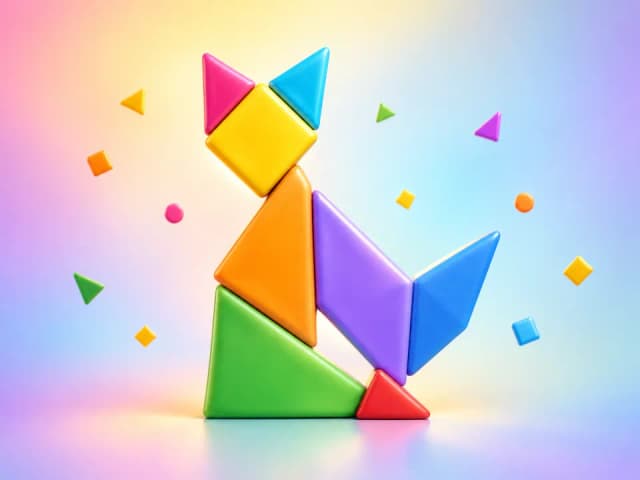
While reading a story about a fox, have the child attempt to build a fox shape using their tangram set. Integrating the puzzle into storytelling makes the activity more engaging and helps with narrative retention.
Example 2: The "Productive Struggle" Challenge
Give your child a silhouette that is slightly above their current skill level. Do not give them the answer. Instead, offer hints like, "I wonder if the parallelogram needs to be flipped?" This encourages "productive struggle," a key component of learning.
Example 3: Shadow Puppets
After creating a tangram figure, place a flashlight behind it to cast a shadow on the wall. This helps children see the "silhouette" in a different context and reinforces the idea that the seven pieces create a single unified form.
Common Mistakes and Misconceptions
Even adults often struggle with tangrams because of several common misconceptions. Identifying these early can prevent frustration for your child.
The "Rectangle" Myth
One of the most common errors is believing that a rectangle is one of the seven pieces. In a standard tangram set, there is no rectangle. If a child needs a rectangle for their design, they must build it using two triangles or a combination of other shapes. This is a vital lesson in composition.
Overlooking the Parallelogram
The parallelogram is the only "non-reversible" piece in a sense. In 2D space, it may need to be flipped over (mirrored) to fit into certain silhouettes. Because many children think only in terms of rotation, they may get stuck because they don't realize the piece can be turned over.
Thinking Digital is Equal
In the age of tablets, many parents opt for tangram apps. While these are convenient, research suggests that the physical act of flipping and sliding wooden or plastic blocks provides better cognitive retention than tapping a screen. The tactile feedback helps the brain "map" the shapes more effectively.
Advertisement
Modern Trends: Tangrams in 2025 and 2026
The world of educational toys is evolving, and tangrams are no exception. We are seeing several exciting trends that make this ancient puzzle more relevant than ever.
| Trend | Description | Impact |
|---|---|---|
| Eco-Friendly Materials | Shift toward bioplastics and wheat-straw sets. | 40% growth in sustainable toy sector. |
| AI-Enhanced Play | Tablet stands with cameras that provide real-time feedback. | Supports "productive struggle" with smart hints. |
| Collaborative Virtual Play | Children solving the same digital puzzle in different locations. | Fosters teamwork and communication. |
| Licensed Storytelling | Tangrams integrated into popular book franchises. | Increases engagement through familiar characters. |
The trend toward sustainable materials is particularly notable. In 2025, parents are increasingly seeking non-toxic, recyclable materials like bioplastic, moving away from traditional petroleum-based plastics.
Why Tangrams are a Core STEM Tool
Tangrams are often categorized simply as Logic Puzzles, but they are actually a foundational STEM tool. They sit at the intersection of:
- Geometry (Math): Understanding angles, area, and perimeter. Did you know that all seven pieces have the same total area as the original large square?
- Spatial Engineering (Technology): Learning how components fit together to create a stable structure.
- Creative Design (Art): Using limited resources to create an infinite variety of forms.
By engaging with a tangram for kids, a child is essentially practicing the same skills used by architects and engineers: taking a set of constraints and finding a functional, aesthetic solution.
Frequently Asked Questions
What is the best age to start with tangrams?
Experts suggest that children as young as 3 to 5 years old can begin with "pre-tangram" activities, such as free exploration and simple shape matching. The optimal age for solving complex, solid-black silhouettes is generally between 5 and 13 years old.
Are there specific rules for playing?
Yes, the classic rules for solving tangram silhouettes are:
- All seven pieces (tans) must be used.
- All pieces must lay flat.
- All pieces must touch.
- No pieces may overlap.
Can tangrams help with "Math Anxiety"?
Absolutely. Tangrams turn abstract, intimidating geometric concepts into a hands-on game. By removing the pressure of "getting the right number" and replacing it with "fitting the right shape," children develop a more positive relationship with spatial mathematics.
Why is the parallelogram so difficult for beginners?
The parallelogram is the only piece in the set that lacks reflectional symmetry. This means it may need to be flipped over to fit a specific pattern, a concept that is often counter-intuitive for young children who are used to simply rotating pieces.
Are wooden tangrams better than plastic ones?
While both work, many educators prefer wooden sets because of the weight and texture, which provide better sensory feedback. However, the recent trend toward eco-friendly bioplastics offers a great middle ground for modern families.
Conclusion: A Lifetime of Logic
The journey of a thousand miles begins with a single step, and for many children, the journey into logical thinking begins with a single tangram for kids. Whether it’s the thrill of finally solving a difficult silhouette or the joy of creating a brand-new animal shape, tangrams offer a sense of accomplishment that few other toys can match.
The ability to see patterns where others see chaos is a superpower. By introducing your child to the "Seven Boards of Cunning," you are giving them the tools to build that superpower, one shape at a time. For more ways to challenge your child's mind, explore our guide on the Best Memory Games for Kids or dive into the world of Grid Logic Puzzles.
Ready to Start?
Explore our collection of puzzles and logic games to boost your child's brainpower.
Put it into practice

Keep reading
Logic Puzzles
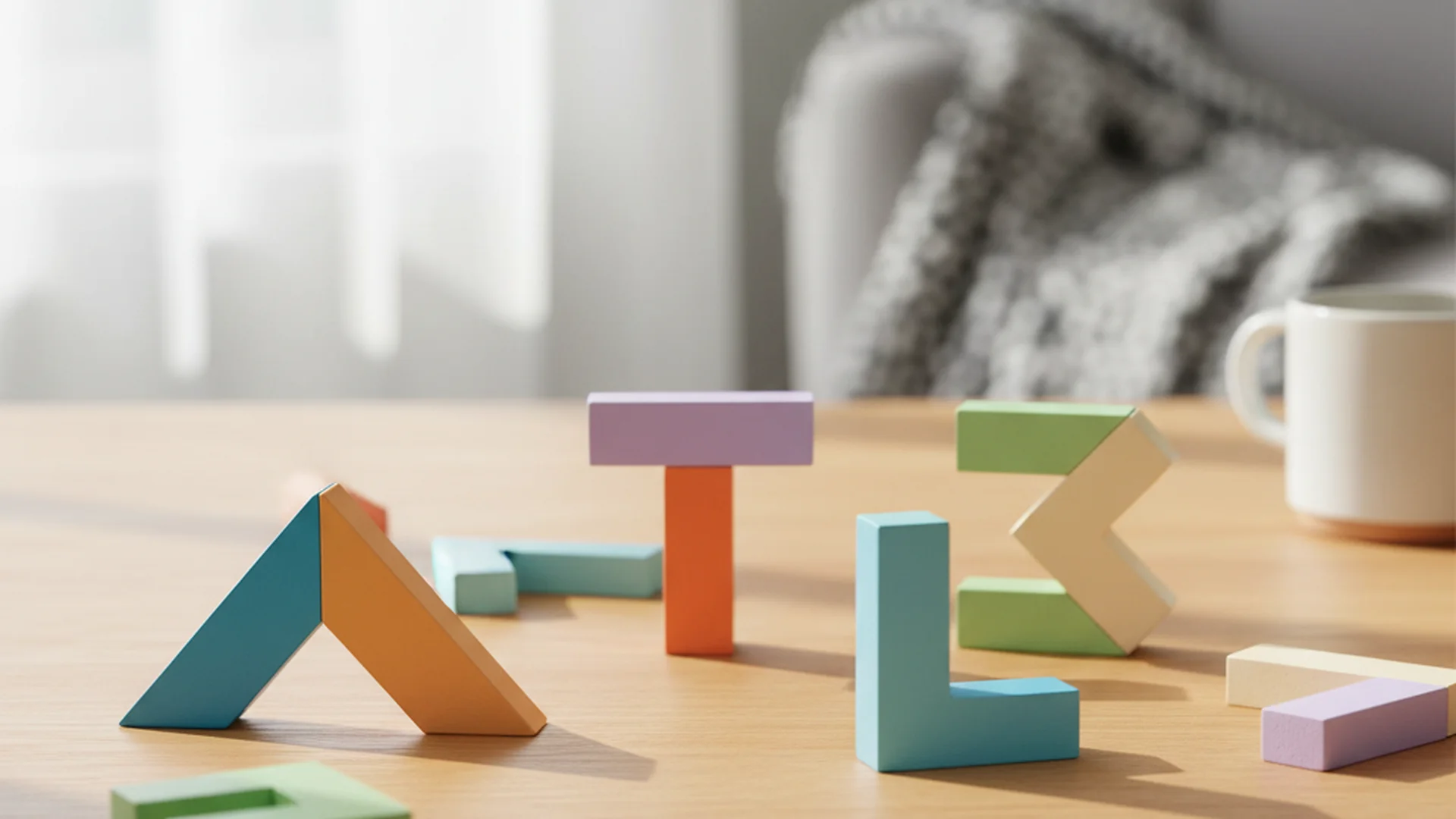
Mastering Tangram Letters and Numbers: A Guide to Geometric Literacy
Explore how tangram letters bridge geometry and literacy. Learn the history, STEM benefits, and tips for mastering alphabet tangram shapes in 2025.
Sep 7, 2025 10 min
Logic Puzzles
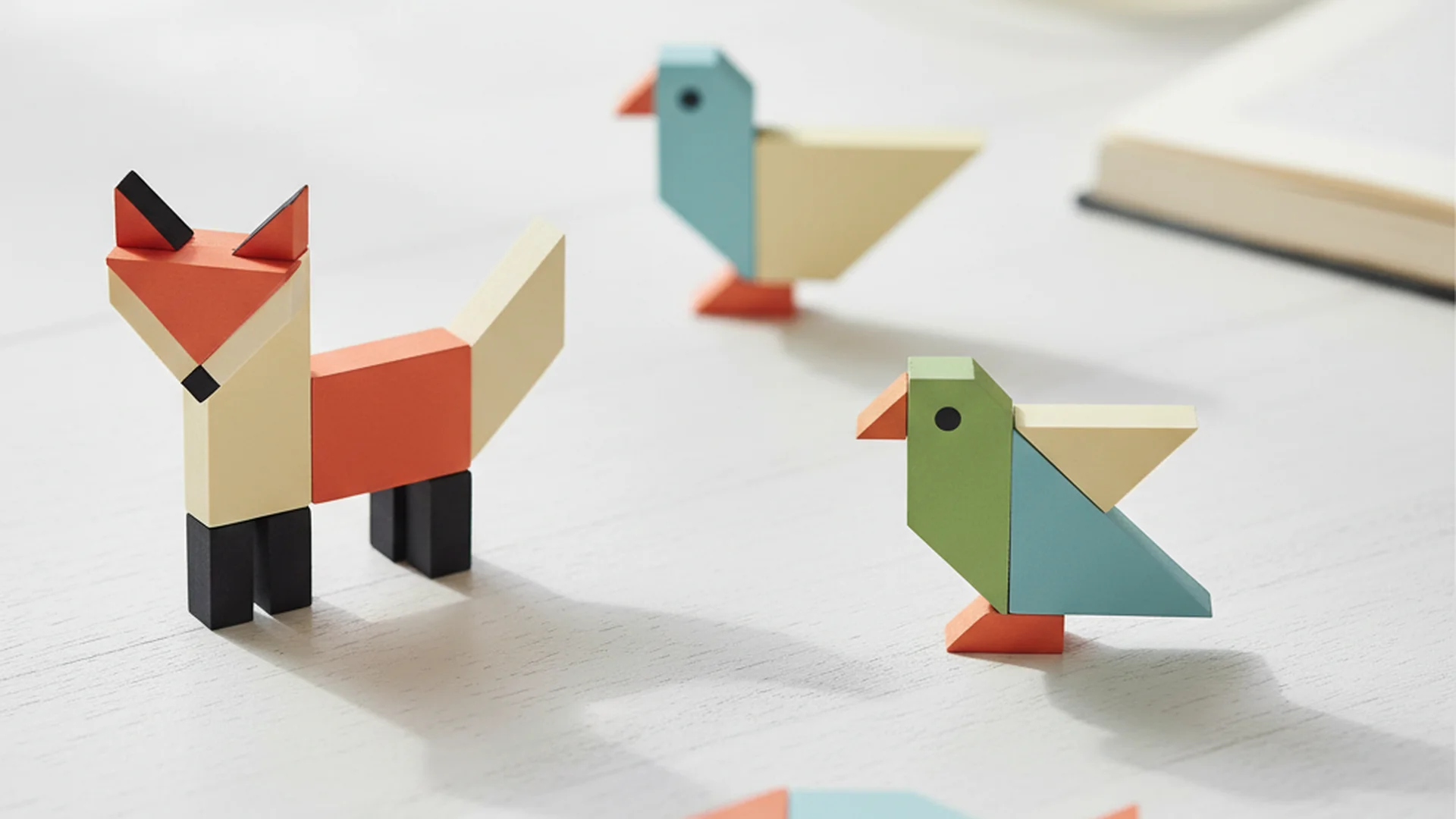
Tangram Animals Guide: Master the Seven Boards of Skill
Learn how to create over 6,500 shapes with our Tangram Animals Guide. Master the rules, difficulty levels, and the mathematical strategy behind these logic puzzles.
Nov 11, 2024 10 min
Child Development
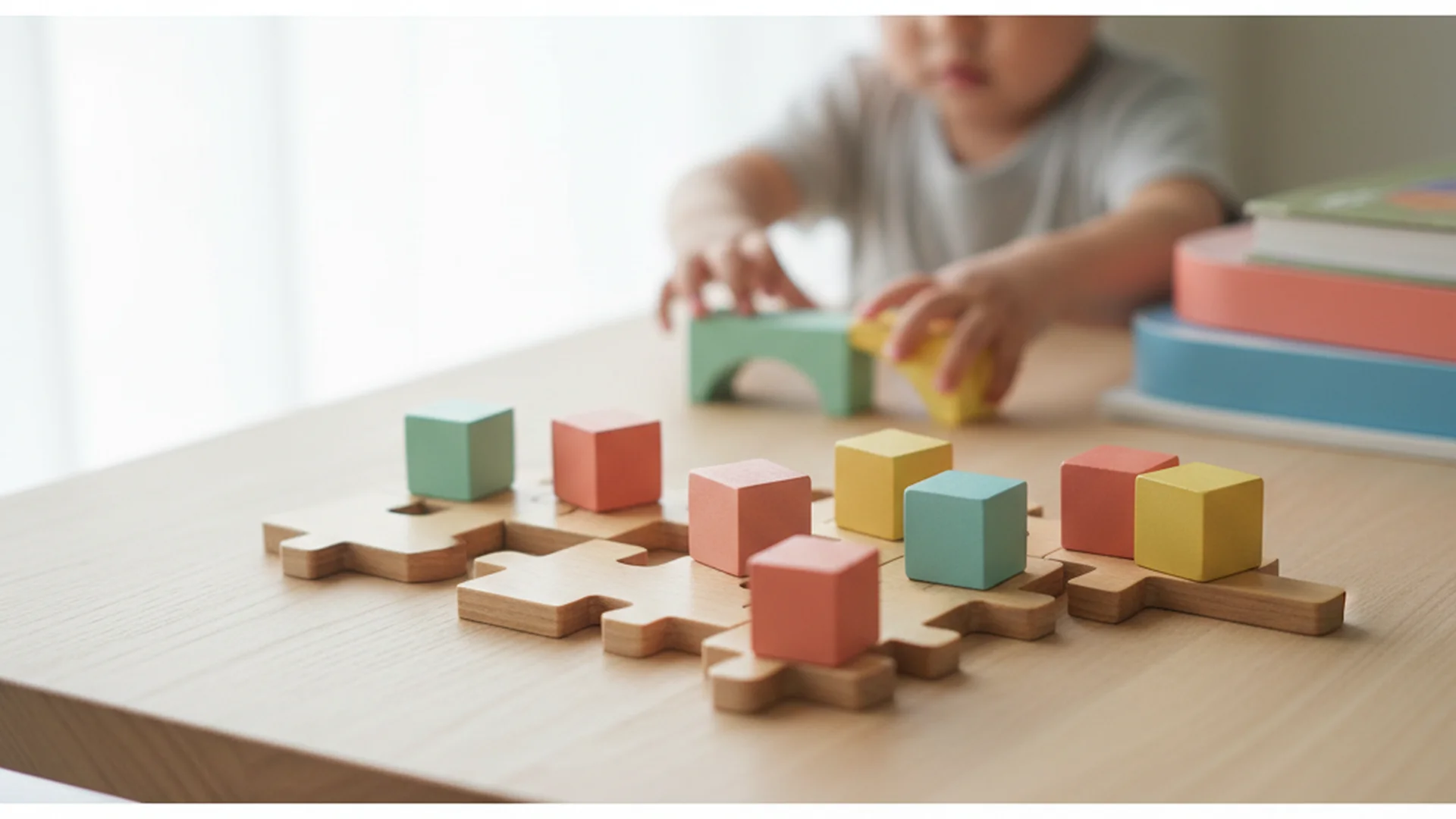
The Ultimate Guide to Problem Solving Puzzles for Kids: Building Critical Thinkers
Discover how problem solving kids can master critical thinking through puzzles. Explore 2025 trends, expert strategies, and the cognitive benefits of logical play.
Feb 11, 2026 12 min
Advertisement