Mastering Rebus Puzzles: The Ultimate Guide to Picture-Word Games
Discover the history, science, and strategies of rebus puzzles. Learn how to solve complex picture clues and stay ahead with 2025 trends in puzzle gaming.
By Free To Play Puzzles Editorial Team 12 min read
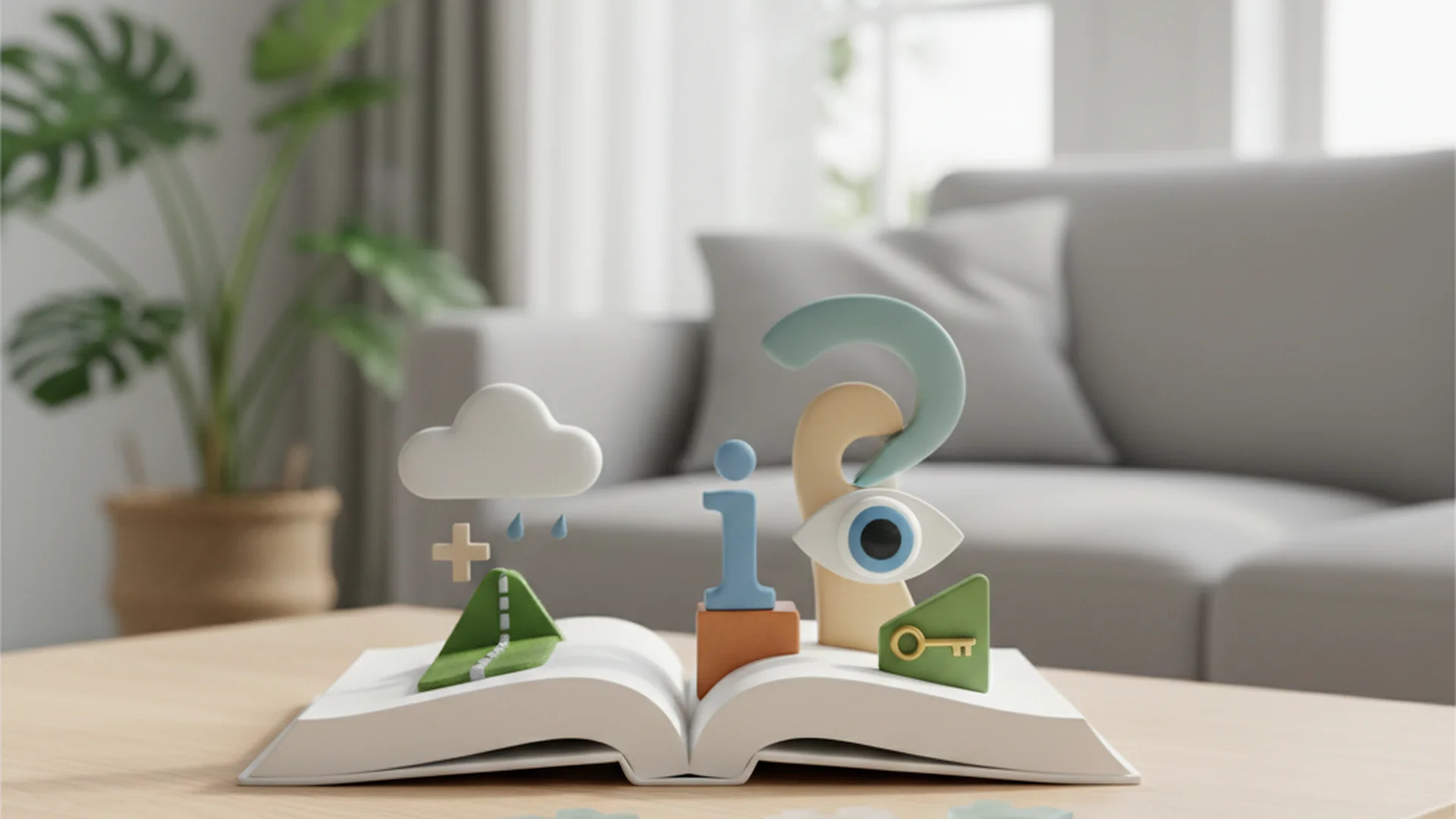
Have you ever looked at a picture of an eye, a heart, and a letter "U" and immediately known it meant "I love you"? If so, you have already mastered the basics of rebus puzzles. These engaging brain teasers have challenged human intellect for millennia, bridging the gap between visual art and linguistic logic. Whether you are a casual solver looking to sharpen your mind or a seasoned cruciverbalist navigating the trickiest squares of a Sunday crossword, understanding the mechanics of rebus puzzles is essential.
In this comprehensive guide, we will dive deep into the world of picture puzzles, exploring their ancient origins, the scientific "Aha!" moment they trigger, and the expert-level strategies you need to solve even the most cryptic modern iterations.
The Ancient Roots of the Rebus
The term "rebus" has a sophisticated lineage. It originates from the Latin phrase non verbis, sed rebus, which literally translates to "not by words, but by things." This linguistic philosophy has been a part of human communication since the dawn of civilization.
The earliest known rebus-like communications date back nearly 5,000 years to ancient Sumerian clay tablets. In these early writing systems, scribes used pictographs not just to represent the objects themselves, but to represent the sounds of those objects to form more complex words—a process known as the "rebus principle." This was a critical step in the development of phonetic writing systems that we use today.
By the Middle Ages, rebuses became a popular form of heraldry and "canting arms," where families would use visual puns on their surnames for their coats of arms. Today, we see them in everything from corporate logos to the hidden "gimmick" squares in high-level crosswords.
The Science of the "Aha!" Moment
Why are rebus puzzles so satisfying to solve? The answer lies in how our brains process information. Unlike a math problem that follows a linear, logical path, a rebus requires what psychologists call "cognitive restructuring."
Research published in Frontiers in Psychology indicates that rebus puzzles are primary tools for studying "insight-based" problem solving. When you look at a puzzle, your brain initially sees a set of disparate objects. The "Aha!" moment occurs when your brain suddenly re-evaluates the spatial relationship, color, or phonetic sound of those objects, allowing the hidden phrase to emerge.
This process provides a "full-brain" workout. The left hemisphere of the brain handles the linguistic and logical decoding, while the right hemisphere manages the visual and spatial recognition. Engaging both sides simultaneously is one of the best ways to maintain cognitive flexibility and brain health.
Advertisement
Traditional vs. Crossword Rebuses
It is important to distinguish between the two primary types of rebus puzzles you will encounter in the wild.
Traditional Rebus Puzzles
A traditional rebus is a visual puzzle that uses pictures, symbols, and letters to represent a common phrase or idiom. For example:
- A picture of a "bee" + a picture of a "leaf" = "Believe."
- The word "HEAD" written over the word "HEELS" = "Head over heels."
Crossword Rebuses
In the world of professional crossword construction, a "rebus" refers to a specific grid gimmick. Usually, each square in a crossword grid holds exactly one letter. However, in a rebus puzzle, multiple letters, a symbol, or even a tiny picture are squeezed into a single box to make intersecting words fit.
For more advanced tactics on handling these, you might want to check out 10 Crossword Solving Strategies the Pros Use.
Expert Solving Strategies: The Four Pillars
If you find yourself stuck on a difficult picture puzzle, experts suggest analyzing the clue through the "Four Pillars" of rebus construction.
1. Position
The physical relationship between words is the most common rebus clue. Is a word over, under, inside, or behind another?
- Example: The word "Man" placed over "Board" = "Man Overboard."
- Example: The word "Weather" written multiple times under a line = "Under the weather."
2. Size
Pay close attention to the scale. Is the word or image unusually large or remarkably small?
- Example: A tiny font for the word "fry" = "Small fry."
- Example: A massive letter "E" = "Big E" (a common nickname or reference).
3. Color
Does the color of the text or image signify a specific word?
- Example: The word "Envy" written in green ink = "Green with envy."
- Example: The word "Feeling" written in blue = "Feeling blue."
4. Quantity and Repetition
If a word is repeated, count how many times it appears. The number itself is often part of the answer.
- Example: The word "Thought" appears four times = "Afterthought" (the fourth 'thought').
- Example: The word "MICE" written three times = "Three blind mice" (often paired with the "blind" effect where the eyes are missing from the letters).
Educational Impact and Benefits
Rebus puzzles aren't just for entertainment; they are powerful educational tools. Studies in 2025 highlighted that using rebus games in ESL (English as a Second Language) environments improves student speaking confidence and vocabulary retention by up to 30% compared to traditional rote memorization.
Because rebuses rely on phonetics and idioms, they help students internalize the "sounds" of English in a way that dry textbooks cannot. They are also excellent for children learning to read, as they encourage the decoding of symbols into sounds. If you are looking for more ways to engage younger minds, you might enjoy these Easy Riddles for Kids.
Advertisement
Recent Trends and the Future of Puzzling (2025–2026)
The world of puzzles is evolving rapidly with the integration of new technologies and a shift toward sustainability.
AI-Powered Generation
In 2025, tools like Reelmind.ai and SymbolicAI emerged. These platforms allow users to generate complex rebus puzzles by simply typing a phrase. The AI handles "multi-image fusion," automatically finding symbols that phonetically match the input. This has led to a surge in high-quality, user-generated content in the puzzle community.
Augmented Reality (AR) Puzzles
The year 2026 is seeing a rise in "Spatial Rebuses." Using AR glasses or mobile apps, players solve puzzles in 3D space. You might see a giant letter "R" floating in your living room, but you have to walk around to the other side to see the "ST" hidden behind it to solve for "Star."
Sustainability in Puzzling
There is a 2025-2026 trend toward "Sustainable Puzzling." Major publishers like Hachette have shifted to releasing "Page-A-Day" rebus calendars printed on 100% recycled bamboo paper with soy-based inks, appealing to the eco-conscious solver.
Digital Optimization
The New York Times and other major crossword apps have finally introduced specific "Rebus Mode" buttons. This solves the long-standing frustration of trying to enter multiple letters into a single mobile grid square, making the digital experience as seamless as pen and paper.
How to Create Your Own Rebus Puzzle
Creating a rebus is just as mentally stimulating as solving one. If you want to design a puzzle for a friend or a classroom, follow these expert steps:
- Start with an Idiom: Common phrases (e.g., "Piece of cake," "Back to square one") are the best foundations. They are recognizable, which makes the puzzle "fair."
- Use the "Plus/Minus" Rule: You can use math symbols to refine your clue. For example, an image of a [Pearl] minus an [Ear] equals the sound "Pl."
- Visual Consistency: If you are creating for a digital audience, use consistent emoji styles or transparent PNGs. Inconsistent art styles can distract the solver and make the puzzle feel "broken."
- Test the Phonetics: Ensure the phonetic leap isn't too large. If you use a picture of a "knee" to represent the word "any," make sure the context of the rest of the puzzle supports that sound.
Creating these can be a great way to build your own DIY Escape Room experience for friends.
Common Mistakes to Avoid
Even expert solvers can get tripped up by certain pitfalls. Here is how to avoid the most common errors:
- The "Ian Rankin" Confusion: A common SEO and search pitfall is confusing "Rebus Puzzles" with the "Inspector Rebus" novel series by Ian Rankin. While Sir Ian Rankin has a new thriller, Midnight and Blue, slated for late 2024/2025, it is a crime novel, not a puzzle book. Don't let your search results lead you astray!
- Overthinking the Imagery: Beginners often try to find deep symbolic meaning in an image. If you see a picture of a cat, it is almost certainly just "cat," not "feline," "tabby," or "mammal." In 90% of rebuses, the simplest word is the correct one.
- Ignoring the Font Style: Solvers often overlook bolding, italics, or strikethroughs. A word with a line through it almost always means "No [Word]" or "Crossed [Word]." For instance, the word "Fingers" with a line through them means "Fingers crossed."
- App Input Errors: When solving a crossword rebus on a mobile app, remember that different apps have different requirements. Some require the full word, while others only want the first letter. Failing to use the "slash" (/) to separate across and down answers in some apps can lead to a "failed" solve even if your logic was perfect.
Frequently Asked Questions
What is the difference between a traditional rebus and a crossword rebus?
A traditional rebus is a standalone visual puzzle using pictures and symbols to represent a phrase (like an eye for "I"). A crossword rebus is a specific grid gimmick where multiple letters or a symbol are placed inside a single square to allow intersecting words to fit.
How do you solve a rebus when you’re stuck?
The best strategy is to "say what you see" out loud. Often, hearing the phonetic sounds of the objects helps your brain make the connection that the visual alone cannot. Additionally, look for the "Four Pillars": Position, Size, Color, and Quantity.
Are rebus puzzles good for brain health?
Yes. Rebus puzzles provide a "full-brain" workout by engaging the left hemisphere (linguistic/logical) and the right hemisphere (visual/spatial). This helps improve cognitive flexibility and insight-based problem-solving skills.
Why does the NYT Crossword use rebus squares?
Crossword constructors use rebus squares to add a layer of difficulty and "play" to the puzzle. It allows them to use longer phrases or themes that wouldn't normally fit within the constraints of a standard grid.
Can AI create rebus puzzles?
As of 2025, AI tools like Reelmind.ai are capable of generating complex rebus puzzles. They use phonetic mapping to turn any text phrase into a series of visual symbols and spatial clues.
Conclusion
Rebus puzzles are a timeless testament to human creativity and our love for hidden meanings. From the clay tablets of Sumer to the augmented reality challenges of 2026, these puzzles continue to evolve while remaining rooted in the simple joy of the "Aha!" moment. By mastering the Four Pillars of position, size, color, and quantity, you can unlock a new level of mental agility.
Whether you are decoding a hidden message in a greeting card or tackling a tricky Thursday crossword, remember to look past the "words" and see the "things." If you enjoyed this dive into word logic, you might also want to explore Cryptogram Strategies to further expand your puzzling toolkit.
Ready to Level Up?
Sharpen your logic skills with our latest challenges.
Put it into practice
Keep reading
Puzzle Types
Math Riddles: The Ultimate Guide to Number-Based Brain Teasers
Discover the power of math riddles to boost cognitive function. Explore 2025 mathematical trends, expert solving tips, and the science of logical puzzles.
Jun 13, 2026 12 min
Puzzle Types
Mastering Puzzle Boxes: A Guide to Secret Compartments and Hidden Challenges
Explore the fascinating world of puzzle boxes. Learn their history, expert solving techniques, and why these secret compartment challenges are the ultimate brain workout.
Mar 31, 2026 12 min
Puzzle Types
Mastering Stereogram Puzzles: The Ultimate Guide to 3D Vision
Unlock the hidden world of stereogram puzzles. Discover the science, history, and expert techniques to master Magic Eye images in this 2025-2026 guide.
Nov 18, 2025 12 min
Advertisement