Mastering Stereogram Puzzles: The Ultimate Guide to 3D Vision
Unlock the hidden world of stereogram puzzles. Discover the science, history, and expert techniques to master Magic Eye images in this 2025-2026 guide.
By Free To Play Puzzles Editorial Team 12 min read
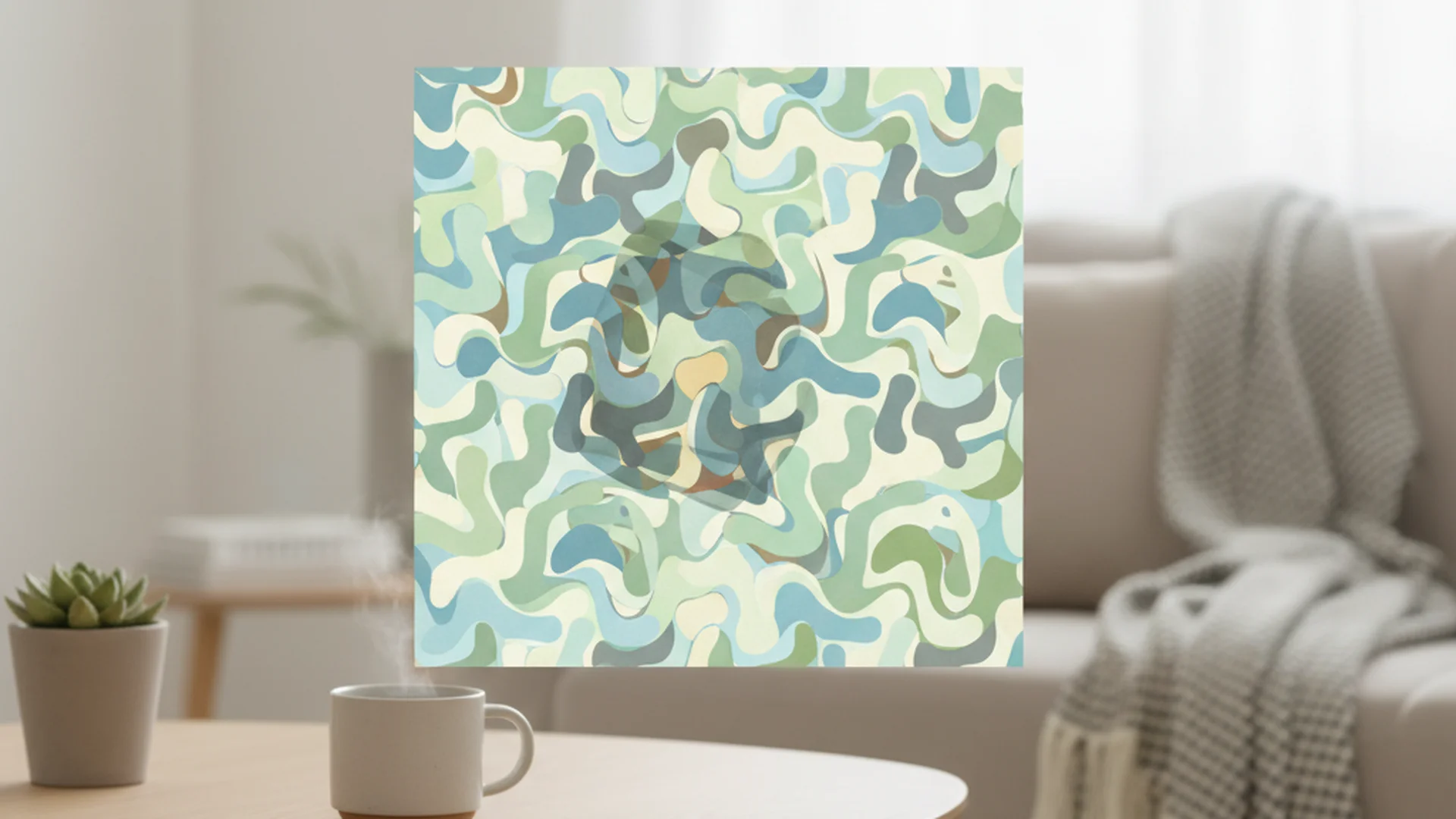
If you have ever stared at a chaotic pattern of colorful dots only to have a majestic 3D dolphin suddenly leap out at you, you have experienced the magic of stereogram puzzles. Often referred to by the brand name "Magic Eye puzzles," these visual enigmas have fascinated the public for decades. While they reached a fever pitch of popularity in the 1990s, stereograms are currently experiencing a massive resurgence in 2025 and 2026, driven by advancements in AI-generated imagery and high-resolution digital displays.
For many, the ability to see the hidden image feels like a superpower. For others, it is a source of frustration. However, as a logic instructor, I can assure you that seeing a stereogram is not a matter of luck or a "gift"—it is a mechanical skill involving the coordination of your eyes and brain. This guide will walk you through the science, the history, and the exact techniques you need to unlock these 3D worlds.
The Scientific Roots of 3D Vision
Stereogram puzzles are built on the principle of stereopsis, the process by which our brain combines two slightly different images from each eye into a single three-dimensional perception.
The journey of the stereogram began much earlier than the neon-colored books of the 90s. In 1838, Sir Charles Wheatstone first described the concept of 3D vision. However, the true breakthrough for puzzles came in 1959 when Béla Julesz created the first random-dot stereogram. Julesz was not trying to create art; he was a scientist testing the brain's ability to perceive depth without recognizable shapes or contours. He proved that depth perception happens in the brain, not just the eyes.
By 1991, Tom Baccei and Cheri Smith refined this technology into the "Magic Eye" series. This became a global phenomenon, with three books simultaneously hitting the New York Times bestseller list and generating over $100 million in sales. Today, we are seeing a shift from these printed artifacts to digital "Live Stereograms" and AI-driven challenges that are more accessible than ever.
How to See Stereogram Puzzles: Three Proven Methods
The primary reason people struggle with magic eye puzzles is that our brains are hardwired to focus on the surface of an object. To see the hidden 3D layer, you must override your "accommodation reflex"—the instinct to focus on the 2D plane of the screen or paper.
1. The "Pull-Back" Method
This is the classic technique recommended for beginners.
- Hold the image (or bring your face) so close that your nose is touching it.
- Do not try to focus on the pattern. Let your eyes remain blurred and relaxed.
- Very slowly, move your head back from the image.
- As you move away, maintain that "blank" stare. Around 12 to 18 inches away, your brain should begin to "lock" onto the hidden depth.
2. The "Reflection" Method (Best for 2025 Digital Screens)
With the ultra-high PPI (pixels per inch) of modern smartphones, the reflection method is often the most effective.
- Turn on a lamp behind you so you can see a slight reflection on your screen.
- Instead of looking at the stereogram pattern, focus on your own reflection or the reflection of the light.
- By focusing "through" the screen at the reflection, your eyes naturally adopt the parallel gaze needed to merge the patterns.
3. The "Transparent" Method
Imagine the image is a window and you are looking at a tree 20 feet behind it. Keep your gaze fixed on that imaginary distant point while the stereogram is in your line of sight. Eventually, the repeating patterns will overlap, and the 3D object will "snap" into focus.
Advertisement
Vision Health and the 2025 Digital Landscape
In a world where 68% of employees suffer from digital eye strain, stereogram puzzles are transitioning from simple toys to legitimate wellness tools. Orthoptists have long used stereograms in vision therapy to treat binocular vision disorders like convergence insufficiency.
Because these puzzles require you to "de-couple" the focus of your eyes from their convergence, they act as an "eye-flexing" exercise. This can help strengthen the ciliary muscles and improve overall eye coordination.
The 20-20-20 Rule
When practicing stereograms on a digital screen, it is vital to avoid overstraining. Experts recommend the 20-20-20 rule:
- Every 20 minutes,
- Look at something 20 feet away,
- For 20 seconds.
This resets your natural focus and prevents the fatigue that often blocks the ability to see 3D images. For more on the health aspects of gaming, explore our guide on Puzzle Benefits.
Modern Trends: AI and the Metaverse (2025-2026)
The world of stereograms is evolving rapidly. We are no longer limited to static images in books.
- AI-Generated Stereograms: In 2025, tools like Meshy AI allow users to convert any 2D photograph into a high-definition 3D autostereogram. This has led to a surge in personalized puzzles.
- AR Integration: Augmented Reality apps are now featuring "Live Stereograms" where the hidden 3D object moves or reacts to your head position, providing a much more immersive experience than the 90s prints.
- Daily Digital Challenges: Much like the daily Wordle, apps have popularized daily 3D streaks. Solving one stereogram puzzle a day is becoming a popular way for users to maintain visual acuity.
| Feature | 1990s Stereograms | 2025/2026 Stereograms |
|---|---|---|
| Format | Printed Books | Mobile Apps / AR |
| Clarity | Grainy/Matte | Ultra-HD / High PPI |
| Content | Static Images | Animated/Interactive |
| Source | Hand-Calculated | AI-Generated |
Common Mistakes to Avoid
Even seasoned puzzle lovers can struggle if they fall into these common traps:
- Tilted Viewing: Your head must be perfectly level. If you tilt your head even slightly, your eyes’ horizontal alignment will be off, making it mathematically impossible for the patterns to merge.
- Trying Too Hard: The biggest hurdle is active effort. If you "search" for the object, your eyes will instantly focus on the 2D surface. You must relax into the image.
- Low Lighting: Viewing stereograms in dim light causes your pupils to dilate, which reduces your depth of field. Always use bright, even lighting.
- Giving Up Too Fast: Many believe you are born with the ability. In reality, it is a mechanical skill. Once your brain learns the "lock," it rarely forgets it.
Advertisement
Frequently Asked Questions
Can everyone see stereogram puzzles?
Most people with two functioning eyes and basic depth perception can see them. However, individuals with significant vision issues like amblyopia, strabismus, or severe astigmatism may find them impossible to resolve.
Why do I see the image "sunk in" instead of popping out?
This happens because you are using the Cross-Eyed method on an image designed for the Parallel (Wall-Eyed) method. Most modern stereograms are designed for parallel viewing. To fix this, try to look "through" the image rather than crossing your eyes in front of it.
Is staring at stereograms bad for my eyes?
No. In fact, many experts suggest it is beneficial. It trains the brain to decouple focus from convergence, which can strengthen eye muscles and help mitigate the effects of fixed-focus digital eye strain.
Why does it take me so long to see the image?
Your brain is naturally hardwired to focus on the physical surface you are looking at. Overriding this "accommodation" reflex takes time and practice. Once your brain learns the pattern of "relaxing" into the depth, the process becomes almost instantaneous.
Are digital screens better or worse than paper for stereograms?
In the past, paper was superior due to the glare on screens. However, the high pixel density (PPI) of 2025 smartphone and monitor displays actually makes modern stereograms sharper and easier to "lock onto" than the grainy prints of the past.
Conclusion
Stereogram puzzles are a unique intersection of art, mathematics, and biology. From their scientific origins in the 19th century to the AI-driven interactive experiences of 2026, they remain one of the most engaging ways to challenge our visual perception. Whether you are using them for vision therapy, to combat digital eye strain, or simply for the thrill of the "hidden reveal," mastering the 3D gaze is a rewarding mental skill.
If you enjoy visual and logic-based challenges, you might also find our guides on 3D Puzzles Guide or Logic Puzzles equally fascinating.
Enhance Your Mind
Explore our full collection of brain-boosting challenges and puzzles.
Put it into practice



Keep reading
Puzzle Types
The Ultimate Guide to Escape Room Puzzles: From Local Rooms to Your Living Room
Explore the evolution of escape room puzzles in 2025. Learn expert strategies for solving at home escape room kits and understand the latest industry trends.
Aug 26, 2026 12 min
Puzzle Types
Mastering Wire Puzzles: A Guide to Disentanglement Challenges
Discover the history, math, and expert techniques behind wire puzzles. Learn how to solve complex disentanglement challenges without force using topology.
May 15, 2025 9 min
Puzzle Types
Navigating Success: The Ultimate Guide to Mazes for Kids
Discover the developmental benefits of mazes for kids. Learn about age-appropriate puzzles, the latest 2025-2026 trends, and expert tips for cognitive growth.
Sep 6, 2026 12 min
Advertisement