Mastering Wire Puzzles: A Guide to Disentanglement Challenges
Discover the history, math, and expert techniques behind wire puzzles. Learn how to solve complex disentanglement challenges without force using topology.
By Free To Play Puzzles Editorial Team 9 min read
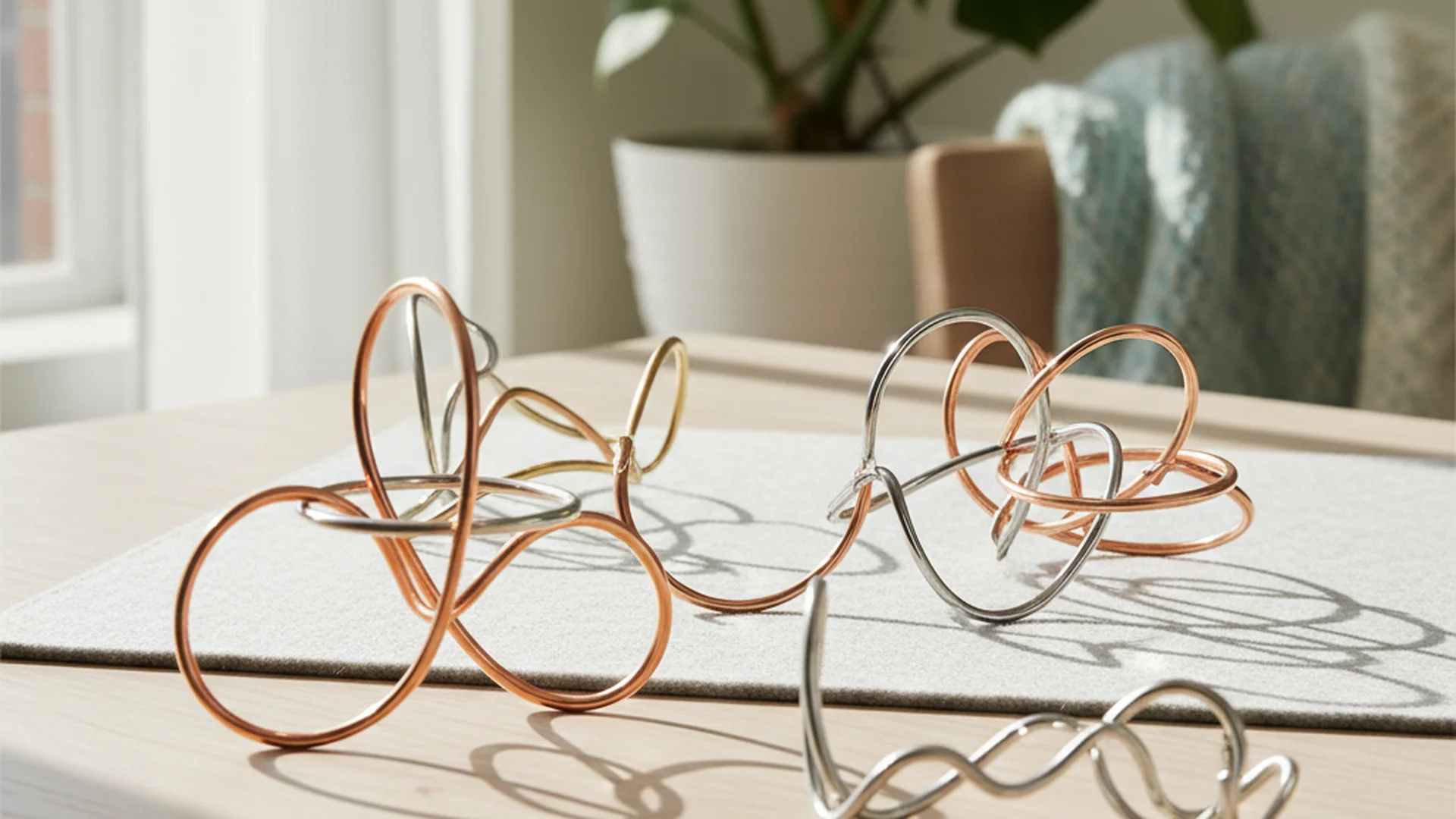
There is a unique sensory satisfaction that comes from picking up a set of interconnected metal loops, hearing the rhythmic "clink" of steel against steel, and feeling the weight of a century-old mystery in your palms. Wire puzzles, technically known as disentanglement puzzles, have fascinated thinkers for nearly two millennia. Whether it is a pair of twisted nails or an intricate series of interlocking rings, the goal is always deceptively simple: separate the pieces and then put them back together.
As a mathematical logic instructor, I often see students approach these challenges as a test of strength. However, the true beauty of these brain teasers lies in their defiance of brute force. Solving a wire puzzle is not an act of power, but an act of spatial reasoning and topological understanding.
The Ancient Heritage of Disentanglement
While we often see wire puzzles in modern gift shops, their roots stretch back to antiquity. These "Vexiers" or patience puzzles were originally forged by blacksmiths using scrap materials like horseshoe nails or bits of heavy-duty fence wire.
One of the most famous examples, the "Chinese Rings" (also known as the Baguenaudier), is documented as far back as the 2nd century. Legend suggests it was invented by the Chinese hero Hung Ming to entertain his wife while he was away at war. It wasn't just a toy; it was a lesson in persistence.
The transition from blacksmith-forged "bent nail" puzzles to the high-end collectibles we see today represents a significant evolution in manufacturing. In 2025, we are seeing a resurgence of these analog escapes as people seek a tactile break from digital screens. Modern collections now include everything from classic iron designs to 3D-printed resins and chrome-plated zinc masterpieces.
The Science of the Solve: Topology in Your Hands
To truly understand why wire puzzles are so challenging, we have to look at the mathematical field of topology. Topology is often called "rubber-sheet geometry." It studies the properties of geometric objects that are preserved under continuous deformations, such as stretching and twisting, but not tearing or breaking.
In a disentanglement puzzle, the pieces are "topologically linked." Your job is to find the one specific orientation where the geometry allows the pieces to slide past each other without breaking the topological bond.
The Complexity of the Chinese Rings
A fascinating aspect of these puzzles is their logarithmic difficulty. For instance, in the classic Chinese Ring puzzle, the number of moves required to solve it follows a strict mathematical formula: $2^{n-1}$ moves, where $n$ is the number of rings.
- A 5-ring puzzle requires 21 moves.
- A 7-ring puzzle requires 85 moves.
- A 9-ring puzzle requires 341 moves.
This exponential growth in complexity is why even a small increase in the number of components can make a puzzle feel exponentially harder to solve. If you enjoy this type of logical progression, you might also find the strategies used in Logic Puzzles equally stimulating.
Advertisement
Expert Techniques: How to Think Like a Pro
If you are staring at a clump of intertwined metal and feeling stuck, you are likely looking at the puzzle in two dimensions. To solve these, you must change your perspective.
1. The "Magic Mirror" Technique
Visualizing the solution is half the battle. Imagine the metal parts are flexible—like liquid mercury or soft rubber. In your mind’s eye, try to "pass" the pieces through each other. Once you see the path the "traveler" (the piece being removed) needs to take, you can look for the physical rotations required to make that path a reality.
2. The "3D Tilt" Strategy
Beginners often try to solve puzzles by sliding pieces left, right, up, or down. However, disentanglement often requires a specific angular rotation. Many puzzles have a "cheat" angle—a 45-degree tilt or a flip that aligns the narrowest part of one wire with the widest gap of another.
3. Focus on the "Gate"
Every wire puzzle has a "gate." This is the specific point where the manufacturer has left a gap just wide enough for another piece to pass through. Identify the narrowest part of the moving piece and the widest part of the stationary piece. The solution must involve these two points meeting.
Evolution of the Craft: 2025–2026 Trends
The world of disentanglement puzzles is undergoing a transformation. We are moving away from simple "bent wire" looks toward what the industry calls "Puzzle Art."
Puzzles as High-End Decor
A major trend for late 2025 is the Wavelinks style of design. These are puzzles designed to look like high-end sculptures sitting on a coffee table. They prioritize tactile feedback—the "click" and "slide" of the metal—as much as the difficulty of the solve.
Precision Engineering
Brands like Hanayama are pushing the boundaries of what is possible with cast metal. The upcoming 2025 releases, such as the Cast Wallet (Level 4) and the Cast A&A, move away from wire frames into interlocking geometric solids. Furthermore, the Precision Sakura Metal Puzzle is setting new standards with 0.005mm tolerances, making the "illegal" solutions found in cheap wire puzzles physically impossible.
Sustainability in Puzzling
In line with global trends, 2025 is seeing a shift toward eco-friendly materials. Many manufacturers are replacing plastic blister packs with recycled cardboard and utilizing bamboo-based composites for the frames of hybrid wire-and-wood puzzles.
| Puzzle Type | Difficulty | Best For |
|---|---|---|
| Two Nails | Beginner | Kids and entry-level hobbyists |
| The Horseshoe | Easy | Learning basic "gate" mechanics |
| Chinese Rings | Hard | Those who love repetitive logic |
| Hanayama Cast | Extreme | Serious collectors and math buffs |
Common Mistakes to Avoid
Even seasoned puzzlers fall into these traps. If you want to improve your solve rate, keep these common errors in mind:
- Using Brute Force: This is the most common mistake. Forcing a puzzle ruins the "click" and can permanently warp the metal, making the true solution impossible to find later.
- Losing the Orientation: Often, a puzzler will successfully separate the pieces but have no idea how they did it. This makes re-assembling—the second half of the challenge—nearly impossible. Always try to reverse the movements immediately after a successful separation.
- Ignoring the 3D Plane: Remember that you aren't just moving pieces on a table; you are moving them in space. Rotate the puzzle frequently to see if a new "gate" reveals itself.
- Underestimating Small Puzzles: Size does not equal simplicity. Some of the smallest metal puzzles, like the 3D Puzzles Guide often highlights, require more precision and focus than larger, more intimidating structures.
Advertisement
Frequently Asked Questions
Is there a universal secret to solving wire puzzles?
No, there isn't one "master key." However, almost all of them rely on finding the "gate" or the specific orientation where the wire diameter is slightly thinner, or the gap is wide enough for a specific rotation.
What are the easiest wire puzzles for beginners?
The "Two Nails" and the "Horseshoe" puzzles are classic entry points. They usually involve only two or three moves but teach the fundamental logic of sliding and rotating rather than pulling.
Can I use tools like pliers if I get stuck?
Absolutely not! A fundamental rule of disentanglement puzzles is that the solution requires zero force. Using tools is considered "breaking" the puzzle rather than solving it.
How do I put the puzzle back together?
Re-entangling is often considered harder than disentangling because you don't have the visual cue of the "separated" state to guide you. Experts recommend "solving in reverse" the very second the pieces come apart to lock the muscle memory of the movements.
Conclusion
Whether you are looking for a way to sharpen your spatial reasoning or simply want an "analog escape" from the digital world, wire puzzles offer an endless variety of challenges. From the ancient Chinese Rings to the high-precision sculptures of 2025, these puzzles prove that some of the greatest mysteries can be held in the palm of your hand.
If you're interested in other ways to challenge your brain, you might explore our 3D Puzzles Guide or check out the Best 3D Puzzles currently on the market.
Ready to Start?
Explore our full collection of brain teasers and logic games today.
Put it into practice


Keep reading
Puzzle Types
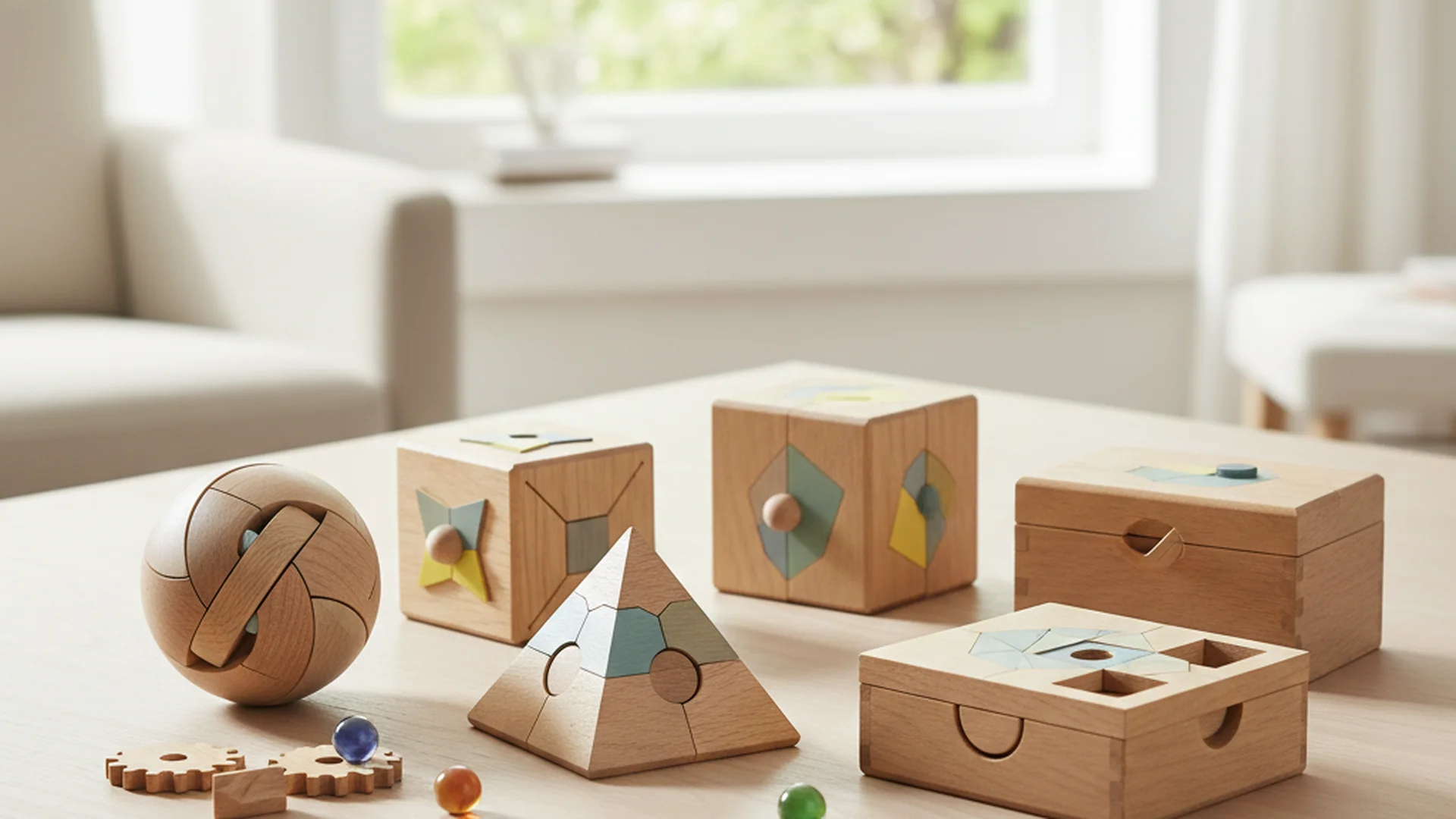
Mastering Puzzle Boxes: A Guide to Secret Compartments and Hidden Challenges
Explore the fascinating world of puzzle boxes. Learn their history, expert solving techniques, and why these secret compartment challenges are the ultimate brain workout.
Mar 31, 2026 12 min
Puzzle Types
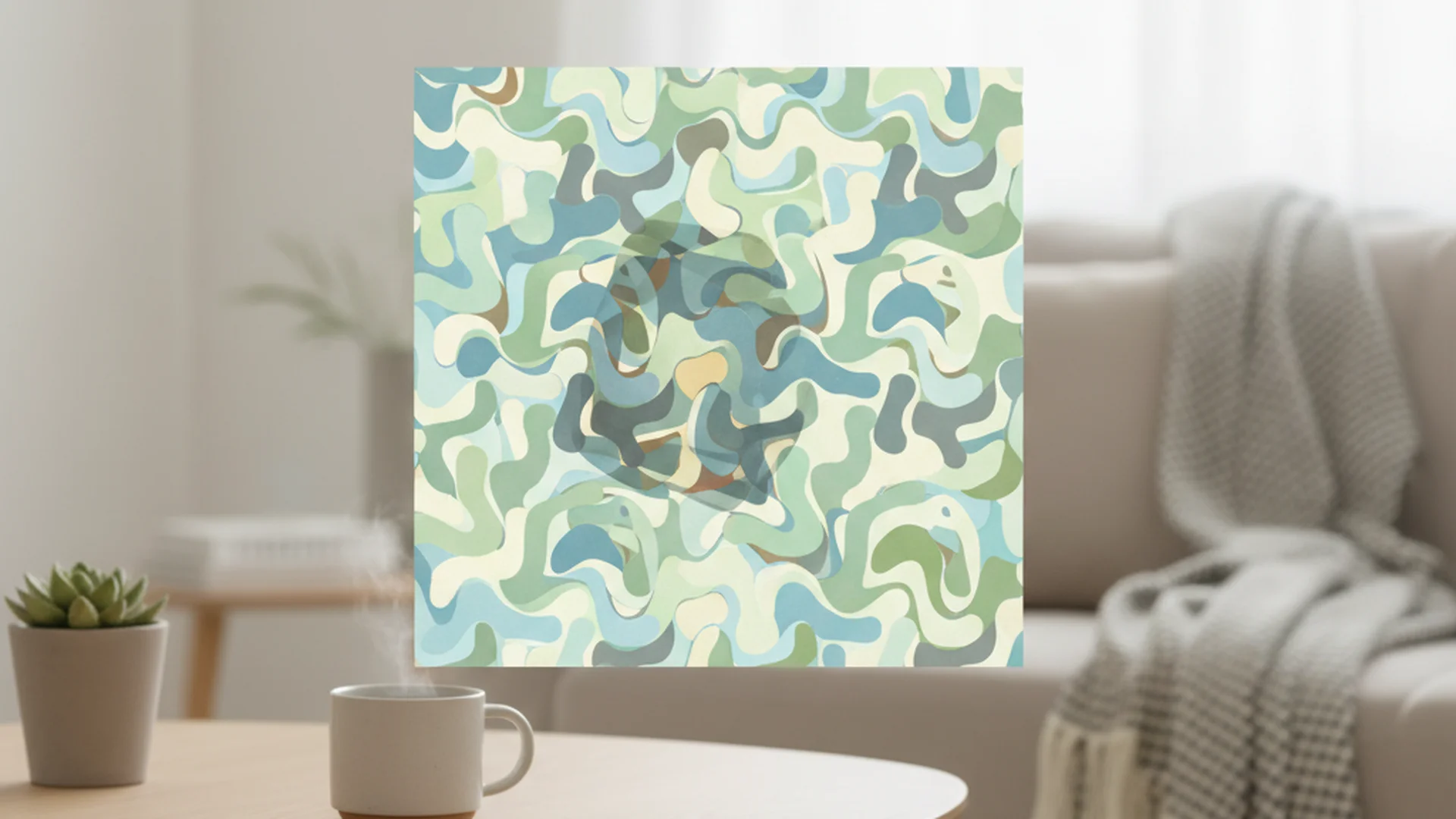
Mastering Stereogram Puzzles: The Ultimate Guide to 3D Vision
Unlock the hidden world of stereogram puzzles. Discover the science, history, and expert techniques to master Magic Eye images in this 2025-2026 guide.
Nov 18, 2025 12 min
Puzzle Types
The Ultimate Guide to Escape Room Puzzles: From Local Rooms to Your Living Room
Explore the evolution of escape room puzzles in 2025. Learn expert strategies for solving at home escape room kits and understand the latest industry trends.
Aug 26, 2026 12 min
Advertisement