3D Puzzles Guide: Building Three-Dimensional Challenges
Explore the ultimate 2025-2026 guide to 3D puzzles. Learn about mechanical wooden kits, smart integration, building tips, and the cognitive benefits of three-dimensional challenges.
By Free To Play Puzzles Editorial Team 12 min read

The world of tabletop entertainment is undergoing a profound transformation. While traditional flat puzzles remain a staple of the hobby, 3d puzzles have surged in popularity, evolving from simple foam-backed structures into complex, laser-cut mechanical masterpieces. As we move through late 2025 and into 2026, these three dimensional puzzles are no longer just toys; they are a sophisticated intersection of engineering, home decor, and mindfulness. For the enthusiast, they offer a tangible sense of achievement that digital gaming often lacks, providing a "tech-renaissance" that rewards patience and precision.
The Rise of the Three-Dimensional Challenge
The history of puzzles has always been one of increasing complexity. As a retro gaming historian, I often compare the jump from 2D jigsaws to 3D kits to the transition from 8-bit sprites to 3D polygons in the 1990s. It changes the way we perceive space and logic. Modern 3d puzzles challenge our spatial reasoning in ways a flat image cannot. You aren't just matching colors; you are managing structural integrity, torque, and gear ratios.
In 2025, the market is seeing a massive influx of interest. According to recent data, the global 3D puzzle market is estimated at $235 million this year, with a steady growth trajectory toward $274 million by 2030. This growth is driven by a desire for "digital detoxing" and a return to tactile, physical accomplishments.
Understanding the Material Landscape
When choosing your next project, the material often dictates the difficulty and the final utility of the piece. Unlike the Jigsaw Puzzles: Complete Guide which focuses on cardboard and paper, 3D puzzles utilize a variety of rigid materials.
| Material Type | Durability | Best For | Typical Connection |
|---|---|---|---|
| Plywood (Laser-cut) | High | Mechanical Models | Interlocking / Tenon |
| Stainless Steel | Very High | Desktop Decor | Tab-and-Slot |
| Plastic (ABS) | High | Architectural Models | Click-fit |
| Foam-core | Moderate | Children / Quick Builds | Slot-and-Groove |
Mechanical Wooden Puzzles
These are currently the gold standard for adult hobbyists. Brands like ROKR and Ugears have pioneered kits that don't just sit on a shelf—they move. We are talking about marble runs, working clocks, and even functional film projectors.
Metal Nano-Kits
Metal puzzles offer a sleek, industrial aesthetic. They often require specialized tools like needle-nose pliers and are known for their unforgiving nature; once a metal tab is bent too many times, it snaps.
Advertisement
Expert Strategies for 3D Success
Building a three-dimensional structure requires a different mindset than traditional puzzling. If you've mastered jigsaw puzzle strategies, you'll find some skills transfer, but the assembly phase is entirely unique.
Workspace Optimization
The number one reason hobbyists fail to finish a 3D kit is a poor workspace. These kits often contain hundreds of tiny, vital components.
- Lighting: Use a high-lumen desk lamp. 3D puzzles have many internal slots and "hidden" gears that are impossible to see in standard room lighting.
- Sorting: Use dedicated sorting trays or even an egg carton to keep pieces organized by their sheet number or size.
The "Dry Fit" Rule
Before you apply any pressure or permanent fasteners, always perform a "dry fit." This means checking how the pieces align without fully locking them. Once a wooden tenon is pressed into a mortise, the friction can make it nearly impossible to remove without splintering the wood.
Lubrication: The Secret to Motion
For mechanical puzzles, lubrication is the difference between a working machine and a static sculpture.
- Wax is King: Rub a candle or a block of paraffin wax on every moving gear tooth and axle.
- Check as You Go: Spin every gear assembly as you build it. If it doesn't spin freely now, it definitely won't work once the outer shell is closed.
Psychological and Educational Benefits
The surge in 3d puzzles isn't just about fun; it's about brain health. Engaging with these structures provides a significant boost to cognitive flexibility. Research into puzzle benefits shows that 3D assembly specifically targets the parietal lobe, which is responsible for spatial navigation and sensory integration.
- STEM Value: Approximately 37% of parents purchase these kits specifically for their educational value. They teach the basics of physics, gear ratios, and structural engineering in a way a textbook cannot.
- Stress Relief: The "flow state" achieved during a complex build is a powerful tool against anxiety. It requires just enough focus to quiet the mind without being overstimulating.
Recent Trends and the 2026 Outlook
As we look toward 2026, the 3D puzzle industry is entering a "smart" era. The "Smart Bricks" movement, teased at early 2026 industry events, suggests a future where our physical builds interact with our digital lives.
Smart Integration and AR
Newer kits are beginning to include sensor-studded pieces. These allow for:
- App-controlled lighting: Imagine building a 3D puzzle of London and having the streetlights turn on via your phone.
- Augmented Reality (AR): Scanning your finished puzzle to see an "X-ray" view of the internal gears moving or a digital history of the landmark.
"Puzz-Decor"
The line between a hobby project and home furniture is blurring. In 2026, we are seeing a massive trend in functional puzzles.
- Puzzle Lamps: Fully wired kits that serve as the primary light source for a room.
- Modular Desk Cities: Interlocking kits that allow you to build an evolving desk organizer system.
- Cuckoo Clocks: Mechanical wooden kits that actually keep time and chime on the hour.
Advertisement
Common Mistakes to Avoid
Even seasoned builders can fall into traps when dealing with three-dimensional structures. Avoiding these common pitfalls will save you hours of frustration.
1. Rushing the "Key" Pieces
Every 3D puzzle has "key" pieces—usually small locking pins or structural braces—that hold the entire assembly together. If these are not seated perfectly, the puzzle will feel "squishy" or unstable.
2. Ignoring the Wood Grain
In wooden 3d puzzles, the direction of the wood grain matters. Wood is strong along the grain but brittle across it. If you need to flex a piece to fit it, ensure you aren't flexing it against the grain, or it will snap instantly.
3. Improper Storage Environment
Wood is a reactive material. Storing your unfinished or finished puzzles near a radiator or in a humid basement can cause the wood to warp or swell.
- The Result: Your gears will seize up, and the interlocking joints will lose their "snug-fit" integrity.
4. Forcing Pieces
If a piece requires significant force, something is wrong. Usually, it's either oriented incorrectly or there is a small "burr" (a leftover bit of wood or plastic) from the manufacturing process that needs to be sanded off.
The Social Scene: Competitions and Communities
Puzzling is no longer a solitary activity. Events like the USA Jigsaw Nationals in Atlanta (scheduled for March 2026) have expanded their categories to include mechanical and 3D builds. These competitions judge not just speed, but the "smoothness" and functionality of the finished mechanical model.
For those interested in the history of these challenges, BloomingCon in July 2026 will feature the world-renowned Slocum Puzzle Collection, showcasing the evolution from early 19th-century burr puzzles to today’s laser-cut marvels.
Frequently Asked Questions
Do I need glue for 3D puzzles?
Most modern 3d puzzles, particularly those made of wood or plastic, are designed as "friction-fit" or "interlocking" models and do not require glue. However, many hobbyists use a tiny amount of clear-drying wood glue on non-moving structural joints to ensure the model survives being moved or dusted over the years.
Are 3D puzzles good for your brain?
Yes. They are excellent for developing spatial reasoning, fine motor skills, and logical problem-solving. They are often recommended by occupational therapists for maintaining cognitive health in adults and developing STEM skills in children.
How long does a 3D puzzle take to build?
This varies wildly based on piece count. A simple 100-piece architectural model might take 2 hours. A complex 500+ piece mechanical engine kit can take anywhere from 15 to 40 hours of focused assembly.
What should I do if a piece breaks?
Don't panic. Most major manufacturers (like ROKR and Ugears) offer a replacement piece service, often for free or a small shipping fee. For minor breaks in wooden pieces, a small drop of wood glue and a piece of masking tape to hold it while it dries will usually fix the issue without affecting the build.
Are 3D puzzles suitable for children?
While there are 3D puzzles designed for kids (usually foam-core or simple plastic), most mechanical wooden and metal kits are rated for ages 14 and up due to the complexity of the instructions and the fragility of the parts.
Conclusion
The transition from 2D to 3D puzzling represents a significant leap in the hobbyist's journey. Whether you are building a towering skyscraper, a functional clock, or a complex mechanical creature, 3d puzzles offer a unique blend of artistry and engineering. By following the best practices of lubrication, dry-fitting, and patient assembly, you can create a masterpiece that is as much a joy to build as it is to display.
As we move into 2026, the integration of smart technology and sustainable materials ensures that three dimensional puzzles will remain at the forefront of the "analog gaming" movement. It’s time to clear off your desk, turn on your high-lumen lamp, and start building the future, one piece at a time.
Ready to Start?
Explore our top-rated 3D puzzle kits and start your next build today.
Put it into practice


Keep reading
Puzzle Types
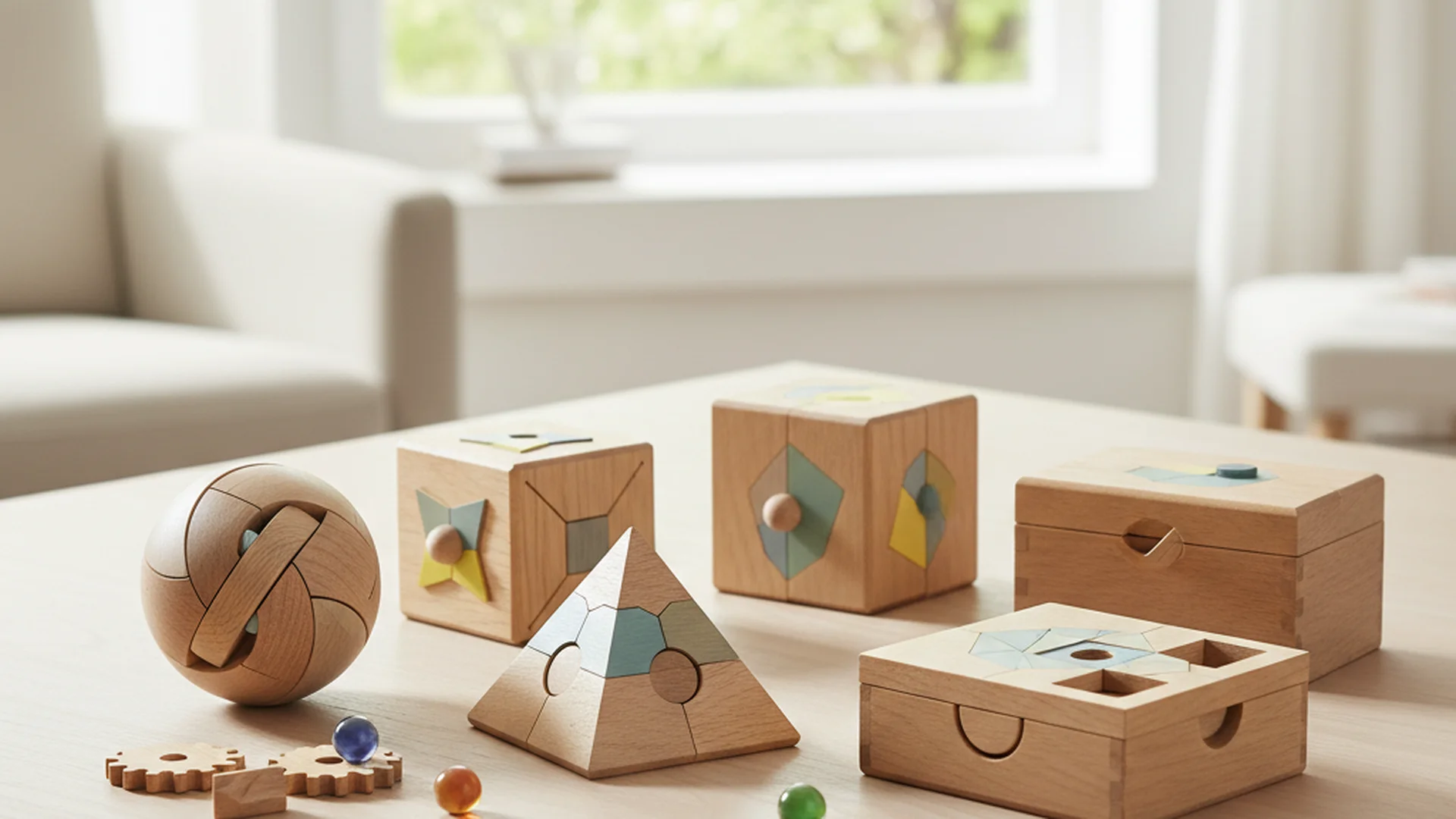
Mastering Puzzle Boxes: A Guide to Secret Compartments and Hidden Challenges
Explore the fascinating world of puzzle boxes. Learn their history, expert solving techniques, and why these secret compartment challenges are the ultimate brain workout.
Mar 31, 2026 12 min
Puzzle Types
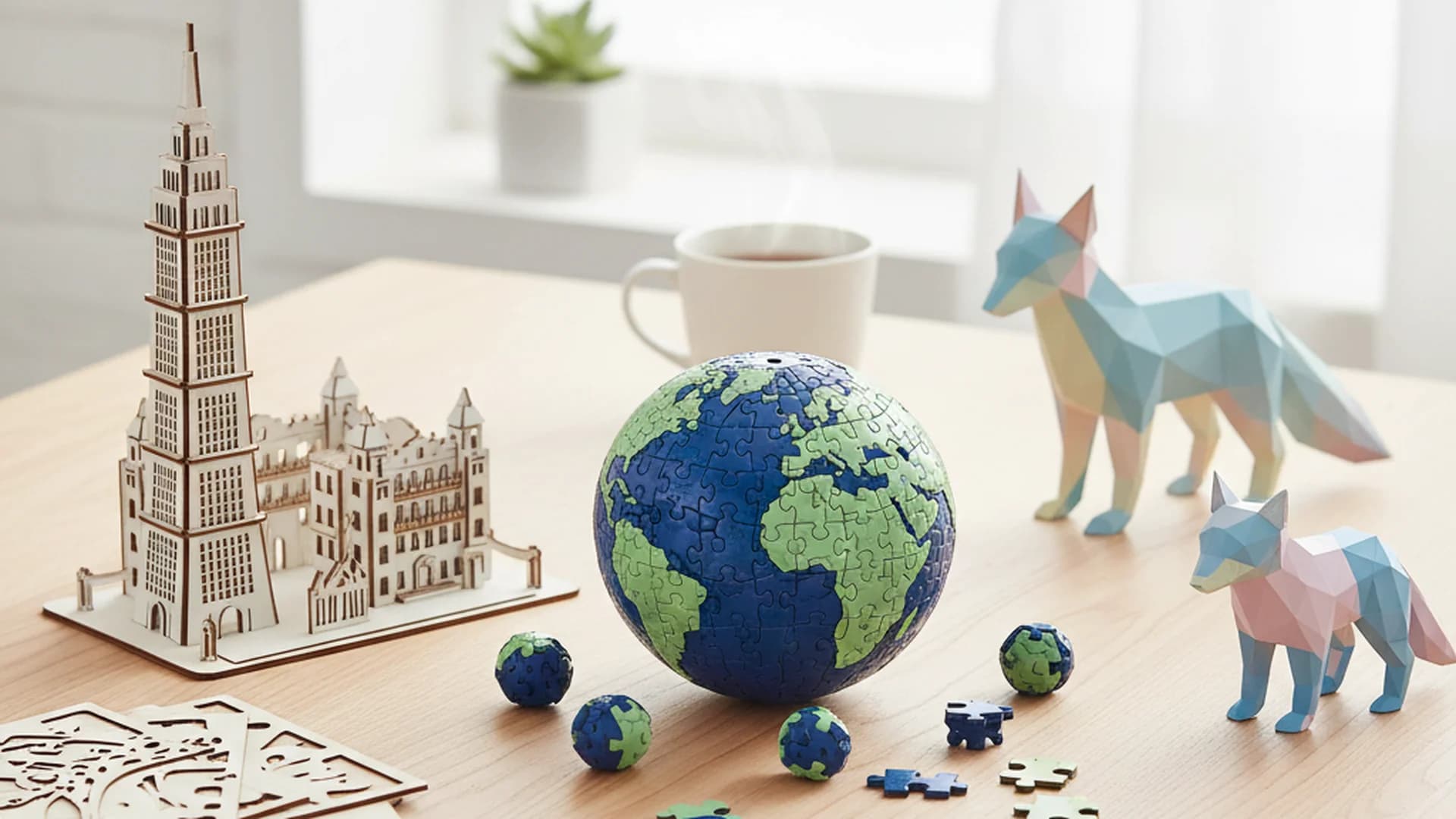
Best 3D Puzzles: Top-Rated Building Challenges for 2025-2026
Discover the best 3D puzzles of 2025-2026. From mechanical marble runs to LED architectural wonders, find the perfect challenge for your cognitive growth.
Apr 28, 2026 12 min
Puzzle Types
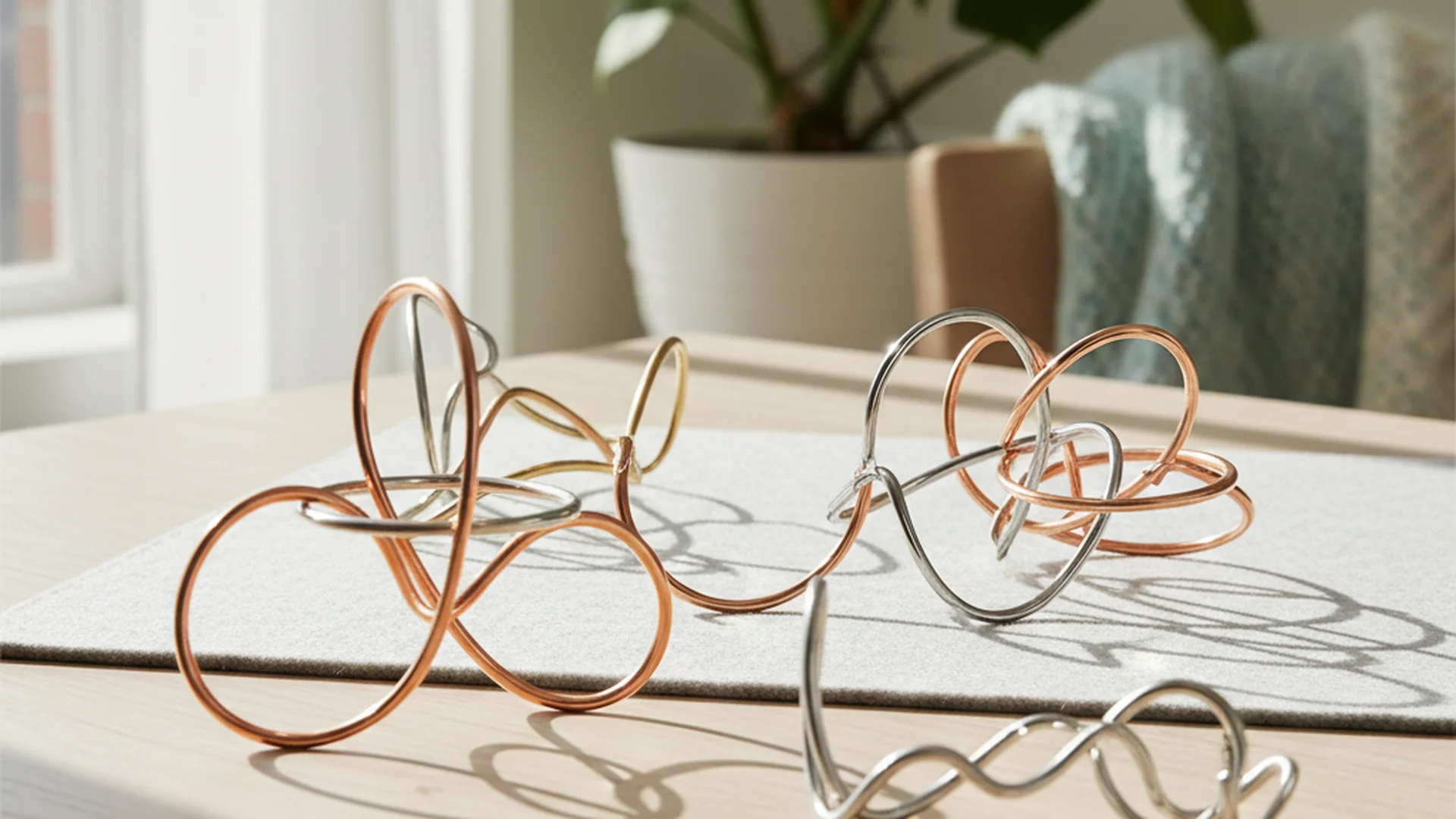
Mastering Wire Puzzles: A Guide to Disentanglement Challenges
Discover the history, math, and expert techniques behind wire puzzles. Learn how to solve complex disentanglement challenges without force using topology.
May 15, 2025 9 min
Advertisement