Puzzle Documentation Care: The Complete Guide to Progress Tracking
Learn how to master activity documentation for puzzles in senior care and hobbyist collections. Explore SOAP notes, AI trends, and cognitive progress tracking.
By Free To Play Puzzles Editorial Team 10 min read
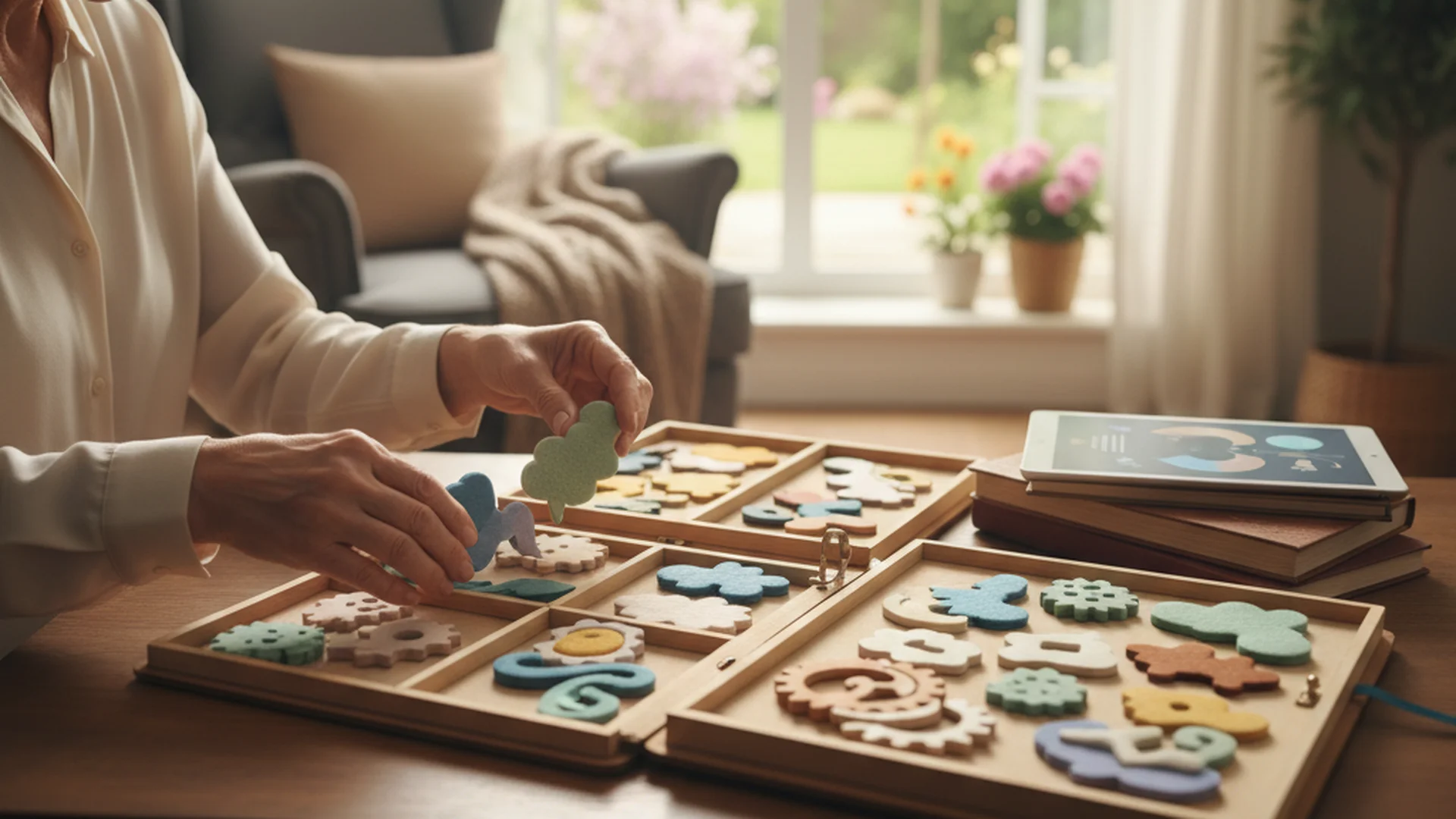
Effective activity documentation transforms a simple pastime into a powerful tool for cognitive health and personal achievement. Whether you are a clinical professional tracking a resident’s fine motor coordination or a dedicated hobbyist logging a 5,000-piece masterpiece, the way you record progress matters. In the world of senior care, these records provide the evidence needed for therapeutic interventions, while for enthusiasts, they preserve a legacy of mental agility.
As a Sudoku tournament director, I have seen firsthand how structured tracking can elevate a casual solver into a master. In clinical settings, that same structure becomes a lifeline for measuring cognitive decline or recovery. Understanding the nuances of puzzle progress notes ensures that every piece placed contributes to a larger picture of health and history.
The Science of Puzzles and Why Documentation Matters
The global puzzle market is currently experiencing a significant surge, projected to reach roughly $2.65 billion by 2026. This growth is largely driven by the "Adult" segment, as more people seek screen-free activities to support mental health. But the benefits go far beyond simple relaxation.
Research published in the Journal of the International Neuropsychological Society indicates that regular engagement in mentally stimulating activities like puzzles can delay the onset of dementia symptoms by approximately 2.5 years. This "cognitive reserve" is a critical focus in Memory Care Puzzle Activities, where the goal is to maintain quality of life for as long as possible.
In clinical trials, even medical students have shown higher post-test scores when using puzzle-based "active learning" compared to traditional methods. If puzzles can sharpen the minds of future doctors, imagine the impact they have on seniors maintaining their cognitive independence.
The Professional’s Guide: Clinical Activity Documentation
For occupational therapists, life enrichment directors, and caregivers, a puzzle is more than a game—it is a diagnostic tool. However, a common mistake is writing vague notes like "Resident enjoyed the puzzle." To provide "skilled" care, your documentation must be objective and measurable.
The SOAP Format for Puzzle Progress Notes
The SOAP format remains the gold standard for clinical documentation. Here is how to apply it to a puzzle session:
- Subjective: Record what the resident says. (e.g., "Resident stated, 'These pieces are too small for my hands.'")
- Objective: Record what you observed with data. (e.g., "Resident completed a 24-piece puzzle in 15 minutes with 2 verbal cues for edge placement.")
- Assessment: Analyze the performance. (e.g., "Resident demonstrated improved visual scanning but struggled with fine motor coordination due to arthritis flare-up.")
- Plan: Determine the next steps. (e.g., "Continue with 24-piece puzzles; introduce puzzles with larger 'easy-grip' pieces next session.")
The "Just Right" Challenge
When documenting, always note the level of challenge. If a resident completes a puzzle too quickly, they may become bored; if it is too hard, they may become frustrated and withdraw. Aim for the level where the user succeeds with minimal cueing. Documenting these thresholds helps the entire care team adjust the Care Home Activity Director Guide to meet individual needs.
Advertisement
The Hobbyist’s Toolkit: Tracking Your Puzzling Journey
For enthusiasts, documentation is about collection management and personal bests. As the market shifts toward high-quality, collectible sets, keeping a "stash" log is essential.
Digital Collection Management
Many hobbyists now use dedicated apps like Puzzle Tracker to maintain a digital log. This allows you to:
- Scan Barcodes: Quickly add new purchases to your inventory.
- Time Completion: Record how many hours a specific brand or piece count takes you.
- Wishlist Management: Prevent duplicate purchases when browsing sales.
Preservation as Documentation
Documenting a "win" often involves more than just a note; it involves the physical preservation of the puzzle. There is a common debate: glue or tape? Experts recommend specialized puzzle tape for a mess-free experience, but high-gloss glue is preferred if you intend to display the puzzle as "art documentation" in a UV-resistant frame to prevent fading.
2026 Innovations: AI and Smart Puzzles
The landscape of activity documentation is changing rapidly as we move into 2026. Technology is now bridging the gap between manual notes and automated data.
- AI-Automated Documentation: Tools like Supanote and Freed AI are being integrated into healthcare settings. These AI listeners can observe a therapy session and automatically generate a structured SOAP note, reducing administrative burnout by up to 20%.
- Smart Puzzles (AwarePuzzles): We are seeing the rise of "Smart Boards" with built-in sensors. These boards track exactly how long it takes to find a piece and the "error rate" (how many times a piece was tried in the wrong spot). This data is sent directly to a caregiver's phone to alert them of sudden changes in cognitive performance.
- AR Integration: Augmented Reality now allows users to turn personal family photos into digital puzzles. Once completed, a tracking code can be scanned to reveal a hidden video message or animation, creating a layered documentation of family memories.
Common Mistakes to Avoid
Even seasoned professionals can fall into documentation traps. Avoid these pitfalls to ensure your records are accurate and useful.
- The "Copy-Paste" Trap: Using the exact same note for every session. Repetitive notes can look like a lack of engagement. Each session should reflect a unique breakthrough or a specific struggle.
- Labeling vs. Describing: Avoid writing "The resident was frustrated" (a label). Instead, write "The resident pushed the pieces away after 5 minutes of unsuccessful edge matching" (an observation).
- Over-Documenting Minor Details: You don't need to record what the resident was wearing or what the weather was like unless it directly impacted their performance (e.g., "Low light from the storm hindered visual scanning").
- Misconception of Prevention: It is a common myth that puzzles "prevent" dementia. While they are a vital part of Puzzle Benefits, they actually delay the onset of symptoms and improve quality of life. Accurate documentation should reflect "maintenance of skills" rather than "curing" a condition.
Advertisement
Real-World Examples of Documentation Impact
Case Study 1: The Memory Care Breakthrough
In a high-end memory care facility, a resident stopped participating in group activities. By reviewing her puzzle progress notes, the activity director realized her completion time for 50-piece puzzles had doubled over a month. This led to a medical review that caught a minor urinary tract infection (UTI)—which often causes sudden cognitive dips in seniors—before it became a crisis.
Case Study 2: The Collector’s Insurance Claim
A hobbyist with over 400 vintage puzzles used a digital tracking app to document his collection. When a pipe burst in his basement, his detailed log—complete with photos and purchase dates—allowed for a seamless insurance claim, proving the value of his "stash" was over $10,000.
Case Study 3: The Student’s Logic Leap
Using Logic Puzzles in a classroom setting, a teacher documented the "aha!" moments of her students. By tracking which students struggled with "deductive versus inductive" reasoning in their logs, she was able to tailor her math curriculum, leading to a 15% increase in standardized test scores.
Frequently Asked Questions
How do I make a puzzle activity "countable" for therapy?
To make it a "skilled" note, focus on the components of the task. Document the level of assistance required (verbal cues, tactile cues), the specific skills addressed (visual scanning, pincer grasp), and how these relate to the patient’s functional goals.
What is the best format for progress notes?
The SOAP (Subjective, Objective, Assessment, Plan) format is the industry standard for clinical settings. For hobbyists, a simple log of Brand, Piece Count, and Completion Time is usually sufficient.
Should I glue or tape my finished puzzles?
If you want to document your win for long-term display, use glue for a permanent bond. For those who want a quicker, less messy way to flip and secure a puzzle for storage, puzzle tape is the better option.
Can puzzles actually improve my brain health?
Yes. Engaging in puzzles supports "active learning" and Cognitive Benefits like improved memory and spatial reasoning. While they don't prevent dementia entirely, they are proven to delay symptoms significantly.
Conclusion
Documentation is the bridge between a fleeting moment of success and a permanent record of progress. By utilizing structured formats like SOAP notes and embracing 2026's AI and AR innovations, we can better understand the profound impact puzzles have on our brains. Whether you are preserving a senior's cognitive dignity or cataloging your own puzzling achievements, remember that every note you take is a piece of a much larger story.
Ready to Level Up?
Discover more ways to sharpen your mind and track your progress today.
Put it into practice
Keep reading
Senior Care
Unlocking the Past: The Ultimate Guide to Reminiscence Puzzles for Seniors
Discover how reminiscence puzzles and memory recall activities improve cognitive health, reduce depression, and strengthen bonds in senior care.
Apr 6, 2026 12 min
Senior Care
The Power of the Piece: How Puzzles are Revolutionizing Memory Care in 2025
Discover how memory care activities and dementia puzzles reduce risk and delay cognitive decline. Explore 2025 trends like AI games and sensory puzzles.
Apr 4, 2026 12 min
Senior Care
Adapting for Sight: Engaging in Low Vision Puzzle Activities for Cognitive Health
Explore how to adapt low vision puzzles for seniors. Discover 2025's best tactile aids, digital apps, and expert tips to keep the mind sharp.
Jan 10, 2026 12 min
Advertisement