The Power of the Piece: How Puzzles are Revolutionizing Memory Care in 2025
Discover how memory care activities and dementia puzzles reduce risk and delay cognitive decline. Explore 2025 trends like AI games and sensory puzzles.
By Free To Play Puzzles Editorial Team 12 min read
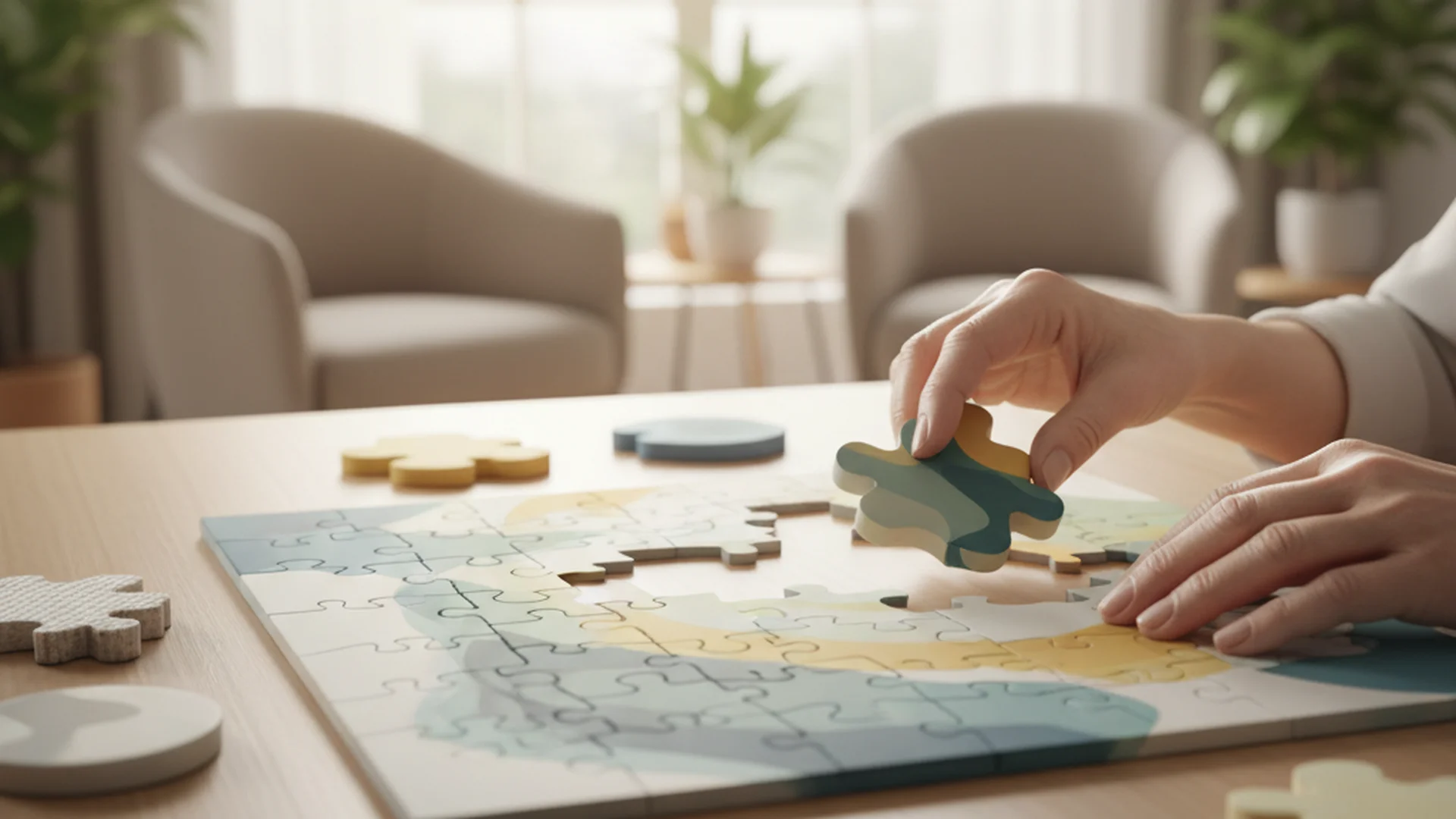
In the world of neurological health, few interventions are as accessible, affordable, and effective as the humble jigsaw puzzle or the morning crossword. As we move through 2025, memory care activities have shifted from simple pastimes to vital, non-pharmacological interventions that directly impact the quality of life for those living with cognitive impairment.
Research from the Bronx Aging Study—a cornerstone of modern geriatric data cited heavily in 2024 and 2025 reports—indicates that regular engagement with puzzles can delay the onset of memory decline by 2.54 years in individuals who eventually develop dementia. This "cognitive reserve" isn't just a clinical statistic; it represents nearly a thousand days of extra clarity, connection, and independence. For families and professional caregivers, understanding how to implement cognitive benefits through structured play is no longer optional—it is essential.
The Science of the Brain: Why Puzzles Work
To understand why dementia puzzles activities are so effective, we must look at the neurobiology of the aging brain. When a senior engages with a puzzle, they aren't just "killing time." They are engaging in a complex neurological workout that promotes two critical processes: neuroplasticity and dopamine release.
Neuroplasticity and Connectivity
Neuroplasticity is the brain’s ability to reorganize itself by forming new neural connections throughout life. While dementia involves the degradation of certain pathways, solving a puzzle forces the brain to find "detours." When a senior searches for a specific shape or color, they are exercising their visual-spatial reasoning and short-term memory simultaneously.
The Dopamine Reward System
As a Sudoku tournament director, I have seen firsthand the "aha!" moment when a player finds a missing number. That moment triggers the release of dopamine, a neurotransmitter that regulates mood, motivation, and concentration. In a memory care setting, where residents may often feel frustrated or confused, these small wins provide a much-needed emotional lift.
A 2023 study published in JAMA Network Open found that participating in adult literacy activities, including puzzles, card games, and chess, can reduce dementia risk in adults over 70 by up to 11%. This highlights that the brain, much like a muscle, requires consistent resistance training to stay resilient.
Choosing the Right Fit: Puzzles by Stage
One of the most common mistakes in senior care is providing a "one-size-fits-all" activity. To ensure success, activities must be tailored to the individual’s current cognitive stage.
Early Stage: Maintaining Complexity
In the early stages of dementia, the goal is to keep the brain challenged. Individuals can often still handle standard puzzles that require high-level logic.
- Recommended: 500-piece jigsaw puzzles, standard crosswords, and traditional Sudoku.
- Benefit: These tasks reinforce complex problem-solving skills and help maintain fine motor control.
Middle Stage: Simplifying and Focusing
During the middle stage, visual-spatial awareness and short-term memory begin to fluctuate. The focus shifts from "challenge" to "engagement."
- Recommended: 35–100 piece jigsaws with large, easy-to-grip pieces. Word searches with large fonts and simple matching games are also highly effective.
- Benefit: Reduces frustration while still providing the dopamine hit of completion.
Late Stage: Reminiscence and Sensory Play
In late-stage memory care, the objective is sensory stimulation and emotional comfort rather than "solving" a problem.
- Recommended: 5–13 piece "reminiscence" puzzles. These should feature high-contrast colors and familiar images (e.g., a vintage car or a common garden bird).
- Benefit: Triggers long-term memory recall and provides tactile stimulation.
| Stage | Puzzle Type | Piece Count / Level | Primary Goal |
|---|---|---|---|
| Early | Jigsaw/Sudoku | 500 pcs / Medium | Neuroplasticity |
| Middle | Large Piece | 35-100 pcs / Simple | Engagement |
| Late | Reminiscence | 5-13 pcs / Familiar | Sensory/Recall |
Advertisement
The High-Tech Horizon: Trends for 2025 and 2026
We are currently witnessing a technological revolution in memory care activities. While physical puzzles remain a staple, new digital and sensory tools are augmenting the experience.
AI-Driven Adaptive Games
2025 has seen the rise of AI-powered cognitive platforms, such as myEZCare or Neu Health. These platforms use tablets to monitor a user’s engagement in real-time. If a senior is struggling with a sliding puzzle, the AI subtly highlights the next move or reduces the difficulty. This keeps the resident in a "flow state," preventing the agitation that comes with tasks that are too difficult.
Sensory-Integrated Puzzles
A major trend in 2025 is the "Sensory Jigsaw" subscription box. These are physical puzzles where the pieces have different textures—such as faux fur, rough wood, or smooth silk—or even light scents like lavender and cinnamon. This multisensory approach is particularly effective for those who may have declining vision, as it allows them to "solve" the puzzle through touch and smell.
Immersive VR Puzzles
High-end memory care facilities are now utilizing Virtual Reality (VR) to allow residents to "walk through" and assemble 3D puzzles of historic landmarks. This combines physical movement (reaching and grabbing in a 3D space) with cognitive exercise, offering a level of immersion that traditional puzzles cannot match.
"AllTech" Integration in 2026
Looking forward to 2026, the industry is moving toward "AllTech" integration. Rather than using specialized "senior-only" devices that can feel stigmatizing, caregivers are using standard consumer tablets with "supportive overlays." This allows a grandmother to play a word search on the same type of device her grandson uses, fostering a sense of connection and modernity.
Caregiver Pro-Tips: Best Practices for Success
Implementation is just as important as the activity itself. As an instructor, I always emphasize that the process is more valuable than the result.
1. Avoid "Infantilization"
Experts strongly recommend using puzzles with adult themes. A 24-piece puzzle featuring a cartoon bunny can feel degrading to a 80-year-old former engineer. Instead, choose puzzles featuring classic cars, landscapes, or gardening. Preserving dignity is a core component of effective Care Home Activity Director Guide.
2. The "Personalization" Rule
Custom puzzles are a game-changer. Using services to create jigsaws from family photographs or favorite travel destinations is significantly more effective at triggering long-term memory. Seeing a familiar face or a childhood home can spark a "no-fail" conversation, allowing family members to interact without the pressure of direct questioning.
3. Scaffolding Success
Start with a puzzle that is slightly easier than you think they can handle. This builds confidence. Once they succeed, the dopamine release will motivate them to try something more challenging. If you start too hard, they may shut down and refuse to try again.
4. Create the Right Environment
Conduct puzzle activities in a calm, well-lit corner with minimal background noise. Cluttered or loud environments can lead to "visual overstimulation," causing the senior to give up or become agitated.
Common Mistakes to Avoid
Even with the best intentions, caregivers can fall into traps that make memory care activities less effective.
- The "Cure" Myth: A major misconception is that puzzles can prevent or cure dementia. While they are powerful tools for delaying symptoms and improving quality of life, they do not stop the underlying disease progression. Manage expectations accordingly.
- Ignoring Physical Limitations: If a senior seems to be "losing interest," check for physical barriers. Arthritis may make small pieces painful to hold, or declining vision may make it impossible to see the lines. Switching to magnetic puzzles or large-print word logic games can often solve this.
- Overlooking "Life Skill Puzzles": Don't limit yourself to boxed games. Matching socks, sorting laundry by color, or organizing a toolbox are "life skill puzzles" that engage the same cognitive pathways as a jigsaw.
Advertisement
Frequently Asked Questions
What types of puzzles are best for different stages?
In the early stage, 500-piece jigsaws and standard crosswords are ideal. The middle stage requires 35–100 piece jigsaws with large pieces and word searches. Late-stage residents benefit most from 5–13 piece "reminiscence" puzzles with familiar, high-contrast images.
How do puzzles help with agitation?
Puzzles provide a focused, meditative task that can distract from the stressors of confusion and memory loss. The rhythmic nature of the activity can lower heart rates and provide a sense of control and accomplishment.
Is digital better than physical?
Both have unique benefits. Physical puzzles provide tactile stimulation and help with fine motor skills. Digital puzzles on tablets offer adaptive difficulty (AI assistance) and are often easier to see due to backlighting and glare-reduction features.
Can puzzles actually bond families?
Yes. Collaborative puzzling creates a "no-fail" environment. It allows family members to sit together and interact without the pressure of direct conversation. Focusing on the puzzle can make the time spent together feel more natural and less focused on the illness.
What should I do if my loved one refuses to play?
Don't force it. Try "scaffolding"—start the puzzle yourself and leave just two or three easy pieces for them to "help" you with. Often, once they see the progress, they will feel invited to participate.
Conclusion: It’s About the Connection
At the end of the day, memory care activities are about more than just cognitive scores; they are about moments of connection. Whether it is a resident in a care home finding the last piece of a landscape puzzle or a grandfather and grandson solving a 10-minute puzzle game together, these activities bridge the gap created by memory loss.
By utilizing the latest 2025 trends—from AI-adaptive play to sensory-rich physical puzzles—we can provide seniors with the dignity, stimulation, and joy they deserve. Remember, the goal isn't just to finish the picture; it's to enjoy the process of putting it together.
Ready to Start?
Enhance cognitive health with our curated selection of brain games.
Put it into practice
Keep reading
Senior Care
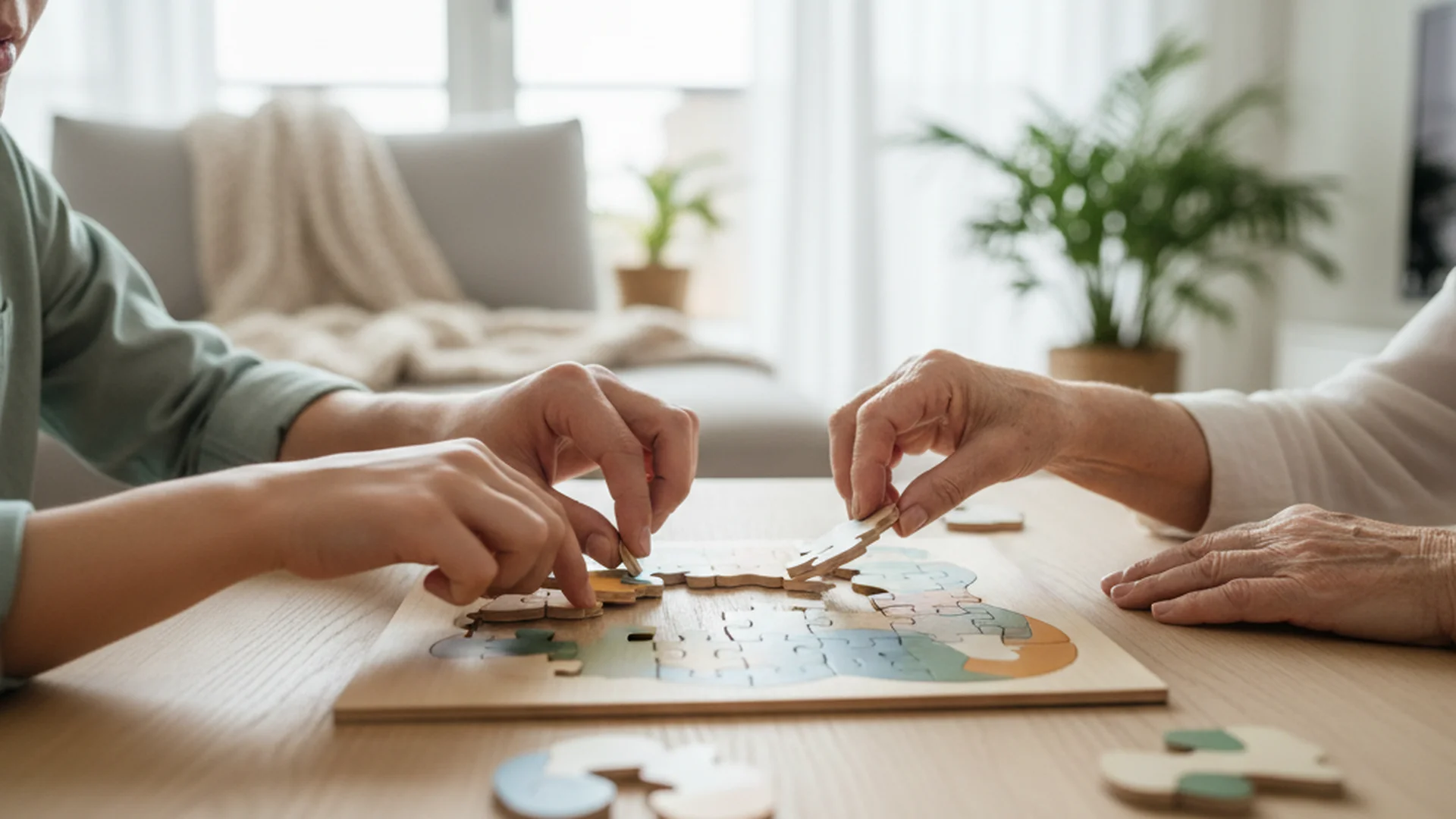
The Bridge Across Generations: Why Intergenerational Puzzles are the Ultimate Bonding Tool
Discover the cognitive and emotional benefits of intergenerational puzzles. Learn how grandparents and grandchildren can bond through shared play and modern 2026 trends.
Aug 21, 2026 12 min
Senior Care
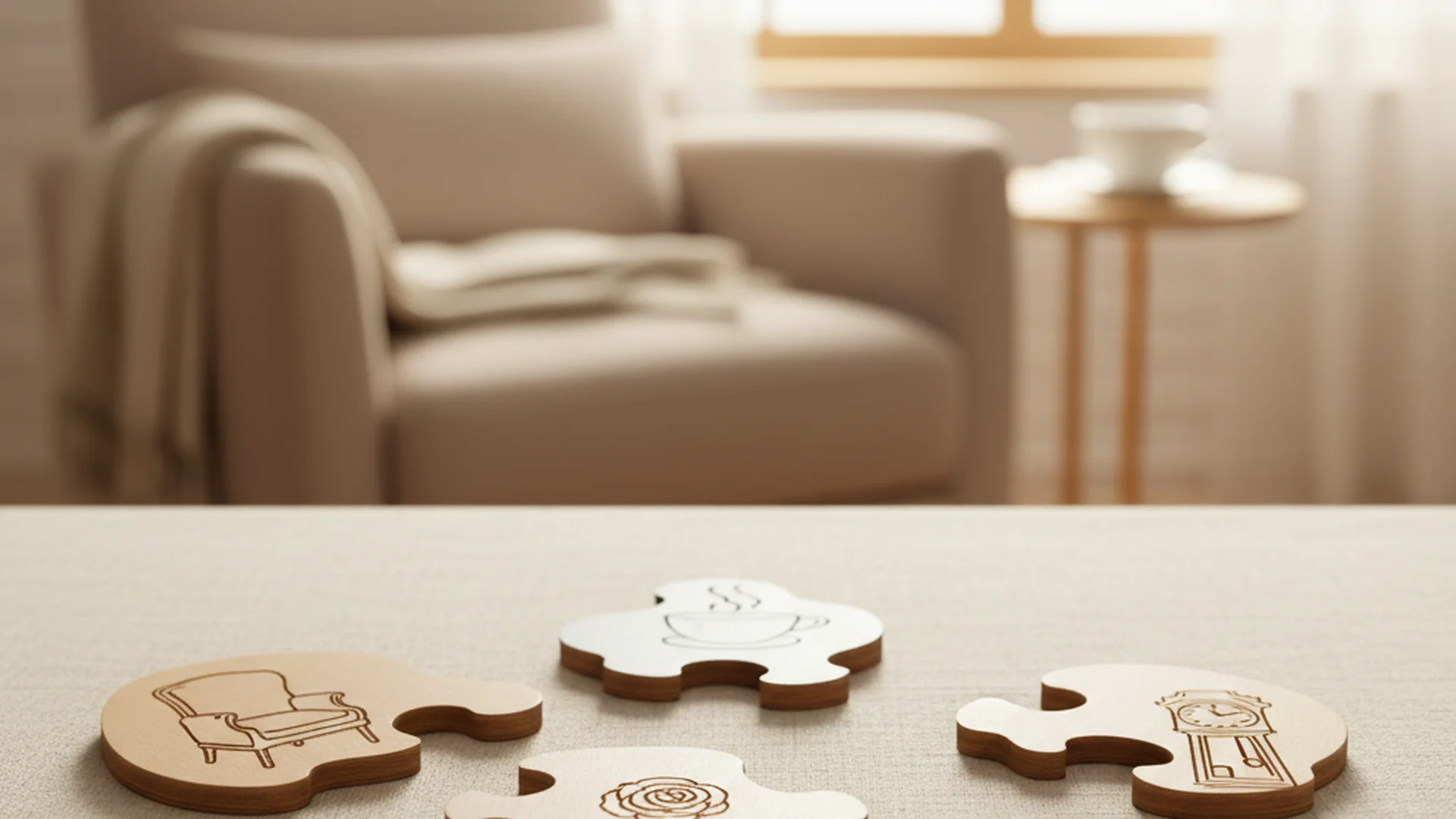
Unlocking the Past: The Ultimate Guide to Reminiscence Puzzles for Seniors
Discover how reminiscence puzzles and memory recall activities improve cognitive health, reduce depression, and strengthen bonds in senior care.
Apr 6, 2026 12 min
Senior Care
End of Life Comfort Puzzles: Cognitive and Emotional Benefits in Hospice
Discover how comfort activities like hospice puzzles improve quality of life, reduce pain, and provide cognitive grounding for patients in palliative care.
Mar 11, 2026 9 min
Advertisement