Unlocking the Past: The Ultimate Guide to Reminiscence Puzzles for Seniors
Discover how reminiscence puzzles and memory recall activities improve cognitive health, reduce depression, and strengthen bonds in senior care.
By Free To Play Puzzles Editorial Team 12 min read
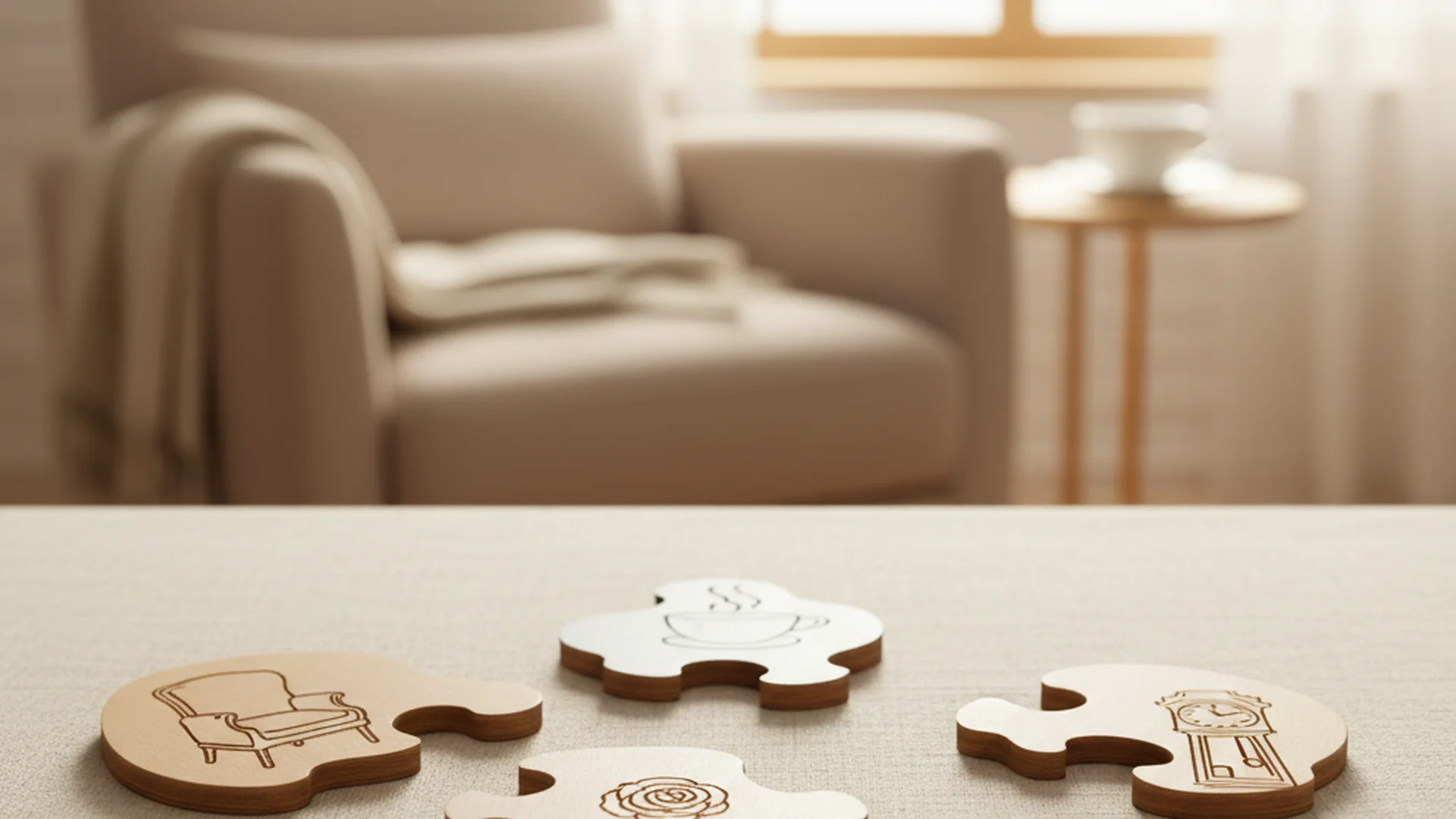
For many seniors, a single image can be a key that unlocks a treasure chest of forgotten stories. Whether it is the sleek chrome of a 1957 Chevy or the distinctive label of a vintage soup can, these visual cues are the foundation of reminiscence puzzles. Unlike standard jigsaws, these specialized memory recall activities are designed not just to challenge the brain, but to reconnect individuals with their own history. In the world of senior care, these tools are becoming essential for maintaining cognitive health and emotional well-being.
The Science of Reminiscence Therapy
The effectiveness of reminiscence puzzles is backed by rigorous clinical data. A 2025 meta-analysis published by the National Institutes of Health (NIH) found that Reminiscence Therapy (RT) significantly improved cognitive function in older adults with mild cognitive impairment (MCI). The study reported a standardized mean difference (SMD) of 1.15 to 1.56, which indicates a substantial positive impact compared to traditional care methods.
Beyond logic and spatial reasoning, these puzzles tap into "episodic memory"—the ability to remember specific events and experiences. While short-term memory often fades first in conditions like Alzheimer’s, long-term memories frequently remain intact. Reminiscence puzzles bridge this gap by providing a tangible, visual anchor for those enduring memories.
The "Autobiographical Memory Bump"
One of the most fascinating phenomena in cognitive science is the "memory bump." Research indicates that seniors, including those living with dementia, possess the strongest recall for events that occurred during their youth and early adulthood—specifically between the ages of 10 and 30.
Reminiscence puzzles are strategically designed to target this specific window. By using imagery from the 1940s, 50s, and 60s, these puzzles meet the senior where their memories are clearest. This successful recall builds confidence, reduces the "sundowning" effect, and fosters a sense of identity that can often feel lost in a care environment.
Comparing Puzzle Types: Standard vs. Reminiscence
Many caregivers make the mistake of assuming any puzzle will provide the same benefits. However, the design philosophy behind a reminiscence puzzle is fundamentally different from a standard retail jigsaw.
| Feature | Standard Jigsaw Puzzles | Reminiscence Puzzles |
|---|---|---|
| Subject Matter | Complex patterns, modern art, landscapes | Vintage ads, historical events, personal photos |
| Piece Count | 500 to 2,000+ pieces | 12 to 100 pieces (optimized for ability) |
| Finish | Often glossy (can cause glare) | Usually matte (easier for low-vision) |
| Primary Goal | Problem-solving & completion | Storytelling & emotional connection |
| Tactile Design | Small, thin pieces | Extra-large, "easy-grip" thick pieces |
Advertisement
Best Practices for Implementing Memory Recall Activities
To maximize the cognitive benefits of these activities, it is important to treat the puzzle as a medium for connection rather than a task to be finished.
1. Select High-Interest "Trigger" Imagery
The image is the most important component. If the senior was an avid gardener, a puzzle featuring vintage seed packets or a 1950s rose garden will be more effective than a generic landscape. If they were a car enthusiast, look for specific models they may have owned.
2. Prioritize Physical Accessibility
Age-related changes in vision and motor skills must be considered.
- Easy-Grip Pieces: Look for pieces that are at least 2 inches wide.
- Matte Finish: Glossy puzzles reflect overhead lighting, which can be disorienting for those with cataracts or low vision puzzle activities.
- Sturdy Materials: Wood or thick cardboard is preferable to prevent pieces from bending during use.
3. Focus on the Process, Not Completion
As a caregiver or activity director, your role is to facilitate "reminiscence spikes." Ask open-ended questions as the puzzle is being built:
- "What does this old Ford remind you of?"
- "Did your mother have a kitchen table that looked like this?"
- "Where was the first place you traveled in a car like this?"
New Trends for 2025–2026: The Future of Memory Care
The field of senior care is evolving rapidly, with technology playing a central role in how we approach memory care puzzle activities.
AI-Generated "Synthetic Memories"
A major trend highlighted by Google Arts & Culture in 2025 is the use of Generative AI to create custom puzzles. For many seniors, childhood photos have been lost to time. AI can now "recreate" a specific childhood home, a lost wedding photo, or a neighborhood park based on the senior’s verbal descriptions. These "synthetic memories" provide a personalized puzzle experience that was previously impossible.
AR-Enhanced Puzzles
Augmented Reality (AR) is bridging the gap between physical and digital play. When viewed through a tablet or smart glasses, specific puzzle pieces can "come to life." For example, placing a piece showing a 1940s radio might trigger the tablet to play a clip of a famous wartime broadcast. This multi-sensory approach doubles the neural pathways being activated, enhancing the cognitive benefits.
Smart Progress Tracking
New "smart puzzles" entering the market in 2026 feature digital overlays. These allow caregivers to track "struggle points"—specific areas where a senior may be having difficulty with spatial orientation. This data provides objective insights into a senior’s cognitive decline or improvement over time, allowing for more personalized care plans.
Common Mistakes to Avoid
Even with the best intentions, caregivers often fall into traps that can make the activity stressful rather than therapeutic.
The "Accuracy Trap"
One of the most common mistakes is correcting a senior when they misidentify a person or place in a puzzle. If they look at a picture of a 1950s diner and insist it was the place where they had their wedding rehearsal (even if it wasn't), do not correct them. The goal of reminiscence is emotional confidence, not factual accuracy. Correcting them can lead to withdrawal or "catastrophic reactions" (sudden distress).
The "Generalized Memory" Myth
It is a misconception that doing puzzles will automatically make a senior better at all memory tasks, such as remembering to take their medication. In reality, puzzles show "limited generalization." They are excellent for spatial reasoning and mood elevation, but they are not a "cure" for everyday functional memory loss.
Treating it as a Solo Activity
While puzzles can be used to "keep someone busy," the greatest gains come from group puzzle activities for seniors. A study found that group sessions with more than six participants, held for 30–45 minutes, were significantly more effective at reducing depressive symptoms than solo play.
Advertisement
Frequently Asked Questions
What is the difference between a standard puzzle and a reminiscence puzzle?
Standard puzzles often focus on complex patterns or modern landscapes that may feel foreign or frustrating to a senior. Reminiscence puzzles use "trigger images" like vintage advertisements, classic cars, or historical landmarks specifically chosen to unlock autobiographical memories from the senior's youth.
How many pieces should a memory puzzle have?
The piece count should match the individual's cognitive and motor abilities. For those with moderate to late-stage dementia, 12 to 36 pieces are ideal. For early-stage dementia or mild cognitive impairment, 60 to 100 pieces provide a healthy level of challenge without causing undue stress.
Can puzzles actually slow down dementia?
While puzzles cannot cure or stop the biological progression of dementia, regular mental stimulation helps build a "cognitive reserve." This reserve can delay the onset of more severe symptoms and improve the senior's ability to perform daily functions for a longer period.
Should I correct my loved one if they misidentify a person or place in the puzzle?
Generally, no. The therapeutic goal of the activity is emotional connection and the joy of storytelling. Correcting their "facts" can cause embarrassment, agitation, or a refusal to continue the activity. Always validate their feelings over the historical facts.
Conclusion
Reminiscence puzzles are more than just a pastime; they are a bridge to the past and a tool for a brighter, more connected present. By selecting the right imagery, focusing on the social process, and avoiding the "accuracy trap," caregivers can significantly improve the quality of life for the seniors in their care. As we move into 2026, the integration of AI and AR will only make these tools more personal and powerful.
Whether you are a professional in a care home or a family member at home, incorporating these memory recall activities into a weekly routine can transform a quiet afternoon into a vibrant session of storytelling and laughter.
Explore Memory Care Puzzles
Enhance your loved one's quality of life through cognitive stimulation.
Put it into practice
Keep reading
Senior Care
The Bridge Across Generations: Why Intergenerational Puzzles are the Ultimate Bonding Tool
Discover the cognitive and emotional benefits of intergenerational puzzles. Learn how grandparents and grandchildren can bond through shared play and modern 2026 trends.
Aug 21, 2026 12 min
Senior Care
The Power of the Piece: How Puzzles are Revolutionizing Memory Care in 2025
Discover how memory care activities and dementia puzzles reduce risk and delay cognitive decline. Explore 2025 trends like AI games and sensory puzzles.
Apr 4, 2026 12 min
Senior Care
End of Life Comfort Puzzles: Cognitive and Emotional Benefits in Hospice
Discover how comfort activities like hospice puzzles improve quality of life, reduce pain, and provide cognitive grounding for patients in palliative care.
Mar 11, 2026 9 min
Advertisement