Free vs Paid Brain Games: Is a Premium Subscription Worth Your Cognitive Capital?
Explore the 2025 landscape of free vs paid brain games. Discover if premium apps like Lumosity and Elevate offer real cognitive benefits or just better gameplay.
By Free To Play Puzzles Editorial Team 12 min read
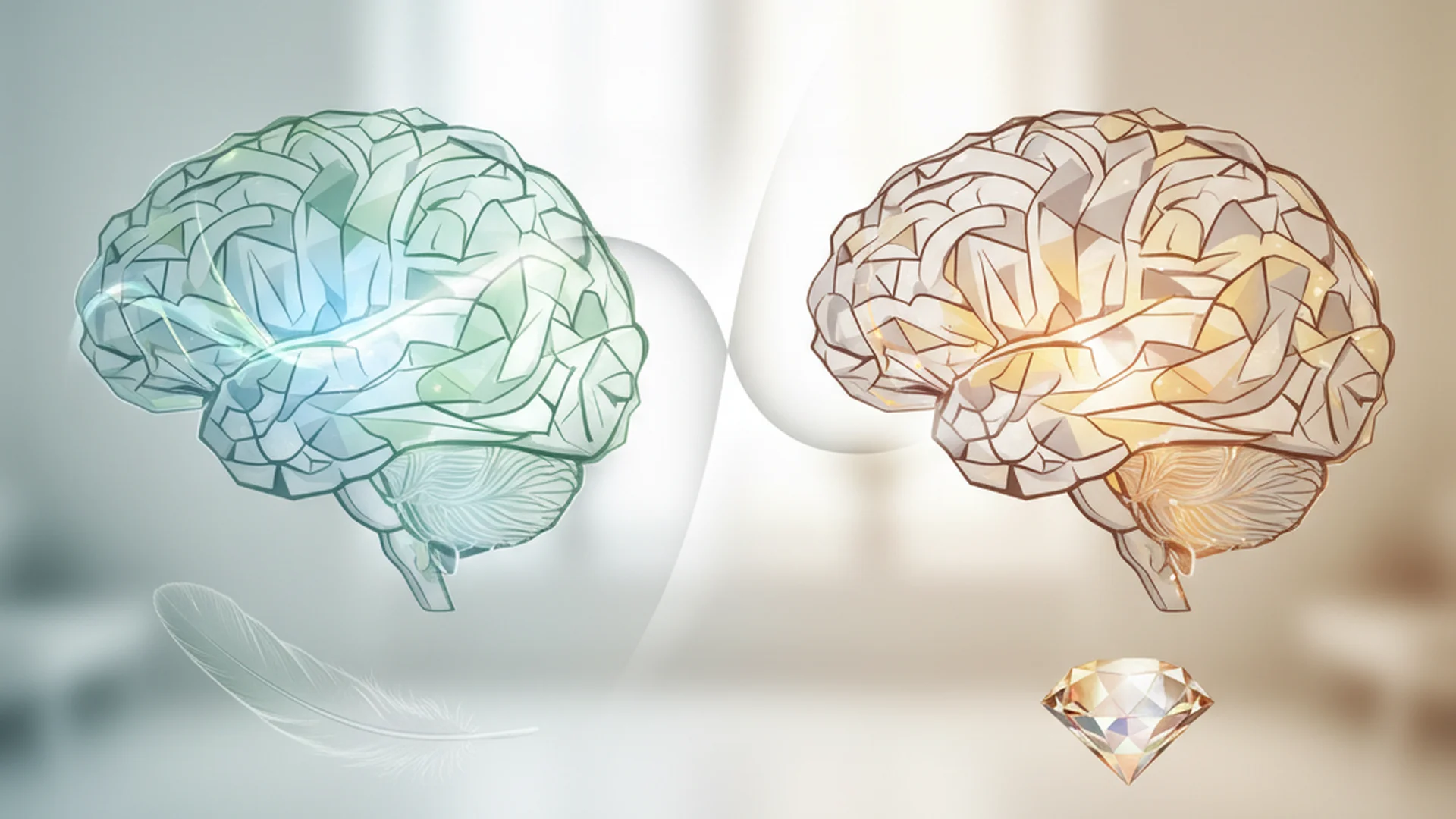
In my years as a Mathematical Logic Instructor and Sudoku Tournament Director, I have witnessed a fascinating evolution in how we approach mental fitness. A decade ago, a "brain workout" meant a newspaper crossword or a handheld Sudoku book. Today, the landscape is dominated by sophisticated digital ecosystems. As we navigate the 2025–2026 market, which is valued at a staggering $9.76 billion, the most common question I receive from students and seniors alike is: "Is it worth paying for these apps?"
The debate over free vs paid brain games isn't just about saving money; it’s about understanding the "cognitive capital" you are investing. Are you paying for a prettier interface, or are you paying for a scientifically validated path to a sharper mind? With the market projected to reach nearly $40 billion by 2033, the marketing claims are becoming bolder, making it harder to separate neuro-hype from neuro-reality.
The Modern Landscape: Brain Training in 2025 and 2026
The brain training industry has moved far beyond simple memory matching games. In 2025, we are seeing a significant shift toward AI-Driven Personalization. Modern apps no longer just give you a "daily workout"; they use adaptive AI to monitor your biometric data—such as response latency and error patterns—to adjust difficulty in real-time.
Furthermore, the integration with wearables has changed the stakes. Many premium apps now sync with Oura rings or Apple Watches. They analyze how your last night's REM sleep or your current stress levels should influence your "Brain Score." This level of data integration is almost exclusively reserved for paid tiers.
However, a new trend is emerging: the "Second Brain" shift. Many users are moving away from purely "training" their brains and are instead "offloading" memory to Personal Knowledge Management (PKM) systems like Notion or Obsidian. This highlights a critical question: should you pay to train your internal memory, or should you invest in tools that act as an external hard drive for your mind?
The Science of "Transfer Effects"
The core selling point of any brain app is the promise that playing the game will make you better at life. Scientists call this the "transfer effect."
A landmark 2024 study published in The Lancet Psychiatry provided a sobering reality check. The researchers found that while users improve significantly at the specific games they play—essentially getting better at "the app"—there is limited evidence that these gains translate to broader real-world cognitive improvements, such as remembering where you left your keys or making faster executive decisions at work.
General Intelligence vs. Fluid Intelligence
It is important to distinguish between "General Intelligence" (the G-factor) and "Fluid Intelligence."
- General Intelligence: This is your broad cognitive ability, which most neurologists agree brain games cannot significantly raise.
- Fluid Intelligence: This involves processing speed, short-term memory, and problem-solving. Brain apps can sharpen these specific tasks.
Advertisement
Free vs Paid Brain Games: What are You Buying?
When comparing free vs paid brain games, the difference rarely lies in the underlying cognitive science. Instead, the "premium" price tag usually covers three specific areas: Variety, Analytics, and Engagement.
The Freemium Reality
Currently, the freemium model holds a 45.24% market share. Most apps allow you to play 3 games per day for free. For many casual users, this is actually the ideal dosage.
The Premium Value Proposition
Paid versions typically unlock:
- Specialized Domains: Access to 40+ games instead of a rotating set of 3.
- Performance Analytics: Deep dives into your percentile rankings against other users in your age group.
- Adaptive Learning: AI that keeps you in the "flow state"—challenging enough to prevent boredom, but not so hard that you quit.
| App | Free Version Features | Paid Version (Worth It?) |
|---|---|---|
| Lumosity | 3 games per day (randomly selected). | Yes, if you want deep performance analytics and access to 40+ specialized games. |
| Elevate | 3 games per day, basic tracking. | Yes, for professionals. Unlocks "Study Materials" and competitive "Leagues." |
| Peak | Random workouts, basic stats. | Maybe. The "Coach" feature is great for motivation, but the games remain similar to the free ones. |
Real-World Examples of Brain App Usage
To better understand whether premium brain apps are worth the cost, let's look at three common user profiles in 2025.
Example 1: The Corporate Professional
User: Sarah, 34, Marketing Director. Sarah uses Elevate. She found that the free version's three games weren't enough to cover her specific needs in communication and writing. By paying for the premium version, she gained access to "Study Materials" that focus on brevity and clarity in writing. For her, the $40/year investment is a professional development tool, not just a game.
Example 2: The Logic Enthusiast
User: David, 52, Engineer. David sticks to free versions and supplements them with Logic Puzzles. He recognizes that once he "masters" a digital game, the cognitive benefit plateaus. Instead of paying for more games, he rotates through several free apps to keep his brain from getting too comfortable with any one interface.
Example 3: The Immersive Learner
User: James, 28, Athlete. James uses NeuroTracker, a VR-based system. He pays a high premium for a 3D environment that trains situational awareness. Unlike a standard 2D mobile game, the VR environment mimics the multitasking required in high-speed sports, representing a case where the paid version offers a fundamentally different cognitive experience.
Common Mistakes to Avoid
In the pursuit of a sharper mind, many users fall into traps that waste both time and money.
- Replacing Physical Exercise with Apps:
- Binge-Playing: Cognitive fatigue usually sets in after 20 minutes. Playing for two hours straight won't make you "smarter"; it will likely just lead to digital eye strain and diminished returns.
- The Plateau Trap: Once you reach a high score and stay there, your brain is no longer working hard. You are simply using muscle memory. At this point, even if you’ve paid for the app, it’s time to switch to a new challenge, like learning a new language.
- Believing "Medical Validation" Claims: Most apps use the term "medically validated" to refer to the general theory of neuroplasticity, not their specific app's ability to cure or prevent Alzheimer’s.
Advertisement
Expert Recommendations: The "Rule of Three"
As a director of competitive logic tournaments, I advocate for a holistic approach. I call this the Rule of Three. To maintain peak cognitive health, you should combine:
- Digital Training: (Free or paid apps) for 15 minutes a day to sharpen processing speed.
- Physical Exercise: To increase blood flow and oxygen to the brain.
- Social/Tactile Challenges: Engaging in Social Activities or learning a musical instrument, which offer much higher "transfer effects" than isolated screen time.
Frequently Asked Questions
Is the paid version really more effective than the free one?
Research suggests no significant difference in actual cognitive gain between free and paid versions. The primary difference is the user experience. Paid versions offer more variety, which can help prevent the "plateau effect," and better tracking, which can keep you motivated. However, the "brain-building" mechanism is identical in both.
How long do I need to use these apps to see results?
Most experts, supported by current research, recommend 8–12 weeks of consistent use. This typically means 15–20 minutes, 3–5 times a week. Improvements are usually seen first in your game-specific scores, while real-world "clarity" may take longer to perceive.
Can these apps raise my IQ?
The short answer is no. Most neurologists agree that brain games do not increase "General Intelligence" (the G-factor). They do, however, improve "Fluid Intelligence" tasks, such as how quickly you can process information or how much you can hold in your short-term memory.
Are there free alternatives that work better?
Yes. Learning a musical instrument, a new language, or engaging in aerobic exercise often shows higher "transfer effects" than digital games. Additionally, traditional Brain Training through Memory Games and complex Logic Puzzles can be just as effective as paid apps.
Do these apps prevent dementia or Alzheimer’s?
According to the National Institutes of Health (NIH) and the Mayo Clinic, there is no definitive proof that brain training apps can prevent or reverse Alzheimer’s or dementia. While staying mentally active is a "protective factor," these apps are not a medical cure.
Conclusion: Making the Choice
When deciding between free vs paid brain games, the answer depends on your goals. If you are a casual user looking for a morning "brain wake-up," the free versions of Lumosity or Peak are more than sufficient. You get the cognitive benefits of stimulation without the monthly bill.
However, if you are a professional looking to sharpen specific communication skills (Elevate) or an individual who needs the motivation of deep data and "coaching" (Peak Pro), a subscription may be worth the premium. Just remember that no app is a magic pill. The best results come from a diverse mental diet that includes physical movement, social connection, and the occasional 15-minute puzzle challenge.
Explore the Science
Discover more about how different activities affect your mind.
Put it into practice


Keep reading
Comparisons
Logic vs Memory Puzzles: Which Is Better for Your Brain Health?
Explore the neuroscientific differences between logic vs memory puzzles. Learn how reasoning and recall games impact cognitive reserve and dementia delay.
Oct 15, 2026 12 min
Comparisons
Puzzles vs Language Learning: Which Is Better for Your Brain Health?
Explore the ultimate brain training comparison: puzzles vs languages. Discover which activity offers the best protection against cognitive decline and dementia.
Mar 18, 2026 12 min

Comparisons
Puzzles vs Reading: Which Is the Ultimate Workout for Your Brain?
Compare the cognitive benefits of puzzles vs reading. Discover how crosswords and books impact memory, stress, and dementia risk based on 2025 research.
Feb 20, 2026 12 min
Advertisement