Puzzles vs Reading: Which Is the Ultimate Workout for Your Brain?
Compare the cognitive benefits of puzzles vs reading. Discover how crosswords and books impact memory, stress, and dementia risk based on 2025 research.
By Free To Play Puzzles Editorial Team 12 min read
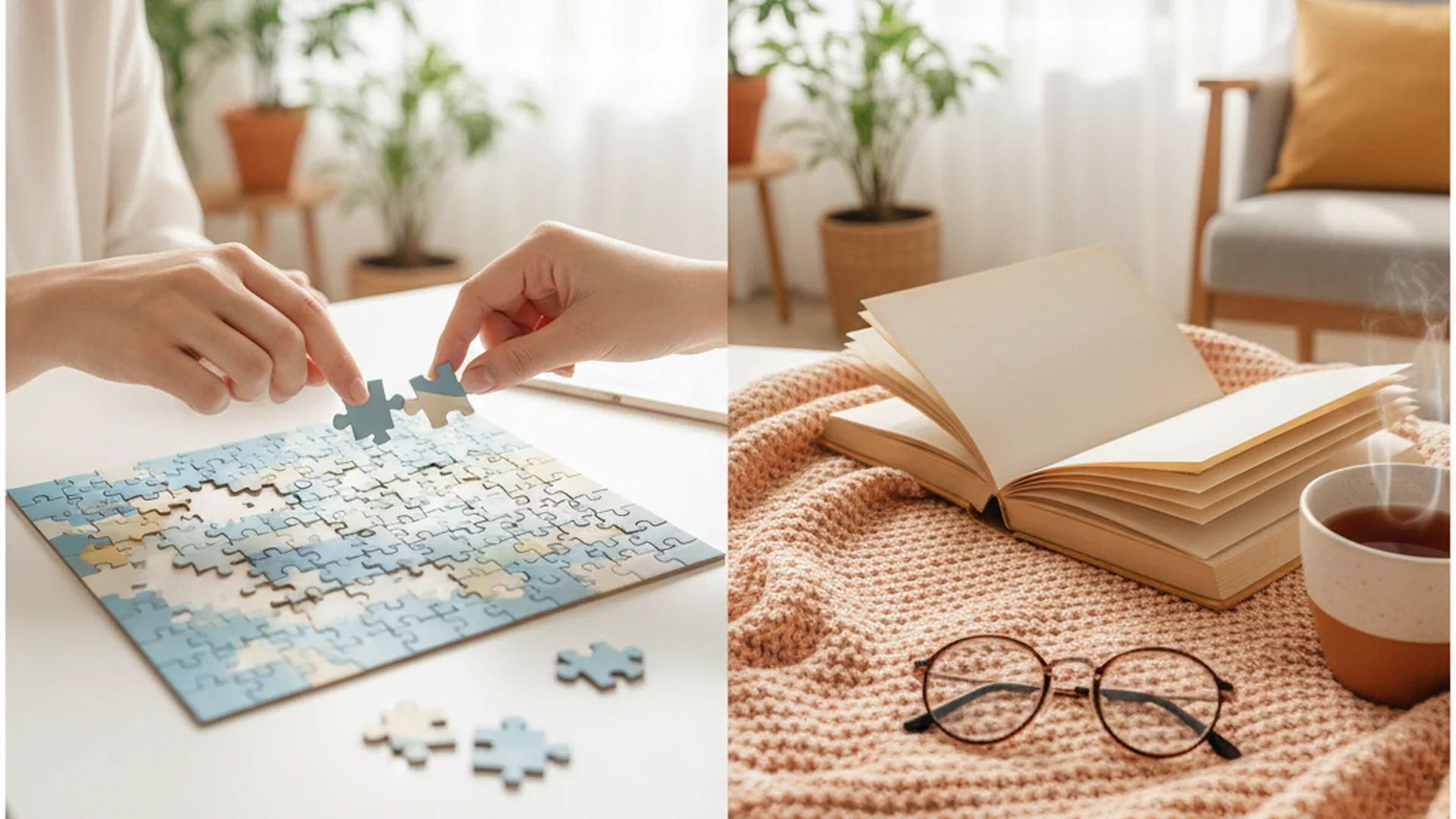
Puzzles sit at the intersection of linguistics and logic, and enthusiasts often ask whether their morning Sudoku is "better" for them than picking up a classic novel. The debate of puzzles vs reading is one that has long fascinated neurologists and casual learners alike. Is it better to be a bookworm or a "cruciverbalist"?
The truth is that our brains don't view these activities as a zero-sum game. Instead, think of them as different machines at a cognitive gym. While reading builds your endurance and narrative empathy, puzzles act as the high-intensity interval training (HIIT) for your processing speed. As we head into 2025 and 2026, new research is shedding light on exactly how these two pastimes shape our gray matter.
The Science of Mental Stimulation: Puzzles vs Reading
To understand the brain games vs books debate, we have to look at the specific cognitive "muscles" each activity targets. Recent studies have moved beyond the general idea of "staying sharp" to pinpointing exactly which functions are improved by specific habits.
Memory Superpowers through Reading
A landmark 2025 study from the University of Illinois observed a group of older adults (ages 60–79) who committed to reading for pleasure for 90 minutes a day. The results were startling: these participants showed significantly greater improvements in working and episodic memory compared to those who focused solely on word puzzles.
Why does this happen? Reading a book requires you to hold a "long-form" cognitive map in your mind. You must remember character arcs, plot points from 200 pages ago, and complex themes. This sustained attention stretches the brain’s capacity to store and retrieve information over long durations.
Processing Speed and Attention through Puzzles
While reading wins the memory marathon, puzzles excel in the sprint. A 2024 Texas A&M study concluded that engaging in word games and puzzles at a high level results in superior processing speed and focused attention.
Furthermore, a 2023/2024 NEJM Evidence study found that crossword puzzles were more effective at reducing brain shrinkage (atrophy) in individuals with mild cognitive impairment than modern, computerized "brain training" programs. Puzzles force the brain into a state of deductive reasoning—a "near-transfer" skill that keeps your ability to solve immediate, logical problems razor-sharp.
Stress Reduction and the "Flow State"
One of the most immediate benefits of both activities is their impact on our nervous system. However, the way they provide relief differs fundamentally.
The 6-Minute Reading Miracle
Research from Mindlab International at the University of Sussex has shown that just 6 minutes of reading can reduce stress levels by up to 68%. This outperformed other popular relaxation methods like walking (42%) or playing video games (21%). Reading slows the heart rate and eases muscle tension by transporting the mind into an alternative reality, effectively "resetting" the stress response.
The Meditative Power of Puzzles
Puzzles offer a different kind of calm known as the "flow state." This is a psychological phenomenon where you become so immersed in a task that time seems to disappear. The repetitive focus required to find a word in a grid or fit a jigsaw piece into place lowers heart rate and blood pressure through a process similar to mindfulness meditation.
Advertisement
IQ, Cognitive Reserve, and the "Dementia Delay"
A common question in the puzzles vs reading debate is whether these activities actually make you smarter.
Do Puzzles Increase IQ?
Experts are quick to clarify a common misconception: solving a Sudoku every day makes you better at Sudoku, but it doesn't necessarily boost your general intelligence (g-factor). However, what it does do is build "cognitive reserve."
Cognitive reserve is essentially a buffer. Think of it as a secondary power grid for your brain. When age-related changes or pathologies (like Alzheimer's) begin to damage certain neural pathways, a brain with high cognitive reserve can "reroute" signals through other healthy connections. Regularly engaging in both reading and puzzles can delay the onset of Alzheimer’s symptoms by up to 5 years.
Deep Focus vs. Fragmented Attention
Reading is generally superior for building sustained attention. In our world of 15-second videos and constant notifications, the ability to focus on a single narrative for an hour is becoming a rare and valuable cognitive asset. In contrast, digital puzzles can sometimes contribute to "fragmented attention" if they are designed with too many intrusive ads or "gamified" distractions.
2025–2026 Trends in Brain Health
The landscape of mental fitness is evolving. We are moving away from simple paper vs. screen debates and toward more integrated experiences.
The Rise of AR and "Slow Puzzling"
2025 has seen a surge in Augmented Reality (AR) puzzles. These require 360-degree spatial reasoning, forcing the brain to interact with a 3D environment. Experts believe these may offer "far-transfer" benefits (skills that apply to real-world tasks) that traditional 2D puzzles lack.
Simultaneously, there is a movement toward "Sustainable Slow Puzzling." High-quality, eco-friendly wooden 3D puzzles are trending as a "digital detox" tool. These emphasize tactile engagement and the preservation of fine motor skills, which are crucial as we age. For more on the medium of your challenges, check out our guide on Digital vs Paper Puzzles.
The Ultimate Brain Game: Dancing?
Interestingly, a major trend identified in 2025 highlights dancing as perhaps the ultimate brain workout. Why? Because it combines the cognitive challenge of learning steps (like a puzzle), the narrative flow of music (like reading), physical movement, and social interaction.
| Activity | Primary Benefit | Secondary Benefit |
|---|---|---|
| Reading | Episodic Memory | Stress Reduction |
| Puzzles | Processing Speed | Spatial Reasoning |
| Dancing | Neuroplasticity | Social Connection |
| Chess | Strategic Depth | Pattern Recognition |
Common Mistakes to Avoid
Even with the best intentions, many people fall into habits that limit their cognitive growth.
- The "Crossword-Only" Trap: Many people believe that doing the same daily crossword is all they need. However, if you can finish a Friday New York Times crossword without breaking a sweat, you've reached a plateau. Your brain is no longer building new connections; it's just accessing old ones. To trigger Cognitive Benefits, you must prioritize novelty.
- Ignoring Vascular Health: You cannot "solve" your way out of a poor lifestyle. Neurologists emphasize that heart health = brain health. Physical exercise is often more effective at preventing dementia than any puzzle because it increases blood flow to the brain.
- The "Strain" Fallacy: Some believe that if a puzzle is frustratingly hard, it’s working better. Dr. Gary Small (Hackensack University Medical Center) recommends the "train, don't strain" approach. If a challenge causes genuine stress, the resulting cortisol can actually negate the cognitive gains.
Advertisement
Expert Recommendations for a Healthy Brain
If you want to maximize the benefits of brain games vs books, follow these professional guidelines:
- The 30-Minute Minimum: Aim for at least 30 minutes of cognitively stimulating activity 3–4 times a week.
- Switch It Up: Once you become an expert at one type of puzzle, move to another. If you love Wordle, try a Sudoku or a Nonogram.
- Social Puzzling: Puzzling with others—whether through board games or escape rooms—adds a "social layer" that provides significantly higher protection against cognitive decline than solo play.
- Embrace the "Sweet Spot": Find material that is challenging but achievable. This promotes the release of dopamine, which aids in memory retention.
If you are looking for specific strategies to up your game, you might enjoy 10 Crossword Solving Strategies the Pros Use.
Frequently Asked Questions
Is reading better for focus than puzzles?
Yes. Reading requires sustained attention and the construction of complex mental models over hours or days. Puzzles generally focus on "near-transfer" skills like deductive logic and spatial reasoning, which are shorter in duration.
Do puzzles actually increase IQ?
Not exactly. Puzzles make you better at the specific task you are practicing. However, they are vital for building "cognitive reserve," which helps your brain stay functional and resilient against aging and disease.
Can digital puzzles replace physical books?
While digital puzzles offer great variety and accessibility, traditional paper-based reading is often recommended to avoid "blue light" exposure and the "fragmented attention" that comes with screen-based multitasking. For a deeper dive into this, see our article on Digital vs Paper Puzzles.
What is the "Sweet Spot" rule?
The "Sweet Spot" rule, suggested by experts like Dr. Gary Small, states that brain exercises should be challenging enough to require effort ("training") but not so difficult that they cause high stress ("straining"), which can be counterproductive.
How does reading reduce stress so quickly?
Reading allows for "cognitive escapism." By focusing on a narrative, the brain's "threat detection" systems (like the amygdala) are quieted, allowing the parasympathetic nervous system to take over, lowering the heart rate in as little as 6 minutes.
Conclusion: The Balanced Brain Diet
In the battle of puzzles vs reading, there is no single winner. If you only do crosswords, you’re only training your "retrieval" muscles. If you only read, you might miss out on the "processing speed" gains provided by logic games.
The most resilient brains are those that enjoy a diverse diet. Start your morning with a puzzle to wake up your logic centers, and end your day with a book to consolidate your memory and lower your stress. By embracing both, you aren't just passing the time—you're building a fortress for your mind that will last for decades.
Ready to Level Up?
Start your daily cognitive workout with our collection of logic and word challenges.
Put it into practice
Keep reading
Comparisons
Word Puzzles vs Number Puzzles: Which Is Best for Your Brain?
Explore the ultimate debate of word vs number puzzles. Discover which cognitive benefits suit your goals, from verbal intelligence to logical reasoning.
Dec 15, 2025 12 min
Comparisons
Puzzles vs Language Learning: Which Is Better for Your Brain Health?
Explore the ultimate brain training comparison: puzzles vs languages. Discover which activity offers the best protection against cognitive decline and dementia.
Mar 18, 2026 12 min
Comparisons
Puzzles vs Music Brain: Which Cognitive Workout Wins?
Explore the neurobiology of puzzles vs music. Learn how learning an instrument and solving puzzles impact cognitive longevity, IQ, and dementia prevention.
Feb 17, 2026 12 min
Advertisement