Competitive vs Casual Puzzles: Which Path Is Right for You?
Explore the differences between competitive and casual puzzles. Learn about speed puzzling strategies, mental health benefits, and the latest 2026 trends.
By Free To Play Puzzles Editorial Team 12 min read
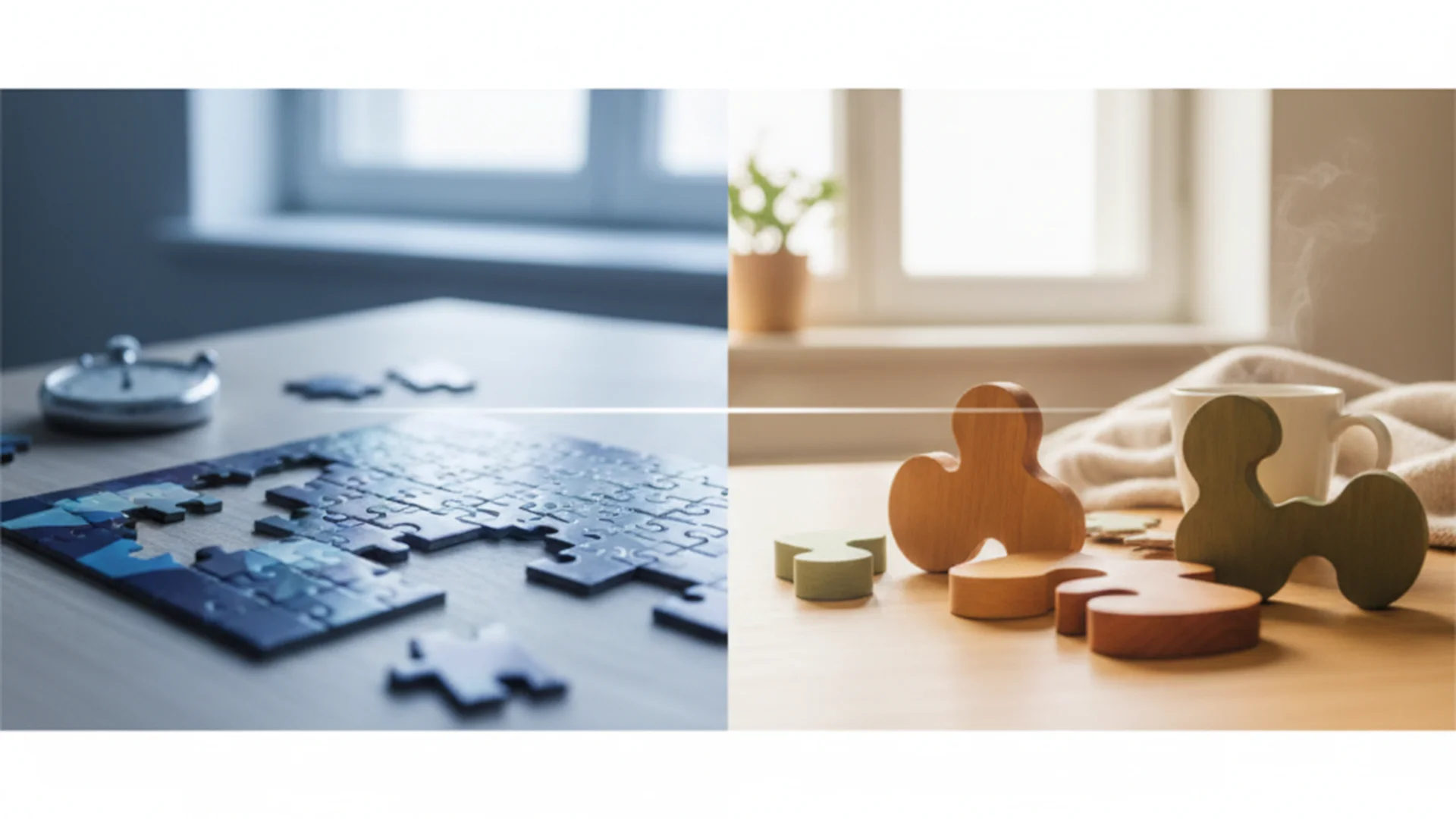
Puzzling has undergone a radical transformation over the last decade. Once viewed as a quiet, solitary pastime reserved for rainy afternoons or retirement homes, it has evolved into a multi-billion dollar industry with a vibrant split between two distinct worlds. Today, the debate of competitive vs casual puzzles isn't just about how you spend your Sunday—it’s about your goals, your brain chemistry, and your community.
As a tournament director and logic instructor, I have seen participants approach a Sudoku grid with the intensity of an Olympic sprinter, while others find their Zen in the slow placement of a single jigsaw piece. Whether you are aiming for the podium at the World Jigsaw Puzzle Championship or seeking a screen-free way to decompress after work, understanding these two styles will help you maximize the puzzle benefits for your lifestyle.
The Great Divide: Definitions and Demographics
At its core, the difference between puzzle competition vs fun lies in the objective. Casual puzzling is about the process—the tactile feel of the pieces, the visual satisfaction of a forming image, and the relaxation of the mind. Competitive puzzling, or "speed puzzling," is about the finish. It is a race against the clock where every second saved in sorting or placement is a victory.
The market data reflects this growing obsession. The global jigsaw puzzle market was valued at approximately $2.68 billion in 2024 and is projected to surge to $3.53 billion by 2033. Interestingly, while the competitive scene is diverse, the digital puzzle space is heavily female-driven, with 75% of players being women. This demographic shift is also reflected in the rising popularity of "aesthetic" puzzles on social media platforms like TikTok, where Gen Z and Millennials are embracing puzzling as an analog escape from digital burnout.
The World of Competitive Puzzling: A Mental Marathon
Is competitive puzzling actually a sport? To those who participate in the World Jigsaw Puzzle Championship (WJPC) in Valladolid, Spain, the answer is a resounding yes. In 2024, over 74 countries were represented, with elite puzzlers demonstrating feats of spatial reasoning that seem almost superhuman.
Speed and Strategy
To understand the competitive world, you have to look at the numbers. While a casual puzzler might spend weeks on a 500-piece set, elite competitors can finish one in under 35 minutes. When working in pairs, the world record for 1,000 pieces often drops below 1 hour and 15 minutes. This requires more than just "luck"; it requires a specific set of strategies:
- The "Flip and Sort" Strategy: In a competition, pieces are dumped onto the table. Experts don't try to fit pieces immediately. Instead, they spend the first few minutes flipping every single piece right-side up while simultaneously separating edges and high-contrast color clusters.
- Tactile Memory: Competitive puzzlers often train with specific brands. Brands like Ravensburger are the gold standard because of their unique "Softclick Technology." Professional puzzlers learn the exact feel and "cut" of these brands to develop a tactile memory that allows them to know if a piece fits without even looking at it.
- The "20-Second" Rule: If a competitor hasn't placed a piece in 20 seconds, they move to a different section immediately. Stalling is a "run-killer."
The Physicality of Competition
Competitive puzzling also requires physical stamina. High-intensity sessions can lead to neck and back strain. Professionals often use wireless headlamps to eliminate shadows and tilted puzzle boards to maintain better posture. This level of dedication is why many compare high-stakes puzzling to puzzle vs video games benefits, where focus and reaction time are paramount.
Advertisement
Casual Puzzling: The Ultimate Stress Relief
On the other end of the spectrum is casual puzzling, which prioritizes the "flow state"—a form of mindfulness where the world falls away and the brain enters a parasympathetic "rest-and-digest" state.
Mental Health Impacts
The health benefits of casual puzzling are backed by significant research. Studies published in the Archives of Neurology indicate that regular puzzling can reduce the risk of developing Alzheimer’s and dementia by up to 47%. Furthermore, the Journal of Behavioral and Brain Functions suggests that puzzling can decrease cortisol (stress) levels by 35%.
Unlike the high-pressure environment of a tournament, casual puzzling is often compared to puzzles vs meditation. It provides a low-stakes way to achieve a "dopamine hit" every time a piece clicks into place.
Creating a Puzzle Oasis
For the casual enthusiast, atmosphere is everything. Experts recommend:
- Sensory Cues: Use warm lighting and calming music (like lo-fi or nature sounds).
- Aromatic Enhancements: Scents like lavender or eucalyptus can deepen the meditative effect.
- Social Connection: "Puzzle Nights" are a growing trend, allowing for "parallel play"—a social dynamic where friends can talk deeply while their hands are busy, removing the pressure of constant eye contact.
Comparing the Two: Side-by-Side
| Feature | Competitive (Speed) | Casual (Relaxation) |
|---|---|---|
| Goal | Fastest completion time | Stress relief and process |
| Strategy | Sorting by color and shape immediately | Starting with the edges and enjoying the art |
| Tools | Headlamps, tilted boards, sorting trays | Tea, ambient music, comfy seating |
| Social Aspect | Formal tournaments and leaderboards | Family nights, Puzzle Swaps |
| Brands | High-precision brands (e.g., Ravensburger) | Artisanal, wooden, or custom designs |
2025–2026 Trends in the Puzzling World
The landscape is shifting as we head into 2026, with technology and sustainability playing major roles.
1. AR-Integrated Puzzles
Augmented Reality (AR) is bridging the gap between digital and physical. Once a physical puzzle is completed, players can use a smartphone app to bring the image to life. Imagine a 1,000-piece city landscape that, once finished, allows you to watch digital cars drive through the streets or reveal "hidden" 3D animations of the residents.
2. Sustainable and Premium Materials
There is a massive 2026 trend toward eco-friendly materials. Collectors are moving away from mass-produced cardboard in favor of wooden, animal-shaped pieces and bamboo materials. These puzzles offer a more satisfying tactile experience and are designed to be heirlooms rather than disposable games.
3. AI-Generated Art
Artificial Intelligence is being used to create "impossible" gradients. These puzzles feature surrealist landscapes or color shifts that lack distinct patterns, offering a brutal challenge for seasoned competitive puzzlers while providing a visually stunning experience for casual collectors.
4. Hybrid-Casual Gaming
In the mobile space, we see a rise in 10 Minute Puzzle Games that blend Match-3 gameplay with deep storylines. This "Hybrid-Casual" approach brings the competitive element of leaderboards to the relaxing experience of mobile play.
Advertisement
Common Mistakes to Avoid
Regardless of whether you are playing for fun or for a trophy, avoid these common pitfalls:
- Mistake: Sticking to a "Run-Killer" Section: In both casual and competitive play, getting stuck on one color for too long leads to frustration. If you haven't made progress in a few minutes, move to a different zone to reset your visual perception.
- Mistake: Neglecting the Edge Framework: Many casual players get excited by a central detail and start there. Experts recommend establishing the edge first; it provides a "safety net" for the brain and defines the spatial boundaries.
- Mistake: Ignoring Ergonomics: Hunching over a coffee table for three hours is a recipe for a neck ache. Even casual players should consider their lighting and seating height.
- Mistake: Assuming Puzzles are Solitary: Many miss out on the community aspect. From Word Logic Games to local library tournaments, puzzling is one of the most social hobbies available today.
Frequently Asked Questions
Is competitive puzzling actually a sport?
Yes. Participants and organizers argue it requires immense stamina, high-level spatial reasoning, and complex strategy. It is frequently referred to as a "mental marathon," with the World Jigsaw Puzzle Championship being the premier global event.
Can puzzles really help with anxiety?
Absolutely. Puzzling triggers a "flow state," which shifts the brain into a parasympathetic state. This lowers the heart rate and provides a form of mindfulness that is highly effective at reducing daily stress. You can learn more about this in our guide on Puzzles vs Meditation.
What is the best strategy for speed puzzling?
The "Flip and Sort" method is the industry standard. Flip all pieces face up immediately and sort them into color or texture groups using sorting trays. Do not attempt to fit pieces until the sorting phase is complete.
Are digital puzzles as good as physical ones?
Both have benefits. Physical puzzles offer tactile satisfaction and a screen-free break, while digital puzzles—like Sudoku or Minesweeper—offer portability and infinite variety. For a deeper look, check out our comparison of Digital vs Paper Puzzles.
What brands are used in competitions?
Most major competitions, including the WJPC, use Ravensburger. Their precision "cut" and consistent quality make them the preferred choice for timed events.
Conclusion
The choice between competitive vs casual puzzles doesn't have to be permanent. Many enthusiasts spend their weekdays "micro-dosing" Logic Puzzles for mental clarity and their weekends training for local speed-puzzling events. Whether you are chasing the 35-minute mark for a 500-piece set or simply looking to lower your stress levels by 35%, there is no "wrong" way to puzzle.
The future of the hobby is bright, with AR integration and sustainable materials ensuring that puzzling remains relevant for Gen Z, Millennials, and beyond. So, clear off your table, put on some music, and find your flow.
Ready to Test Your Skills?
Challenge your brain with our collection of logic and speed puzzles today.
Put it into practice
Keep reading
Comparisons
Word Puzzles vs Number Puzzles: Which Is Best for Your Brain?
Explore the ultimate debate of word vs number puzzles. Discover which cognitive benefits suit your goals, from verbal intelligence to logical reasoning.
Dec 15, 2025 12 min
Comparisons
Puzzles vs Language Learning: Which Is Better for Your Brain Health?
Explore the ultimate brain training comparison: puzzles vs languages. Discover which activity offers the best protection against cognitive decline and dementia.
Mar 18, 2026 12 min
Comparisons
Puzzles vs Reading: Which Is the Ultimate Workout for Your Brain?
Compare the cognitive benefits of puzzles vs reading. Discover how crosswords and books impact memory, stress, and dementia risk based on 2025 research.
Feb 20, 2026 12 min
Advertisement