Word Puzzles vs Number Puzzles: Which Is Best for Your Brain?
Explore the ultimate debate of word vs number puzzles. Discover which cognitive benefits suit your goals, from verbal intelligence to logical reasoning.
By Free To Play Puzzles Editorial Team 12 min read
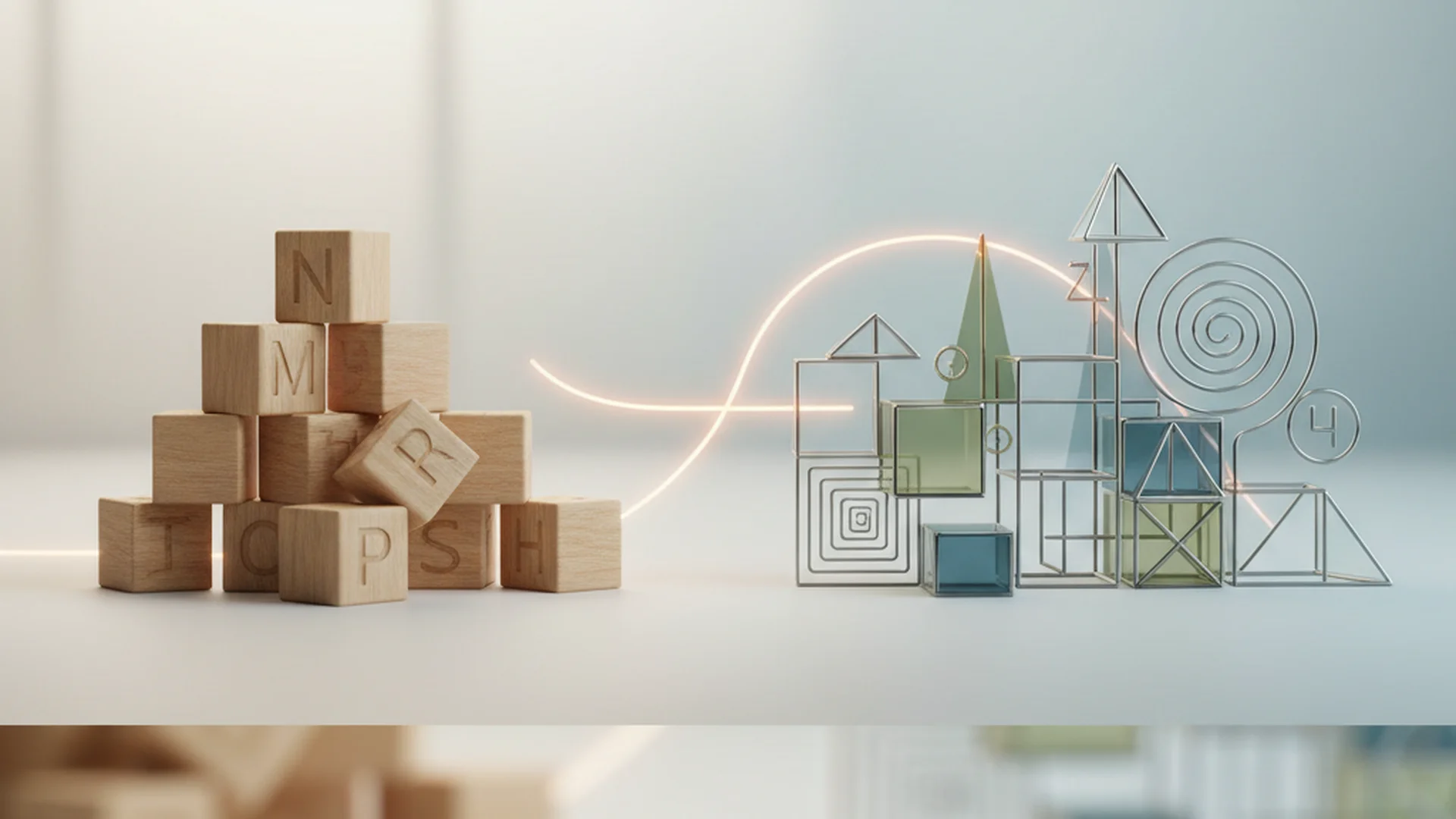
Word lovers live in the intersection of definitions and grid patterns, yet many of them also find themselves drawn to a Sudoku grid or a sliding puzzle. In the world of cognitive wellness, the debate of word vs number puzzles is more than just a matter of preference; it is a question of how we want our brains to evolve.
In 2025, the "brain health" movement has reached a fever pitch. We are no longer just puzzling for fun; we are puzzling to stay sharp, to build cognitive reserve, and to stave off the fog of aging. Whether you are a "word person" or a "numbers person," understanding the science behind these games can help you optimize your mental workout.
The Verbal Brain: The Power of Word Puzzles
Word puzzles—ranging from the classic New York Times Crossword to modern hits like Strands—are the undisputed heavyweights of the puzzle world. According to YouGov data, 43% of adults prefer word-based challenges, and the reasons go beyond just a love for language.
The "10 Years Younger" Effect
The University of Exeter’s PROTECT study, which followed over 19,000 participants, provided some of the most startling evidence for word puzzles in recent years. They found that people who engage in regular word puzzles score equivalent to 10 years younger than their actual age on tests of grammatical reasoning. For short-term memory, the advantage was equivalent to 8 years younger.
When you solve a crossword, you aren't just remembering a word; you are engaging in "fluency" and "word retrieval." This strengthens the neural pathways in the temporal and frontal lobes, which are responsible for language processing and executive function.
Real-World Example: The Friday Crossword
Consider the experience of a "Friday-level" crossword. You encounter a clue like "Lead-in to a change of heart?" and your brain must navigate through literal meanings (cardiology) to metaphorical ones (romance) before landing on the prefix "TRANS-." This lateral thinking is a hallmark of the verbal brain, requiring a vast web of semantic memory.
The Numerical Brain: Logic, Deduction, and Speed
While word puzzles dominate in popularity, number puzzles hold a distinct edge in raw cognitive intensity. If word puzzles are a long-distance jog for the brain, number puzzles are high-intensity interval training (HIIT).
The Cognitive Load of Numbers
A fascinating 2024 Swiss eye-tracking study revealed that reading numbers is 2.5 to 7 times more cognitively taxing than reading words of equal length. This is because numbers are abstract symbols that require more "fixations" (eye focuses) and a higher demand on working memory to process.
In a game like Sudoku, you aren't just identifying 1 through 9; you are holding multiple possibilities in your head simultaneously, using deductive logic to eliminate "candidates." This process significantly boosts:
- Attention Span: The ability to focus on a single task without distraction.
- Information Processing Speed: How quickly you can absorb and react to new data.
- Reasoning: The capacity to follow a logical chain to its conclusion.
Real-World Example: The 2048 Strategy
Games like 2048 require a different kind of numerical brainpower—spatial logic. To reach the high tiles, players must use a 2048 corner strategy, which involves planning several moves ahead and managing a shifting grid. This engages the parietal cortex, the area of the brain responsible for spatial navigation and mathematical calculation.
Advertisement
Word vs Number Puzzles: A Comparison
| Feature | Word Puzzles (e.g., Crosswords) | Number Puzzles (e.g., Sudoku) |
|---|---|---|
| Primary Brain Area | Temporal/Frontal Lobes | Parietal Cortex |
| Key Skill | Semantic Retrieval/Vocabulary | Deductive Logic/Working Memory |
| Cognitive Load | Moderate | High (2.5-7x more taxing) |
| Main Benefit | Memory & Grammatical Reasoning | Processing Speed & Attention |
| Market Popularity | 43% | 13% |
The 2025 Tech Revolution: AI and VR Puzzles
The landscape of verbal vs numerical brain training has shifted dramatically in 2025 with the introduction of AI-adaptive and immersive technologies.
AI-Adaptive Difficulty
Gone are the days of being frustrated by a puzzle that is too hard or bored by one that is too easy. Modern AI-driven apps now adjust difficulty in real-time. If the system detects your solving speed for a Word Search is too fast, it will dynamically hide words in more complex diagonal or backwards patterns to keep you in the "flow state."
Immersive 3D and VR
The rise of "spatial computing" has brought puzzles into the third dimension. VR puzzles like The House of Tesla (2025) allow users to physically manipulate objects to solve logic gates. This bridges the gap between numerical logic and physical spatial awareness, engaging the visual-spatial cortex more than any 2D grid ever could.
Common Mistakes to Avoid
Even the most dedicated puzzlers can fall into traps that limit their cognitive growth. Here are the most common misconceptions in the community:
- The "Smarter" Myth: Many people believe that getting better at crosswords makes them "smarter" overall. In reality, you are primarily improving "near transfer" skills. You become a better verbal thinker, but it won't necessarily help you with your taxes or driving.
- The "Left Brain vs. Right Brain" Fallacy: It is a common myth that word puzzles are purely "left-brained." Modern fMRI scans show that complex puzzles—especially those involving puns or themes—require both hemispheres to communicate constantly.
- The Routine Trap: Doing the same level of difficulty every day offers diminishing returns. Once a puzzle becomes part of your "autopilot" routine, the brain building stops.
- Ignoring the Clock: Many people solve puzzles to relax, which is fine! However, if your goal is brain health, scientists note that speed of processing is a better indicator of cognitive vitality than just finishing a puzzle slowly.
Advertisement
Best Practices: The "Novelty Rule"
If you want the ultimate brain hack, the secret isn't choosing between word or number puzzles—it’s doing both. Neuropsychologists recommend "cross-training" your brain.
- If you are a Word Person: Force yourself to play Sudoku or Minesweeper twice a week. This forces your brain to build new neural pathways for logic and deduction that your vocabulary-rich brain might be neglecting.
- If you are a Number Person: Try a thematic word game like Connections or a Word Ladder. These games require you to find relationships between words, which is a different cognitive "muscle" than pure math.
Frequently Asked Questions
Do puzzles prevent dementia?
Current research as of 2025 suggests that puzzles do not prevent the underlying biological pathology of dementia. However, they contribute significantly to cognitive reserve. This means your brain can function at a high level for much longer, effectively "masking" age-related changes and allowing you to maintain independence.
Which is better for me: Sudoku or Crosswords?
It depends on your personal cognitive goals. If you want to improve your memory and "tip-of-the-tongue" word retrieval, go for word puzzles. If you want to increase your focus, attention span, and logical processing speed, number puzzles are the better choice.
Is Wordle actually good for my brain?
Yes, Wordle is an excellent "entry-level" brain exercise because it combines vocabulary with deductive logic. However, because it is only five letters and has a consistent format, the benefit diminishes once you become an expert. To keep seeing gains, you should eventually move on to more complex word logic games.
Are digital puzzle apps as effective as paper ones?
Recent studies show that while paper puzzles offer fewer distractions, AI-driven apps like Elevate or specialized brain training platforms are closing the gap. They offer personalized difficulty levels that paper puzzles cannot match, ensuring you are always in the "Sweet Spot" of difficulty.
Conclusion: The Holistic Brain Routine
The debate of word vs number puzzles shouldn't be about picking a winner. Instead, see them as different tools in your cognitive toolkit. Word puzzles provide the "10 years younger" boost to your memory and reasoning, while number puzzles offer the high-intensity logic training your brain needs to stay sharp and attentive.
In 2025, the most successful "brain athletes" are those who embrace variety. By combining the verbal richness of a crossword with the logical rigor of a number game—and perhaps adding a dash of puzzle vs exercise brain synergy—you can build a resilient, agile mind that is ready for any challenge.
Ready to Challenge Your Brain?
Explore our wide range of logic and word games to start your cross-training journey today.
Put it into practice
Keep reading
Comparisons
Wordle vs Crossword: Which Daily Word Game Is Best for Your Brain?
Explore the ultimate Wordle vs crossword comparison. Discover cognitive benefits, expert strategies, and 2025 trends in the world of daily word games.
Jan 24, 2025 12 min
Comparisons
Puzzles vs Language Learning: Which Is Better for Your Brain Health?
Explore the ultimate brain training comparison: puzzles vs languages. Discover which activity offers the best protection against cognitive decline and dementia.
Mar 18, 2026 12 min

Comparisons
Puzzles vs Reading: Which Is the Ultimate Workout for Your Brain?
Compare the cognitive benefits of puzzles vs reading. Discover how crosswords and books impact memory, stress, and dementia risk based on 2025 research.
Feb 20, 2026 12 min
Advertisement