Best Sudoku Apps 2025: Top-Rated Mobile Puzzles for Brain Health
Explore the best sudoku apps of 2025. Expert reviews of top-rated mobile puzzles featuring AI tools, competitive modes, and cognitive health benefits.
By Free To Play Puzzles Editorial Team 12 min read

Researchers have spent decades studying how targeted mental stimulation can preserve and enhance brain function. In the digital age, few tools are as accessible or effective as the classic logic puzzle. However, as we move through 2025, the landscape has shifted. We are no longer limited to the black-and-white grids of the morning newspaper. The best sudoku apps have evolved into sophisticated cognitive platforms that utilize artificial intelligence, real-time competition, and adaptive learning to keep our neurons firing.
Whether you are a newcomer looking to learn the ropes or a veteran seeking the ultimate logic challenge, the mobile market in 2025 offers a diverse array of options. In this comprehensive review, we will analyze the top-rated apps that are defining the modern era of Sudoku and explore the science behind why these digital grids are so beneficial for your long-term brain health.
The Evolution of Sudoku in 2025
The transition of Sudoku from paper to screen was initially focused on convenience. Early apps were mere digital clones of the physical game. Today, the industry has embraced "Smart Gaming." In 2025, the focus has shifted toward AI-powered teaching tools, competitive multiplayer modes, and wellness-oriented designs.
We now see apps that don't just tell you that you've made a mistake; they explain the underlying logic of why a specific number belongs in a cell. This shift from "outcome-based play" to "process-based learning" is a breakthrough for cognitive development. When you understand the "why," you are building new neural pathways rather than just performing repetitive tasks.
Best Sudoku App Reviews for 2025
Choosing the right platform is essential for maintaining a consistent habit. Based on user engagement metrics, UI/UX design, and educational value, here are the top recommendations for 2025.
1. Best for Beginners: Brainium Studios Sudoku
Brainium has long been a favorite for those who value aesthetics and education. Their 2025 update further refines their famous "Smart Hint" system.
- Why it stands out: Instead of simply filling in a square when you're stuck, the app provides a detailed explanation of the logic required to find the next number.
- Aesthetics: Known for its "soothing aesthetics," it offers customizable themes that reduce eye strain, making it perfect for a relaxing evening wind-down.
- Rating: Consistently maintains a 4.7+ star rating on major app stores.
2. Best All-Rounder: Sudoku.com (Easybrain)
This remains the most downloaded Sudoku app globally for a reason. It is the "Goldilocks" of puzzle apps—balanced in every way.
- Content Volume: With over 10,000 puzzles and fresh daily challenges, you will never see the same grid twice.
- Polish: The UI is incredibly responsive, which is vital for high-speed solving.
- Daily Challenges: Their seasonal events and trophy systems provide the "gamification" necessary to keep users coming back daily.
3. Best for Advanced Players: Andoku Sudoku 3
For those who find standard 9x9 grids too easy, Andoku 3 is the definitive choice. It is designed for the purist who enjoys the granular details of logic.
- Variants: It features six distinct variations, including Hyper-Sudoku and X-Sudoku. For more on these, check out our Diagonal Sudoku Guide.
- Difficulty: Offers eight levels of difficulty, scaling into territories that require advanced techniques like "Swordfish" and "XY-Wing."
- Customization: Its manual "pencil mark" system allows for the deep strategic planning that expert players crave.
4. Best for Competitive Play: Sudoku Slash
A breakout hit of 2025, Sudoku Slash has successfully introduced "Speed Battles" to the genre.
- Multiplayer: You can engage in real-time 1v1 battles where both players solve the same grid. The tension of seeing your opponent’s progress bar creates a completely different cognitive experience than solo play.
- Waterfall Mode: An infinite puzzle mode where the grid keeps scrolling as you solve, testing your endurance and pattern recognition under pressure.
5. Best for Logic Geeks: Good Sudoku (Zach Gage)
This app is essentially a masterclass in logic. Designed by renowned game designer Zach Gage, it focuses on the "art" of the solve.
- AI Teaching: It uses an AI engine to help you recognize complex patterns. It doesn't just show you a hint; it teaches you how to see the "X-Wing" yourself.
- Strategy Library: It includes a built-in encyclopedia of strategies, making it the best tool for transitioning from a casual player to an expert.
| App Name | Primary Strength | Best For | AI Support |
|---|---|---|---|
| Brainium | Educational Hints | Beginners | High |
| Sudoku.com | Polish/Volume | Daily Users | Medium |
| Andoku 3 | Variants | Experts | Low (Manual) |
| Sudoku Slash | Multiplayer | Competitive | Low |
| Good Sudoku | Pattern Training | Strategy Geeks | Very High |
Advertisement
The Science of Sudoku: Why Your Brain Loves the Grid
A common question is: "Does playing Sudoku actually help my brain?" The answer is a resounding yes, but with a caveat. To reap the maximum benefits, the puzzle must be at the "optimal challenge" level—difficult enough to require effort, but not so hard that it causes frustration.
Playing Sudoku engages several key cognitive areas:
- Working Memory: You must hold multiple possibilities in your mind while scanning the grid.
- Executive Function: The game requires high-level planning and decision-making.
- Pattern Recognition: Your brain learns to identify "Naked Pairs" and "Hidden Triples" through visual scanning.
Advanced Strategies and Best Practices
To truly master the apps listed above, you need to move beyond simple "scanning." Modern app interfaces are built to support advanced methodology.
The "Cross-Hatching" Method
This is the most efficient way to start any puzzle. Instead of looking at a whole 3x3 block, you focus on a single number (e.g., the number 1) and scan all rows and columns to see where that number cannot go. This process of elimination quickly fills the "low-hanging fruit."
Strategic Note-Taking
In 2025, the best apps have "Auto-Notes" features. While convenient, we recommend using "Manual Pencil Marks" for at least the first ten minutes of your play. Manual entry forces your brain to verify the logic twice, which doubles the cognitive load and the subsequent benefit.
Identifying Pairs
- Naked Pair: When two cells in a single block or row contain only the same two candidates (e.g., 2 and 4). This means those two numbers must occupy those two cells, allowing you to eliminate 2 and 4 from all other cells in that row/block.
- Hidden Pair: When two candidates appear in only two cells of a block, but those cells also contain other "noise" numbers. If you can spot the hidden pair, you can delete the noise.
Common Mistakes to Avoid
Even seasoned players fall into habits that hinder their progress and reduce the brain-training benefits of the game.
- The "Math Requirement" Myth: Many people avoid the best sudoku apps because they "aren't good at math." Remember, Sudoku is a game of logic, not arithmetic. You could replace the numbers with symbols, and the game would be identical.
- Over-Reliance on Auto-Check: Beginners often leave the "Auto-Check for Errors" setting on. We advise against this. Part of the cognitive benefit comes from the "Self-Correction" phase—finding your own mistake is where the most intense brain activity occurs. For more tips, see Common Sudoku Mistakes to Avoid.
- Guessing: Sudoku is a game of absolute certainty. A single guess can create a ripple effect that makes a puzzle unsolvable 20 minutes later. If you are guessing, you haven't yet mastered the necessary logic technique for that level.
- Ignoring the 3x3 Blocks: Many players focus too heavily on rows and columns, forgetting that the 3x3 blocks offer unique constraints that are often the key to unlocking "Expert" level puzzles.
Advertisement
The Mathematical Scale of Sudoku
The reason we have so many apps is the sheer mathematical variety of the game. There are approximately 6.67 sextillion ($6.67 \times 10^{21}$) possible 9x9 Sudoku grids. This means that even with millions of users playing daily, the chances of two people solving the same random grid are statistically astronomical.
Furthermore, the 17-Clue Rule is a fundamental law of the game. A valid Sudoku puzzle must have at least 17 given numbers to have a unique solution. Any puzzle with 16 or fewer clues will either have multiple solutions (making it invalid) or be mathematically impossible to solve through logic alone. Modern apps use "Validators" to ensure every puzzle you play adheres to this rule.
Future Trends: What’s Next for Sudoku Apps?
As we look toward 2026, several emerging technologies are set to change how we interact with these grids:
- AR and Hands-Free Solving: Augmented Reality overlays will soon allow you to point your phone at a physical newspaper puzzle and have the app project hints or digital "pencil marks" onto the paper.
- Voice-Activated Grids: For players with mobility issues or those who want to play while multitasking, voice commands like "Place 5 in Row 3, Column 2" are becoming more common.
- AI-Adaptive Difficulty: Instead of selecting "Easy" or "Hard," the app will analyze your solving speed and error patterns in real-time, subtly adjusting the difficulty of the next puzzle to keep you in the "Flow State."
Frequently Asked Questions
Is Sudoku based on math?
No. Sudoku is a game of logic and pattern recognition. While it uses the numbers 1 through 9, no arithmetic (addition or subtraction) is required. The numbers are simply symbols used to denote distinct categories.
How often should I play Sudoku for brain health?
Studies suggest that 15 to 30 minutes of daily engagement is sufficient to provide cognitive benefits. Consistency is more important than the duration of a single session.
What is the difference between 'Naked' and 'Hidden' pairs?
A Naked Pair occurs when two cells in a group contain only the same two candidates. A Hidden Pair occurs when two candidates are restricted to only two cells in a group, but those cells also contain other potential candidates that must be ignored. Identifying these requires a higher level of Advanced Sudoku Techniques.
Are hints in apps considered cheating?
In 2025, hints are viewed as educational tools. Modern apps use "Smart Hints" to explain the logic of a move, helping you learn how to solve similar situations in the future rather than just giving you the answer.
Can playing Sudoku prevent Alzheimer’s?
While no game can "cure" or "prevent" Alzheimer’s entirely, research indicates that keeping the brain active through logic puzzles can build "cognitive reserve," which may delay the onset of symptoms and improve overall quality of life as we age.
Conclusion
The best sudoku apps of 2025 have transformed a solitary pastime into a dynamic, educational, and even social experience. From the soothing, hint-heavy environment of Brainium to the high-stakes "Speed Battles" of Sudoku Slash, there is a digital grid suited for every brain. By engaging with these tools daily, you aren't just passing the time—you are actively investing in your cognitive longevity.
Remember to avoid the trap of "Auto-Check," embrace the challenge of manual pencil marks, and never be afraid to dive into the more complex variants. Your brain is a muscle; give it the workout it deserves.
Ready to Start?
Challenge your brain with our premium selection of logic puzzles today.
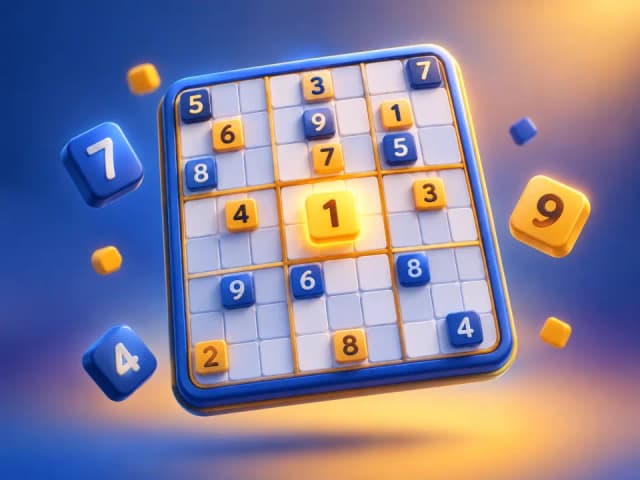
Put it into practice

Keep reading

Sudoku
The Science of Sudoku Brain Benefits: How Logic Puzzles Sharpen Your Mind
Discover the latest 2025 research on sudoku brain benefits. Learn how daily puzzles can "down-age" your brain by 10 years and improve memory by 18%.
Mar 22, 2025 12 min
Sudoku
Sudoku Printables: Free Downloads for Brain Health and Focus
Discover high-quality printable sudoku puzzles. Learn why paper-based logic games are trending in 2026 and how to use them to boost cognitive health.
Feb 25, 2025 10 min

Sudoku
Sudoku Paper vs Digital: Which is Better for Your Brain in 2025?
Explore the debate of sudoku paper vs digital. Learn which method offers better cognitive benefits, memory retention, and focus according to the latest research.
Jan 30, 2025 12 min
Advertisement