Word Search: How to Play, Expert Strategies, and 2026 Trends
Master how to play word search with our expert guide. Learn advanced scanning techniques, rare letter strategies, and explore the latest 2025 puzzle trends.
By Free To Play Puzzles Editorial Team 12 min read
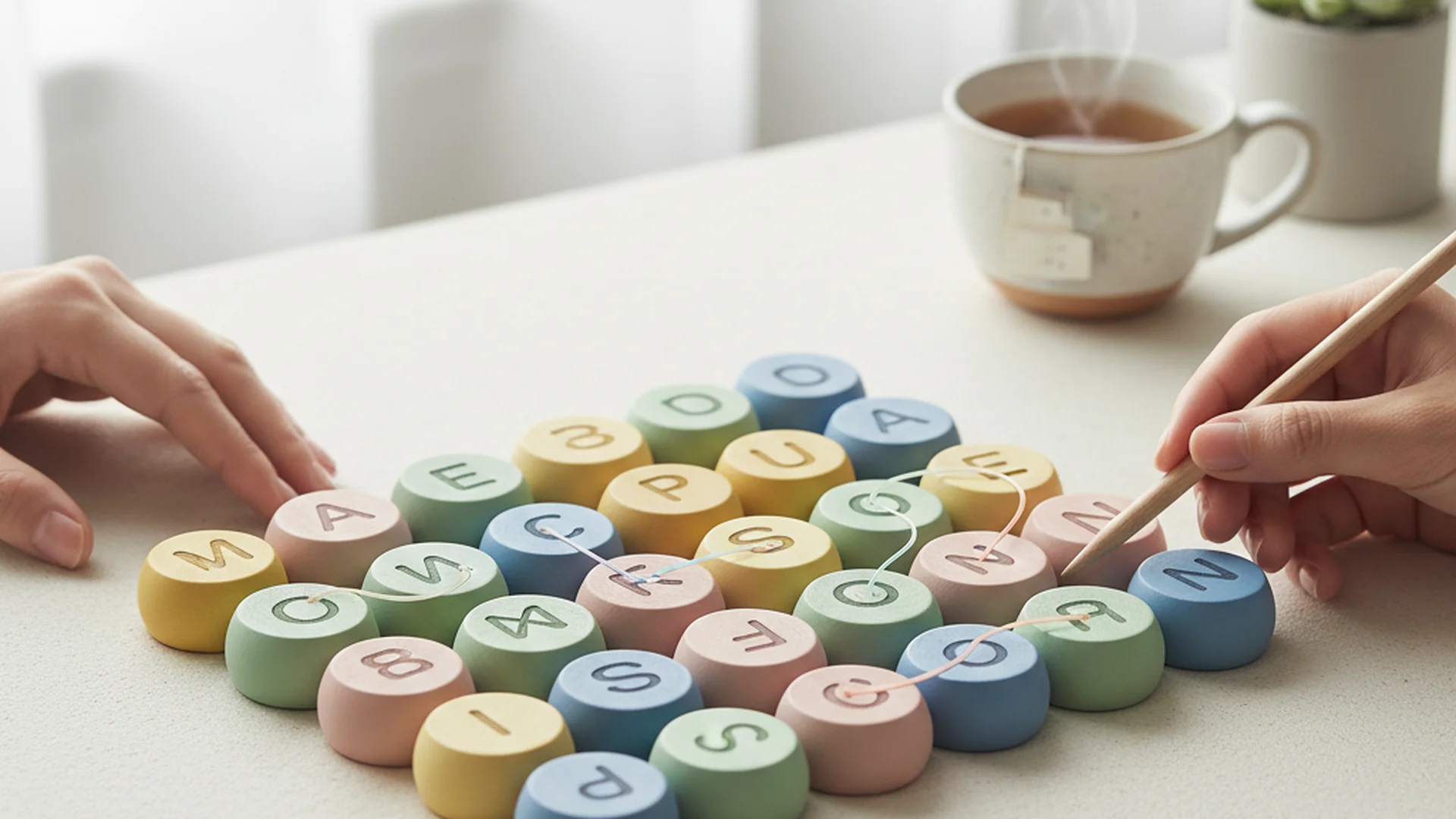
In an era of high-speed digital entertainment, the humble word search remains a titan of the puzzle world. As of 2025, the global puzzle and crossword market is valued at a staggering $3.02 billion, proving that our collective obsession with finding hidden patterns is stronger than ever. Whether you are a beginner looking for basic word search instructions or a seasoned solver aiming to break speed records, understanding how to play word search effectively involves more than just random scanning.
Solving a word search isn't just a pastime; it is an exercise in cognitive discipline, pattern recognition, and linguistic agility. In this guide, we will break down everything from the basic rules to the advanced strategies used by competitive cruciverbalists to dismantle even the most complex 2026-era puzzles.
The Fundamentals: How to Play Word Search
At its core, a word search is a grid of letters—usually square or rectangular—that hides a specific set of words. Your objective is to locate every word from a provided list within the "alphabet soup" of the grid. While the concept is simple, the execution varies significantly between paper-based puzzles and modern digital apps.
The 8 Directions of Discovery
One of the first things a new player must learn is that words are rarely just written left-to-right. In a standard adult-level puzzle, words can be hidden in eight distinct directions:
- Horizontal (Forward): Left to right.
- Horizontal (Backward): Right to left.
- Vertical (Downward): Top to bottom.
- Vertical (Upward): Bottom to top.
- Diagonal (Down-Right): Top-left to bottom-right.
- Diagonal (Down-Left): Top-right to bottom-left.
- Diagonal (Up-Right): Bottom-left to top-right.
- Diagonal (Up-Left): Bottom-right to top-left.
Standard Rules and Mechanics
- Overlapping Letters: Words frequently share letters. For example, the "T" in "TABLE" might also be the starting "T" for "TRAIN" running vertically.
- Encapsulation: A common question is whether a word can be hidden entirely inside another (like "CAT" inside "CATERPILLAR"). While possible, high-quality puzzle design usually avoids this to prevent confusion.
- The Grid Boundaries: Words never "wrap around" the edges. If a word starts at the end of a row, it must stay within that row or its respective diagonal/column.
| Puzzle Level | Grid Size | Word Directions | Common Features |
|---|---|---|---|
| Toddler | 5x5 | 2 Directions | Large letters, pictures |
| Intermediate | 15x15 | 4-6 Directions | Thematic lists, some overlaps |
| Expert | 25x25+ | All 8 Directions | Rare letters, long words, backwards diagonals |
The Pro’s Playbook: Strategies to Solve Faster
If you want to move beyond the "aimless staring" phase, you need a systematic approach. Competitive solvers don't just look for words; they hunt for specific markers that the human eye is biologically tuned to see.
1. The "Perimeter First" Rule
Professional constructors often place "easy win" words along the outer edges of the grid. This is done to build player momentum. When you start a puzzle, scan the top row, bottom row, and both side columns first. Clearing the perimeter "shrinks" the visual field, making the remaining center letters feel less overwhelming.
2. Search for Rare Letters
Instead of searching for common words like "REST" or "TEST," which are composed of high-frequency letters (E, T, S, R), look for the "anchors."
3. The "Double Letter" Strategy
Our brains are naturally wired to spot patterns and repetitions. Words containing double letters (e.g., "COFFEE," "BALLOON," "APPLE") are much easier to find than those with unique single letters. If you see two "O"s next to each other, there is a high statistical probability they belong to one of your list words.
4. Use a Systematic Scan
Do not jump around the grid based on what "pops out." Instead, choose a word from your list and find its first letter. Once found, look at the adjacent 8 letters in a clockwise circle. If you find the second letter, follow that path. If not, move to the next instance of the first letter.
Advertisement
Beyond the Grid: Modern Trends for 2025–2026
The world of word searches has evolved significantly since Norman E. Gibat published the first modern version in 1968. As we move through 2025 and into 2026, several key trends are reshaping how we interact with these puzzles.
AI-Generated and Personalized Puzzles
Generative AI has revolutionized puzzle creation. Today, you can create a Custom Word Search for Events in seconds, tailoring the word list to a wedding, a birthday, or a specific classroom curriculum. This "Personalization Era" has made word searches a staple of social gatherings and niche educational tools.
The "Strands" and Winding Word Revolution
Inspired by popular digital games like the NYT's Strands, a new variant called "Winding Word Searches" is trending. Unlike traditional straight-line puzzles, these allow words to "snake" or twist in any direction, as long as the letters are adjacent. This adds a layer of complexity similar to Word Ladder or Boggle.
Augmented Reality (AR) Integration
In 2026, high-end mobile apps are utilizing AR to project word search grids onto physical surfaces like coffee tables or walls. This "spatial puzzling" allows users to physically move around the grid, looking at the letters from different angles to spot hidden diagonals.
Common Mistakes to Avoid
Even experienced players fall into traps that slow down their solving time. To master how to play word search, you must avoid these common pitfalls:
- Ignoring the Word List Initially: Some players try to find words "blind." While fun, skimming the list first "primes" your brain’s visual cortex to recognize the specific shapes of those words.
- Fixating on Short Words: Many believe 3-letter words are the easiest to find. In reality, they are often the hardest! Short words lack unique letter combinations and can occur accidentally dozens of times in the filler text. Focus on the long, 8+ letter words first.
- Losing Focus Due to Fatigue: Solving a large grid can cause "eye strain" or mental fatigue. If you are stuck on the last two words, take a 5-minute break.
- Forgetting to Rotate: If you are playing on paper, physically rotate the book 90 degrees. This forces your brain to see vertical words as horizontal ones, often making them "pop" instantly.
The Cognitive Benefits of the Solve
Word searches are more than just a way to pass the time; they are a form of "Analog Therapy." Research in 2025 suggests that regular puzzle-solving can significantly reduce cortisol levels and improve vocabulary retention. For seniors, these games are vital for maintaining Cognitive Benefits and mental sharpness.
By focusing on a single task—finding a word—you enter a "flow state" that mimics the effects of meditation. This is why word searches are increasingly marketed as mindfulness tools in 2026, often appearing in "wellness" apps alongside breathing exercises and sleep sounds.
Advertisement
Frequently Asked Questions
Can words overlap in a word search?
Yes, overlapping is a standard feature of most puzzles. Two or more words can share a single letter, and in advanced puzzles, words can even cross through each other at multiple points.
What is the best way to find words faster?
The most effective strategy is scanning for "rare" letters like J, X, Q, and Z. Additionally, performing a systematic row-by-row scan rather than looking at the grid randomly will significantly decrease your solve time. You can find more detailed tips in our guide on Word Search Strategies: How to Find Words Faster.
Are there word searches without a word list?
Yes, these are often called "Hidden Theme" or "Mystery" word searches. You are given a category (e.g., "Types of Fruit") and must find all the words in the grid without knowing exactly what they are or how many there are.
Do digital word searches have hints?
Most modern apps include a "hint" button that will highlight the first letter of a word or briefly flash the entire word for you. However, using these often disqualifies you from high scores or leaderboards.
How do I teach a child how to play word search?
Start with a small grid (no larger than 10x10) and ensure all words are horizontal (left-to-right) or vertical (top-to-bottom). Use words that are familiar to them and encourage them to use a highlighter to mark their finds.
Conclusion
Mastering how to play word search is a journey that starts with the basics of horizontal and vertical scanning and ends with the sophisticated pattern recognition of a pro. Whether you are playing a classic paper puzzle or exploring the latest AR-integrated grids of 2026, the goal remains the same: the satisfaction of the "perfect solve."
By utilizing strategies like the "Perimeter First" rule and hunting for "Rare Letters," you can transform your experience from a casual distraction into a sharp mental workout. Remember to take eye breaks, stay hydrated, and most importantly, have fun with the process!
Ready to Test Your Skills?
Dive into our collection of interactive puzzles and start your daily brain workout now.
Put it into practice

Keep reading
Word Search
Word Search Strategies: How to Find Words Faster
Master the art of the word find with professional word search strategies. Learn rare letter hunting, Z-pattern scanning, and the science behind puzzle solving.
Sep 9, 2025 12 min

Word Search
Mastering Word Search Speed: Professional Techniques for Fast Solving
Boost your word search speed with expert strategies. Learn rare letter hunting, the Boustrophedon scan, and peripheral vision tricks from a professional constructor.
Nov 10, 2025 12 min
Word Search
Word Search Books vs Online: Which is Better for Your Brain?
Discover the pros and cons of print vs digital word searches. Explore cognitive benefits, 2026 trends, and expert strategies for brain health.
Oct 16, 2025 12 min
Advertisement