Word Search Books vs Online: Which is Better for Your Brain?
Discover the pros and cons of print vs digital word searches. Explore cognitive benefits, 2026 trends, and expert strategies for brain health.
By Free To Play Puzzles Editorial Team 12 min read
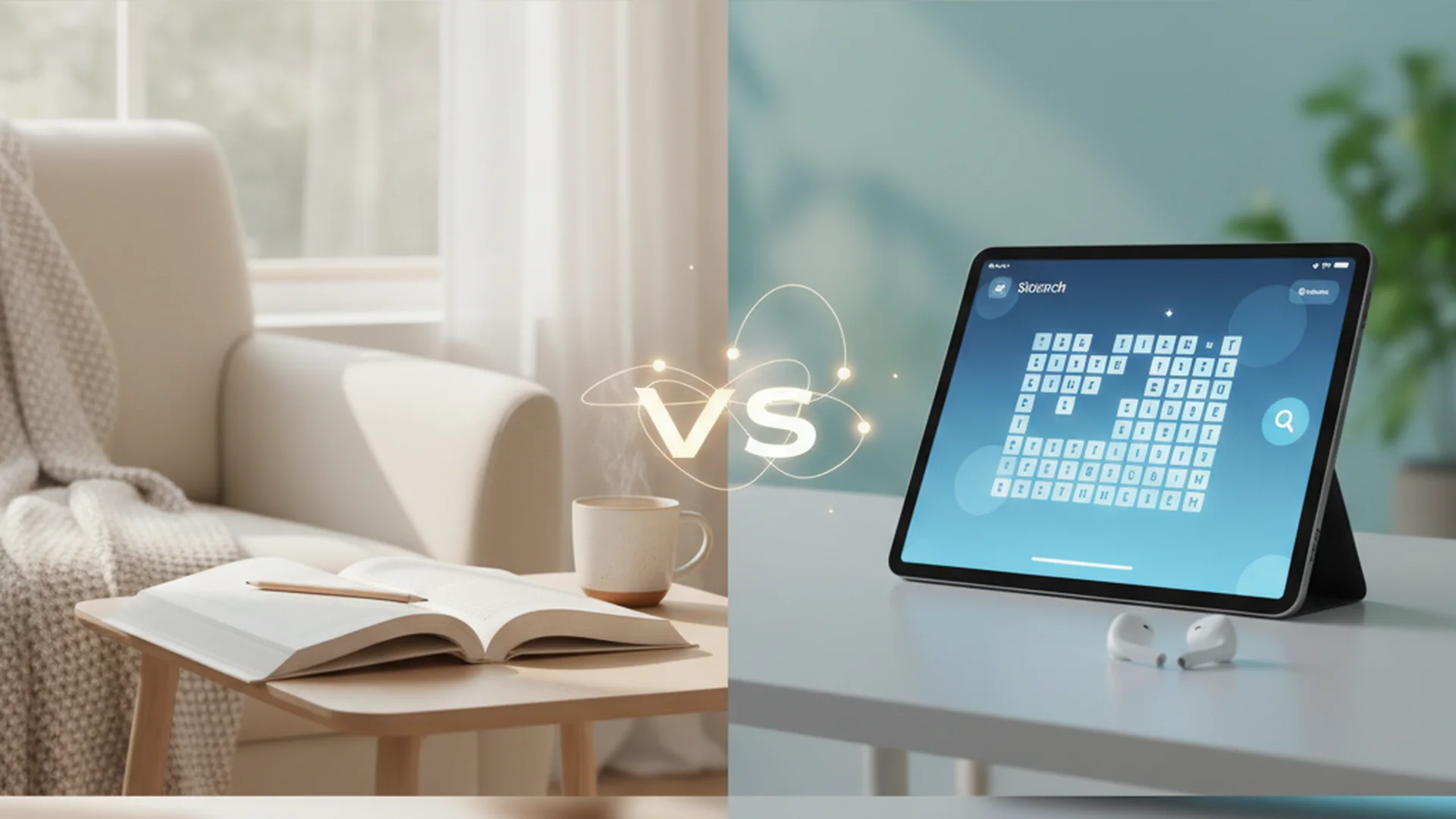
For decades, the image of a relaxing Sunday afternoon involved a thick puzzle book and a well-chewed pencil. However, as we move through 2025, the landscape of mental stimulation has shifted. The debate between word search books online and traditional paper volumes is no longer just about convenience—it is about how our brains process information, manage stress, and build cognitive resilience.
A common question is: "Does it matter if I solve a puzzle on a screen or a page?" The answer is more nuanced than you might think. While the goal of finding "QUARTZ" hidden diagonally in a grid remains the same, the neurological pathways we engage can vary significantly between print and digital mediums. Whether you are looking for a digital detox or a high-tech brain trainer, understanding the differences between print vs digital word search formats is key to maximizing your mental health.
The Cognitive Landscape: How Your Brain Sees the Grid
When we engage with a word search, we aren't just passing time; we are performing a complex series of cognitive functions including visual scanning, pattern recognition, and working memory. However, the "medium" changes the "message" your brain receives.
The Tactile Advantage of Print
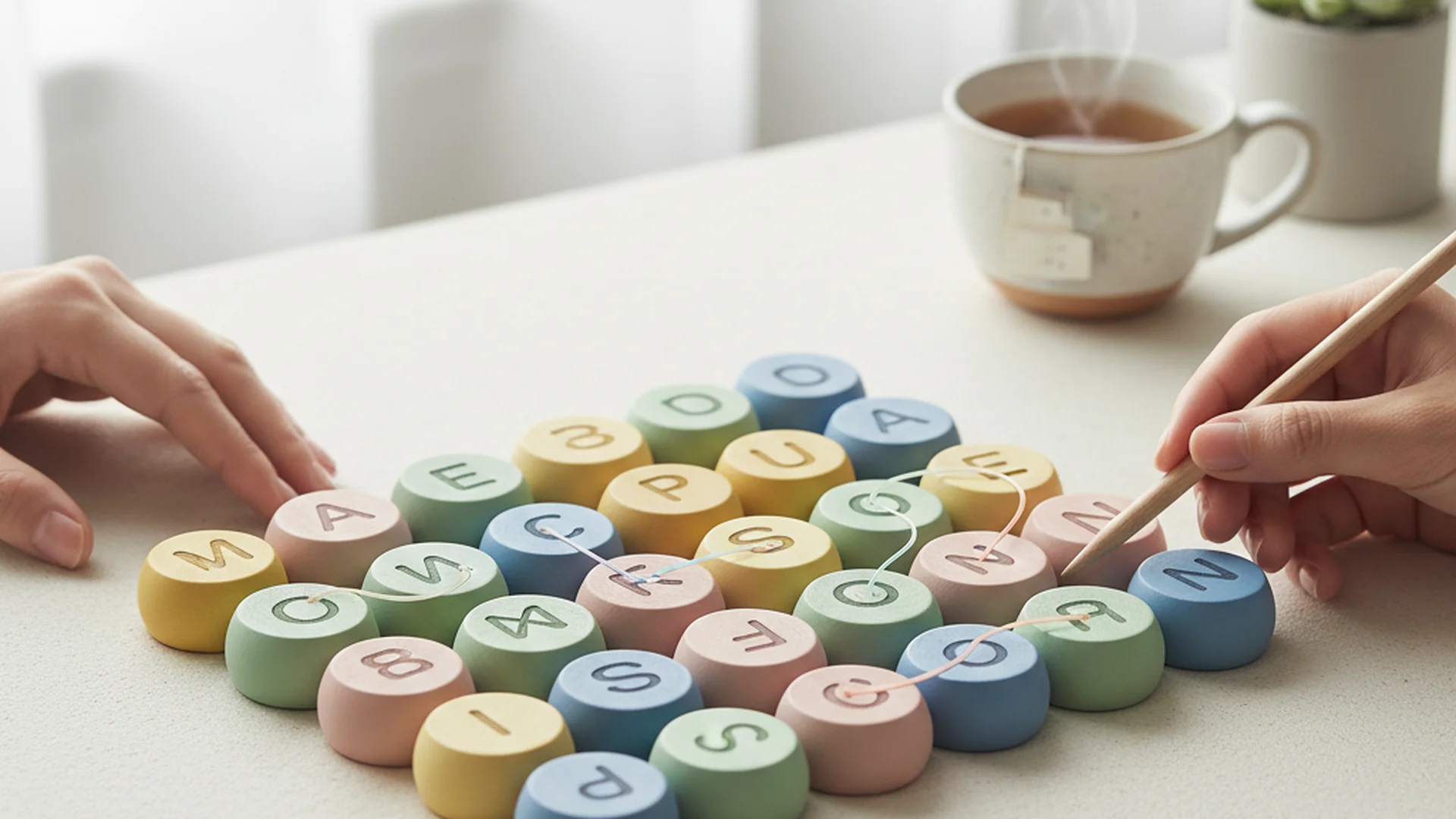
Traditional word search books offer what we call "tactile focus." There is a physical connection between the hand and the page. Studies suggest that writing by hand stimulates more areas of the brain than typing or tapping. When you circle a word in a book, you are engaging your motor cortex in a way that creates stronger spatial memories. You are more likely to remember where on the page a word was located—a phenomenon known as "spatial anchoring."
The Digital Edge: Adaptive Difficulty
Online platforms have a distinct advantage that paper cannot match: real-time adaptation. A 2022 study in the Journal of Cognitive Development found that users of adaptive digital puzzles showed a 15% higher improvement in pattern recognition compared to those using static paper versions. Why? Because digital systems can sense when you are finding words too quickly and automatically increase the grid size or introduce diagonal word search tips to keep your brain in the "challenge zone."
Comparing the Two: A Side-by-Side Analysis
To help you decide which format suits your lifestyle, let’s look at how they stack up across several key categories.
| Feature | Word Search Books (Print) | Online Word Search (Digital) |
|---|---|---|
| Eye Strain | Low (if well-lit) | Higher (due to blue light) |
| Portability | Requires physical space/bag | Fits in your pocket |
| Accessibility | Fixed font size (unless large print) | Adjustable font and contrast |
| Cost | One-time purchase per book | Often free/ad-supported |
| Feedback | Manual (checking the back) | Instant (haptic or visual cues) |
| Customization | None | High (AI-generated themes) |
Advertisement
Why Print Still Dominates: The "Digital Detox" Factor
Despite the rise of smartphones, 74% of global book sales remain in print. A significant driver of this is the desire for a "digital detox." In an era of constant notifications, a physical word search book provides a sanctuary.
Mental Health and the "Flow State"
Solving puzzles triggers a dopamine release and has been shown to lower cortisol levels. This creates a "flow state"—a meditative zone where you lose track of time. For many, this state is easier to achieve with paper because there are no battery alerts or incoming emails to break the concentration. This is particularly beneficial for older adults, making word search games for seniors a staple of cognitive wellness routines.
The Digital Revolution: 2025-2026 Trends
The world of word search books online is evolving rapidly. We are seeing a shift from simple "find the word" clones to highly personalized experiences.
AI-Personalized Puzzles
One of the most exciting trends for 2026 is the rise of AI-generated puzzles. Platforms now allow users to input their own interests—such as "2025 travel list" or "names of my grandchildren"—to create a bespoke grid. This turns a generic exercise into a meaningful memory-retrieval task.
Wellness and Affirmation Puzzles
There is a surge in "Mindful Word Searches." These aren't just about finding words; they are about internalizing them. The word lists consist of positive affirmations and stress-relief terminology. By repeatedly scanning for words like "RESILIENT" or "CALM," users engage in a form of linguistic cognitive behavioral therapy.
Hybrid "Smart Puzzles"
Companies like Clarity Media are bridging the gap with hybrid products. Imagine a physical book that includes QR codes on every page. If you get stuck, you scan the code to get a hint on your phone or to see how your solving time compares to a global leaderboard. This provides the tactile feel of paper with the social connectivity of the internet.
Expert Strategies for Any Format
Regardless of whether you choose print or digital, these proven techniques will help you solve faster and sharpen your brain.
1. The "Rare Letter" Strategy
Don't look for the whole word. Scan the grid for "anchors"—uncommon letters like Q, X, Z, or J. Because these appear less frequently in the English language, they act as beacons. If the word is "QUARTZ," find the 'Q' first; there will only be a few on the board, making the rest of the word easy to spot.
2. The "Grid Blur" Technique
This is a favorite among speed-solvers. Instead of focusing on individual letters, slightly blur your vision and scan the grid as a whole. This engages your peripheral vision and allows your brain’s "autofill" feature to recognize the shape of a word rather than having to spell it out.
3. Highlighter over Pen
If you are using a physical book, use a fluorescent highlighter. Unlike a pen or pencil, which can obscure letters that might be part of an overlapping word, a highlighter keeps the grid clear. This reduces eye fatigue and helps you maintain a clear mental map of the remaining white space.
Advertisement
Common Mistakes to Avoid
- Relying purely on the word list: Many people find a word in the list and then look for it in the grid. To better challenge your brain, try finding 3–5 words in the grid before looking at the list. This forces "unconscious pattern matching."
- Ignoring the "Screen Inferiority" effect: If you find digital puzzles harder, you aren't alone. "Screen inferiority" suggests that the brain processes pixelated text more slowly than ink on paper, leading to a higher cognitive load. Don't be discouraged; your brain is simply working harder!
- Viewing word searches as "busy work": While they are low-stress, they are excellent for educational word searches and vocabulary reinforcement. They are tools, not just toys.
Frequently Asked Questions
Is paper better than digital for my brain?
Both have unique merits. Paper fosters better spatial memory and tactile focus, which is excellent for long-term retention. Digital puzzles offer "adaptive challenge," which keeps the brain from plateauing by constantly increasing difficulty as you improve.
At what age can children start word searches?
Children as young as 5 or 6 (Kindergarten) can start with simple 5x5 grids. This practice helps with letter recognition and the left-to-right tracking skills essential for reading development.
Can word searches prevent dementia?
While no puzzle can prevent dementia, they are a vital part of a "cognitive reserve" strategy. Experts suggest that regular mental stimulation through puzzles can delay the onset of symptoms by up to 2.5 years by building stronger neural networks.
Why do I find digital puzzles more tiring for my eyes?
This is likely due to "Computer Vision Syndrome" or blue light exposure. Digital screens require constant microscopic adjustments of the eye muscles, whereas paper provides a high-contrast, stable image that is easier for the ocular system to process over long periods.
Conclusion
The choice between word search books online and their printed counterparts ultimately depends on your goals. If you are seeking a meditative escape from a digital world, the tactile satisfaction of a physical book is unmatched. If you want to push your cognitive limits with AI-tailored challenges and instant feedback, the digital world offers tools that were unimaginable a decade ago.
We recommend a hybrid approach: use digital apps during your commute or for quick brain-training bursts, but keep a physical book on your nightstand for evening relaxation. By diversifying how you play, you ensure your brain remains adaptable, sharp, and resilient for years to come.
Ready to Sharpen Your Mind?
Explore our collection of brain-boosting puzzles and start your daily challenge today.
Put it into practice

Keep reading
Word Search
The Ultimate Guide to Word Search Books for Kids: Cognitive Benefits and 2025 Trends
Discover why word search books kids love are booming in 2025. Explore cognitive benefits, age-appropriate grids, and the latest trends in children’s puzzles.
Mar 15, 2025 12 min
Word Search
Word Search: How to Play, Expert Strategies, and 2026 Trends
Master how to play word search with our expert guide. Learn advanced scanning techniques, rare letter strategies, and explore the latest 2025 puzzle trends.
Dec 10, 2025 12 min

Word Search
Mastering Word Search Speed: Professional Techniques for Fast Solving
Boost your word search speed with expert strategies. Learn rare letter hunting, the Boustrophedon scan, and peripheral vision tricks from a professional constructor.
Nov 10, 2025 12 min
Advertisement