Word Scramble for Kids: Age-Appropriate Challenges and Cognitive Benefits
Explore how word scramble for kids boosts reading fluency and brain health. Learn expert strategies for age-appropriate word play and literacy development.
By Free To Play Puzzles Editorial Team 12 min read
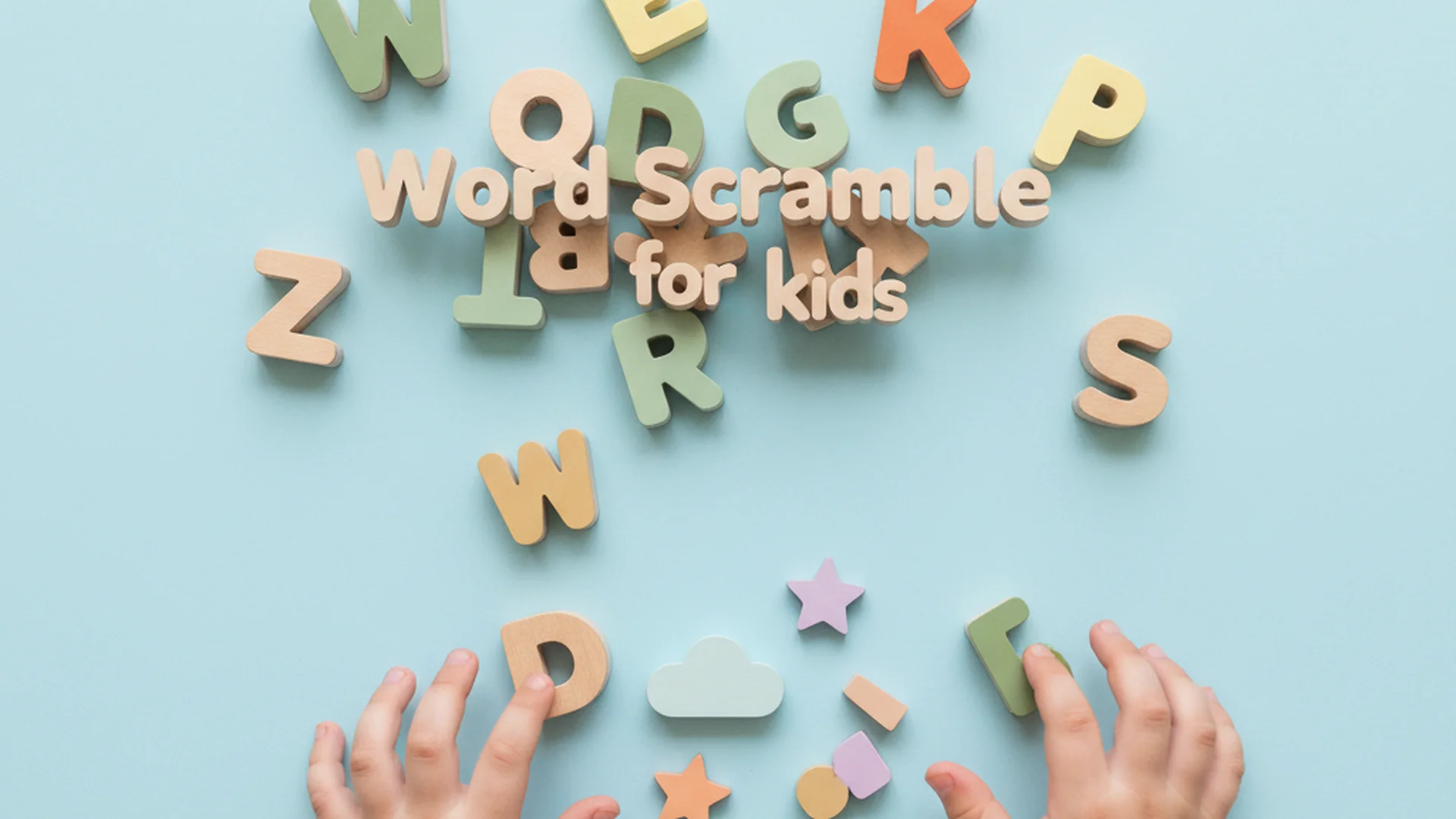
In the landscape of childhood development, we often search for "brain vitamins"—those rare activities that are both engaging and neurologically transformative. One of the most effective, yet deceptively simple, tools in our arsenal is the word scramble for kids. While it may look like a mere jumble of letters on a page, the act of unscrambling is a high-intensity workout for the developing brain.
A landmark meta-analysis published in 2024 confirms this, showing that word games have an 83% significant positive effect on vocabulary learning. This is classified as a "high impact" educational intervention, rivaling formal classroom instruction in its ability to cement new words in a child's long-term memory. When a child engages with a children anagram or a scramble, they aren't just playing; they are building the neural architecture required for advanced literacy.
The Science Behind the Scramble
Why does a word scramble for kids work so effectively? It comes down to what we call "orthographic processing." This is the brain's ability to recognize the visual patterns of letters and translate them into meaning. Research indicates that a child’s proficiency in solving anagrams explains 30% of the variance in their reading fluency. In essence, if a child can quickly navigate a jumbled word, they possess the phonetic and structural awareness to read fluidly.
One of the most fascinating discoveries in this field is the "Outer Letter" rule. Studies from the University of Leicester reveal that the human brain prioritizes the first and last letters of a word for recognition. This "anchoring" effect is a shortcut our brains use to process text quickly. When children are taught to identify these anchors first, their solving speed increases by up to 40%.
Age-Appropriate Challenges: A Developmental Guide
Not all scrambles are created equal. To prevent "learned helplessness"—where a child associates a game with failure—it is crucial to match the challenge to their developmental stage.
Preschool and Kindergarten (Ages 4–5)
At this stage, the focus is on basic letter recognition and phonological processing. Literacy trajectories begin to diverge as early as 18 months, making early intervention at age 4 critical.
- Target: 3-letter CVC (Consonant-Vowel-Consonant) words.
- Example: "A-T-C" becomes "CAT."
- Strategy: Use physical letters that the child can touch and move.
Early Elementary (Ages 6–8)
Children are now learning "letter friends"—clusters like sh, th, ch, or ing. This is the perfect time to introduce themed scrambles.
- Target: 4–6 letter words with common blends.
- Example: "H-I-S-F" becomes "FISH."
- Strategy: Provide a theme like "Animals" or "Under the Sea" to narrow the mental search field.
Upper Elementary and Middle School (Ages 9+)
Now, the transition from a simple scramble to a true children anagram occurs. An anagram involves rearranging a real word to create a new one, which requires higher-order thinking.
- Target: 7+ letter words or multi-word phrases.
- Example: "LISTEN" becomes "SILENT."
- Strategy: Introduce competitive elements or digital platforms like Word Scramble to keep them engaged.
Advertisement
5 Pro-Strategies for Parents and Educators
To maximize the cognitive benefits of word play, we recommend a multi-sensory approach. By engaging more than just the eyes, we create stronger neural pathways.
1. The Multi-Sensory Auditory Loop
Encourage your child to say the jumbled letters out loud. Hearing the sounds can often trigger "lexical retrieval"—that "Aha!" moment where the brain recognizes a word from its auditory pattern even when the visual pattern is messy.
2. Kinesthetic Learning (The Moveable Feast)
Use magnetic letters or blocks. Physically moving letters allows tactile learners to experiment with word structures. This is particularly helpful for the 1 in 4 children who require speech or language support, as it bridges the gap between abstract thought and physical reality.
3. The "Boxing" Method
Provide a specific number of empty boxes for the answer. This visual scaffold helps manage the "working memory" load. It allows the child to see exactly how many slots are left, making it easier to visualize the remaining letter combinations.
4. Pattern Recognition (Letter Friends)
Teach kids to look for "letter friends." If they see an 'S' and an 'H' in a scramble, they should immediately try placing them together. Identifying these blocks makes a 6-letter word feel like a much simpler 4-block puzzle.
5. The Visual Cross-Off
Many children fail because they try to solve the entire puzzle in their heads, which exhausts their mental "RAM." Always have them physically cross out letters as they use them.
The Future of Word Play: Trends for 2025 and 2026
The way children interact with words is changing rapidly due to emerging technology. We are moving beyond the pencil-and-paper era into an age of immersive, personalized learning.
| Technology | Application in 2025-2026 | Benefit |
|---|---|---|
| Neuroadaptive AI | Apps that monitor "stare time" and offer real-time phonetic hints. | Personalized pacing for every learner. |
| Microlearning | 5–10 minute daily "sprints" on platforms like Daily Challenge. | Better suited for Gen Alpha's attention spans. |
| Augmented Reality (AR) | "Grabbing" 3D letters in physical space to assemble words. | Turns word scrambles into a physical activity. |
| Social Gamification | Collaborative "Wordle-style" classroom challenges. | Promotes teamwork over individual stress. |
Recent 2025 Harvard research emphasizes that these "bite-sized" interactions are more effective for long-term retention than long, grueling study sessions. The "10-Minute Rule" is becoming the gold standard for daily Brain Training.
Common Mistakes to Avoid
In our pursuit of academic excellence, it is easy to fall into traps that hinder a child's progress.
- Mistake: Over-reliance on Definitions. Many parents think the goal is just knowing the word. However, the true value of a word scramble for kids is orthographic processing—understanding the rules of how letters sit together.
- Mistake: Treating Word Play as "Extra." Some educators treat scrambles as a reward for finishing "real work." Recent data suggests they are the real work, serving as a primary method for building phonetic awareness.
- Mistake: Neglecting the "Visual Cross-Off." As mentioned, failing to physically track used letters is the #1 reason kids give up on a puzzle.
Advertisement
Frequently Asked Questions
At what age can kids start word scrambles?
Children can typically begin with simple 3-letter word scrambles (CVC words like CAT, DOG, or SUN) around ages 4–5. This usually coincides with their ability to recognize most letters of the alphabet and understand that letters represent specific sounds.
What is the difference between a scramble and an anagram?
A word scramble is a jumble of letters (e.g., "T-A-C") that represents one specific hidden word ("CAT"). A children anagram involves rearranging the letters of a real word to create a new real word (e.g., "EAR" into "ARE"). Anagrams are generally more difficult because the starting point is already a recognized word.
Do word scrambles help with dyslexia?
Yes. Word scrambles force children to analyze individual phonemes and letter positions. This helps overcome the visual-spatial letter jumbling common in dyslexic readers. By breaking the word down into its component parts, children with dyslexia can learn to process letters more linearly.
Is using an anagram solver "cheating"?
Not necessarily. In a learning context, experts view solvers as "learning tools." If a child uses a solver to discover a word they didn't know and then analyzes how those letters formed that word, it becomes a vocabulary-building exercise. However, it should not be used to simply bypass the mental effort of the puzzle.
Can word scrambles improve my child's reading speed?
Absolutely. Because scrambles strengthen the brain's ability to recognize letter patterns and "anchors" (the first and last letters), the brain becomes more efficient at scanning lines of text. This directly correlates to increased reading fluency and speed.
Conclusion
Incorporating a word scramble for kids into your daily routine is one of the most scientifically backed ways to support literacy. By understanding the "Outer Letter" rule and utilizing multi-sensory strategies, we can turn a simple game into a powerful cognitive developmental tool. Whether you are using traditional paper puzzles or exploring the latest Word Scramble digital tools, the goal remains the same: fostering a love for the structure and beauty of language.
As we look toward 2026, the integration of AI and AR will only make these challenges more engaging. But at its heart, the magic of the scramble lies in that moment of discovery—when a jumble of letters suddenly clicks into a word, and a child realizes they have the power to unlock the secrets of the written word.
Ready to Start?
Boost your child's brain power with our daily word challenges.
Put it into practice
Keep reading
Word Games
The Ultimate Mad Libs Guide: Facts, Tips, and 2025-2026 Trends
Discover the history, educational benefits, and expert strategies for Mad Libs. Learn about AI-powered word games and the latest 2025-2026 brand collaborations.
May 7, 2026 12 min

Word Games
Free Word Scramble Online: The Ultimate 2025 Guide to Master the Jumble
Discover the best sites for free word scramble online. Explore 2025 trends, expert solving strategies, and the cognitive benefits of daily word puzzles.
Jan 23, 2026 12 min
Word Games
The Ultimate Guide to Word Scramble Games and Anagram Puzzles
Explore the science, history, and master strategies behind word scramble games. Learn how anagram puzzles boost brain health and cognitive performance in 2025.
Sep 17, 2025 12 min
Advertisement