The Ultimate Guide to Word Scramble Games and Anagram Puzzles
Explore the science, history, and master strategies behind word scramble games. Learn how anagram puzzles boost brain health and cognitive performance in 2025.
By Free To Play Puzzles Editorial Team 12 min read
In the vast landscape of digital entertainment, few genres have stood the test of time as gracefully as word scramble games. Whether you are staring at a jumble of letters on your smartphone during a morning commute or competing in a high-stakes Scrabble tournament, the mental gymnastics required to solve these puzzles offer a unique blend of frustration and euphoria. Word puzzles are more than just a pastime—they are a rigorous workout for the mind's executive functions.
The appeal of word scramble games lies in their simplicity and the profound satisfaction of "the click"—that moment when a chaotic mess of letters suddenly aligns into a coherent word. In this comprehensive guide, we will explore everything from the ancient origins of anagrams to the cutting-edge AI-driven challenges of 2025, providing you with the tools to master any jumble that comes your way.
The Historical Evolution of Word Scrambles
The human obsession with rearranging letters is not a modern phenomenon. It dates back to Ancient Greece in the 4th century B.C., where poets and mathematicians used anagram puzzles for divination and religious wordplay. One of the earliest known structured word puzzles is the Sator Square, a 1st-century A.D. word square that contains a five-word Latin palindrome. It was essentially the precursor to the modern crossword and the word scramble.
However, the genre truly exploded into the mainstream in the 20th century. Arthur Wynne’s invention of the "Word-Cross" in 1913 paved the way for jumbles, while the release of Scrabble in 1948 turned word scrambling into a household competitive sport. Today, roughly one-third of American homes and half of British homes own a Scrabble set.
By 2025, we have entered the era of "Playable Worlds." Using technologies like Genie 3, modern games now allow players to generate 3D environments based on the words they unscramble. This evolution from ink-on-paper to immersive digital reality proves that our drive to solve linguistic puzzles is hardwired into our biology.
The Neuroscience of Word Games
Why do we find these games so addictive? From a neuroscientific perspective, solving word scramble games activates the left hemisphere of the brain, specifically the areas responsible for language processing (Broca’s area) and logical reasoning.
Research conducted in mid-2025 indicates that consistent players exhibit a 15% larger vocabulary than non-players. More importantly, they show improved "processing speed"—the ability to rapidly identify and categorize visual patterns. This skill translates to real-world benefits, such as faster reading comprehension and improved decision-making under pressure.
Pattern Recognition vs. Vocabulary
A common misconception is the "Genius Myth." Many believe that to be good at anagrams, you must have memorized a dictionary. In reality, pattern recognition is the dominant skill. Expert players don't see "A-C-T-R-E-S-S"; they see the potential for "STRESS" or "ASSETS." They look for the "skeleton" of the word rather than the individual letters.
Advertisement
Expert Strategies for Unscrambling Words
To move from a casual player to a pro, you must adopt a systematic approach. Here are the top strategies used by competitive word game players:
1. The Circle Strategy
When letters are presented in a straight line, our brains often get trapped in a specific "linear bias." We tend to read from left to right, making it hard to break the existing sequence.
2. Vowel-Consonant Separation
The first step in any complex scramble should be separating the vowels (A, E, I, O, U) from the consonants. This allows you to see the phonetic structure. Most English words follow specific vowel-consonant-vowel patterns. By isolating the vowels, you can test where they might "anchor" the word.
3. Chunking: Prefixes and Suffixes
Don't try to solve a 7-letter word all at once. Look for "chunks" or common clusters.
- Prefixes: RE-, UN-, DE-, PRE-, DIS-
- Suffixes: -ING, -TION, -ED, -LY, -S
If you identify an "-ING" suffix in a 7-letter jumble, you only have four letters left to solve. This reduces the cognitive load significantly.
4. Identifying Common Bigrams
Certain letters are "best friends" in the English language. When you see them together, there is a high probability they form a bigram or trigram:
- TH, CH, SH, PH
- QU (Q is almost always followed by U)
- CK
Real-World Examples and Drills
Let's look at three practical examples of how to apply these strategies:
Example 1: The 5-Letter Jumble
- Letters: T-R-A-E-S
- Process: Identify the common vowels (A, E) and consonants (T, R, S).
- Solution: This is a famous jumble. Using the Best Wordle Starting Words data, we find "RATES," "STARE," "TEARS," and "ASTER."
Example 2: The 7-Letter "Bingo" Challenge
- Letters: N-I-G-T-R-A-E
- Process: Look for the suffix "-ING." That leaves T-R-A-E.
- Solution: "TEARING" or "GRATING."
Example 3: The "S" Extension
- Letters: P-L-A-N-T-S
- Process: Recognize "PLANT" immediately. Adding the 'S' gives you "PLANTS."
- Solution: "PLANTS."
| Strategy | Primary Benefit | Best For |
|---|---|---|
| Circle Method | Breaks linear bias | Circular games like Wordscapes |
| Chunking | Reduces letter count | 7+ letter words |
| Bigram Search | Identifies clusters | High-speed competitive play |
Modern Trends: Word Games in 2025-2026
The landscape of word scramble games has changed drastically in the last year. We are seeing a move away from "AI Slop"—mass-produced, low-quality apps—toward curated experiences.
AI-Generated Challenges
Top-tier apps now use AI to analyze your personal vocabulary. If the game detects you are struggling with medical terminology, it will subtly weave in more "bio-words" to help you learn. This real-time adaptation ensures the game remains in the "Goldilocks Zone" of difficulty—not too easy to be boring, and not too hard to be frustrating.
Semantic Puzzles
Following the success of NYT Strands, the trend is toward "Themed Scrambles." In these games, every word you find must relate to a central hidden theme. For example, a jumble might contain "OXYGEN," "HYDROGEN," and "NITROGEN" under the theme "Elements." This adds a layer of Word Logic Games to the traditional scramble format.
The Rise of "Histodle" and Niche Puzzles
2025 has seen the rise of "Histodle" (History Scrambles) and "Geodle" (Geography Scrambles). These cater to specific audiences who want to test their factual knowledge alongside their anagram skills.
Advertisement
Common Mistakes to Avoid
Even seasoned veterans fall into certain traps. If you want to improve your performance in Anagram Games Guide, avoid these pitfalls:
- Overthinking the "Bingo": Many beginners spend 90% of their time looking for the longest possible word. In competitive play, finding three 4-letter words is often faster and more points-efficient than spending minutes hunting for one 7-letter word.
- Ignoring the Timer: In digital scrambles, "freezing" is your worst enemy. If you can't see the word, keep your fingers moving. Input common prefixes or endings; sometimes the visual feedback of seeing those letters on the screen triggers the correct pattern in your brain.
- Assuming Vocabulary is Everything: As mentioned, this is a game of pattern recognition. Don't feel discouraged if you don't know "obscure" words. Mastery comes from How to Unscramble Words Like a Pro through mechanical drills, not just reading the dictionary.
- The Millennial Myth: Don't assume word games are only for seniors. 2025 data shows that 60% of word game players are aged 25–54. It is a dominant genre for Millennials and Gen X who use it for stress relief and mental maintenance.
Frequently Asked Questions
What is the difference between a word scramble and an anagram?
An anagram uses all the letters of one word to form exactly one other word (e.g., "dormitory" becomes "dirty room"). A word scramble, however, typically provides a jumbled set of letters and asks you to find as many words as possible of varying lengths.
Can word games really prevent cognitive decline?
While they are not a "cure" for neurological diseases, games that provide Brain Training benefits contribute to cognitive reserve. This helps the brain build more neural pathways, which can delay the clinical symptoms of dementia or age-related memory loss.
What is the best starting word for Wordle-style scrambles?
Based on 2025 linguistic data, the most effective starting words are "RAISE," "ARISE," or "TRACE." These words contain the most frequent vowels and consonants in English, providing the maximum amount of information per turn.
How do I unscramble long words (7+ letters) quickly?
The "chunking" method is best. Identify common prefixes like "UN-" or "RE-" and suffixes like "-ING" or "-ED." Once you remove these from the mental equation, the remaining letters are much easier to handle.
Are there tools to help me practice?
Yes, many players use an Anagram Solver Tips guide to understand the mechanics of word construction. Additionally, practicing with Word Ladder Rules and Strategies can help you learn how changing a single letter transforms word structures.
Conclusion: Why We Play
At its core, the world of word scramble games is about the human desire for order. We take a chaotic jumble—a representation of entropy—and use our cognitive faculties to impose meaning and structure. Whether you are playing for the health of your brain or the thrill of the leaderboard, these puzzles offer a timeless challenge that continues to evolve with our technology.
By applying the circle strategy, focusing on chunking, and staying aware of the 2025 trends in semantic gaming, you can elevate your play from casual to expert. Remember, the goal isn't just to find the word; it's to train your brain to see the patterns that others miss.
Ready to Level Up?
Master the art of word puzzles with our expert tips and daily challenges.
Put it into practice
Keep reading
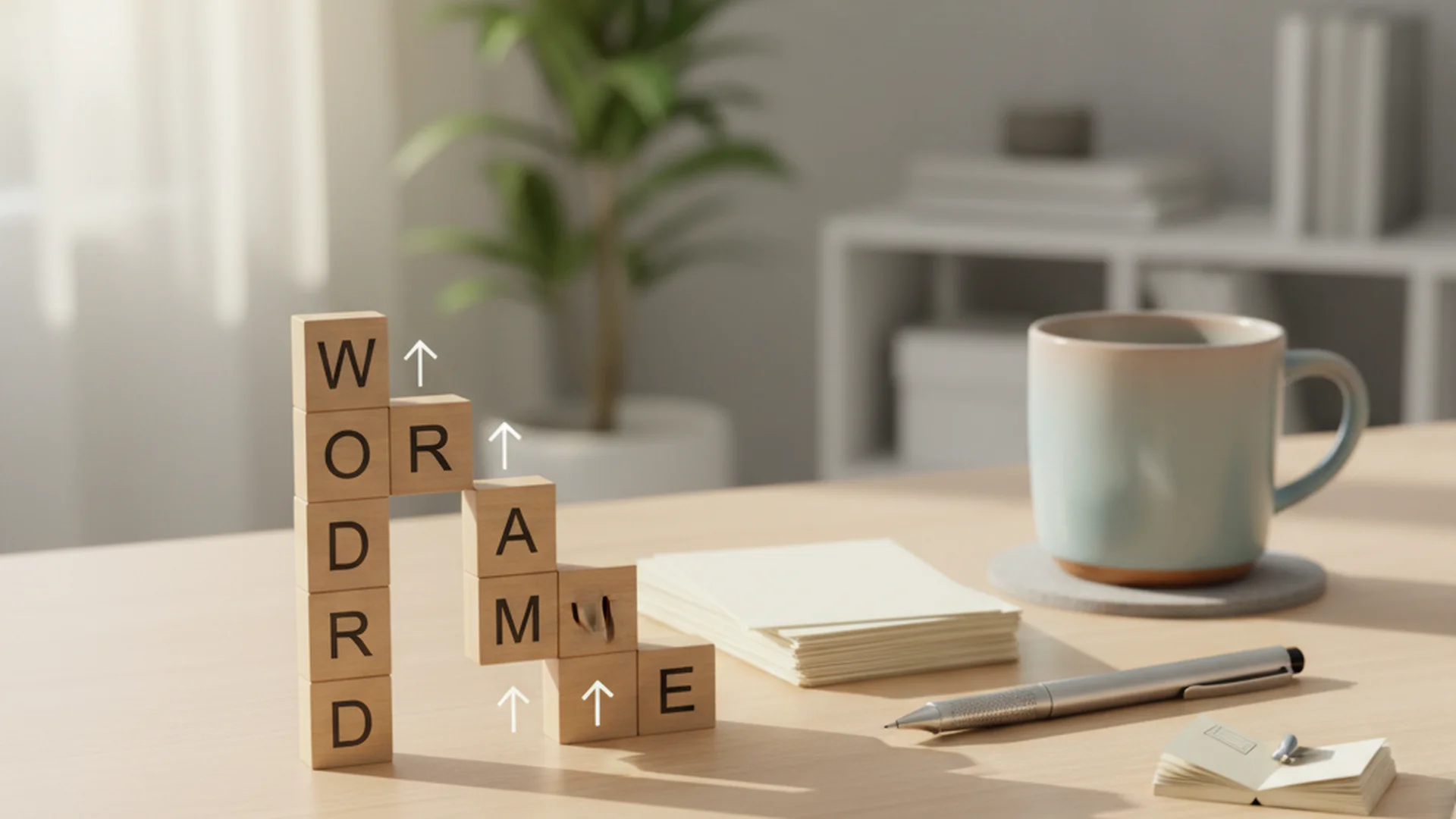
Word Games
Mastering Word Ladder Puzzles: The Ultimate Guide to Doublets
Discover the history, strategy, and evolution of word ladder puzzles. Learn expert techniques to solve doublets and explore 2025 trends in word gaming.
Dec 19, 2025 9 min
Word Games
Word Games: Complete Collection and Strategy Guide
Unlock the ultimate word games guide for 2025. Master Wordle, Connections, Scrabble, and more with expert strategies, market trends, and cognitive tips.
May 2, 2025 25 min
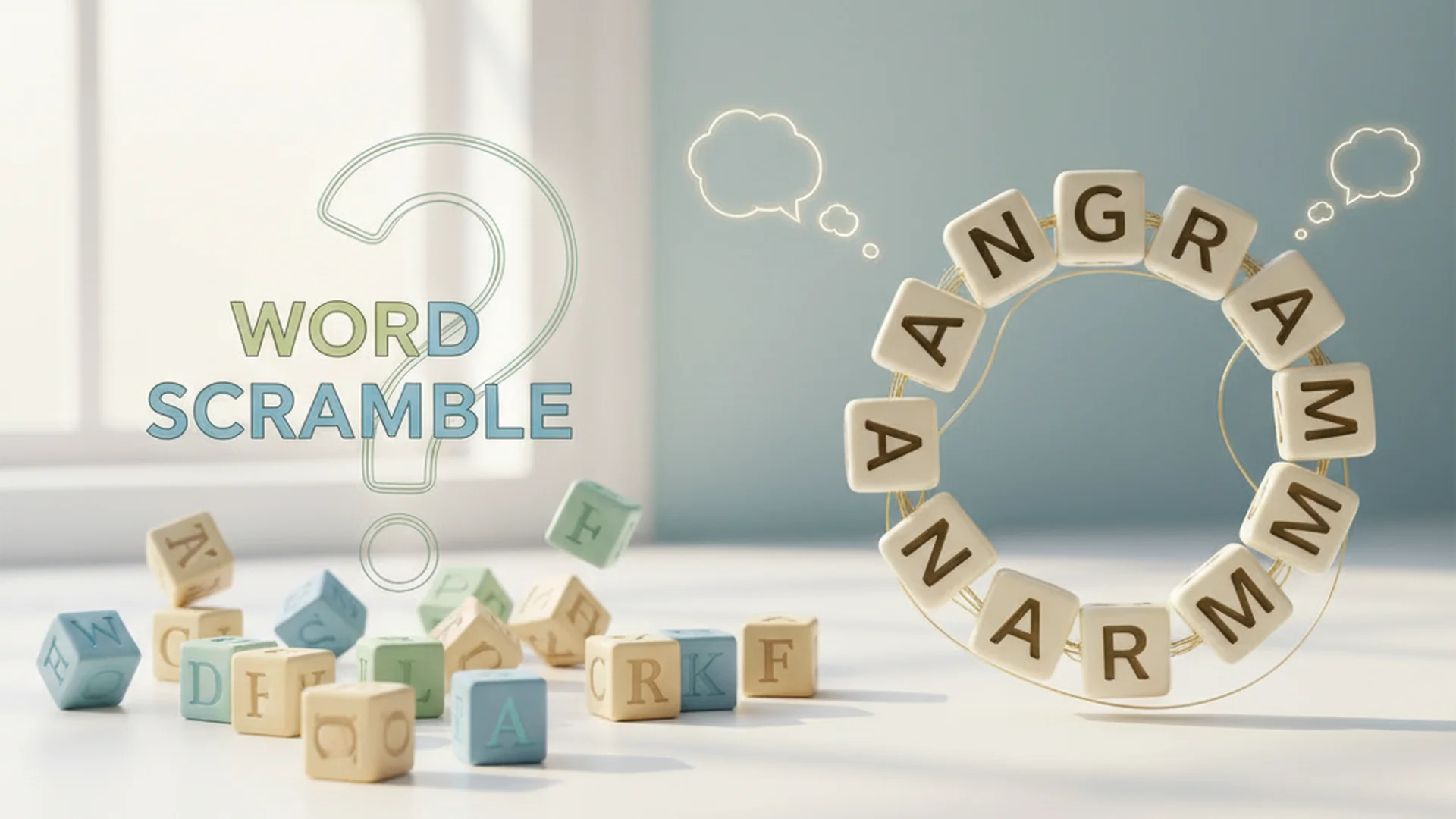
Word Games
Word Scramble vs Anagram: Key Differences and Pro Strategies for 2025
Explore the fundamental differences between word scrambles and anagrams. Learn expert solving techniques and stay ahead of the 2025-2026 word game trends.
Dec 28, 2024 10 min
Advertisement